

Beef, rice, and vegetables excluding carrots, broccoli, and/or dark-green leafy; tomato-based sauce
Common food
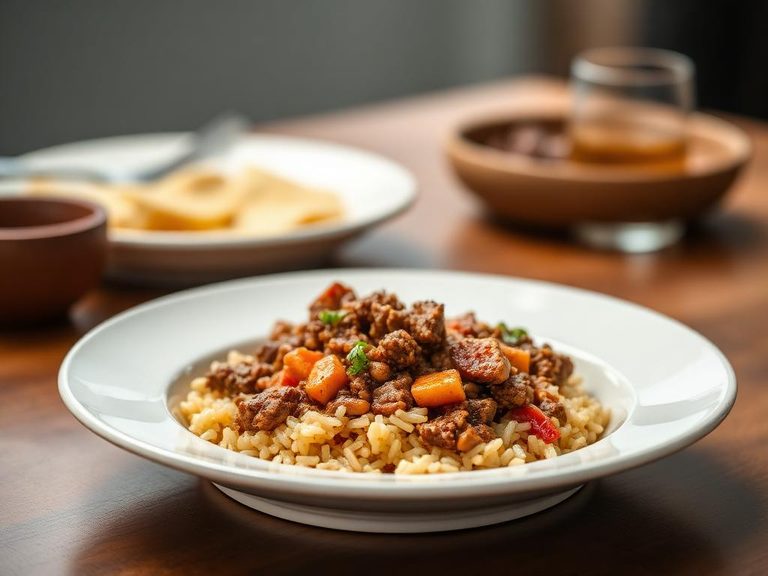
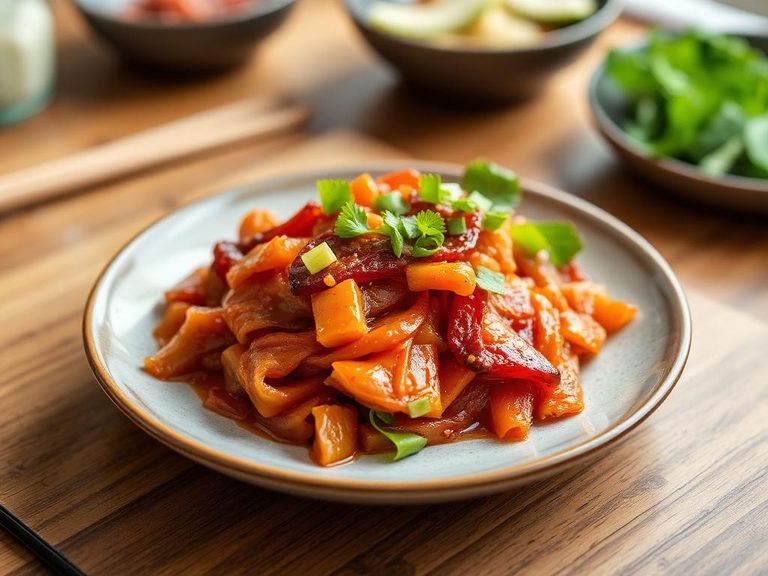
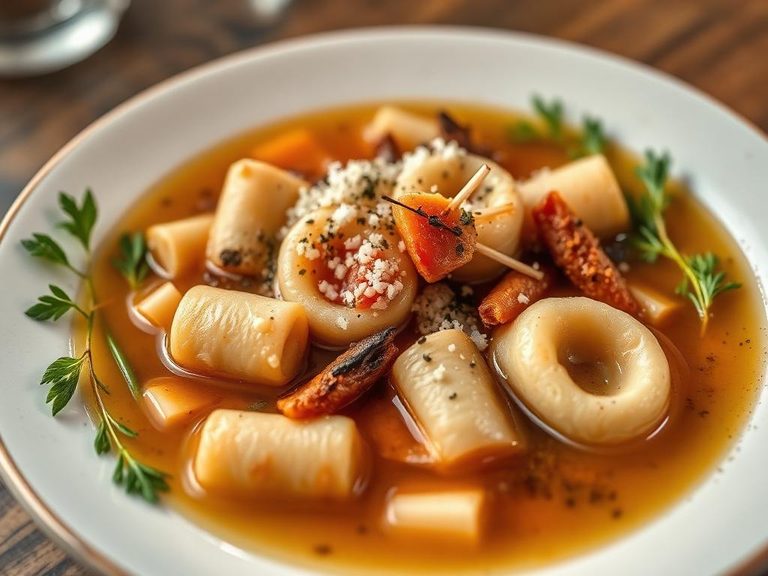
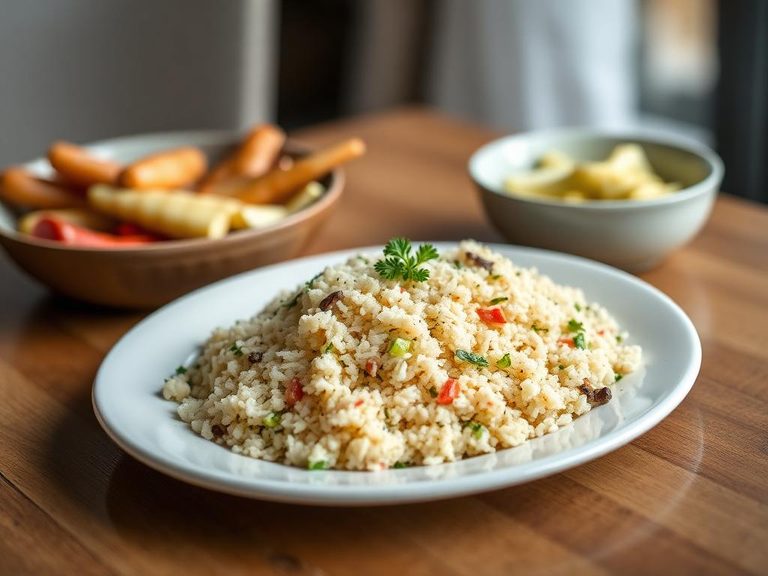
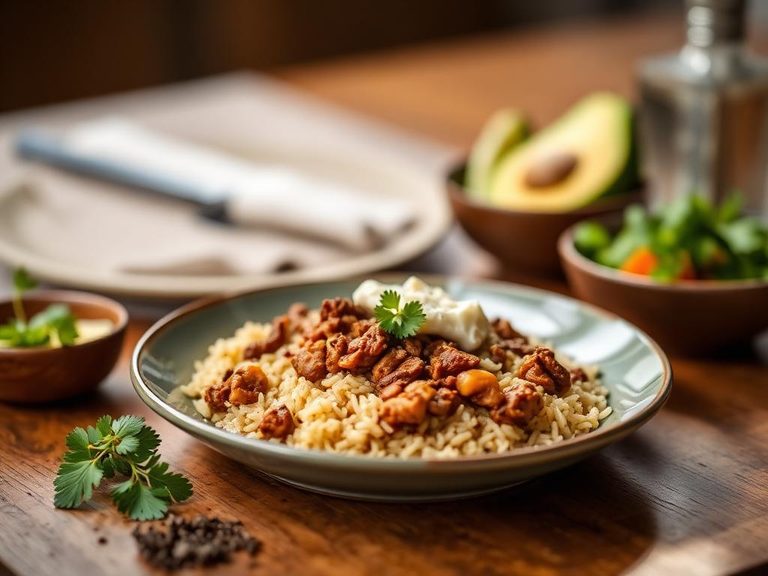
This is a hearty, savory one-pot meal where tender beef and rice simmer in a rich, tangy tomato sauce alongside a medley of vegetables. The texture is comforting and cohesive, with the rice absorbing the savory juices, while the beef provides a satisfying chew. Nutritionally, it's a balanced, moderate-calorie dish offering a solid mix of protein and carbohydrates.
Calorie split: 18% protein · 48% carbs · 34% fat
↓ Full nutrition💚 Why it's loved
People love it for its comforting, all-in-one convenience and the way the tomato sauce brings a bright, savory depth to the simple ingredients. It's a universally adaptable staple that can be spiced up or down to suit any palate.
⚠️ Watch-outs & how to enjoy it better
The combination of white rice and a sweet tomato sauce can lead to a quicker blood-sugar spike for some individuals. To counteract this, consider using brown or cauliflower rice, or pairing the meal with a side of leafy greens or a splash of vinegar to help blunt the glycemic response. Those watching sodium should be mindful of the sauce's salt content.
Key benefits
- Provides a balanced mix of protein, carbs, and fats in one meal
- Good source of quick energy from rice and tomato sauce
- Contains lycopene, an antioxidant from the cooked tomatoes
- Versatile base for adding a wide variety of vegetables
- Generally lower in fat than many stews or braised dishes
🍽️ Popular dishes
🌍 Where it's eaten
💡 Did you know?
The 'tomato-based sauce' in many global beef and rice dishes is a relatively modern phenomenon, as tomatoes only became a widespread culinary staple in the 18th and 19th centuries after originating in the Americas.
Full nutrition (USDA data · scales with serving)
| Water | 71.7 g |
| Energy | 132 kcal |
| Protein | 5.9 g |
| Total lipid (fat) | 5.0 g |
| Carbohydrate, by difference | 16.1 g |
| Fiber, total dietary | 1.0 g |
| Total Sugars | 1.4 g |
| Calcium, Ca | 13.0 mg |
| Iron, Fe | 1.2 mg |
| Magnesium, Mg | 16.0 mg |
| Phosphorus, P | 61.0 mg |
| Potassium, K | 162 mg |
| Sodium, Na | 302 mg |
| Zinc, Zn | 1.0 mg |
| Copper, Cu | 0.08 mg |
| Selenium, Se | 7.7 ug |
| Vitamin C, total ascorbic acid | 2.5 mg |
| Thiamin | 0.09 mg |
| Riboflavin | 0.06 mg |
| Niacin | 1.8 mg |
| Vitamin B-6 | 0.13 mg |
| Folate, total | 34.0 ug |
| Folic acid | 24.0 ug |
| Folate, food | 10.0 ug |
| Folate, DFE | 52.0 ug |
| Choline, total | 22.1 mg |
| Vitamin B-12 | 0.23 ug |
| Vitamin B-12, added | 0.00 ug |
| Vitamin A, RAE | 9.0 ug |
| Retinol | 0.00 ug |
| Carotene, beta | 93.0 ug |
| Carotene, alpha | 6.0 ug |
| Cryptoxanthin, beta | 12.0 ug |
| Lycopene | 3672 ug |
| Lutein + zeaxanthin | 111 ug |
| Vitamin E (alpha-tocopherol) | 1.1 mg |
| Vitamin E, added | 0.00 mg |
| Vitamin D (D2 + D3) | 0.00 ug |
| Vitamin K (phylloquinone) | 7.9 ug |
| Alcohol, ethyl | 0.00 g |
| Caffeine | 0.00 mg |
| Theobromine | 0.00 mg |
Fat & fatty acid profile (per 100g)
| Fatty acids, total saturated | 0.98 g |
| SFA 4:0 | 0.00 g |
| SFA 6:0 | 0.00 g |
| SFA 8:0 | 0.00 g |
| SFA 10:0 | 0.00 g |
| SFA 12:0 | 0.00 g |
| SFA 14:0 | 0.04 g |
| SFA 16:0 | 0.67 g |
| SFA 18:0 | 0.24 g |
| Fatty acids, total monounsaturated | 2.1 g |
| MUFA 16:1 | 0.06 g |
| MUFA 18:1 | 2.0 g |
| MUFA 20:1 | 0.03 g |
| MUFA 22:1 | 0.00 g |
| Fatty acids, total polyunsaturated | 1.5 g |
| PUFA 18:2 | 1.3 g |
| PUFA 18:3 | 0.18 g |
| PUFA 18:4 | 0.00 g |
| PUFA 20:4 | 0.00 g |
| PUFA 20:5 n-3 (EPA) | 0.00 g |
| PUFA 22:5 n-3 (DPA) | 0.00 g |
| PUFA 22:6 n-3 (DHA) | 0.00 g |
| Cholesterol | 12.0 mg |
Amino acid profile (per 100g)
Estimated from Beef, variety meats and by-products, mechanically separated beef, raw — USDA does not publish this profile for Beef.
| Tryptophan | 0.17 g |
| Threonine | 0.47 g |
| Isoleucine | 0.58 g |
| Leucine | 1.2 g |
| Lysine | 1.2 g |
| Methionine | 0.43 g |
| Cystine | 0.23 g |
| Phenylalanine | 0.64 g |
| Tyrosine | 0.38 g |
| Valine | 0.92 g |
| Arginine | 1.2 g |
| Histidine | 0.44 g |
| Alanine | 1.0 g |
| Aspartic acid | 1.3 g |
| Glutamic acid | 2.1 g |
| Glycine | 1.2 g |
| Proline | 0.92 g |
| Serine | 0.57 g |
FAQ
Is this dish gluten-free?
It can be, but it depends on the specific recipe and any added seasonings or sauces. Always check labels for hidden gluten in broth or spice mixes.
How can I make it more filling?
Increase the protein by adding more beef or a can of beans, or bulk it up with extra vegetables like bell peppers, zucchini, or peas.
Can I use ground beef instead of cubed?
Absolutely. Ground beef is a common and quick-cooking alternative that will change the texture to a more crumbly, saucy consistency.
Nutrient density (calculated · NRF9.3)
Nutrient Rich Foods index: beneficial nutrients (protein, fiber, vitamins, minerals) minus saturated fat, added sugar & sodium, per 100 kcal.
NRF9.3 index — Fulgoni, Keast & Drewnowski, 2009. Computed from USDA nutrients.
Weight-loss friendliness (composite index)
Energy density 1.32 kcal/g · 18% calories from protein · 1.0 g fiber · 1.4 g sugar per 100 g.
Composite of energy density (Rolls et al., 1999), protein & fiber satiety, minus sugar. A calculated heuristic — ranks satiety-per-calorie, not a clinical measure.
Dietary load (calculated from USDA values)
Potential renal acid load. Positive = acid-forming, negative = alkaline-forming.
Sodium-to-potassium ratio: 1.86 (lower is better — aim for ≤ 1)
Sodium:potassium per WHO potassium guidance. Computed from USDA nutrients.