

Beans, NFS
Common food
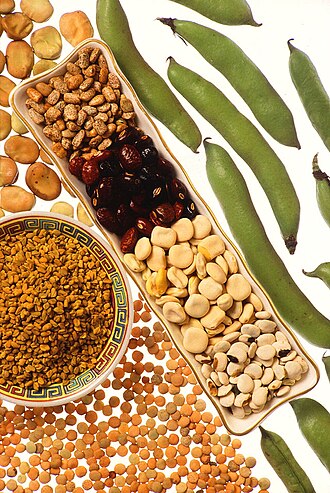
Photo: Wikipedia
Beans, NFS (Not Further Specified) is a versatile category of cooked legumes, offering a hearty, earthy flavor with a creamy yet firm texture that varies by variety. Nutritionally, they are a powerhouse, providing a substantial 8.34g of protein and 8.3g of fiber per 100g, making them excellent for sustained energy and digestive health.
Calorie split: 17% protein · 49% carbs · 33% fat
↓ Full nutrition💚 Why it's loved
People love beans for their incredible versatility—they absorb flavors from spices and sauces, making them a staple in countless global cuisines from chili to curries. Their satisfying, protein-rich nature makes them a beloved comfort food and a reliable meat substitute.
⚠️ Watch-outs & how to enjoy it better
Some may experience digestive discomfort like gas or bloating due to their high fiber and oligosaccharide content. To mitigate this, start with smaller portions, soak dried beans thoroughly before cooking, and consider adding digestive spices like cumin or ginger. They can also be high in sodium if canned, so rinsing them well or choosing low-sodium versions is advisable.
Key benefits
- Excellent source of plant-based protein
- High in dietary fiber for gut health
- Rich in complex carbohydrates for steady energy
- Low in sugar (0.31g per 100g)
- Contains healthy fats and essential minerals
🍽️ Popular dishes
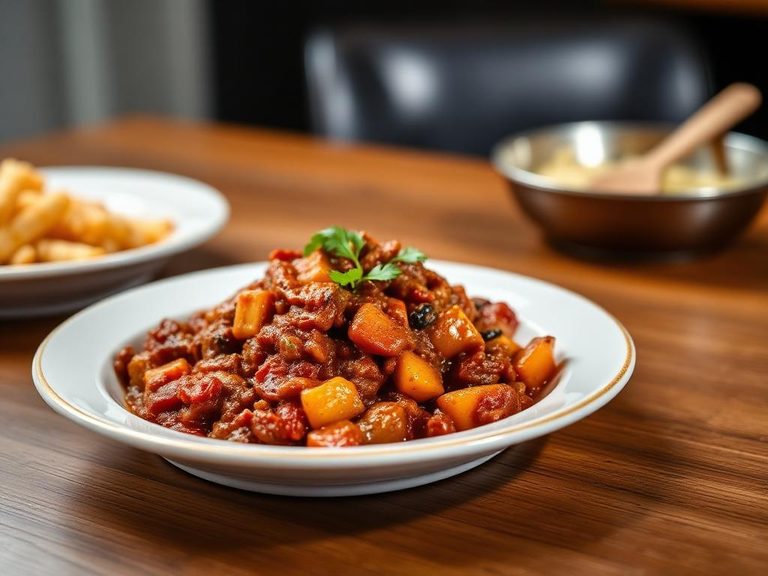

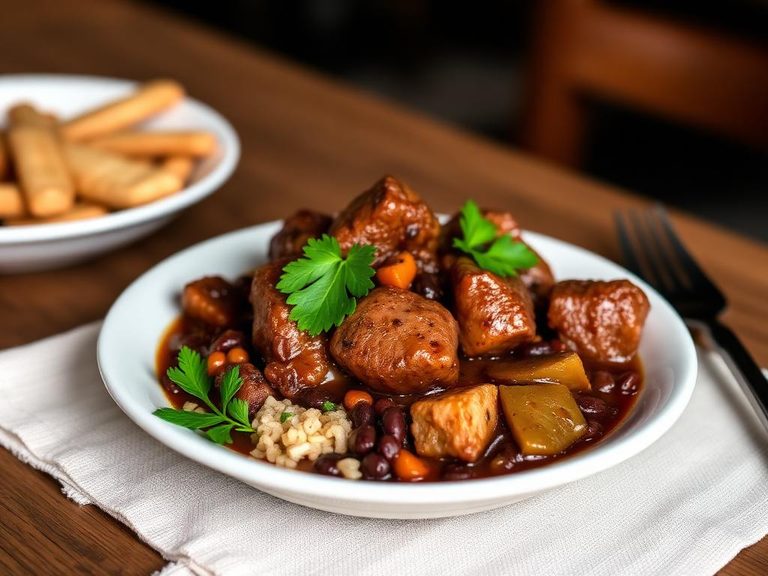
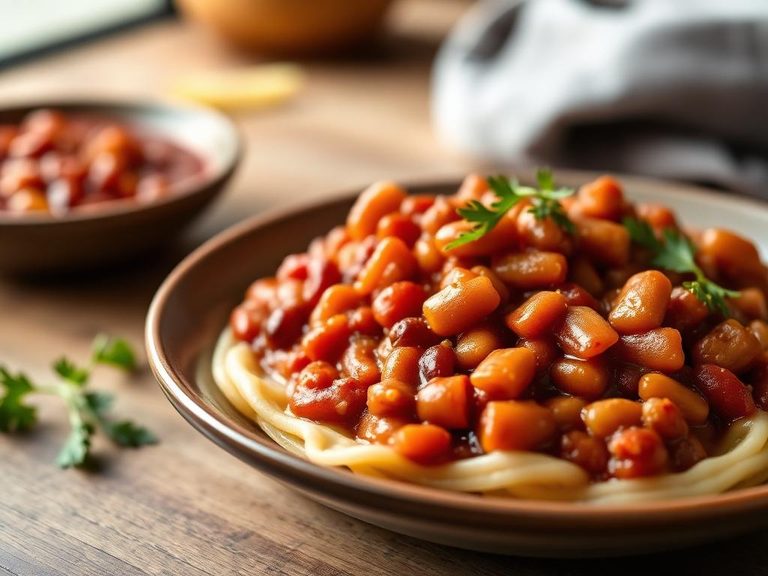
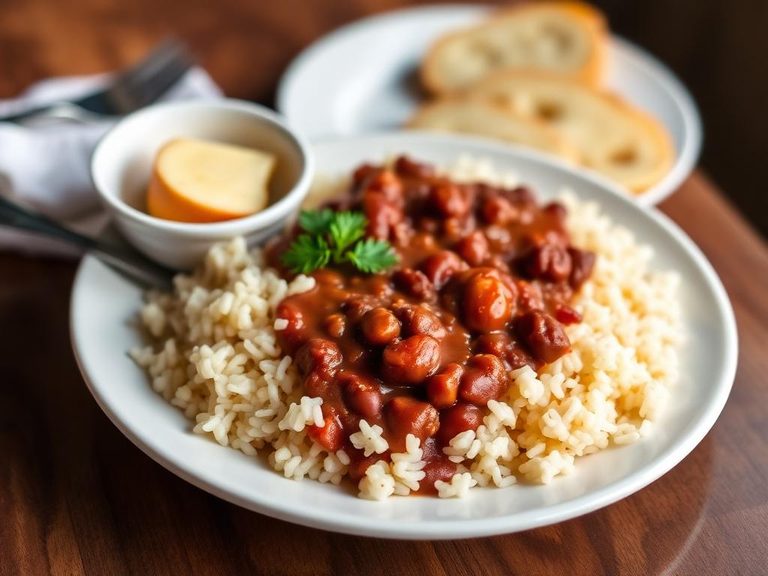
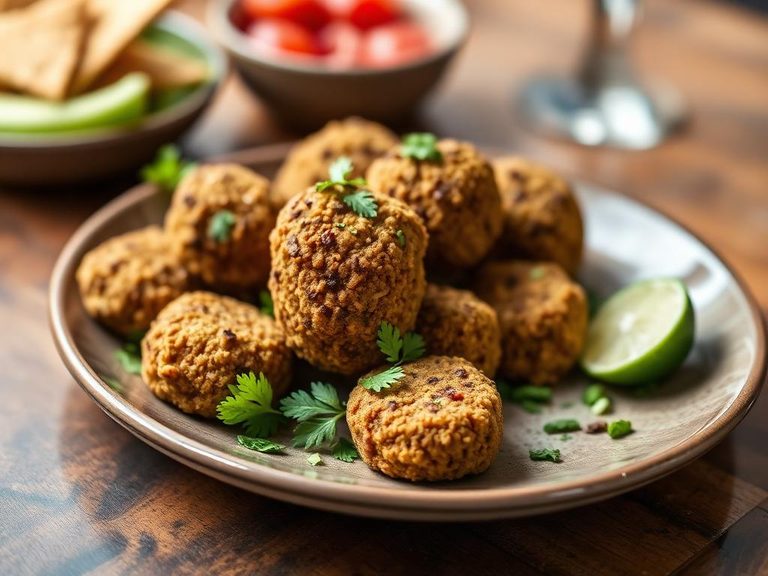
🌍 Where it's eaten
💡 Did you know?
The phrase 'spill the beans' is believed to originate from an ancient Greek voting system where beans were used as secret ballots, and spilling them would prematurely reveal the results.
Full nutrition (USDA data · scales with serving)
| Water | 59.1 g |
| Energy | 189 kcal |
| Protein | 8.3 g |
| Total lipid (fat) | 7.1 g |
| Carbohydrate, by difference | 23.8 g |
| Fiber, total dietary | 8.3 g |
| Total Sugars | 0.31 g |
| Calcium, Ca | 39.0 mg |
| Iron, Fe | 2.0 mg |
| Magnesium, Mg | 51.0 mg |
| Phosphorus, P | 135 mg |
| Potassium, K | 386 mg |
| Sodium, Na | 217 mg |
| Zinc, Zn | 0.94 mg |
| Copper, Cu | 0.20 mg |
| Selenium, Se | 4.6 ug |
| Vitamin C, total ascorbic acid | 0.50 mg |
| Thiamin | 0.18 mg |
| Riboflavin | 0.05 mg |
| Niacin | 0.32 mg |
| Vitamin B-6 | 0.17 mg |
| Folate, total | 147 ug |
| Folic acid | 0.00 ug |
| Folate, food | 147 ug |
| Folate, DFE | 147 ug |
| Choline, total | 32.2 mg |
| Vitamin B-12 | 0.00 ug |
| Vitamin B-12, added | 0.00 ug |
| Vitamin A, RAE | 0.00 ug |
| Retinol | 0.00 ug |
| Carotene, beta | 0.00 ug |
| Carotene, alpha | 0.00 ug |
| Cryptoxanthin, beta | 0.00 ug |
| Lycopene | 0.00 ug |
| Lutein + zeaxanthin | 0.00 ug |
| Vitamin E (alpha-tocopherol) | 2.1 mg |
| Vitamin E, added | 0.00 mg |
| Vitamin D (D2 + D3) | 0.00 ug |
| Vitamin K (phylloquinone) | 9.7 ug |
| Alcohol, ethyl | 0.00 g |
| Caffeine | 0.00 mg |
| Theobromine | 0.00 mg |
Fat & fatty acid profile (per 100g)
| Fatty acids, total saturated | 1.00 g |
| SFA 4:0 | 0.00 g |
| SFA 6:0 | 0.00 g |
| SFA 8:0 | 0.00 g |
| SFA 10:0 | 0.00 g |
| SFA 12:0 | 0.00 g |
| SFA 14:0 | 0.00 g |
| SFA 16:0 | 0.75 g |
| SFA 18:0 | 0.19 g |
| Fatty acids, total monounsaturated | 2.9 g |
| MUFA 16:1 | 0.02 g |
| MUFA 18:1 | 2.8 g |
| MUFA 20:1 | 0.04 g |
| MUFA 22:1 | 0.00 g |
| Fatty acids, total polyunsaturated | 2.7 g |
| PUFA 18:2 | 2.3 g |
| PUFA 18:3 | 0.40 g |
| PUFA 18:4 | 0.00 g |
| PUFA 20:4 | 0.00 g |
| PUFA 20:5 n-3 (EPA) | 0.00 g |
| PUFA 22:5 n-3 (DPA) | 0.00 g |
| PUFA 22:6 n-3 (DHA) | 0.00 g |
| Cholesterol | 0.00 mg |
Amino acid profile (per 100g)
Estimated from Restaurant, Mexican, refried beans — USDA does not publish this profile for Beans.
| Tryptophan | 0.07 g |
| Threonine | 0.27 g |
| Isoleucine | 0.27 g |
| Leucine | 0.54 g |
| Lysine | 0.53 g |
| Methionine | 0.08 g |
| Cystine | 0.06 g |
| Phenylalanine | 0.39 g |
| Tyrosine | 0.17 g |
| Valine | 0.29 g |
| Arginine | 0.41 g |
| Histidine | 0.20 g |
| Alanine | 0.27 g |
| Aspartic acid | 0.73 g |
| Glutamic acid | 0.97 g |
| Glycine | 0.28 g |
| Proline | 0.26 g |
| Serine | 0.39 g |
| Hydroxyproline | 0.00 g |
FAQ
What does 'NFS' mean on a nutrition label for beans?
'NFS' stands for 'Not Further Specified,' indicating the data is an average for various common bean types (like kidney, pinto, black) without specifying one.
Are canned beans as nutritious as dried beans?
Yes, canned beans are nutritionally comparable. Rinsing them can reduce sodium content by up to 40%, while cooking dried beans from scratch gives you full control over salt and texture.
How can I reduce the gas-causing effects of beans?
Soak dried beans for 8-12 hours, discard the soaking water, and cook them thoroughly. Starting with small servings and gradually increasing intake also helps your digestive system adapt.
Nutrient density (calculated · NRF9.3)
Nutrient Rich Foods index: beneficial nutrients (protein, fiber, vitamins, minerals) minus saturated fat, added sugar & sodium, per 100 kcal.
NRF9.3 index — Fulgoni, Keast & Drewnowski, 2009. Computed from USDA nutrients.
Weight-loss friendliness (composite index)
Energy density 1.89 kcal/g · 18% calories from protein · 8.3 g fiber · 0.3 g sugar per 100 g.
Composite of energy density (Rolls et al., 1999), protein & fiber satiety, minus sugar. A calculated heuristic — ranks satiety-per-calorie, not a clinical measure.
Dietary load (calculated from USDA values)
Potential renal acid load. Positive = acid-forming, negative = alkaline-forming.
Sodium-to-potassium ratio: 0.56 (lower is better — aim for ≤ 1)
Sodium:potassium per WHO potassium guidance. Computed from USDA nutrients.