

Beans and rice, with meat
Common food

Photo: Wikipedia
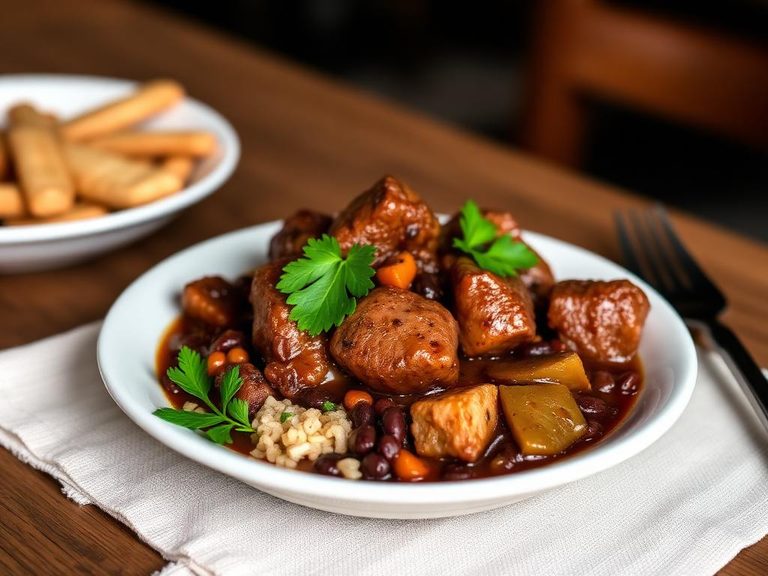
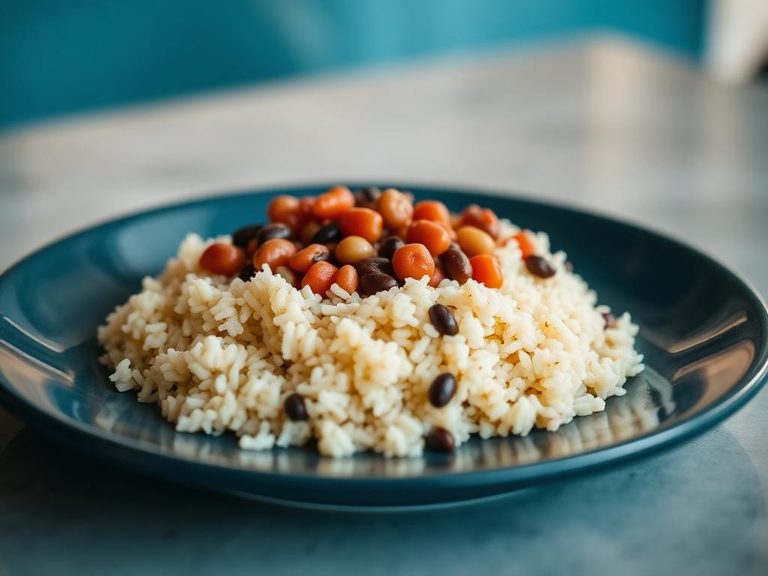
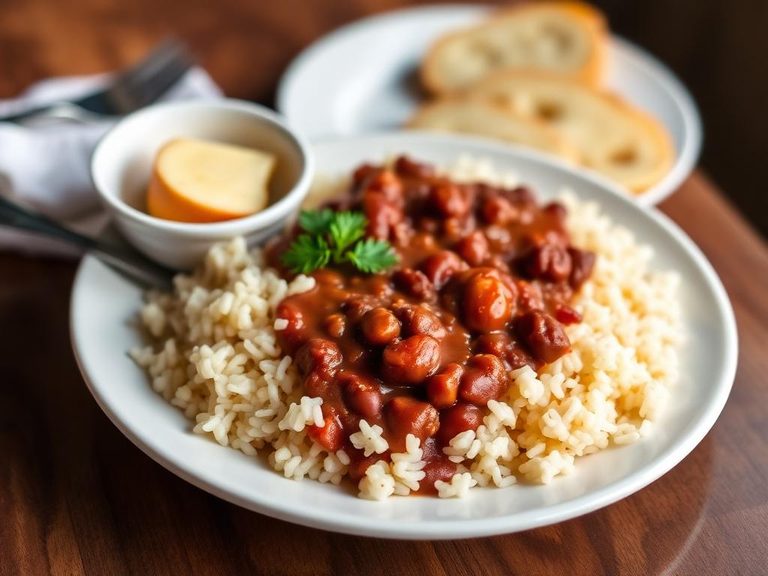
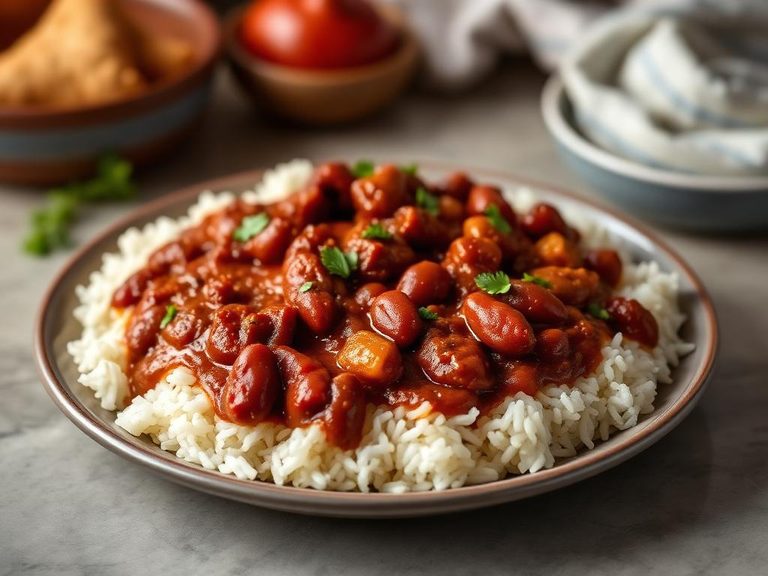
A hearty, comforting staple of tender beans and fluffy rice, often simmered with savory meat for a rich, umami depth. The texture is a satisfying mix of soft, starchy grains and creamy, protein-packed legumes. Nutritionally, it's a balanced powerhouse, offering substantial fiber and plant-based protein alongside complex carbohydrates.
Calorie split: 18% protein · 58% carbs · 24% fat
↓ Full nutrition💚 Why it's loved
People love it for its deeply savory, comforting flavor and the way it stretches a simple meal into a filling feast. It's a versatile canvas for spices and a cornerstone of communal dining in many cultures.
⚠️ Watch-outs & how to enjoy it better
The combination of beans and rice can cause significant gas and bloating for some due to oligosaccharides and fiber. To counteract this, introduce beans gradually into your diet, soak dried beans thoroughly before cooking, and consider adding digestive spices like cumin or ginger.
Key benefits
- Excellent source of dietary fiber for digestive health.
- High-quality plant-based protein from beans, complemented by meat.
- Complex carbohydrates provide sustained energy.
- Low in sugar, making it a stable energy source.
- Rich in essential minerals like iron and magnesium.
🍽️ Popular dishes
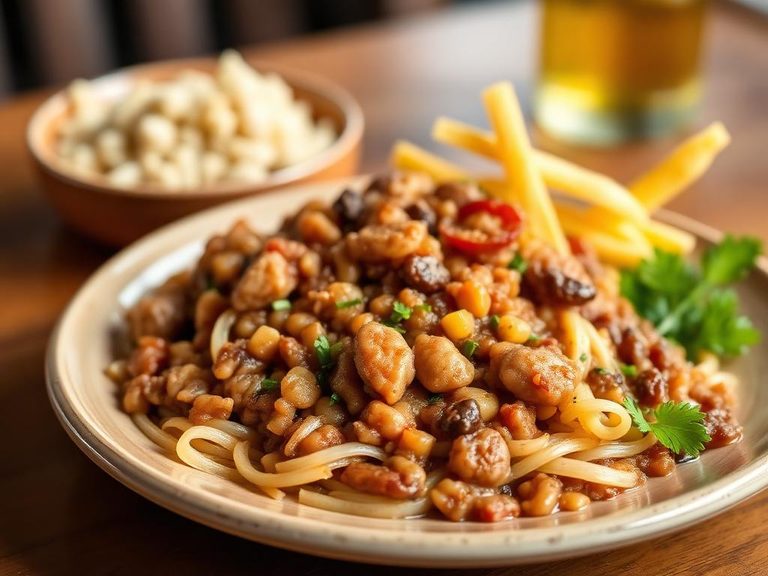
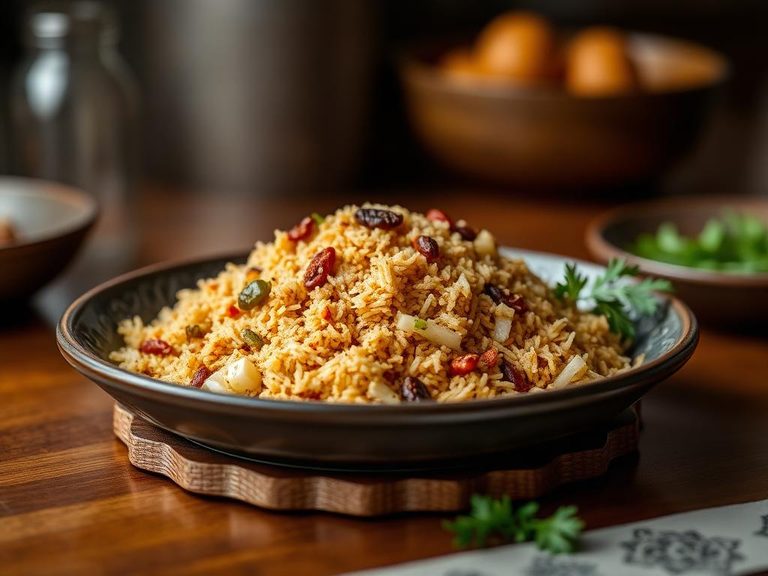
🌍 Where it's eaten
💡 Did you know?
The combination of beans and rice creates a 'complete protein,' meaning together they provide all nine essential amino acids your body cannot make on its own.
Full nutrition (USDA data · scales with serving)
| Water | 63.3 g |
| Energy | 162 kcal |
| Protein | 7.5 g |
| Total lipid (fat) | 4.2 g |
| Carbohydrate, by difference | 23.5 g |
| Fiber, total dietary | 4.4 g |
| Total Sugars | 0.25 g |
| Calcium, Ca | 25.0 mg |
| Iron, Fe | 1.6 mg |
| Magnesium, Mg | 33.0 mg |
| Phosphorus, P | 108 mg |
| Potassium, K | 240 mg |
| Sodium, Na | 263 mg |
| Zinc, Zn | 1.1 mg |
| Copper, Cu | 0.14 mg |
| Selenium, Se | 8.2 ug |
| Vitamin C, total ascorbic acid | 0.30 mg |
| Thiamin | 0.18 mg |
| Riboflavin | 0.05 mg |
| Niacin | 1.2 mg |
| Vitamin B-6 | 0.16 mg |
| Folate, total | 99.0 ug |
| Folic acid | 22.0 ug |
| Folate, food | 77.0 ug |
| Folate, DFE | 115 ug |
| Choline, total | 24.9 mg |
| Vitamin B-12 | 0.13 ug |
| Vitamin B-12, added | 0.00 ug |
| Vitamin A, RAE | 1.0 ug |
| Retinol | 1.0 ug |
| Carotene, beta | 0.00 ug |
| Carotene, alpha | 0.00 ug |
| Cryptoxanthin, beta | 0.00 ug |
| Lycopene | 0.00 ug |
| Lutein + zeaxanthin | 0.00 ug |
| Vitamin E (alpha-tocopherol) | 1.1 mg |
| Vitamin E, added | 0.00 mg |
| Vitamin D (D2 + D3) | 0.00 ug |
| Vitamin K (phylloquinone) | 5.1 ug |
| Alcohol, ethyl | 0.00 g |
| Caffeine | 0.00 mg |
| Theobromine | 0.00 mg |
Fat & fatty acid profile (per 100g)
| Fatty acids, total saturated | 0.72 g |
| SFA 4:0 | 0.00 g |
| SFA 6:0 | 0.00 g |
| SFA 8:0 | 0.00 g |
| SFA 10:0 | 0.00 g |
| SFA 12:0 | 0.00 g |
| SFA 14:0 | 0.01 g |
| SFA 16:0 | 0.52 g |
| SFA 18:0 | 0.16 g |
| Fatty acids, total monounsaturated | 1.7 g |
| MUFA 16:1 | 0.03 g |
| MUFA 18:1 | 1.7 g |
| MUFA 20:1 | 0.03 g |
| MUFA 22:1 | 0.00 g |
| Fatty acids, total polyunsaturated | 1.5 g |
| PUFA 18:2 | 1.3 g |
| PUFA 18:3 | 0.21 g |
| PUFA 18:4 | 0.00 g |
| PUFA 20:4 | 0.01 g |
| PUFA 20:5 n-3 (EPA) | 0.00 g |
| PUFA 22:5 n-3 (DPA) | 0.00 g |
| PUFA 22:6 n-3 (DHA) | 0.00 g |
| Cholesterol | 6.0 mg |
Amino acid profile (per 100g)
Estimated from Restaurant, Latino, Arroz con habichuelas colorados (Rice And Red Beans) — USDA does not publish this profile for Beans and rice.
| Tryptophan | 0.05 g |
| Threonine | 0.15 g |
| Isoleucine | 0.16 g |
| Leucine | 0.30 g |
| Lysine | 0.21 g |
| Methionine | 0.07 g |
| Cystine | 0.05 g |
| Phenylalanine | 0.20 g |
| Tyrosine | 0.10 g |
| Valine | 0.21 g |
| Arginine | 0.24 g |
| Histidine | 0.11 g |
| Alanine | 0.18 g |
| Aspartic acid | 0.43 g |
| Glutamic acid | 0.63 g |
| Glycine | 0.16 g |
| Proline | 0.18 g |
| Serine | 0.21 g |
FAQ
Is beans and rice a good meal for weight management?
Yes, it can be. The high fiber and protein content promote a feeling of fullness, which may help control appetite. The key is mindful portion control and being aware of added fats like oils or fatty meats in the preparation.
How can I reduce the cooking time for dried beans?
The 'quick soak' method is effective: boil the beans for 2 minutes, then let them soak off the heat for an hour before draining and cooking fresh. Alternatively, using a pressure cooker or Instant Pot can cut cooking time dramatically.
Why do my beans sometimes stay hard even after long cooking?
This is often due to hard water, high altitude, or old beans. Adding a pinch of baking soda to the soaking water (not the cooking water) can help soften the skins. Also, avoid adding acidic ingredients like tomatoes or vinegar until the beans are fully tender.
Nutrient density (calculated · NRF9.3)
Nutrient Rich Foods index: beneficial nutrients (protein, fiber, vitamins, minerals) minus saturated fat, added sugar & sodium, per 100 kcal.
NRF9.3 index — Fulgoni, Keast & Drewnowski, 2009. Computed from USDA nutrients.
Weight-loss friendliness (composite index)
Energy density 1.62 kcal/g · 18% calories from protein · 4.4 g fiber · 0.3 g sugar per 100 g.
Composite of energy density (Rolls et al., 1999), protein & fiber satiety, minus sugar. A calculated heuristic — ranks satiety-per-calorie, not a clinical measure.
Dietary load (calculated from USDA values)
Potential renal acid load. Positive = acid-forming, negative = alkaline-forming.
Sodium-to-potassium ratio: 1.10 (lower is better — aim for ≤ 1)
Sodium:potassium per WHO potassium guidance. Computed from USDA nutrients.