

Babyfood, water, bottled, GERBER, without added fluoride
Whole food · Baby Foods
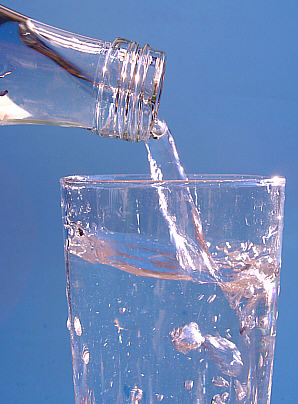
Photo: Wikipedia
This is ultra-pure, fluoride-free water specifically formulated for infant consumption, often used to mix baby formula or cereal. It is completely neutral in taste and odor, with a clean, crisp, and thin texture. Nutritionally, it provides pure hydration with zero calories, protein, fat, or carbohydrates.
💚 Why it's loved
Parents love it for its absolute purity and peace of mind, knowing it contains no additives or minerals that could affect a baby's developing system. Its neutrality makes it a reliable base for preparing infant food without altering the intended flavor profile.
⚠️ Watch-outs & how to enjoy it better
It is essentially just water, so it offers no nutritional value beyond hydration and can be an unnecessary expense compared to filtered tap water. For older children or adults, it provides no electrolytes or minerals, which might be a downside during prolonged activity or illness.
Key benefits
- Provides essential hydration for infants
- Completely free of added fluoride
- Zero calories, sugar, and sodium
- Safe for mixing formula and cereals
- Minimizes risk of dental fluorosis in young children
🌍 Where it's eaten
💡 Did you know?
Gerber's fluoride-free water is often sourced from municipal supplies but undergoes a specialized purification process to remove fluoride, a practice that began in the 1970s to address concerns about excessive fluoride intake in infants.
Full nutrition (USDA data · scales with serving)
| Water | 99.9 g |
| Energy | 0.00 kcal |
| Energy | 0.00 kj |
| Protein | 0.00 g |
| Total lipid (fat) | 0.00 g |
| Ash | 0.00 g |
| Carbohydrate, by difference | 0.00 g |
| Fiber, total dietary | 0.00 g |
| Total Sugars | 0.00 g |
| Calcium, Ca | 0.00 mg |
| Iron, Fe | 0.00 mg |
| Magnesium, Mg | 0.00 mg |
| Phosphorus, P | 0.00 mg |
| Potassium, K | 0.00 mg |
| Sodium, Na | 0.00 mg |
| Zinc, Zn | 0.00 mg |
| Copper, Cu | 0.00 mg |
| Manganese, Mn | 0.00 mg |
| Selenium, Se | 0.00 ug |
| Fluoride, F | 40.5 ug |
| Vitamin C, total ascorbic acid | 0.00 mg |
| Thiamin | 0.00 mg |
| Riboflavin | 0.00 mg |
| Niacin | 0.00 mg |
| Pantothenic acid | 0.00 mg |
| Vitamin B-6 | 0.00 mg |
| Folate, total | 0.00 ug |
| Folic acid | 0.00 ug |
| Folate, food | 0.00 ug |
| Folate, DFE | 0.00 ug |
| Choline, total | 0.00 mg |
| Vitamin B-12 | 0.00 ug |
| Vitamin B-12, added | 0.00 ug |
| Vitamin A, RAE | 0.00 ug |
| Retinol | 0.00 ug |
| Carotene, beta | 0.00 ug |
| Carotene, alpha | 0.00 ug |
| Cryptoxanthin, beta | 0.00 ug |
| Vitamin A, IU | 0.00 iu |
| Lycopene | 0.00 ug |
| Lutein + zeaxanthin | 0.00 ug |
| Vitamin E (alpha-tocopherol) | 0.00 mg |
| Vitamin E, added | 0.00 mg |
| Vitamin D (D2 + D3), International Units | 0.00 iu |
| Vitamin D (D2 + D3) | 0.00 ug |
| Vitamin K (phylloquinone) | 0.00 ug |
| Alcohol, ethyl | 0.00 g |
| Caffeine | 0.00 mg |
| Theobromine | 0.00 mg |
Fat & fatty acid profile (per 100g)
| Fatty acids, total saturated | 0.00 g |
| SFA 4:0 | 0.00 g |
| SFA 6:0 | 0.00 g |
| SFA 8:0 | 0.00 g |
| SFA 10:0 | 0.00 g |
| SFA 12:0 | 0.00 g |
| SFA 14:0 | 0.00 g |
| SFA 16:0 | 0.00 g |
| SFA 18:0 | 0.00 g |
| Fatty acids, total monounsaturated | 0.00 g |
| MUFA 16:1 | 0.00 g |
| MUFA 18:1 | 0.00 g |
| MUFA 20:1 | 0.00 g |
| MUFA 22:1 | 0.00 g |
| Fatty acids, total polyunsaturated | 0.00 g |
| PUFA 18:2 | 0.00 g |
| PUFA 18:3 | 0.00 g |
| PUFA 18:4 | 0.00 g |
| PUFA 20:4 | 0.00 g |
| PUFA 20:5 n-3 (EPA) | 0.00 g |
| PUFA 22:5 n-3 (DPA) | 0.00 g |
| PUFA 22:6 n-3 (DHA) | 0.00 g |
| Cholesterol | 0.00 mg |
Amino acid profile (per 100g)
Estimated from Babyfood, grape juice, no sugar, canned — USDA does not publish this profile for Babyfood.
| Threonine | 0.02 g |
| Isoleucine | 0.01 g |
| Leucine | 0.02 g |
| Lysine | 0.02 g |
| Methionine | 0.03 g |
| Cystine | 0.01 g |
| Phenylalanine | 0.02 g |
| Tyrosine | 0.02 g |
| Valine | 0.02 g |
| Arginine | 0.06 g |
| Histidine | 0.03 g |
| Alanine | 0.04 g |
| Aspartic acid | 0.10 g |
| Glutamic acid | 0.18 g |
| Glycine | 0.03 g |
| Proline | 0.03 g |
| Serine | 0.04 g |
FAQ
Why is fluoride-free water recommended for babies?
Fluoride-free water is recommended for infants under 6 months to prevent dental fluorosis, a condition that can cause white spots or streaks on developing teeth. It also ensures the baby's system isn't exposed to excess fluoride before they start using fluoride toothpaste.
Can I use regular tap water for baby formula?
If your tap water is fluoridated, it's generally safe for older infants and toddlers, but for newborns and young babies, fluoride-free water is often advised to avoid excessive fluoride intake. Always check with your pediatrician for local water quality guidelines.
Is this water different from regular bottled water?
Yes, it is specifically processed to remove fluoride and other minerals, ensuring it meets infant safety standards. Regular bottled water may contain added minerals or fluoride, which isn't ideal for very young babies.
How should I store opened bottles of baby water?
Once opened, baby water should be used within 24 hours if stored in a clean, sealed container in the refrigerator. It's best to discard any unused water after this period to maintain freshness and safety.
Dietary load (calculated from USDA values)
Potential renal acid load. Positive = acid-forming, negative = alkaline-forming.
Sodium:potassium per WHO potassium guidance. Computed from USDA nutrients.