

Babyfood, fruit, apple and blueberry, strained
Whole food · Baby Foods

Photo: Wikipedia
A smooth, velvety puree of ripe apples and blueberries, strained to a perfectly uniform consistency for tiny palates. It offers a naturally sweet, mildly tart flavor profile with a bright, fruity aroma. Nutritionally, it's a simple, energy-dense source of quick-release carbohydrates and natural sugars, with minimal protein or fat.
Calorie split: 1% protein · 96% carbs · 3% fat
↓ Full nutrition💚 Why it's loved
Parents love it for its convenience and the way its gentle, familiar flavors help babies accept new tastes. The smooth texture is ideal for the transition from milk to solids, and the natural sweetness is often a guaranteed hit with little ones.
⚠️ Watch-outs & how to enjoy it better
The high natural sugar content (13.93g per 100g) can contribute to blood sugar spikes if offered frequently without pairing. To counteract this, serve it alongside a source of protein or healthy fat, like a smear of full-fat yogurt or a sprinkle of infant cereal, to slow sugar absorption. Also, introduce it as part of a varied diet, not as a sole fruit source.
Key benefits
- Provides quick energy from natural fruit sugars
- Contains dietary fiber for digestive health
- Offers vitamin C from both fruits
- Introduces simple, single-ingredient flavors to infants
- Convenient, ready-to-eat texture for early feeding
🍽️ Popular dishes
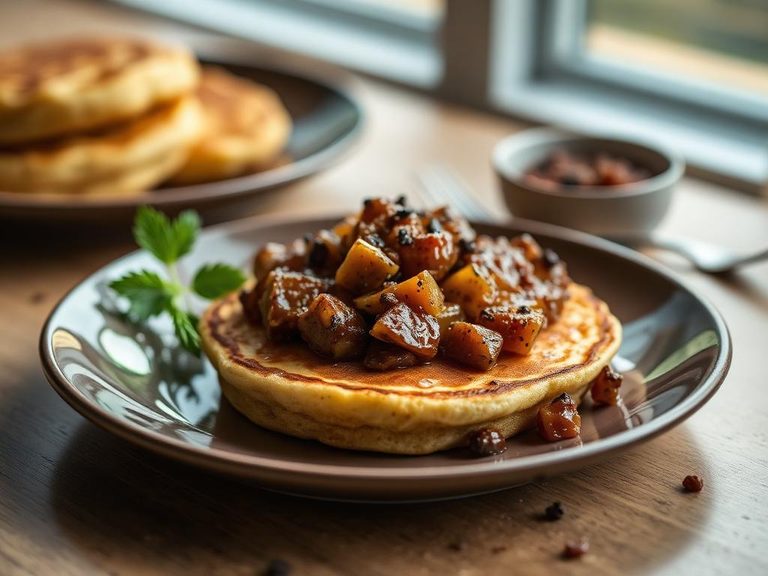
🌍 Where it's eaten
💡 Did you know?
Straining fruit for baby food is a centuries-old technique, but commercial strained baby food in jars was only popularized in the mid-20th century, revolutionizing infant feeding for working parents.
Full nutrition (USDA data · scales with serving)
| Water | 83.1 g |
| Energy | 61.0 kcal |
| Energy | 255 kj |
| Protein | 0.20 g |
| Total lipid (fat) | 0.20 g |
| Ash | 0.20 g |
| Carbohydrate, by difference | 16.3 g |
| Fiber, total dietary | 1.8 g |
| Total Sugars | 13.9 g |
| Calcium, Ca | 4.0 mg |
| Iron, Fe | 0.20 mg |
| Magnesium, Mg | 3.0 mg |
| Phosphorus, P | 8.0 mg |
| Potassium, K | 69.0 mg |
| Sodium, Na | 1.0 mg |
| Zinc, Zn | 0.03 mg |
| Copper, Cu | 0.06 mg |
| Selenium, Se | 0.40 ug |
| Vitamin C, total ascorbic acid | 27.8 mg |
| Thiamin | 0.02 mg |
| Riboflavin | 0.03 mg |
| Niacin | 0.12 mg |
| Pantothenic acid | 0.16 mg |
| Vitamin B-6 | 0.04 mg |
| Folate, total | 4.0 ug |
| Folic acid | 0.00 ug |
| Folate, food | 4.0 ug |
| Folate, DFE | 4.0 ug |
| Choline, total | 3.2 mg |
| Vitamin B-12 | 0.00 ug |
| Vitamin B-12, added | 0.00 ug |
| Vitamin A, RAE | 1.0 ug |
| Retinol | 0.00 ug |
| Carotene, beta | 10.0 ug |
| Carotene, alpha | 0.00 ug |
| Cryptoxanthin, beta | 5.0 ug |
| Vitamin A, IU | 20.0 iu |
| Lycopene | 0.00 ug |
| Lutein + zeaxanthin | 24.0 ug |
| Vitamin E (alpha-tocopherol) | 0.12 mg |
| Vitamin E, added | 0.00 mg |
| Vitamin D (D2 + D3), International Units | 0.00 iu |
| Vitamin D (D2 + D3) | 0.00 ug |
| Vitamin K (phylloquinone) | 3.5 ug |
| Alcohol, ethyl | 0.00 g |
| Caffeine | 0.00 mg |
| Theobromine | 0.00 mg |
Fat & fatty acid profile (per 100g)
| Fatty acids, total saturated | 0.02 g |
| SFA 4:0 | 0.00 g |
| SFA 6:0 | 0.00 g |
| SFA 8:0 | 0.00 g |
| SFA 10:0 | 0.00 g |
| SFA 12:0 | 0.00 g |
| SFA 14:0 | 0.00 g |
| SFA 16:0 | 0.02 g |
| SFA 18:0 | 0.00 g |
| Fatty acids, total monounsaturated | 0.02 g |
| MUFA 16:1 | 0.00 g |
| MUFA 18:1 | 0.02 g |
| MUFA 20:1 | 0.00 g |
| MUFA 22:1 | 0.00 g |
| Fatty acids, total polyunsaturated | 0.07 g |
| PUFA 18:2 | 0.05 g |
| PUFA 18:3 | 0.02 g |
| PUFA 18:4 | 0.00 g |
| PUFA 20:4 | 0.00 g |
| PUFA 20:5 n-3 (EPA) | 0.00 g |
| PUFA 22:5 n-3 (DPA) | 0.00 g |
| PUFA 22:6 n-3 (DHA) | 0.00 g |
| Cholesterol | 0.00 mg |
Amino acid profile (per 100g)
Estimated from Babyfood, grape juice, no sugar, canned — USDA does not publish this profile for Babyfood.
| Threonine | 0.02 g |
| Isoleucine | 0.01 g |
| Leucine | 0.02 g |
| Lysine | 0.02 g |
| Methionine | 0.03 g |
| Cystine | 0.01 g |
| Phenylalanine | 0.02 g |
| Tyrosine | 0.02 g |
| Valine | 0.02 g |
| Arginine | 0.06 g |
| Histidine | 0.03 g |
| Alanine | 0.04 g |
| Aspartic acid | 0.10 g |
| Glutamic acid | 0.18 g |
| Glycine | 0.03 g |
| Proline | 0.03 g |
| Serine | 0.04 g |
FAQ
Is this a good first food for a baby?
Yes, single-fruit purees like apple and blueberry are common first foods due to their mild flavor and smooth texture. However, always introduce one new food at a time and wait a few days to watch for any allergic reactions.
Why is it so high in sugar?
The sugar is naturally occurring from the ripe fruits. Unlike added sugars, it comes packaged with fiber, vitamins, and water. The high percentage is because the water content of fresh fruit is reduced when it's cooked and strained into a puree.
Can I mix it with other foods?
Absolutely. It's very versatile. Common mixes include plain yogurt, infant cereal, or other vegetable purees like sweet potato or carrot to create a more balanced flavor and nutrient profile.
Nutrient density (calculated · NRF9.3)
Nutrient Rich Foods index: beneficial nutrients (protein, fiber, vitamins, minerals) minus saturated fat, added sugar & sodium, per 100 kcal.
NRF9.3 index — Fulgoni, Keast & Drewnowski, 2009. Computed from USDA nutrients.
Weight-loss friendliness (composite index)
Energy density 0.61 kcal/g · 1% calories from protein · 1.8 g fiber · 13.9 g sugar per 100 g.
Composite of energy density (Rolls et al., 1999), protein & fiber satiety, minus sugar. A calculated heuristic — ranks satiety-per-calorie, not a clinical measure.
Dietary load (calculated from USDA values)
Potential renal acid load. Positive = acid-forming, negative = alkaline-forming.
Sodium-to-potassium ratio: 0.01 (lower is better — aim for ≤ 1)
Sodium:potassium per WHO potassium guidance. Computed from USDA nutrients.