

Babyfood, dessert, banana pudding, strained
Whole food · Baby Foods

Photo: Wikipedia
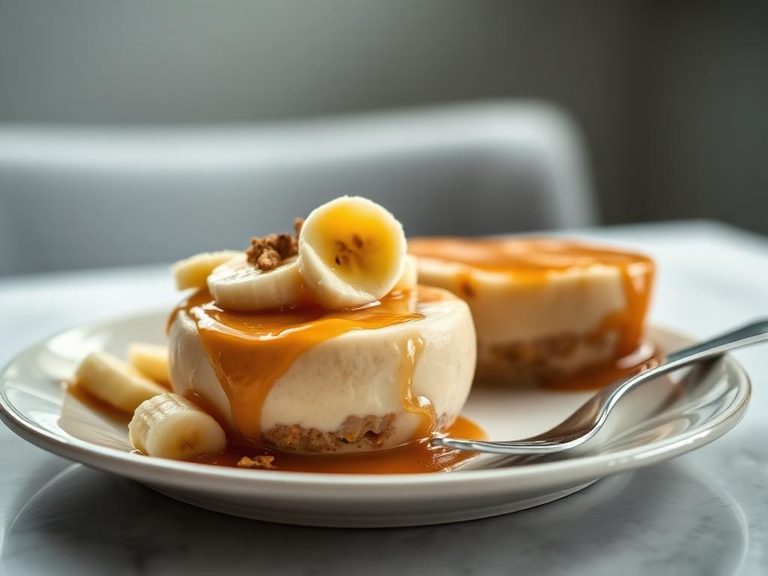
This is a smooth, velvety strained baby food dessert that captures the sweet, mellow essence of ripe bananas in a pudding-like consistency. It's a gentle, comforting first food for infants, offering a naturally sweet flavor without added sugars. The texture is perfectly uniform and easy to swallow, making it ideal for babies transitioning to solids.
Calorie split: 6% protein · 83% carbs · 11% fat
↓ Full nutrition💚 Why it's loved
Parents love it for its simplicity and the fact that it introduces a classic, comforting flavor—banana—to a baby's palate. It's a reliable, fuss-free option that can be served on its own or mixed with other purees for variety.
⚠️ Watch-outs & how to enjoy it better
The high natural sugar content (over 10g per 100g) can cause rapid blood-sugar spikes, which is a concern for babies with specific metabolic conditions. To mitigate this, always serve it alongside a small amount of protein or fat, like a spoonful of full-fat yogurt or a bit of avocado, to slow sugar absorption. Portion control is also key; stick to the recommended serving size for the baby's age.
Key benefits
- Naturally sweet from ripe bananas, no added sugars
- Smooth, strained texture ideal for early weaning
- Provides quick energy from natural fruit carbohydrates
- Contains small amounts of dietary fiber for digestive health
- Easy to digest and gentle on a baby's developing stomach
🍽️ Popular dishes
🌍 Where it's eaten
💡 Did you know?
Bananas are technically berries, while strawberries are not. This means this baby food is technically a berry pudding.
Full nutrition (USDA data · scales with serving)
| Water | 83.5 g |
| Energy | 68.0 kcal |
| Energy | 284 kj |
| Protein | 1.0 g |
| Total lipid (fat) | 0.80 g |
| Ash | 0.56 g |
| Carbohydrate, by difference | 14.1 g |
| Fiber, total dietary | 0.80 g |
| Total Sugars | 10.6 g |
| Calcium, Ca | 11.0 mg |
| Iron, Fe | 0.30 mg |
| Magnesium, Mg | 5.0 mg |
| Phosphorus, P | 34.0 mg |
| Potassium, K | 90.0 mg |
| Sodium, Na | 54.0 mg |
| Zinc, Zn | 0.12 mg |
| Copper, Cu | 0.04 mg |
| Selenium, Se | 1.1 ug |
| Vitamin C, total ascorbic acid | 12.0 mg |
| Thiamin | 0.01 mg |
| Riboflavin | 0.06 mg |
| Niacin | 0.16 mg |
| Vitamin B-6 | 0.13 mg |
| Folate, total | 6.0 ug |
| Folic acid | 0.00 ug |
| Folate, food | 6.0 ug |
| Folate, DFE | 6.0 ug |
| Choline, total | 10.7 mg |
| Vitamin B-12 | 0.01 ug |
| Vitamin B-12, added | 0.00 ug |
| Vitamin A, RAE | 1.0 ug |
| Retinol | 0.00 ug |
| Carotene, beta | 8.0 ug |
| Carotene, alpha | 7.0 ug |
| Cryptoxanthin, beta | 0.00 ug |
| Vitamin A, IU | 19.0 iu |
| Lycopene | 0.00 ug |
| Lutein + zeaxanthin | 19.0 ug |
| Vitamin E (alpha-tocopherol) | 0.07 mg |
| Vitamin E, added | 0.00 mg |
| Vitamin D (D2 + D3), International Units | 5.0 iu |
| Vitamin D (D2 + D3) | 0.10 ug |
| Vitamin D3 (cholecalciferol) | 0.10 ug |
| Vitamin K (phylloquinone) | 0.20 ug |
| Alcohol, ethyl | 0.00 g |
| Caffeine | 0.00 mg |
| Theobromine | 0.00 mg |
Fat & fatty acid profile (per 100g)
| Fatty acids, total saturated | 0.26 g |
| SFA 4:0 | 0.00 g |
| SFA 6:0 | 0.00 g |
| SFA 8:0 | 0.00 g |
| SFA 10:0 | 0.00 g |
| SFA 12:0 | 0.00 g |
| SFA 14:0 | 0.01 g |
| SFA 16:0 | 0.18 g |
| SFA 18:0 | 0.06 g |
| Fatty acids, total monounsaturated | 0.28 g |
| MUFA 16:1 | 0.02 g |
| MUFA 18:1 | 0.25 g |
| MUFA 20:1 | 0.00 g |
| MUFA 22:1 | 0.00 g |
| Fatty acids, total polyunsaturated | 0.11 g |
| PUFA 18:2 | 0.09 g |
| PUFA 18:3 | 0.01 g |
| PUFA 18:4 | 0.00 g |
| PUFA 20:4 | 0.01 g |
| PUFA 20:5 n-3 (EPA) | 0.00 g |
| PUFA 22:5 n-3 (DPA) | 0.00 g |
| PUFA 22:6 n-3 (DHA) | 0.00 g |
| Cholesterol | 29.0 mg |
Amino acid profile (per 100g)
Estimated from Babyfood, grape juice, no sugar, canned — USDA does not publish this profile for Babyfood.
| Threonine | 0.02 g |
| Isoleucine | 0.01 g |
| Leucine | 0.02 g |
| Lysine | 0.02 g |
| Methionine | 0.03 g |
| Cystine | 0.01 g |
| Phenylalanine | 0.02 g |
| Tyrosine | 0.02 g |
| Valine | 0.02 g |
| Arginine | 0.06 g |
| Histidine | 0.03 g |
| Alanine | 0.04 g |
| Aspartic acid | 0.10 g |
| Glutamic acid | 0.18 g |
| Glycine | 0.03 g |
| Proline | 0.03 g |
| Serine | 0.04 g |
FAQ
Is this baby food suitable for a 6-month-old?
Yes, strained banana pudding is a common first food for babies around 6 months, as it's smooth and easy to swallow. Always consult your pediatrician before introducing new foods.
Can I mix this with other baby foods?
Absolutely. It blends well with other fruit purees like pear or apple, or with vegetable purees like sweet potato for a balanced flavor.
Does this contain added sugar?
The sugar listed is naturally occurring from the bananas themselves. Most commercial versions have no added sugars, but always check the ingredient list to be sure.
How should I store opened baby food?
Once opened, transfer any unused portion to a clean, airtight container and refrigerate. Use within 48 hours for best quality and safety.
Nutrient density (calculated · NRF9.3)
Nutrient Rich Foods index: beneficial nutrients (protein, fiber, vitamins, minerals) minus saturated fat, added sugar & sodium, per 100 kcal.
NRF9.3 index — Fulgoni, Keast & Drewnowski, 2009. Computed from USDA nutrients.
Weight-loss friendliness (composite index)
Energy density 0.68 kcal/g · 6% calories from protein · 0.8 g fiber · 10.6 g sugar per 100 g.
Composite of energy density (Rolls et al., 1999), protein & fiber satiety, minus sugar. A calculated heuristic — ranks satiety-per-calorie, not a clinical measure.
Dietary load (calculated from USDA values)
Potential renal acid load. Positive = acid-forming, negative = alkaline-forming.
Sodium-to-potassium ratio: 0.60 (lower is better — aim for ≤ 1)
Sodium:potassium per WHO potassium guidance. Computed from USDA nutrients.