

Baby Toddler cereal, multigrain with fruit, ready-to-eat
Common food

Photo: Wikipedia
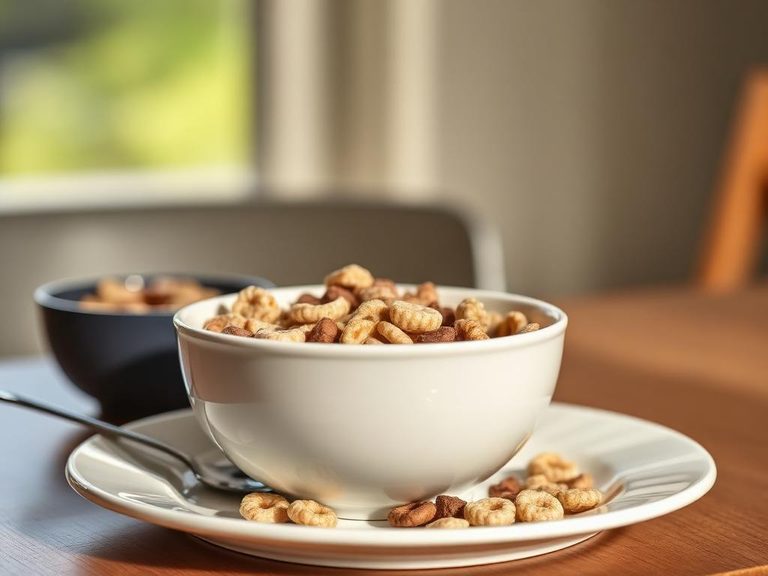
A smooth, spoonable blend of finely milled oats, rice, and wheat, studded with soft, sweet bits of fruit like apple and banana. It has a comforting, mildly sweet, porridge-like texture that's easy for tiny mouths to manage. Despite its light feel, it's a nutritional powerhouse, fortified with iron to support growing minds.
Calorie split: 7% protein · 87% carbs · 7% fat
↓ Full nutrition💚 Why it's loved
Parents adore it for its foolproof consistency and the fact that babies often take to its naturally mild, fruity sweetness. It's a cultural staple in many households, seen as a reliable first food that provides essential nutrients without a fuss.
⚠️ Watch-outs & how to enjoy it better
The high carbohydrate content, including added sugars, can cause rapid blood-sugar spikes if not balanced. It's also a common vehicle for potential allergens like wheat and may contain trace amounts of other grains. To counteract this, always mix it with a source of protein or fat like breastmilk, formula, or a dollop of plain whole-milk yogurt, and serve it as part of a varied diet with other foods.
Key benefits
- Fortified with iron to help prevent deficiency in infants.
- Provides quick, gentle energy from complex carbohydrates.
- Contains added B-vitamins like thiamin and riboflavin.
- Smooth texture aids the transition to solid foods.
- Often includes prebiotic fiber from grains.
🍽️ Popular dishes
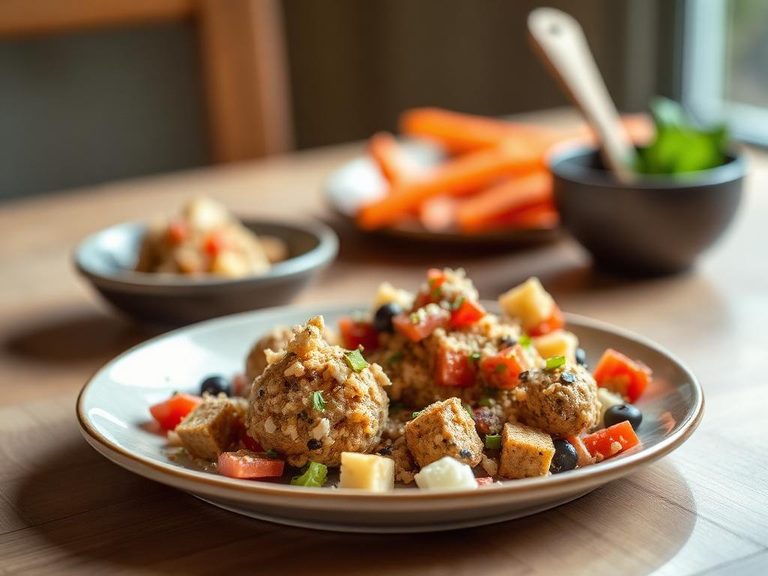
🌍 Where it's eaten
💡 Did you know?
The process of 'extrusion' used to create this cereal's fine, consistent texture was adapted from industrial manufacturing and revolutionized the baby food market in the mid-20th century.
Full nutrition (USDA data · scales with serving)
| Water | 78.2 g |
| Energy | 88.0 kcal |
| Protein | 1.5 g |
| Total lipid (fat) | 0.68 g |
| Carbohydrate, by difference | 19.2 g |
| Fiber, total dietary | 1.2 g |
| Total Sugars | 8.2 g |
| Calcium, Ca | 26.0 mg |
| Iron, Fe | 1.1 mg |
| Magnesium, Mg | 16.0 mg |
| Phosphorus, P | 41.0 mg |
| Potassium, K | 91.0 mg |
| Sodium, Na | 2.0 mg |
| Zinc, Zn | 0.57 mg |
| Copper, Cu | 0.05 mg |
| Selenium, Se | 2.9 ug |
| Vitamin C, total ascorbic acid | 9.6 mg |
| Thiamin | 0.07 mg |
| Riboflavin | 0.06 mg |
| Niacin | 0.67 mg |
| Vitamin B-6 | 0.08 mg |
| Folate, total | 10.0 ug |
| Folic acid | 4.0 ug |
| Folate, food | 7.0 ug |
| Folate, DFE | 13.0 ug |
| Choline, total | 4.4 mg |
| Vitamin B-12 | 0.02 ug |
| Vitamin B-12, added | 0.02 ug |
| Vitamin A, RAE | 1.0 ug |
| Retinol | 0.00 ug |
| Carotene, beta | 12.0 ug |
| Carotene, alpha | 0.00 ug |
| Cryptoxanthin, beta | 3.0 ug |
| Lycopene | 0.00 ug |
| Lutein + zeaxanthin | 21.0 ug |
| Vitamin E (alpha-tocopherol) | 0.28 mg |
| Vitamin E, added | 0.14 mg |
| Vitamin D (D2 + D3) | 0.00 ug |
| Vitamin K (phylloquinone) | 0.70 ug |
| Alcohol, ethyl | 0.00 g |
| Caffeine | 0.00 mg |
| Theobromine | 0.00 mg |
Fat & fatty acid profile (per 100g)
| Fatty acids, total saturated | 0.12 g |
| SFA 4:0 | 0.00 g |
| SFA 6:0 | 0.00 g |
| SFA 8:0 | 0.00 g |
| SFA 10:0 | 0.00 g |
| SFA 12:0 | 0.00 g |
| SFA 14:0 | 0.00 g |
| SFA 16:0 | 0.10 g |
| SFA 18:0 | 0.01 g |
| Fatty acids, total monounsaturated | 0.17 g |
| MUFA 16:1 | 0.00 g |
| MUFA 18:1 | 0.17 g |
| MUFA 20:1 | 0.00 g |
| MUFA 22:1 | 0.00 g |
| Fatty acids, total polyunsaturated | 0.23 g |
| PUFA 18:2 | 0.21 g |
| PUFA 18:3 | 0.02 g |
| PUFA 18:4 | 0.00 g |
| PUFA 20:4 | 0.00 g |
| PUFA 20:5 n-3 (EPA) | 0.00 g |
| PUFA 22:5 n-3 (DPA) | 0.00 g |
| PUFA 22:6 n-3 (DHA) | 0.00 g |
| Cholesterol | 0.00 mg |
Amino acid profile (per 100g)
Estimated from Babyfood, dinner, chicken stew, toddler — USDA does not publish this profile for Baby Toddler cereal.
| Tryptophan | 0.06 g |
| Threonine | 0.22 g |
| Isoleucine | 0.26 g |
| Leucine | 0.41 g |
| Lysine | 0.41 g |
| Methionine | 0.11 g |
| Cystine | 0.05 g |
| Phenylalanine | 0.21 g |
| Tyrosine | 0.17 g |
| Valine | 0.29 g |
| Arginine | 0.33 g |
| Histidine | 0.13 g |
| Alanine | 0.30 g |
| Aspartic acid | 0.47 g |
| Glutamic acid | 0.90 g |
| Glycine | 0.29 g |
| Proline | 0.35 g |
| Serine | 0.21 g |
FAQ
Is this cereal a complete meal for my baby?
No, it's typically a complementary food. For a balanced meal, mix it with breastmilk, formula, or a protein source like yogurt or puréed meat, and offer other foods like fruits or vegetables alongside it.
Why is the sugar content listed as 8.18g?
This includes both naturally occurring sugars from the fruit pieces and added sugars from ingredients like fruit juice concentrate. Always check the ingredients list for specifics.
Can I serve it to my toddler straight from the container?
While it's ready-to-eat, it's often served chilled or at room temperature. For variety, you can stir in a spoonful of nut butter (for older toddlers) or fresh mashed fruit to boost nutrition and flavor.
Nutrient density (calculated · NRF9.3)
Nutrient Rich Foods index: beneficial nutrients (protein, fiber, vitamins, minerals) minus saturated fat, added sugar & sodium, per 100 kcal.
NRF9.3 index — Fulgoni, Keast & Drewnowski, 2009. Computed from USDA nutrients.
Weight-loss friendliness (composite index)
Energy density 0.88 kcal/g · 7% calories from protein · 1.2 g fiber · 8.2 g sugar per 100 g.
Composite of energy density (Rolls et al., 1999), protein & fiber satiety, minus sugar. A calculated heuristic — ranks satiety-per-calorie, not a clinical measure.
Dietary load (calculated from USDA values)
Potential renal acid load. Positive = acid-forming, negative = alkaline-forming.
Sodium-to-potassium ratio: 0.02 (lower is better — aim for ≤ 1)
Sodium:potassium per WHO potassium guidance. Computed from USDA nutrients.