

Asparagus, frozen, cooked, no added fat
Common food
Frozen asparagus, once cooked, delivers a tender-crisp texture and a subtly sweet, earthy flavor that captures the essence of spring, even out of season. At just 18 calories per 100g, it's a nutrient-dense powerhouse, offering a solid protein boost (2.94g) and essential fiber (1.6g) with minimal fat. Its convenience and consistent quality make it a reliable staple for quick, healthy meals.
Calorie split: 51% protein · 33% carbs · 16% fat
↓ Full nutrition💚 Why it's loved
People love it for its sweet, grassy flavor and satisfying snap, which adds a fresh, vibrant element to any plate. Its versatility allows it to shine in everything from simple sautés to elegant gratins, making it a beloved vegetable across many cuisines.
⚠️ Watch-outs & how to enjoy it better
Some may find the flavor too sulfurous or the texture mushy if overcooked. For those sensitive to purines or prone to kidney stones, high oxalate content can be a concern. To counteract, pair it with a protein like eggs or chicken to balance the meal, and avoid over-boiling by steaming or blanching it briefly to preserve texture and nutrients.
Key benefits
- Low-calorie, high-nutrient density
- Good source of plant-based protein
- Rich in dietary fiber for digestive health
- Provides essential vitamins like K, A, and C
- Convenient year-round availability
🍽️ Popular dishes
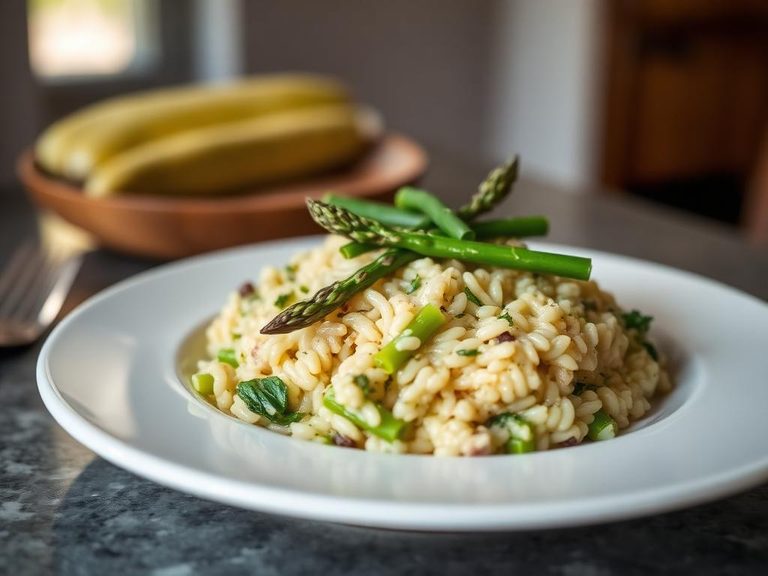

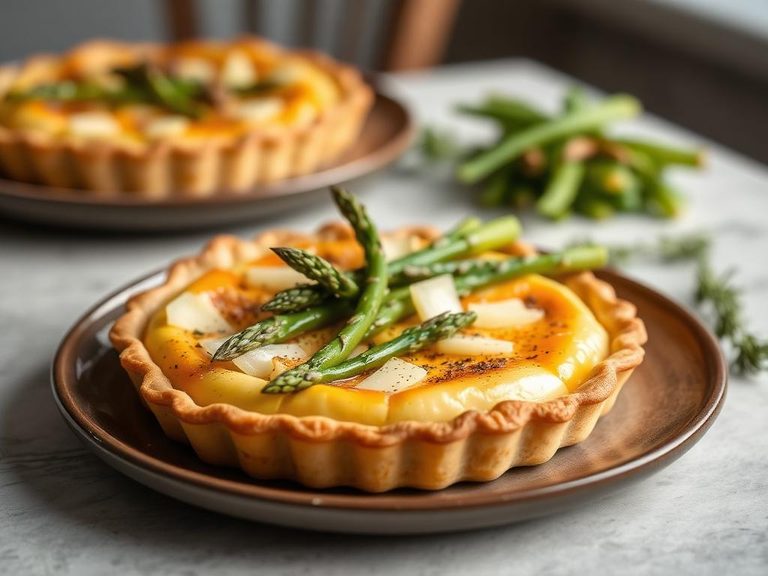
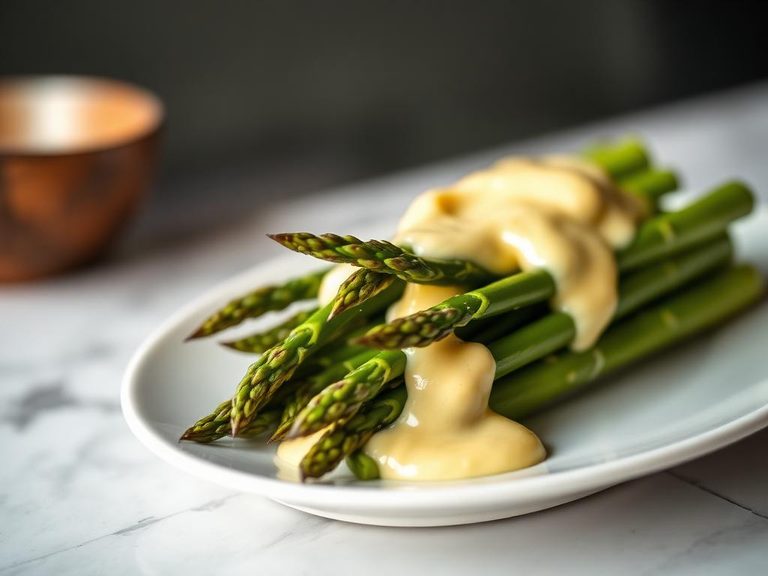
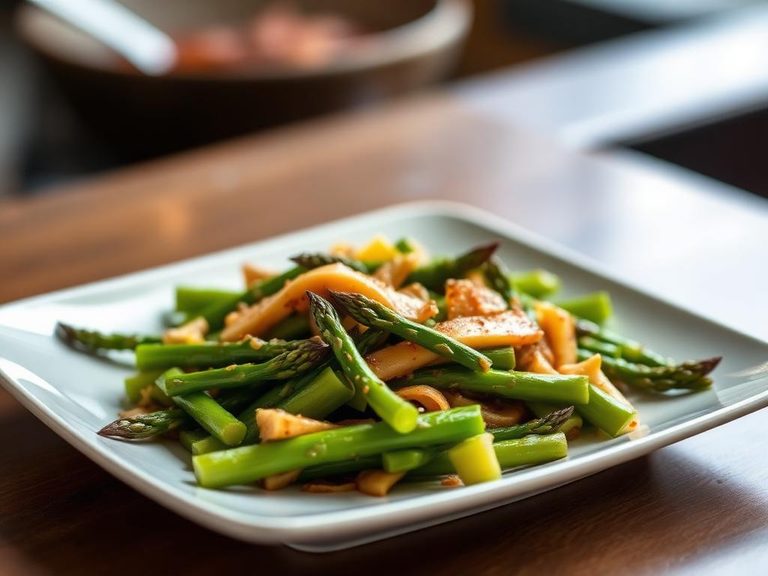

🌍 Where it's eaten
💡 Did you know?
The ancient Romans considered asparagus a delicacy and even had a special word, 'sparagus,' for the plant, which is the root of the modern name.
Full nutrition (USDA data · scales with serving)
| Water | 93.8 g |
| Energy | 18.0 kcal |
| Protein | 2.9 g |
| Total lipid (fat) | 0.42 g |
| Carbohydrate, by difference | 1.9 g |
| Fiber, total dietary | 1.6 g |
| Total Sugars | 0.32 g |
| Calcium, Ca | 18.0 mg |
| Iron, Fe | 0.56 mg |
| Magnesium, Mg | 10.0 mg |
| Phosphorus, P | 49.0 mg |
| Potassium, K | 171 mg |
| Sodium, Na | 119 mg |
| Zinc, Zn | 0.41 mg |
| Copper, Cu | 0.10 mg |
| Selenium, Se | 3.9 ug |
| Vitamin C, total ascorbic acid | 24.3 mg |
| Thiamin | 0.07 mg |
| Riboflavin | 0.10 mg |
| Niacin | 1.0 mg |
| Vitamin B-6 | 0.02 mg |
| Folate, total | 135 ug |
| Folic acid | 0.00 ug |
| Folate, food | 135 ug |
| Folate, DFE | 135 ug |
| Choline, total | 20.8 mg |
| Vitamin B-12 | 0.00 ug |
| Vitamin B-12, added | 0.00 ug |
| Vitamin A, RAE | 40.0 ug |
| Retinol | 0.00 ug |
| Carotene, beta | 482 ug |
| Carotene, alpha | 0.00 ug |
| Cryptoxanthin, beta | 0.00 ug |
| Lycopene | 24.0 ug |
| Lutein + zeaxanthin | 616 ug |
| Vitamin E (alpha-tocopherol) | 1.2 mg |
| Vitamin E, added | 0.00 mg |
| Vitamin D (D2 + D3) | 0.00 ug |
| Vitamin K (phylloquinone) | 79.8 ug |
| Alcohol, ethyl | 0.00 g |
| Caffeine | 0.00 mg |
| Theobromine | 0.00 mg |
Fat & fatty acid profile (per 100g)
| Fatty acids, total saturated | 0.10 g |
| SFA 4:0 | 0.00 g |
| SFA 6:0 | 0.00 g |
| SFA 8:0 | 0.00 g |
| SFA 10:0 | 0.00 g |
| SFA 12:0 | 0.00 g |
| SFA 14:0 | 0.00 g |
| SFA 16:0 | 0.09 g |
| SFA 18:0 | 0.01 g |
| Fatty acids, total monounsaturated | 0.01 g |
| MUFA 16:1 | 0.00 g |
| MUFA 18:1 | 0.01 g |
| MUFA 20:1 | 0.00 g |
| MUFA 22:1 | 0.00 g |
| Fatty acids, total polyunsaturated | 0.18 g |
| PUFA 18:2 | 0.17 g |
| PUFA 18:3 | 0.01 g |
| PUFA 18:4 | 0.00 g |
| PUFA 20:4 | 0.00 g |
| PUFA 20:5 n-3 (EPA) | 0.00 g |
| PUFA 22:5 n-3 (DPA) | 0.00 g |
| PUFA 22:6 n-3 (DHA) | 0.00 g |
| Cholesterol | 0.00 mg |
Amino acid profile (per 100g)
Estimated from Asparagus, cooked, boiled, drained — USDA does not publish this profile for Asparagus.
| Tryptophan | 0.03 g |
| Threonine | 0.09 g |
| Isoleucine | 0.08 g |
| Leucine | 0.14 g |
| Lysine | 0.11 g |
| Methionine | 0.03 g |
| Cystine | 0.03 g |
| Phenylalanine | 0.08 g |
| Tyrosine | 0.06 g |
| Valine | 0.13 g |
| Arginine | 0.10 g |
| Histidine | 0.05 g |
| Alanine | 0.13 g |
| Aspartic acid | 0.56 g |
| Glutamic acid | 0.26 g |
| Glycine | 0.10 g |
| Proline | 0.08 g |
| Serine | 0.12 g |
FAQ
Is frozen asparagus as nutritious as fresh?
Yes, frozen asparagus is often flash-frozen at peak ripeness, which can preserve its nutrients better than fresh asparagus that has been transported and stored for days.
How do I prevent frozen asparagus from becoming mushy?
Avoid overcooking. Thaw it first, then quickly sauté, steam, or roast it. If boiling, add it to the water only for the last 2-3 minutes.
Can I eat frozen asparagus without cooking it?
It is best cooked to ensure safety and improve digestibility. Thawing and adding it to a salad or smoothie is possible, but cooking is recommended for optimal texture and flavor.
Nutrient density (calculated · NRF9.3)
Nutrient Rich Foods index: beneficial nutrients (protein, fiber, vitamins, minerals) minus saturated fat, added sugar & sodium, per 100 kcal.
NRF9.3 index — Fulgoni, Keast & Drewnowski, 2009. Computed from USDA nutrients.
Weight-loss friendliness (composite index)
Energy density 0.18 kcal/g · 65% calories from protein · 1.6 g fiber · 0.3 g sugar per 100 g.
Composite of energy density (Rolls et al., 1999), protein & fiber satiety, minus sugar. A calculated heuristic — ranks satiety-per-calorie, not a clinical measure.
Dietary load (calculated from USDA values)
Potential renal acid load. Positive = acid-forming, negative = alkaline-forming.
Sodium-to-potassium ratio: 0.70 (lower is better — aim for ≤ 1)
Sodium:potassium per WHO potassium guidance. Computed from USDA nutrients.