

Asparagus, canned, cooked with butter or margarine
Common food
Canned asparagus, gently cooked with butter or margarine, offers a tender, slightly fibrous texture and a mild, savory flavor with a hint of richness from the added fat. It's a convenient, low-calorie vegetable option that provides a modest protein boost and a good source of dietary fiber. The preparation method enhances its natural taste while keeping it ready-to-eat.
Calorie split: 19% protein · 22% carbs · 59% fat
↓ Full nutrition💚 Why it's loved
People appreciate its convenience and the comforting, savory flavor imparted by the butter or margarine, making it a quick side dish. Its mild taste and soft texture make it a versatile ingredient that blends easily into a variety of meals.
⚠️ Watch-outs & how to enjoy it better
Canned vegetables can be higher in sodium than fresh or frozen varieties, which may concern those monitoring salt intake. The added butter or margarine increases the saturated fat content. To counteract this, rinse the asparagus under water to reduce sodium, and consider using it in dishes where other flavors can shine, or opt for versions packed in water if available.
Key benefits
- Good source of dietary fiber (1.6g per 100g)
- Provides plant-based protein (2.09g per 100g)
- Very low in calories (38 kcal per 100g)
- Contains added fat for satiety and flavor
- Convenient and shelf-stable
🍽️ Popular dishes
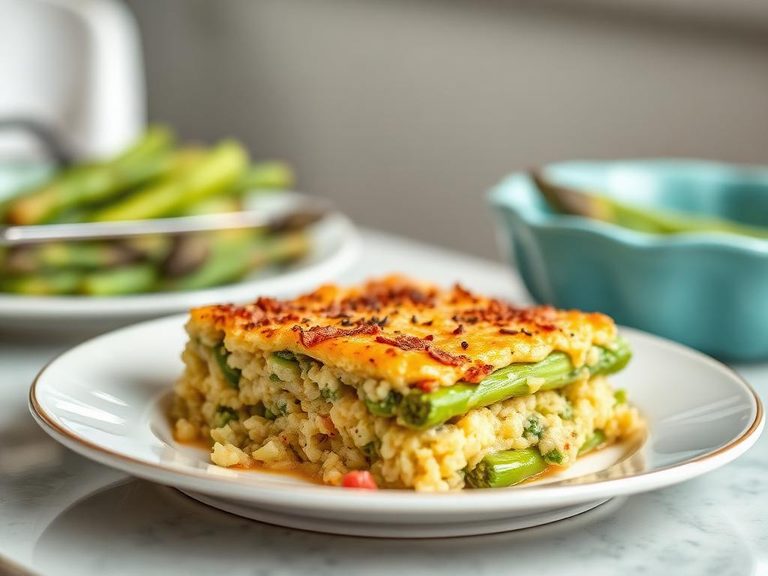
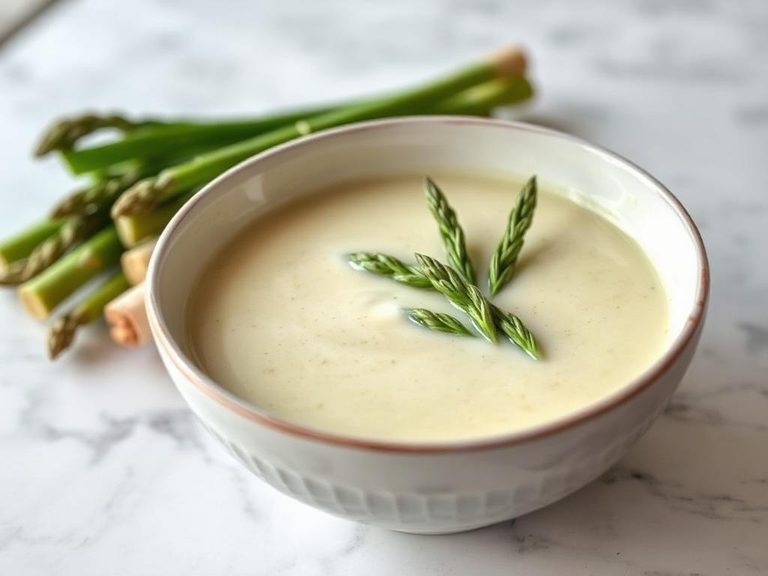

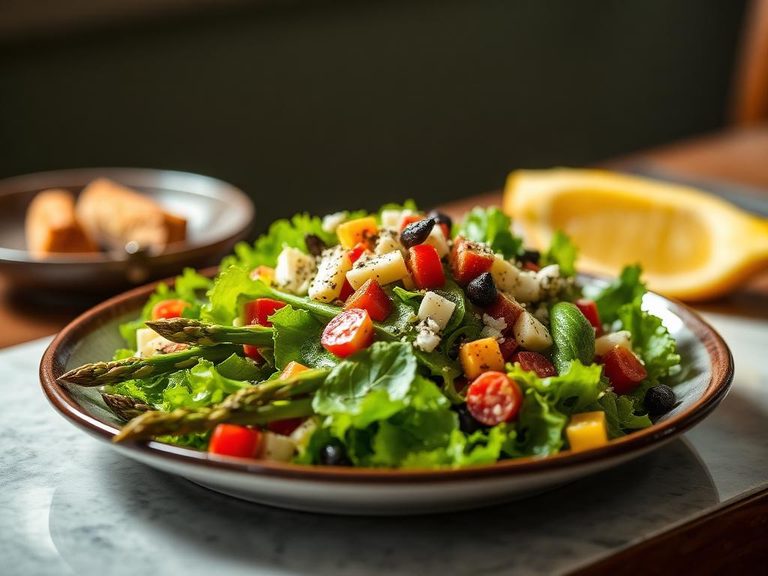
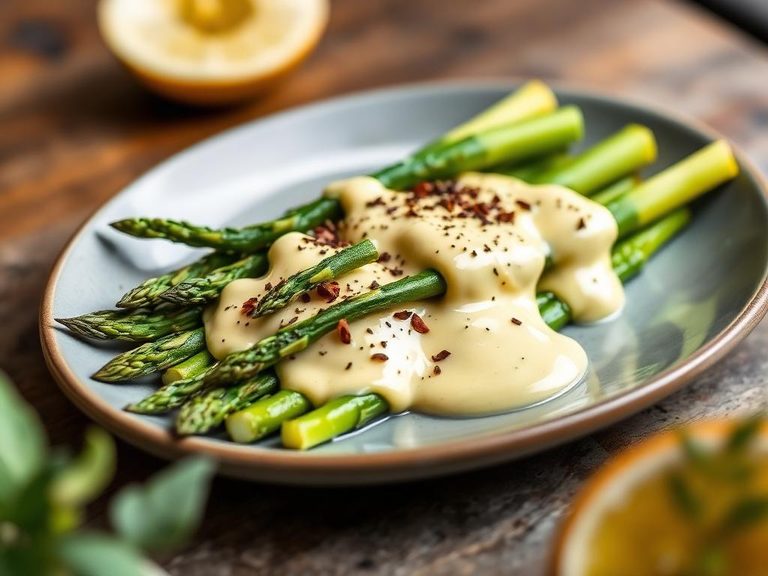
🌍 Where it's eaten
💡 Did you know?
Canned asparagus was a popular luxury item in the United States during the early 20th century, often served at formal dinners and advertised as a sophisticated delicacy.
Full nutrition (USDA data · scales with serving)
| Water | 91.9 g |
| Energy | 38.0 kcal |
| Protein | 2.1 g |
| Total lipid (fat) | 2.8 g |
| Carbohydrate, by difference | 2.4 g |
| Fiber, total dietary | 1.6 g |
| Total Sugars | 1.0 g |
| Calcium, Ca | 16.0 mg |
| Iron, Fe | 1.8 mg |
| Magnesium, Mg | 10.0 mg |
| Phosphorus, P | 42.0 mg |
| Potassium, K | 168 mg |
| Sodium, Na | 296 mg |
| Zinc, Zn | 0.39 mg |
| Copper, Cu | 0.09 mg |
| Selenium, Se | 1.6 ug |
| Vitamin C, total ascorbic acid | 16.1 mg |
| Thiamin | 0.06 mg |
| Riboflavin | 0.10 mg |
| Niacin | 0.93 mg |
| Vitamin B-6 | 0.14 mg |
| Folate, total | 89.0 ug |
| Folic acid | 0.00 ug |
| Folate, food | 89.0 ug |
| Folate, DFE | 89.0 ug |
| Choline, total | 21.2 mg |
| Vitamin B-12 | 0.00 ug |
| Vitamin B-12, added | 0.00 ug |
| Vitamin A, RAE | 63.0 ug |
| Retinol | 22.0 ug |
| Carotene, beta | 489 ug |
| Carotene, alpha | 0.00 ug |
| Cryptoxanthin, beta | 0.00 ug |
| Lycopene | 23.0 ug |
| Lutein + zeaxanthin | 612 ug |
| Vitamin E (alpha-tocopherol) | 1.4 mg |
| Vitamin E, added | 0.00 mg |
| Vitamin D (D2 + D3) | 0.10 ug |
| Vitamin K (phylloquinone) | 41.4 ug |
| Alcohol, ethyl | 0.00 g |
| Caffeine | 0.00 mg |
| Theobromine | 0.00 mg |
Fat & fatty acid profile (per 100g)
| Fatty acids, total saturated | 1.1 g |
| SFA 4:0 | 0.04 g |
| SFA 6:0 | 0.03 g |
| SFA 8:0 | 0.01 g |
| SFA 10:0 | 0.03 g |
| SFA 12:0 | 0.04 g |
| SFA 14:0 | 0.13 g |
| SFA 16:0 | 0.58 g |
| SFA 18:0 | 0.20 g |
| Fatty acids, total monounsaturated | 0.60 g |
| MUFA 16:1 | 0.02 g |
| MUFA 18:1 | 0.56 g |
| MUFA 20:1 | 0.00 g |
| MUFA 22:1 | 0.00 g |
| Fatty acids, total polyunsaturated | 0.62 g |
| PUFA 18:2 | 0.57 g |
| PUFA 18:3 | 0.05 g |
| PUFA 18:4 | 0.00 g |
| PUFA 20:4 | 0.00 g |
| PUFA 20:5 n-3 (EPA) | 0.00 g |
| PUFA 22:5 n-3 (DPA) | 0.00 g |
| PUFA 22:6 n-3 (DHA) | 0.00 g |
| Cholesterol | 4.0 mg |
Amino acid profile (per 100g)
Estimated from Asparagus, cooked, boiled, drained — USDA does not publish this profile for Asparagus.
| Tryptophan | 0.03 g |
| Threonine | 0.09 g |
| Isoleucine | 0.08 g |
| Leucine | 0.14 g |
| Lysine | 0.11 g |
| Methionine | 0.03 g |
| Cystine | 0.03 g |
| Phenylalanine | 0.08 g |
| Tyrosine | 0.06 g |
| Valine | 0.13 g |
| Arginine | 0.10 g |
| Histidine | 0.05 g |
| Alanine | 0.13 g |
| Aspartic acid | 0.56 g |
| Glutamic acid | 0.26 g |
| Glycine | 0.10 g |
| Proline | 0.08 g |
| Serine | 0.12 g |
FAQ
Is canned asparagus as nutritious as fresh?
Canning can reduce some heat-sensitive vitamins like vitamin C, but it retains most minerals and fiber. The added butter or margarine in this version increases calorie and fat content compared to plain canned or fresh asparagus.
How can I reduce the sodium in canned asparagus?
Rinse the asparagus thoroughly under cold running water before use. This can wash away a significant portion of the surface sodium from the canning liquid.
What's the best way to store leftover canned asparagus after opening?
Transfer any unused asparagus to a clean, airtight container and refrigerate. It should be consumed within 3-4 days for best quality and safety.
Nutrient density (calculated · NRF9.3)
Nutrient Rich Foods index: beneficial nutrients (protein, fiber, vitamins, minerals) minus saturated fat, added sugar & sodium, per 100 kcal.
NRF9.3 index — Fulgoni, Keast & Drewnowski, 2009. Computed from USDA nutrients.
Weight-loss friendliness (composite index)
Energy density 0.38 kcal/g · 22% calories from protein · 1.6 g fiber · 1.0 g sugar per 100 g.
Composite of energy density (Rolls et al., 1999), protein & fiber satiety, minus sugar. A calculated heuristic — ranks satiety-per-calorie, not a clinical measure.
Dietary load (calculated from USDA values)
Potential renal acid load. Positive = acid-forming, negative = alkaline-forming.
Sodium-to-potassium ratio: 1.76 (lower is better — aim for ≤ 1)
Sodium:potassium per WHO potassium guidance. Computed from USDA nutrients.