

Apple pie filling
Common food

Photo: Wikipedia
Apple pie filling is a sweet, viscous compote of sliced or diced apples cooked with sugar, spices, and a thickener like cornstarch or flour. It boasts a tender, slightly chewy texture with a warm, cinnamon-forward flavor profile. Nutritionally, it is a concentrated source of simple carbohydrates, primarily from added sugars and the fruit itself, offering minimal protein or fat.
Calorie split: 0% protein · 99% carbs · 1% fat
↓ Full nutrition💚 Why it's loved
People love it for its nostalgic, comforting sweetness and the way it transforms simple pastries into warm, spiced desserts. Its versatility as a topping, filling, or standalone treat makes it a staple in home baking and holiday traditions.
⚠️ Watch-outs & how to enjoy it better
The high sugar content can lead to rapid blood-sugar spikes, making it unsuitable for those managing diabetes or insulin resistance without careful portion control. To mitigate this, pair it with a source of protein or healthy fat (like a dollop of Greek yogurt or a handful of nuts) to slow sugar absorption, and opt for smaller servings or homemade versions with reduced sugar.
Key benefits
- Quick source of energy from carbohydrates
- Provides dietary fiber from apple pieces
- Contains small amounts of antioxidants like quercetin
- Convenient for baking and dessert preparation
- Offers a familiar, comforting flavor profile
🍽️ Popular dishes
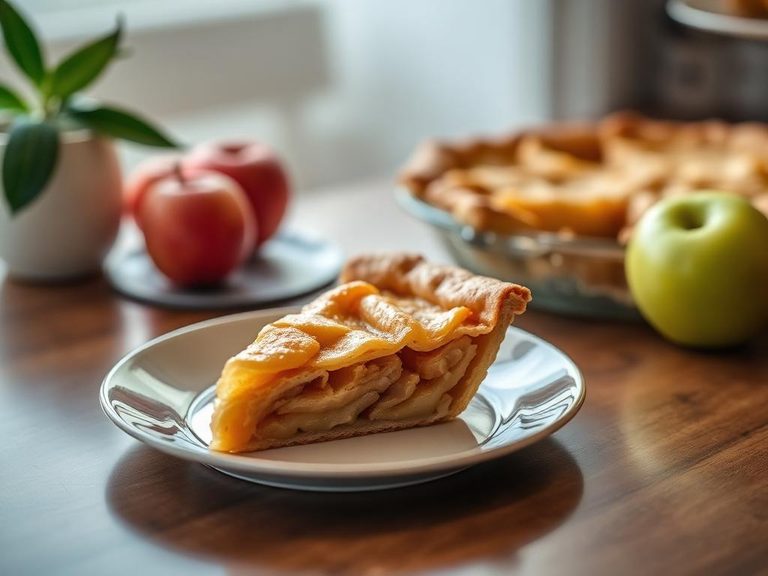
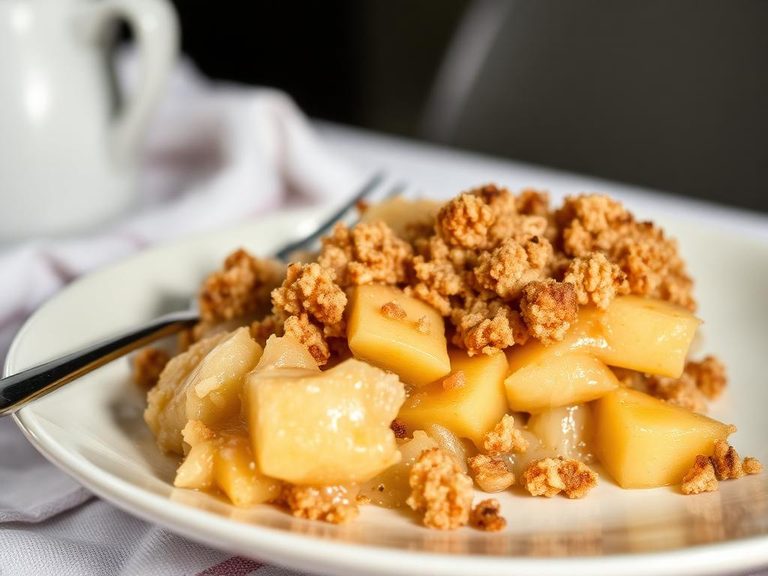
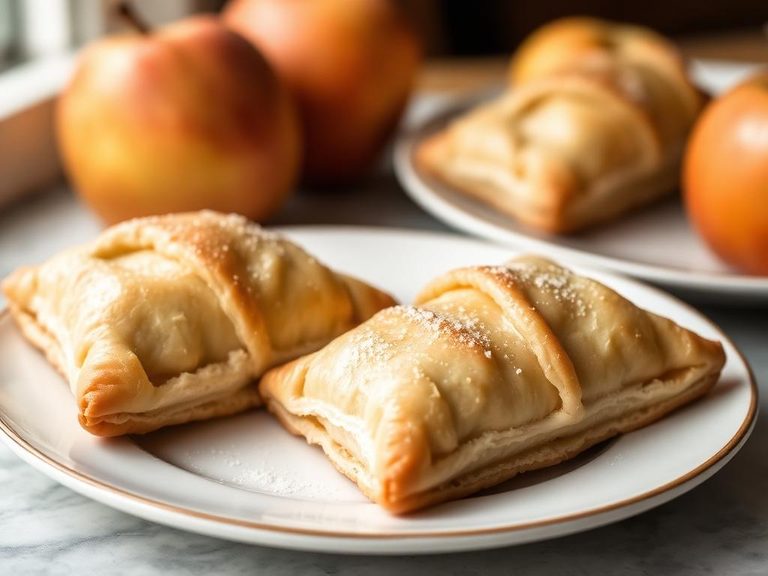
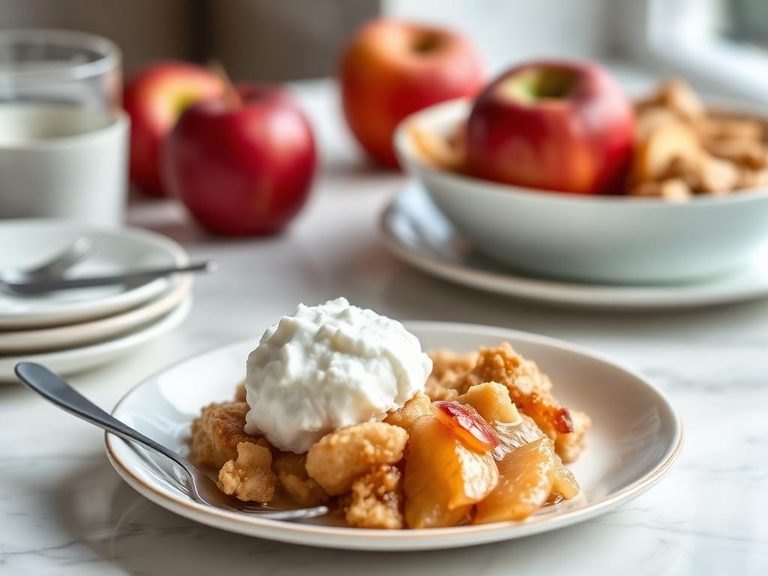
🌍 Where it's eaten
💡 Did you know?
Commercial apple pie filling often contains a small amount of calcium propionate as a preservative to prevent mold growth, which is why it can remain shelf-stable for months in a sealed can.
Full nutrition (USDA data · scales with serving)
| Water | 73.4 g |
| Energy | 100 kcal |
| Protein | 0.10 g |
| Total lipid (fat) | 0.10 g |
| Carbohydrate, by difference | 26.1 g |
| Fiber, total dietary | 1.0 g |
| Total Sugars | 13.8 g |
| Calcium, Ca | 4.0 mg |
| Iron, Fe | 0.29 mg |
| Magnesium, Mg | 2.0 mg |
| Phosphorus, P | 7.0 mg |
| Potassium, K | 45.0 mg |
| Sodium, Na | 47.0 mg |
| Zinc, Zn | 0.04 mg |
| Copper, Cu | 0.06 mg |
| Selenium, Se | 0.30 ug |
| Vitamin C, total ascorbic acid | 1.7 mg |
| Thiamin | 0.01 mg |
| Riboflavin | 0.01 mg |
| Niacin | 0.04 mg |
| Vitamin B-6 | 0.02 mg |
| Folate, total | 0.00 ug |
| Folic acid | 0.00 ug |
| Folate, food | 0.00 ug |
| Folate, DFE | 0.00 ug |
| Choline, total | 2.8 mg |
| Vitamin B-12 | 0.00 ug |
| Vitamin B-12, added | 0.00 ug |
| Vitamin A, RAE | 2.0 ug |
| Retinol | 0.00 ug |
| Carotene, beta | 10.0 ug |
| Carotene, alpha | 0.00 ug |
| Cryptoxanthin, beta | 8.0 ug |
| Lycopene | 0.00 ug |
| Lutein + zeaxanthin | 11.0 ug |
| Vitamin E (alpha-tocopherol) | 0.04 mg |
| Vitamin E, added | 0.00 mg |
| Vitamin D (D2 + D3) | 0.00 ug |
| Vitamin K (phylloquinone) | 0.50 ug |
| Alcohol, ethyl | 0.00 g |
| Caffeine | 0.00 mg |
| Theobromine | 0.00 mg |
Fat & fatty acid profile (per 100g)
| Fatty acids, total saturated | 0.00 g |
| SFA 4:0 | 0.00 g |
| SFA 6:0 | 0.00 g |
| SFA 8:0 | 0.00 g |
| SFA 10:0 | 0.00 g |
| SFA 12:0 | 0.00 g |
| SFA 14:0 | 0.00 g |
| SFA 16:0 | 0.00 g |
| SFA 18:0 | 0.00 g |
| Fatty acids, total monounsaturated | 0.00 g |
| MUFA 16:1 | 0.00 g |
| MUFA 18:1 | 0.00 g |
| MUFA 20:1 | 0.00 g |
| MUFA 22:1 | 0.00 g |
| Fatty acids, total polyunsaturated | 0.00 g |
| PUFA 18:2 | 0.00 g |
| PUFA 18:3 | 0.00 g |
| PUFA 18:4 | 0.00 g |
| PUFA 20:4 | 0.00 g |
| PUFA 20:5 n-3 (EPA) | 0.00 g |
| PUFA 22:5 n-3 (DPA) | 0.00 g |
| PUFA 22:6 n-3 (DHA) | 0.00 g |
| Cholesterol | 0.00 mg |
Amino acid profile (per 100g)
Estimated from Pie, Dutch Apple, Commercially Prepared — USDA does not publish this profile for Apple pie filling.
| Tryptophan | 0.03 g |
| Threonine | 0.06 g |
| Isoleucine | 0.08 g |
| Leucine | 0.16 g |
| Lysine | 0.04 g |
| Methionine | 0.05 g |
| Cystine | 0.06 g |
| Phenylalanine | 0.10 g |
| Tyrosine | 0.05 g |
| Valine | 0.10 g |
| Arginine | 0.08 g |
| Histidine | 0.05 g |
| Alanine | 0.07 g |
| Aspartic acid | 0.12 g |
| Glutamic acid | 0.74 g |
| Glycine | 0.08 g |
| Proline | 0.25 g |
| Serine | 0.10 g |
FAQ
Is apple pie filling the same as apple sauce?
No, apple pie filling is typically chunkier, sweeter, and thickened with starches, while apple sauce is smoother, less sweet, and often unsweetened.
Can I use apple pie filling as a topping for oatmeal or yogurt?
Yes, it works well as a sweet topping, but be mindful of the added sugar content and consider using a smaller portion.
How long does opened apple pie filling last in the fridge?
Once opened, it should be stored in an airtight container in the refrigerator and consumed within 5 to 7 days.
Nutrient density (calculated · NRF9.3)
Nutrient Rich Foods index: beneficial nutrients (protein, fiber, vitamins, minerals) minus saturated fat, added sugar & sodium, per 100 kcal.
NRF9.3 index — Fulgoni, Keast & Drewnowski, 2009. Computed from USDA nutrients.
Weight-loss friendliness (composite index)
Energy density 1.00 kcal/g · 0% calories from protein · 1.0 g fiber · 13.8 g sugar per 100 g.
Composite of energy density (Rolls et al., 1999), protein & fiber satiety, minus sugar. A calculated heuristic — ranks satiety-per-calorie, not a clinical measure.
Dietary load (calculated from USDA values)
Potential renal acid load. Positive = acid-forming, negative = alkaline-forming.
Sodium-to-potassium ratio: 1.04 (lower is better — aim for ≤ 1)
Sodium:potassium per WHO potassium guidance. Computed from USDA nutrients.