

Alcoholic beverage, daiquiri, prepared-from-recipe
Whole food · Beverages

Photo: Wikipedia
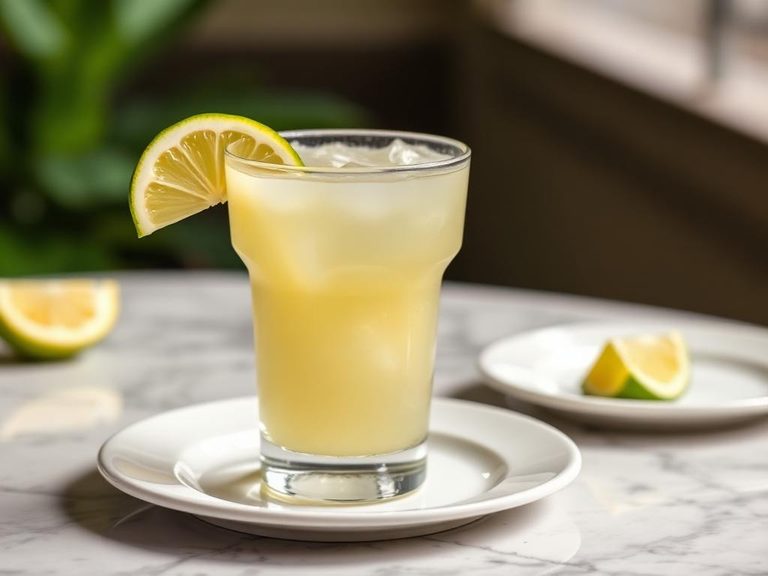
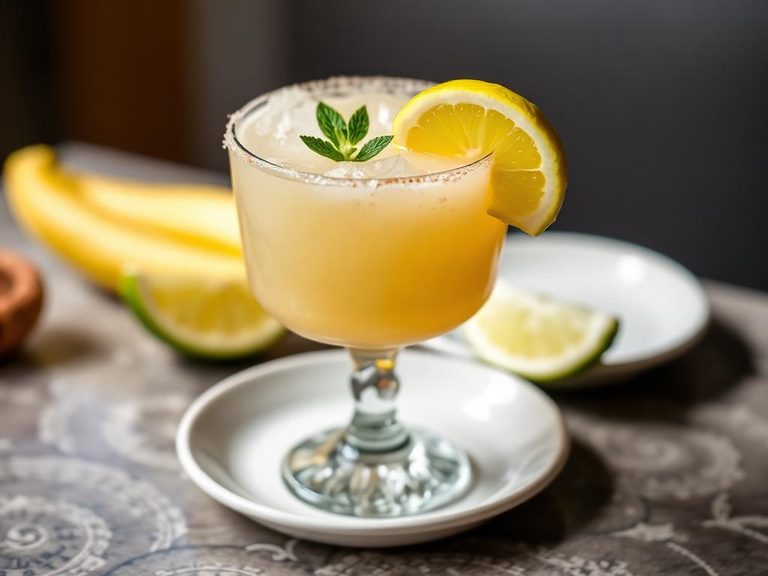
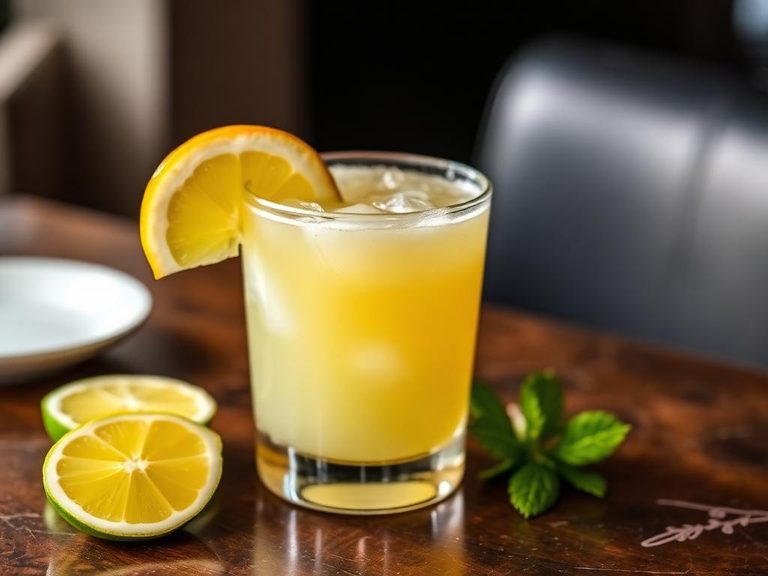
A classic daiquiri is a vibrant, rum-based cocktail that balances the bright, tangy punch of fresh lime juice with the subtle sweetness of simple syrup. Its texture is perfectly smooth and slightly syrupy, served chilled in a cocktail glass. Nutritionally, it is almost entirely a source of quick energy from its sugar content, with negligible protein, fat, or fiber.
Calorie split: 1% protein · 97% carbs · 2% fat
↓ Full nutrition💚 Why it's loved
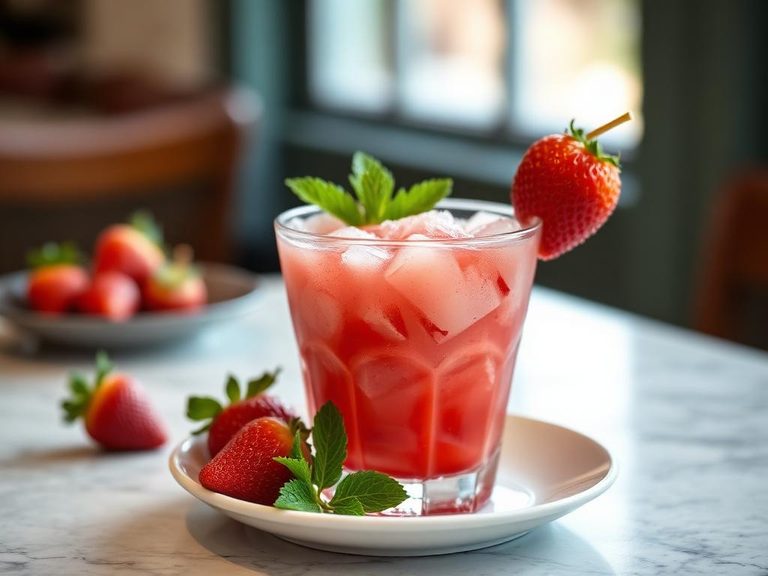
People adore the daiquiri for its perfect, refreshing balance of sweet and sour, which makes it a quintessential warm-weather drink. Its versatility is also key, as the base recipe can be frozen, flavored with fruits like strawberry, or elevated with aged rums.
⚠️ Watch-outs & how to enjoy it better
The primary downside is its high sugar content, which can lead to blood sugar spikes and contributes empty calories. Those monitoring sugar intake or with diabetes should be cautious. To counteract this, enjoy a smaller portion, ensure it's part of a meal to slow absorption, or ask for a 'skinny' version with less simple syrup.
Key benefits
- Provides a quick source of energy from carbohydrates
- Can be a source of hydration if consumed with adequate water
- Lime juice offers a small amount of vitamin C
- The ritual of preparation can be a social or creative outlet
🍽️ Popular dishes
🌍 Where it's eaten
💡 Did you know?
The daiquiri is named after a beach and iron mine near Santiago, Cuba, where American mining engineer Jennings Cox is said to have invented the drink in 1898 when he ran out of gin for his guests.
Full nutrition (USDA data · scales with serving)
| Water | 69.7 g |
| Energy | 186 kcal |
| Energy | 777 kj |
| Protein | 0.06 g |
| Total lipid (fat) | 0.06 g |
| Ash | 0.08 g |
| Carbohydrate, by difference | 6.9 g |
| Fiber, total dietary | 0.10 g |
| Total Sugars | 5.6 g |
| Calcium, Ca | 3.0 mg |
| Iron, Fe | 0.09 mg |
| Magnesium, Mg | 2.0 mg |
| Phosphorus, P | 5.0 mg |
| Potassium, K | 21.0 mg |
| Sodium, Na | 5.0 mg |
| Zinc, Zn | 0.04 mg |
| Copper, Cu | 0.02 mg |
| Manganese, Mn | 0.01 mg |
| Selenium, Se | 0.10 ug |
| Vitamin C, total ascorbic acid | 1.6 mg |
| Thiamin | 0.01 mg |
| Riboflavin | 0.01 mg |
| Niacin | 0.05 mg |
| Pantothenic acid | 0.02 mg |
| Vitamin B-6 | 0.01 mg |
| Folate, total | 2.0 ug |
| Folic acid | 0.00 ug |
| Folate, food | 2.0 ug |
| Folate, DFE | 2.0 ug |
| Vitamin B-12 | 0.00 ug |
| Vitamin A, RAE | 0.00 ug |
| Retinol | 0.00 ug |
| Carotene, beta | 2.0 ug |
| Carotene, alpha | 0.00 ug |
| Cryptoxanthin, beta | 0.00 ug |
| Vitamin A, IU | 4.0 iu |
| Lycopene | 0.00 ug |
| Lutein + zeaxanthin | 0.00 ug |
| Vitamin E (alpha-tocopherol) | 0.03 mg |
| Vitamin K (phylloquinone) | 0.10 ug |
| Alcohol, ethyl | 23.1 g |
| Caffeine | 0.00 mg |
| Theobromine | 0.00 mg |
Fat & fatty acid profile (per 100g)
| Fatty acids, total saturated | 0.01 g |
| SFA 4:0 | 0.00 g |
| SFA 6:0 | 0.00 g |
| SFA 8:0 | 0.00 g |
| SFA 10:0 | 0.00 g |
| SFA 12:0 | 0.00 g |
| SFA 14:0 | 0.00 g |
| SFA 16:0 | 0.01 g |
| SFA 18:0 | 0.00 g |
| Fatty acids, total monounsaturated | 0.01 g |
| MUFA 16:1 | 0.00 g |
| MUFA 18:1 | 0.01 g |
| MUFA 20:1 | 0.00 g |
| MUFA 22:1 | 0.00 g |
| Fatty acids, total polyunsaturated | 0.02 g |
| PUFA 18:2 | 0.01 g |
| PUFA 18:3 | 0.01 g |
| PUFA 18:4 | 0.00 g |
| PUFA 20:4 | 0.00 g |
| PUFA 20:5 n-3 (EPA) | 0.00 g |
| PUFA 22:5 n-3 (DPA) | 0.00 g |
| PUFA 22:6 n-3 (DHA) | 0.00 g |
| Fatty acids, total trans | 0.00 g |
| Cholesterol | 0.00 mg |
Amino acid profile (per 100g)
Estimated from Alcoholic beverage, distilled, vodka, 80 proof — USDA does not publish this profile for Alcoholic beverage.
| Tryptophan | 0.00 g |
| Threonine | 0.00 g |
| Isoleucine | 0.00 g |
| Leucine | 0.00 g |
| Lysine | 0.00 g |
| Methionine | 0.00 g |
| Cystine | 0.00 g |
| Phenylalanine | 0.00 g |
| Tyrosine | 0.00 g |
| Valine | 0.00 g |
| Arginine | 0.00 g |
| Histidine | 0.00 g |
| Alanine | 0.00 g |
| Aspartic acid | 0.00 g |
| Glutamic acid | 0.00 g |
| Glycine | 0.00 g |
| Proline | 0.00 g |
| Serine | 0.00 g |
FAQ
What is the main spirit in a daiquiri?
The main spirit is white rum, which provides the alcoholic base and a clean, slightly sweet flavor profile.
Is a daiquiri the same as a mojito?
No. While both are Cuban rum cocktails, a mojito includes muddled mint, soda water, and is typically served over ice in a highball glass, whereas a classic daiquiri is shaken and served 'up' without mint or soda.
Can I make a daiquiri without added sugar?
You can reduce the simple syrup significantly, but some sweetness is needed to balance the strong sourness of the lime juice. Using a naturally sweeter fruit like ripe mango can help reduce added sugar.
Nutrient density (calculated · NRF9.3)
Nutrient Rich Foods index: beneficial nutrients (protein, fiber, vitamins, minerals) minus saturated fat, added sugar & sodium, per 100 kcal.
NRF9.3 index — Fulgoni, Keast & Drewnowski, 2009. Computed from USDA nutrients.
Weight-loss friendliness (composite index)
Energy density 1.86 kcal/g · 0% calories from protein · 0.1 g fiber · 5.6 g sugar per 100 g.
Composite of energy density (Rolls et al., 1999), protein & fiber satiety, minus sugar. A calculated heuristic — ranks satiety-per-calorie, not a clinical measure.
Dietary load (calculated from USDA values)
Potential renal acid load. Positive = acid-forming, negative = alkaline-forming.
Sodium-to-potassium ratio: 0.24 (lower is better — aim for ≤ 1)
Sodium:potassium per WHO potassium guidance. Computed from USDA nutrients.