Brussels sprouts, cooked, boiled, drained, without salt
Whole food · Vegetables and Vegetable Products

Photo: Wikipedia
Brussels sprouts, when boiled and drained, transform from dense, bitter buds into tender, olive-green morsels with a subtly sweet, earthy flavor and a soft, slightly mushy texture. Nutritionally, they are a low-calorie powerhouse, delivering a solid 2.55g of protein and an impressive 2.6g of dietary fiber per 100g, all for just 36 calories.
💚 Why it's loved
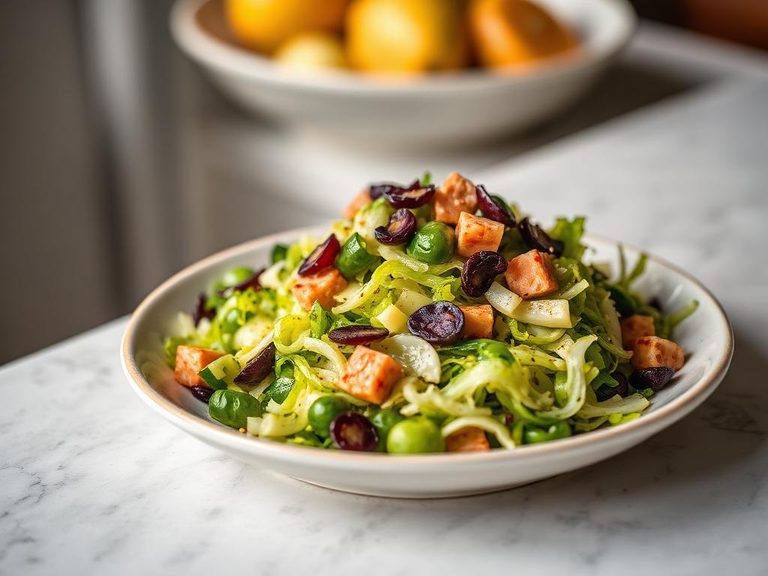
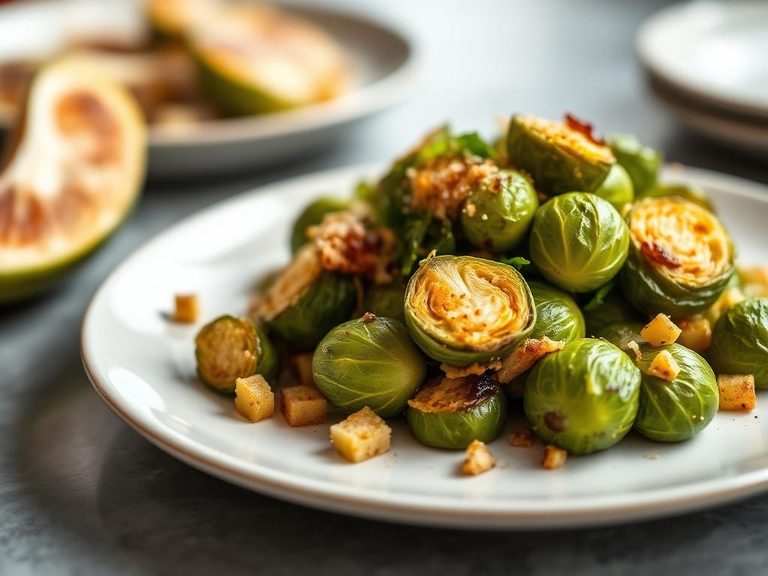
People love them for their unique, savory-sweet flavor that pairs beautifully with bold ingredients like bacon, balsamic, or garlic. They are a versatile holiday staple and a beloved part of Northern European winter cuisine.
⚠️ Watch-outs & how to enjoy it better
Overcooking can lead to a sulfurous smell and mushy texture, which some find unappealing. They are high in vitamin K, which can interact with blood-thinning medications, and contain goitrogens, which may affect thyroid function in very large quantities for those with pre-existing conditions. To counteract, avoid over-boiling; steam or roast instead for better texture and flavor, and those on blood thinners should maintain consistent intake.
Key benefits
- Excellent source of dietary fiber for digestive health.
- Very low in calories, supporting weight management.
- Provides a good plant-based protein boost.
- Naturally low in fat and sodium when prepared plain.
- Rich in vitamins C and K, and folate.
🍽️ Popular dishes
🌍 Where it's eaten
💡 Did you know?
Brussels sprouts are not a modern invention; they were cultivated in Belgium as early as the 13th century, and their name directly references the city of Brussels.
Full nutrition (scales with serving)
| Water | 88.9 g |
| Energy | 36.0 kcal |
| Energy | 150 kj |
| Protein | 2.5 g |
| Total lipid (fat) | 0.50 g |
| Ash | 0.95 g |
| Carbohydrate, by difference | 7.1 g |
| Fiber, total dietary | 2.6 g |
| Total Sugars | 1.7 g |
| Calcium, Ca | 36.0 mg |
| Iron, Fe | 1.2 mg |
| Magnesium, Mg | 20.0 mg |
| Phosphorus, P | 56.0 mg |
| Potassium, K | 317 mg |
| Sodium, Na | 21.0 mg |
| Zinc, Zn | 0.33 mg |
| Copper, Cu | 0.08 mg |
| Manganese, Mn | 0.23 mg |
| Selenium, Se | 1.5 ug |
| Vitamin C, total ascorbic acid | 62.0 mg |
| Thiamin | 0.11 mg |
| Riboflavin | 0.08 mg |
| Niacin | 0.61 mg |
| Pantothenic acid | 0.25 mg |
| Vitamin B-6 | 0.18 mg |
| Folate, total | 60.0 ug |
| Folic acid | 0.00 ug |
| Folate, food | 60.0 ug |
| Folate, DFE | 60.0 ug |
| Choline, total | 40.6 mg |
| Betaine | 0.20 mg |
| Vitamin B-12 | 0.00 ug |
| Vitamin B-12, added | 0.00 ug |
| Vitamin A, RAE | 39.0 ug |
| Retinol | 0.00 ug |
| Carotene, beta | 465 ug |
| Carotene, alpha | 0.00 ug |
| Cryptoxanthin, beta | 0.00 ug |
| Vitamin A, IU | 775 iu |
| Lycopene | 0.00 ug |
| Lutein + zeaxanthin | 1290 ug |
| Vitamin E (alpha-tocopherol) | 0.43 mg |
| Vitamin E, added | 0.00 mg |
| Tocopherol, beta | 0.00 mg |
| Tocopherol, gamma | 0.00 mg |
| Tocopherol, delta | 0.00 mg |
| Tocotrienol, alpha | 0.00 mg |
| Tocotrienol, beta | 0.00 mg |
| Tocotrienol, gamma | 0.00 mg |
| Tocotrienol, delta | 0.00 mg |
| Vitamin D (D2 + D3), International Units | 0.00 iu |
| Vitamin D (D2 + D3) | 0.00 ug |
| Vitamin K (phylloquinone) | 140 ug |
| Alcohol, ethyl | 0.00 g |
| Caffeine | 0.00 mg |
| Theobromine | 0.00 mg |
Fat & fatty acid profile (per 100g)
| Fatty acids, total saturated | 0.10 g |
| SFA 4:0 | 0.00 g |
| SFA 6:0 | 0.00 g |
| SFA 8:0 | 0.00 g |
| SFA 10:0 | 0.00 g |
| SFA 12:0 | 0.00 g |
| SFA 14:0 | 0.00 g |
| SFA 16:0 | 0.09 g |
| SFA 18:0 | 0.01 g |
| Fatty acids, total monounsaturated | 0.04 g |
| MUFA 16:1 | 0.00 g |
| MUFA 18:1 | 0.03 g |
| MUFA 20:1 | 0.00 g |
| MUFA 22:1 | 0.00 g |
| Fatty acids, total polyunsaturated | 0.26 g |
| PUFA 18:2 | 0.08 g |
| PUFA 18:3 | 0.17 g |
| PUFA 18:4 | 0.00 g |
| PUFA 20:4 | 0.00 g |
| PUFA 20:5 n-3 (EPA) | 0.00 g |
| PUFA 22:5 n-3 (DPA) | 0.00 g |
| PUFA 22:6 n-3 (DHA) | 0.00 g |
| Fatty acids, total trans | 0.00 g |
| Cholesterol | 0.00 mg |
Amino acid profile (per 100g)
| Tryptophan | 0.03 g |
| Threonine | 0.09 g |
| Isoleucine | 0.10 g |
| Leucine | 0.11 g |
| Lysine | 0.12 g |
| Methionine | 0.02 g |
| Cystine | 0.02 g |
| Phenylalanine | 0.07 g |
| Valine | 0.12 g |
| Arginine | 0.15 g |
| Histidine | 0.06 g |
FAQ
Why do my boiled Brussels sprouts smell bad?
The sulfurous smell comes from compounds called glucosinolates breaking down during prolonged, high-heat cooking. To minimize this, cook them quickly until just tender, or use alternative methods like steaming or roasting.
Are Brussels sprouts good for weight loss?
Yes, they are an excellent choice. They are very low in calories (36 kcal/100g) and high in fiber and water, which helps promote fullness and reduces overall calorie intake.
Can I eat Brussels sprouts if I have a thyroid condition?
Brussels sprouts contain goitrogens, which can interfere with thyroid hormone production in very large amounts. For most people with normal thyroid function, cooking them deactivates most goitrogens. If you have a thyroid condition, it's best to eat them in moderation and consult your doctor.