

Vegetable oil, NFS
Common food

Photo: Wikipedia
Vegetable oil, NFS (Not Further Specified) is a generic, refined cooking oil derived from plant sources like soybeans, canola, or sunflowers, characterized by a neutral flavor and smooth, liquid texture. It is a pure fat source, providing a dense 900 calories and 100 grams of fat per 100 grams, with no protein, carbohydrates, or fiber. This makes it a highly efficient energy source and a fundamental cooking medium.
Calorie split: 0% protein · 0% carbs · 100% fat
↓ Full nutrition💚 Why it's loved
People love it for its incredible versatility and neutral taste, which allows it to be the silent workhorse in everything from sautéing vegetables to baking cakes without altering the intended flavor profile. It's a kitchen staple that enables frying, roasting, and dressing-making with consistent, reliable results.
⚠️ Watch-outs & how to enjoy it better
Being a pure fat, it is extremely calorie-dense, which can contribute to weight gain if used excessively without mindful portion control. Some refined vegetable oils can be high in omega-6 fatty acids, which, in a disproportionate diet, may promote inflammation. To counteract this, balance intake with omega-3-rich foods (like fatty fish or flaxseeds) and use oils in moderation, measuring with a spoon rather than free-pouring.
Key benefits
- High smoke point for versatile cooking methods
- Neutral flavor doesn't overpower other ingredients
- Rich source of energy-dense calories
- Often contains vitamin E as an antioxidant
- Cost-effective for everyday cooking
🍽️ Popular dishes

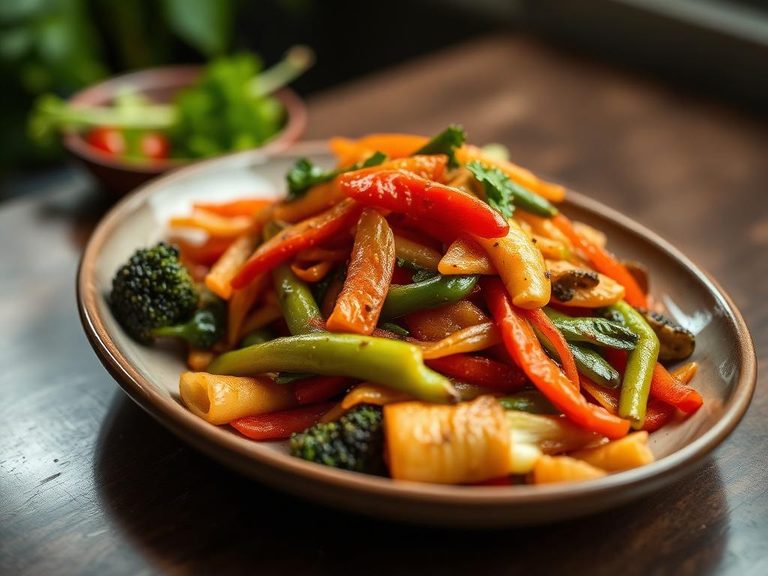


🌍 Where it's eaten
💡 Did you know?
The 'NFS' designation in food databases means the specific plant source isn't identified, so a single 'Vegetable oil, NFS' entry could represent a blend of soybean, corn, and sunflower oils from the same bottle.
Full nutrition (USDA data · scales with serving)
| Water | 0.00 g |
| Energy | 900 kcal |
| Protein | 0.00 g |
| Total lipid (fat) | 100 g |
| Carbohydrate, by difference | 0.00 g |
| Fiber, total dietary | 0.00 g |
| Total Sugars | 0.00 g |
| Calcium, Ca | 0.00 mg |
| Iron, Fe | 0.16 mg |
| Magnesium, Mg | 0.00 mg |
| Phosphorus, P | 0.00 mg |
| Potassium, K | 0.00 mg |
| Sodium, Na | 0.00 mg |
| Zinc, Zn | 0.00 mg |
| Copper, Cu | 0.00 mg |
| Selenium, Se | 0.00 ug |
| Vitamin C, total ascorbic acid | 0.00 mg |
| Thiamin | 0.00 mg |
| Riboflavin | 0.00 mg |
| Niacin | 0.00 mg |
| Vitamin B-6 | 0.00 mg |
| Folate, total | 0.00 ug |
| Folic acid | 0.00 ug |
| Folate, food | 0.00 ug |
| Folate, DFE | 0.00 ug |
| Choline, total | 0.20 mg |
| Vitamin B-12 | 0.00 ug |
| Vitamin B-12, added | 0.00 ug |
| Vitamin A, RAE | 0.00 ug |
| Retinol | 0.00 ug |
| Carotene, beta | 0.00 ug |
| Carotene, alpha | 0.00 ug |
| Cryptoxanthin, beta | 0.00 ug |
| Lycopene | 0.00 ug |
| Lutein + zeaxanthin | 0.00 ug |
| Vitamin E (alpha-tocopherol) | 19.0 mg |
| Vitamin E, added | 0.00 mg |
| Vitamin D (D2 + D3) | 0.00 ug |
| Vitamin K (phylloquinone) | 101 ug |
| Alcohol, ethyl | 0.00 g |
| Caffeine | 0.00 mg |
| Theobromine | 0.00 mg |
Fat & fatty acid profile (per 100g)
| Fatty acids, total saturated | 13.4 g |
| SFA 4:0 | 0.00 g |
| SFA 6:0 | 0.00 g |
| SFA 8:0 | 0.00 g |
| SFA 10:0 | 0.00 g |
| SFA 12:0 | 0.00 g |
| SFA 14:0 | 0.05 g |
| SFA 16:0 | 9.6 g |
| SFA 18:0 | 2.9 g |
| Fatty acids, total monounsaturated | 42.4 g |
| MUFA 16:1 | 0.35 g |
| MUFA 18:1 | 41.3 g |
| MUFA 20:1 | 0.67 g |
| MUFA 22:1 | 0.00 g |
| Fatty acids, total polyunsaturated | 38.4 g |
| PUFA 18:2 | 34.0 g |
| PUFA 18:3 | 4.4 g |
| PUFA 18:4 | 0.00 g |
| PUFA 20:4 | 0.00 g |
| PUFA 20:5 n-3 (EPA) | 0.00 g |
| PUFA 22:5 n-3 (DPA) | 0.00 g |
| PUFA 22:6 n-3 (DHA) | 0.00 g |
| Cholesterol | 0.00 mg |
Amino acid profile (per 100g)
Estimated from Oil, industrial, soy (partially hydrogenated), principal uses popcorn and flavoring vegetables — USDA does not publish this profile for Vegetable oil.
| Tryptophan | 0.00 g |
| Threonine | 0.00 g |
| Isoleucine | 0.00 g |
| Leucine | 0.00 g |
| Lysine | 0.00 g |
| Methionine | 0.00 g |
| Cystine | 0.00 g |
| Phenylalanine | 0.00 g |
| Tyrosine | 0.00 g |
| Valine | 0.00 g |
| Arginine | 0.00 g |
| Histidine | 0.00 g |
| Alanine | 0.00 g |
| Aspartic acid | 0.00 g |
| Glutamic acid | 0.00 g |
| Glycine | 0.00 g |
| Proline | 0.00 g |
| Serine | 0.00 g |
FAQ
What does 'NFS' stand for on a nutrition label?
'NFS' means 'Not Further Specified.' It's a generic category used when the exact source of the vegetable oil (e.g., soybean, canola, sunflower) isn't detailed, but its nutritional profile is consistent.
Is vegetable oil unhealthy?
It's not inherently unhealthy but is a concentrated source of calories and fat. Its health impact depends on the type (e.g., refined vs. unrefined), how it's used (high-heat frying vs. dressings), and overall dietary balance. Moderation is key.
Can I use vegetable oil for baking?
Yes, it's commonly used in baking for moist cakes, muffins, and cookies. Its neutral flavor won't interfere with other tastes, and it provides a tender texture. It's often substituted for butter in recipes seeking a lighter crumb.
Nutrient density (calculated · NRF9.3)
Nutrient Rich Foods index: beneficial nutrients (protein, fiber, vitamins, minerals) minus saturated fat, added sugar & sodium, per 100 kcal.
NRF9.3 index — Fulgoni, Keast & Drewnowski, 2009. Computed from USDA nutrients.
Weight-loss friendliness (composite index)
Energy density 9.00 kcal/g · 0% calories from protein · 0.0 g fiber · 0.0 g sugar per 100 g.
Composite of energy density (Rolls et al., 1999), protein & fiber satiety, minus sugar. A calculated heuristic — ranks satiety-per-calorie, not a clinical measure.
Dietary load (calculated from USDA values)
Potential renal acid load. Positive = acid-forming, negative = alkaline-forming.
Sodium:potassium per WHO potassium guidance. Computed from USDA nutrients.