

Oil or table fat, NFS
Common food
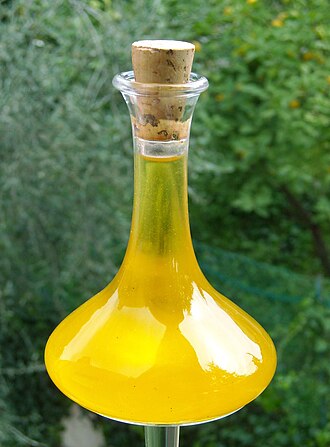
Photo: Wikipedia
This is the generic, catch-all category for culinary oils and solid fats—like vegetable oil, lard, or shortening—used as the foundational cooking medium in kitchens worldwide. With a neutral flavor profile and a smooth, viscous liquid or semi-solid texture, it is essentially pure energy, packing nearly 88 grams of fat and 789 calories per 100 grams. It contains negligible protein, carbohydrates, and fiber, serving as a highly concentrated source of dietary fat.
Calorie split: 0% protein · 0% carbs · 100% fat
↓ Full nutrition💚 Why it's loved
People love it for its unparalleled versatility and ability to transform raw ingredients into rich, savory dishes through frying, baking, and sautéing. It is a universal staple that provides the essential 'fat' component in countless global cuisines, from frying crispy chicken to making flaky pastry.
⚠️ Watch-outs & how to enjoy it better
The primary downside is its extremely high caloric density, which can easily lead to excess calorie intake and weight gain if not portion-controlled. To counteract this, measure oils carefully with a teaspoon or spray bottle, and pair high-fat foods with high-fiber vegetables to increase satiety and slow digestion.
Key benefits
- Provides a dense, efficient source of energy for the body
- Essential for the absorption of fat-soluble vitamins A, D, E, and K
- Facilitates the Maillard reaction, creating desirable browning and flavor in food
- Acts as a crucial medium for heat transfer in frying and sautéing
- Improves the texture, mouthfeel, and moisture retention of baked goods
🍽️ Popular dishes




🌍 Where it's eaten
💡 Did you know?
The term 'NFS' stands for 'Not Further Specified,' a USDA designation used when the exact type of oil or fat (like olive, canola, or lard) isn't known, yet it still contains the same base macronutrient profile.
Full nutrition (USDA data · scales with serving)
| Water | 11.2 g |
| Energy | 789 kcal |
| Protein | 0.29 g |
| Total lipid (fat) | 87.7 g |
| Carbohydrate, by difference | 0.18 g |
| Fiber, total dietary | 0.00 g |
| Total Sugars | 0.17 g |
| Calcium, Ca | 10.0 mg |
| Iron, Fe | 0.10 mg |
| Magnesium, Mg | 1.0 mg |
| Phosphorus, P | 9.0 mg |
| Potassium, K | 12.0 mg |
| Sodium, Na | 296 mg |
| Zinc, Zn | 0.02 mg |
| Copper, Cu | 0.00 mg |
| Selenium, Se | 0.00 ug |
| Vitamin C, total ascorbic acid | 0.00 mg |
| Thiamin | 0.00 mg |
| Riboflavin | 0.01 mg |
| Niacin | 0.00 mg |
| Vitamin B-6 | 0.56 mg |
| Folate, total | 2.0 ug |
| Folic acid | 0.00 ug |
| Folate, food | 2.0 ug |
| Folate, DFE | 2.0 ug |
| Choline, total | 7.9 mg |
| Vitamin B-12 | 0.00 ug |
| Vitamin B-12, added | 0.00 ug |
| Vitamin A, RAE | 391 ug |
| Retinol | 377 ug |
| Carotene, beta | 172 ug |
| Carotene, alpha | 1.0 ug |
| Cryptoxanthin, beta | 2.0 ug |
| Lycopene | 0.00 ug |
| Lutein + zeaxanthin | 0.00 ug |
| Vitamin E (alpha-tocopherol) | 13.1 mg |
| Vitamin E, added | 0.00 mg |
| Vitamin D (D2 + D3) | 0.90 ug |
| Vitamin K (phylloquinone) | 72.2 ug |
| Alcohol, ethyl | 0.00 g |
| Caffeine | 0.00 mg |
| Theobromine | 0.00 mg |
Fat & fatty acid profile (per 100g)
| Fatty acids, total saturated | 22.9 g |
| SFA 4:0 | 0.61 g |
| SFA 6:0 | 0.43 g |
| SFA 8:0 | 0.25 g |
| SFA 10:0 | 0.59 g |
| SFA 12:0 | 0.69 g |
| SFA 14:0 | 2.2 g |
| SFA 16:0 | 12.5 g |
| SFA 18:0 | 4.7 g |
| Fatty acids, total monounsaturated | 31.1 g |
| MUFA 16:1 | 0.48 g |
| MUFA 18:1 | 29.9 g |
| MUFA 20:1 | 0.41 g |
| MUFA 22:1 | 0.00 g |
| Fatty acids, total polyunsaturated | 25.1 g |
| PUFA 18:2 | 22.3 g |
| PUFA 18:3 | 2.8 g |
| PUFA 18:4 | 0.00 g |
| PUFA 20:4 | 0.03 g |
| PUFA 20:5 n-3 (EPA) | 0.01 g |
| PUFA 22:5 n-3 (DPA) | 0.01 g |
| PUFA 22:6 n-3 (DHA) | 0.00 g |
| Cholesterol | 71.0 mg |
FAQ
What does 'NFS' mean in the context of food?
NFS stands for 'Not Further Specified.' It's a category used by food databases like the USDA when the exact type of a food (e.g., the specific kind of oil or fat) isn't identified, but its general nutritional profile is known.
Why is this food so high in calories but low in protein and carbs?
Because it is almost entirely composed of fat. Fat is the most energy-dense macronutrient, providing 9 calories per gram, compared to 4 calories per gram for protein and carbohydrates. Oils and fats contain virtually no water, protein, or carbohydrates.
How can I use this in cooking without adding too many calories?
Use measuring spoons or a spray bottle to control portions. For sautéing, use just enough to coat the pan. For baking, you can often substitute some fat with unsweetened applesauce or mashed banana to reduce calories while maintaining moisture.
Nutrient density (calculated · NRF9.3)
Nutrient Rich Foods index: beneficial nutrients (protein, fiber, vitamins, minerals) minus saturated fat, added sugar & sodium, per 100 kcal.
NRF9.3 index — Fulgoni, Keast & Drewnowski, 2009. Computed from USDA nutrients.
Weight-loss friendliness (composite index)
Energy density 7.89 kcal/g · 0% calories from protein · 0.0 g fiber · 0.2 g sugar per 100 g.
Composite of energy density (Rolls et al., 1999), protein & fiber satiety, minus sugar. A calculated heuristic — ranks satiety-per-calorie, not a clinical measure.
Dietary load (calculated from USDA values)
Potential renal acid load. Positive = acid-forming, negative = alkaline-forming.
Sodium-to-potassium ratio: 24.67 (lower is better — aim for ≤ 1)
Sodium:potassium per WHO potassium guidance. Computed from USDA nutrients.