

Veal, Australian, shank, hind, bone-in, separable lean only, raw
Whole food · Lamb, Veal, and Game Products

Photo: Wikipedia
This is the lean, meaty portion from the hind shank of Australian veal, prized for its deep, mild beefy flavor and firm, dense texture that transforms into tender, succulent morsels with slow cooking. Nutritionally, it's a powerhouse of high-quality protein with minimal fat, making it a lean yet satisfying foundation for hearty meals.
Calorie split: 67% protein · 0% carbs · 33% fat
↓ Full nutrition💚 Why it's loved
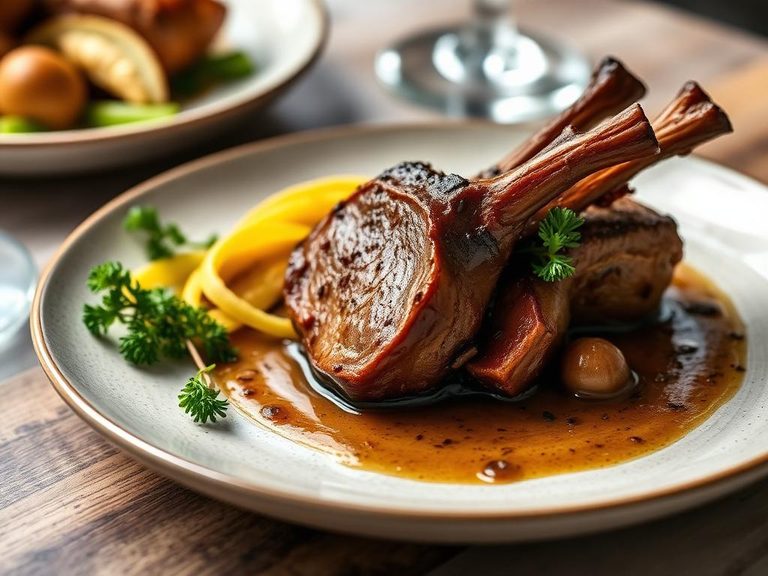
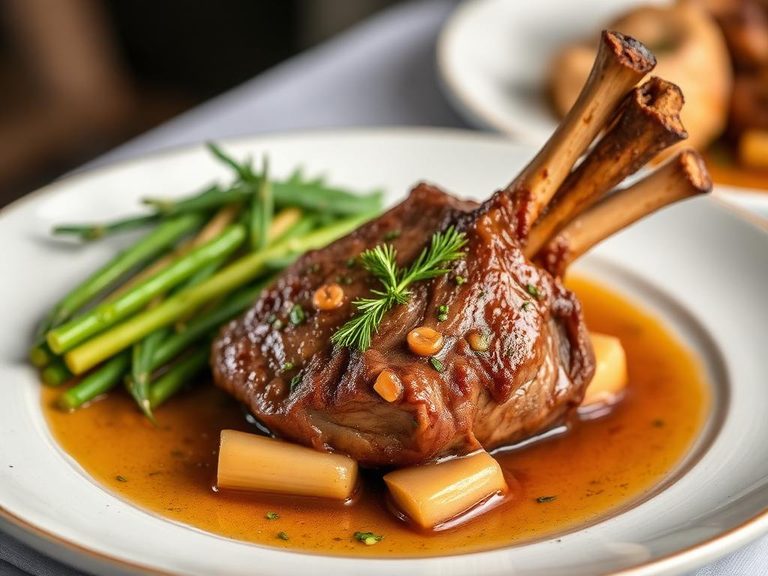
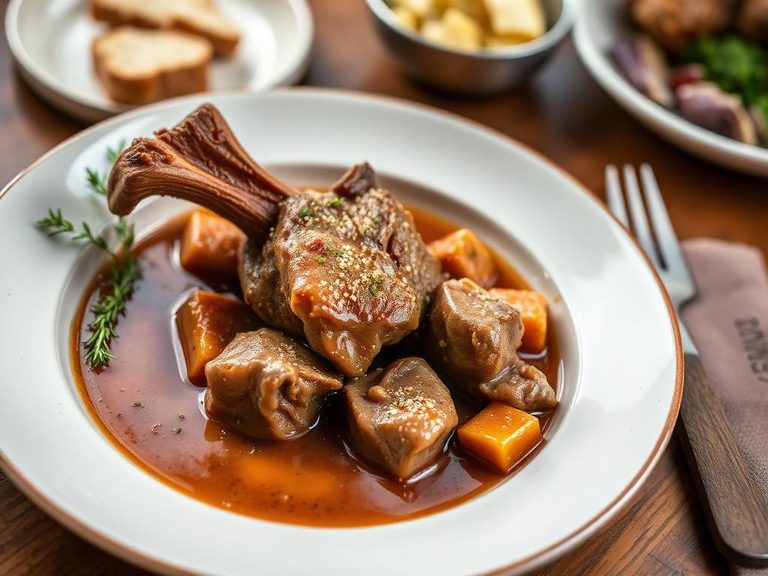
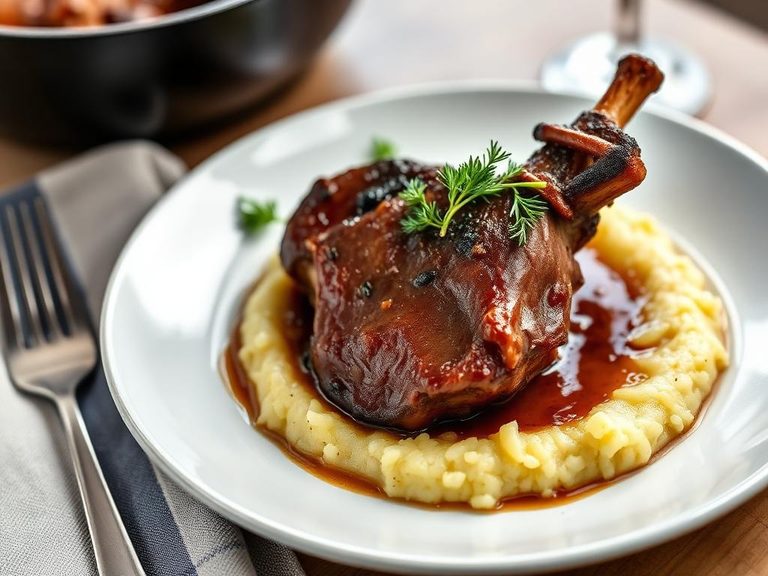
People love veal shank for its rich, refined flavor that is more delicate than beef but deeply savory, and for the luxurious, fall-off-the-bone texture it achieves when braised. It's the star of classic comfort dishes that feel both rustic and elegant.
⚠️ Watch-outs & how to enjoy it better
The lean, dense cut can be tough and chewy if not cooked properly with moist heat. Those watching their cholesterol should note it contains dietary cholesterol, though it's low in fat. To counteract toughness, always braise or slow-cook it, and consider pairing with a fiber-rich vegetable side to balance the meal.
Key benefits
- Excellent source of complete protein for muscle maintenance
- Very low in fat, especially saturated fat
- Naturally zero carbohydrates and sugar
- Rich in essential minerals like iron and zinc
- Provides collagen which supports joint and skin health
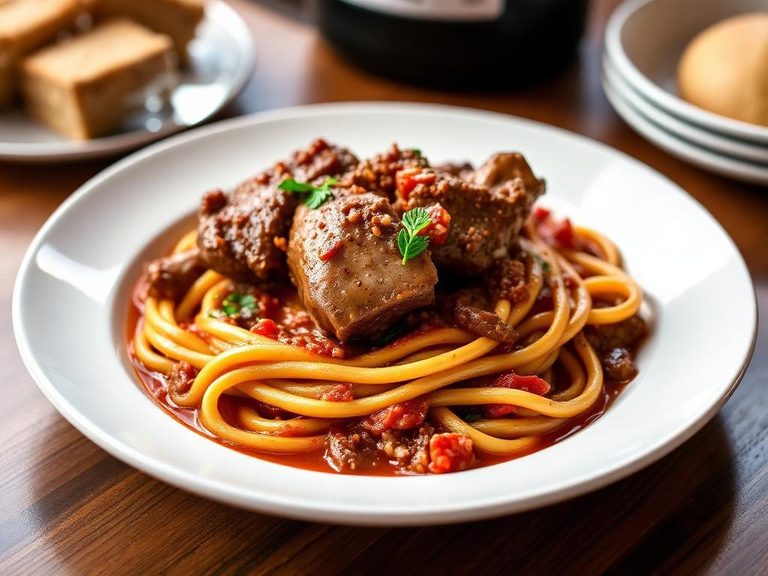
🍽️ Popular dishes
🌍 Where it's eaten
💡 Did you know?
The name 'Osso Buco' literally translates from Italian as 'bone with a hole,' referring to the marrow cavity in the center of the cross-cut shank, which is considered a prized delicacy for its rich, gelatinous marrow.
Full nutrition (USDA data · scales with serving)
| Water | 75.4 g |
| Energy | 122 kcal |
| Energy | 509 kj |
| Protein | 20.4 g |
| Total lipid (fat) | 4.5 g |
| Ash | 1.0 g |
| Carbohydrate, by difference | 0.00 g |
| Fiber, total dietary | 0.00 g |
| Total Sugars | 0.00 g |
| Calcium, Ca | 17.0 mg |
| Iron, Fe | 3.1 mg |
| Sodium, Na | 98.0 mg |
| Vitamin C, total ascorbic acid | 0.00 mg |
| Vitamin A, RAE | 0.00 ug |
| Retinol | 0.00 ug |
| Carotene, beta | 0.00 ug |
| Carotene, alpha | 0.00 ug |
| Cryptoxanthin, beta | 0.00 ug |
| Vitamin A, IU | 0.00 iu |
| Lycopene | 0.00 ug |
| Lutein + zeaxanthin | 0.00 ug |
| Alcohol, ethyl | 0.00 g |
| Caffeine | 0.00 mg |
| Theobromine | 0.00 mg |
Fat & fatty acid profile (per 100g)
| Fatty acids, total saturated | 1.7 g |
| SFA 4:0 | 0.00 g |
| SFA 6:0 | 0.00 g |
| SFA 10:0 | 0.01 g |
| SFA 12:0 | 0.01 g |
| SFA 14:0 | 0.17 g |
| SFA 15:0 | 0.03 g |
| SFA 16:0 | 0.96 g |
| SFA 17:0 | 0.04 g |
| SFA 18:0 | 0.48 g |
| SFA 20:0 | 0.01 g |
| SFA 22:0 | 0.01 g |
| Fatty acids, total monounsaturated | 1.7 g |
| MUFA 14:1 | 0.05 g |
| MUFA 16:1 | 0.13 g |
| MUFA 18:1 | 1.5 g |
| MUFA 18:1 c | 1.4 g |
| MUFA 20:1 | 0.01 g |
| Fatty acids, total polyunsaturated | 0.60 g |
| PUFA 18:2 | 0.12 g |
| PUFA 18:2 n-6 c,c | 0.09 g |
| PUFA 18:3 | 0.38 g |
| PUFA 18:3 n-3 c,c,c (ALA) | 0.38 g |
| PUFA 18:3i | 0.01 g |
| PUFA 18:4 | 0.00 g |
| PUFA 20:4 | 0.04 g |
| PUFA 20:5 n-3 (EPA) | 0.03 g |
| PUFA 22:5 n-3 (DPA) | 0.03 g |
| Fatty acids, total trans | 0.14 g |
| Fatty acids, total trans-monoenoic | 0.10 g |
| TFA 18:1 t | 0.10 g |
| TFA 18:2 t not further defined | 0.03 g |
| Fatty acids, total trans-polyenoic | 0.04 g |
| Cholesterol | 59.0 mg |
Amino acid profile (per 100g)
| Tryptophan | 0.21 g |
| Threonine | 0.89 g |
| Isoleucine | 1.0 g |
| Leucine | 1.6 g |
| Lysine | 1.7 g |
| Methionine | 0.48 g |
| Cystine | 0.23 g |
| Phenylalanine | 0.82 g |
| Tyrosine | 0.65 g |
| Valine | 1.1 g |
| Arginine | 1.2 g |
| Histidine | 0.74 g |
| Alanine | 1.2 g |
| Aspartic acid | 1.8 g |
| Glutamic acid | 3.2 g |
| Glycine | 1.0 g |
| Proline | 0.85 g |
| Serine | 0.76 g |
| Hydroxyproline | 0.10 g |
FAQ
What's the best cooking method for this cut?
Braising is ideal. Sear the shank, then simmer it slowly in liquid (like broth, wine, or tomatoes) at a low temperature for 2-3 hours until the collagen breaks down and the meat becomes fork-tender.
How is veal shank different from beef shank?
Veal shank comes from younger cattle, so the meat is more tender, paler in color, and has a milder, more delicate flavor compared to the stronger taste and chewier texture of mature beef shank.
Can I cook it quickly?
No, this is a tough, connective tissue-rich cut that requires long, slow, moist cooking. Quick, high-heat methods like grilling or pan-frying will result in very tough, chewy meat.
Nutrient density (calculated · NRF9.3)
Nutrient Rich Foods index: beneficial nutrients (protein, fiber, vitamins, minerals) minus saturated fat, added sugar & sodium, per 100 kcal.
NRF9.3 index — Fulgoni, Keast & Drewnowski, 2009. Computed from USDA nutrients.
Weight-loss friendliness (composite index)
Energy density 1.22 kcal/g · 67% calories from protein · 0.0 g fiber · 0.0 g sugar per 100 g.
Composite of energy density (Rolls et al., 1999), protein & fiber satiety, minus sugar. A calculated heuristic — ranks satiety-per-calorie, not a clinical measure.