

Tomatoes, red, ripe, cooked, stewed
Whole food · Vegetables and Vegetable Products

Photo: Wikipedia
Stewed red tomatoes are a culinary staple, transforming fresh tomatoes into a rich, sweet-tart sauce through slow cooking. The process concentrates their flavor, resulting in a soft, almost velvety texture with a deep, savory umami profile. Nutritionally, they are a low-calorie source of fiber and carbohydrates, with a small amount of protein and fat.
Calorie split: 9% protein · 62% carbs · 29% fat
↓ Full nutrition💚 Why it's loved
People love stewed tomatoes for their concentrated, sweet-savory flavor that forms the backbone of countless comfort foods, from pasta sauces to stews. Their soft, melting texture and ability to meld seamlessly with other ingredients make them a beloved, versatile kitchen staple across cultures.
⚠️ Watch-outs & how to enjoy it better
The cooking process can reduce some heat-sensitive vitamins like vitamin C, and the natural sugars can concentrate, potentially affecting blood sugar if consumed in large, unpaired portions. To counteract this, pair with protein (like beans or meat) and healthy fats (like olive oil) to slow sugar absorption, and practice portion control by using them as a component of a balanced meal rather than a standalone dish.
Key benefits
- Rich in lycopene, an antioxidant that becomes more bioavailable when cooked.
- Provides a good source of dietary fiber for digestive health.
- Low in calories and naturally fat-free, supporting weight management.
- Contains vitamin C and potassium, essential for immune function and blood pressure regulation.
- Versatile base for countless healthy meals and sauces.
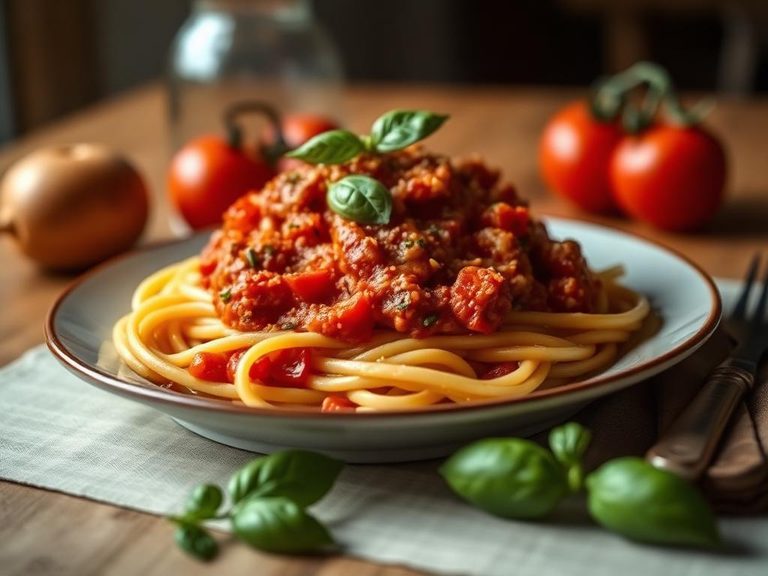
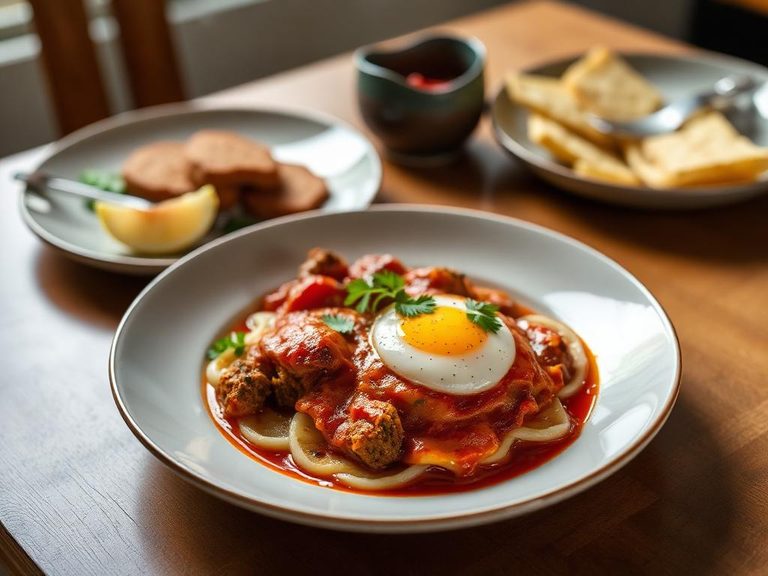
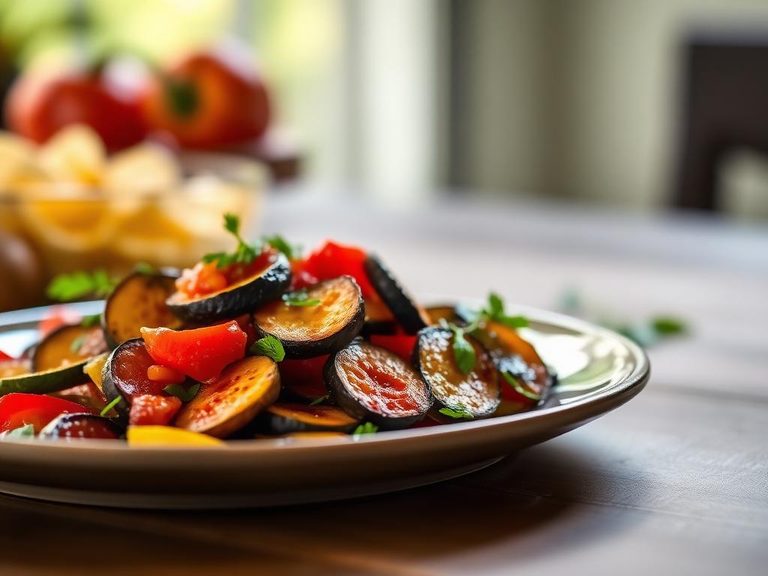
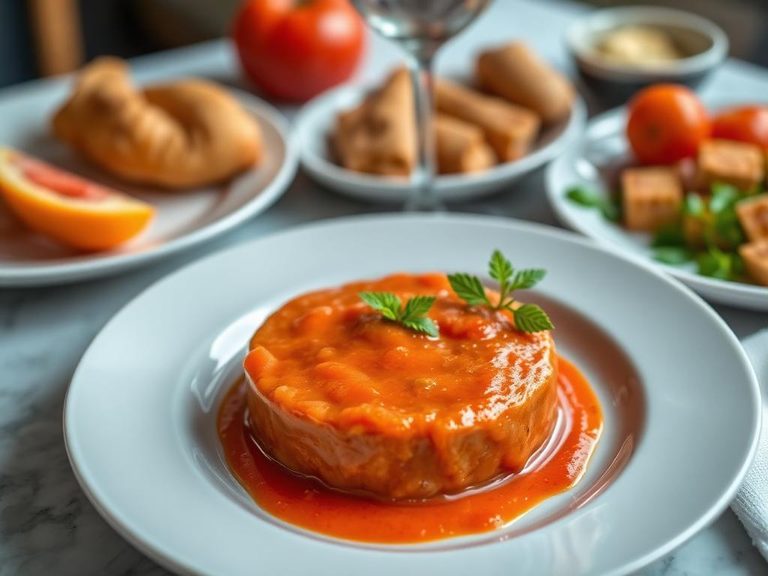
🍽️ Popular dishes
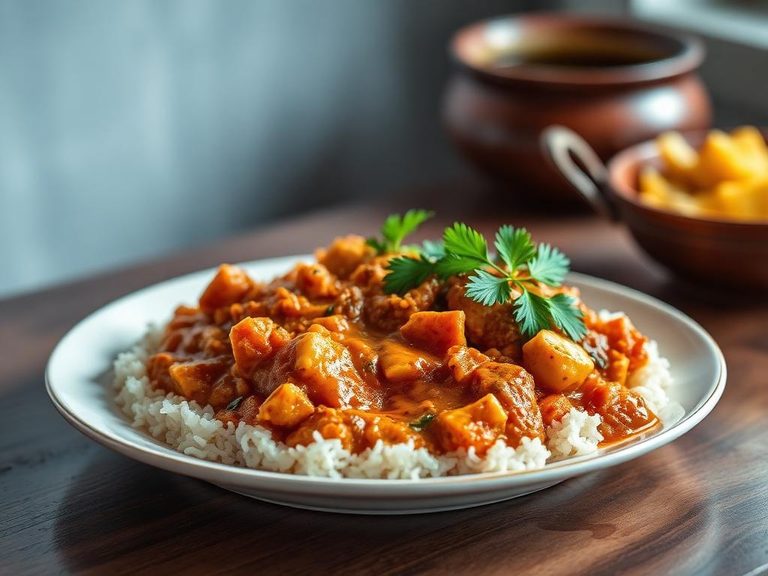
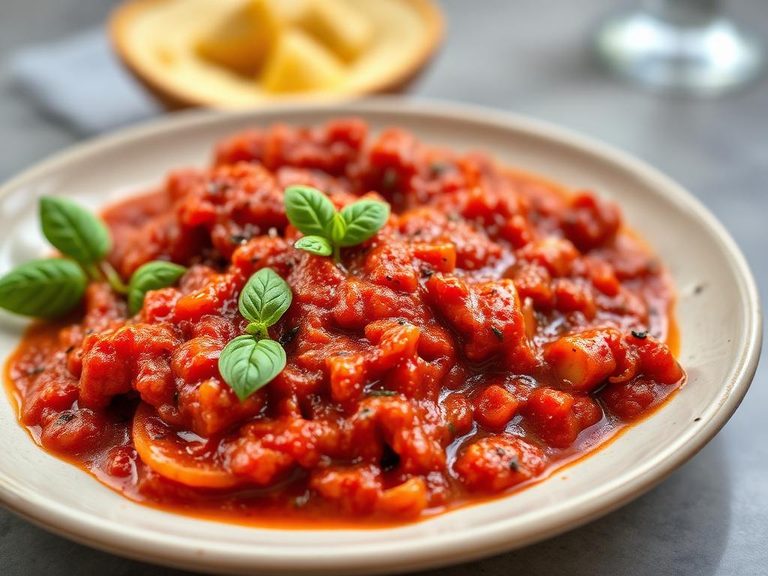
🌍 Where it's eaten
💡 Did you know?
The lycopene in tomatoes, which gives them their red color, is a fat-soluble antioxidant that becomes significantly more bioavailable to the body when tomatoes are cooked with a little oil, like in a stew or sauce.
Full nutrition (USDA data · scales with serving)
| Water | 80.6 g |
| Energy | 79.0 kcal |
| Energy | 331 kj |
| Protein | 2.0 g |
| Total lipid (fat) | 2.7 g |
| Ash | 1.7 g |
| Carbohydrate, by difference | 13.1 g |
| Fiber, total dietary | 1.7 g |
| Calcium, Ca | 26.0 mg |
| Iron, Fe | 1.1 mg |
| Magnesium, Mg | 15.0 mg |
| Phosphorus, P | 38.0 mg |
| Potassium, K | 247 mg |
| Sodium, Na | 455 mg |
| Zinc, Zn | 0.18 mg |
| Copper, Cu | 0.10 mg |
| Manganese, Mn | 0.19 mg |
| Selenium, Se | 1.2 ug |
| Vitamin C, total ascorbic acid | 18.2 mg |
| Thiamin | 0.11 mg |
| Riboflavin | 0.08 mg |
| Niacin | 1.1 mg |
| Pantothenic acid | 0.26 mg |
| Vitamin B-6 | 0.09 mg |
| Folate, total | 11.0 ug |
| Folic acid | 0.00 ug |
| Folate, food | 11.0 ug |
| Folate, DFE | 11.0 ug |
| Vitamin B-12 | 0.00 ug |
| Vitamin A, RAE | 33.0 ug |
| Retinol | 0.00 ug |
| Vitamin A, IU | 666 iu |
| Vitamin D (D2 + D3), International Units | 0.00 iu |
| Vitamin D (D2 + D3) | 0.00 ug |
| Alcohol, ethyl | 0.00 g |
Fat & fatty acid profile (per 100g)
| Fatty acids, total saturated | 0.52 g |
| SFA 4:0 | 0.00 g |
| SFA 6:0 | 0.00 g |
| SFA 8:0 | 0.00 g |
| SFA 10:0 | 0.00 g |
| SFA 12:0 | 0.00 g |
| SFA 14:0 | 0.01 g |
| SFA 16:0 | 0.33 g |
| SFA 18:0 | 0.19 g |
| Fatty acids, total monounsaturated | 1.0 g |
| MUFA 16:1 | 0.00 g |
| MUFA 18:1 | 1.0 g |
| MUFA 20:1 | 0.00 g |
| MUFA 22:1 | 0.00 g |
| Fatty acids, total polyunsaturated | 0.88 g |
| PUFA 18:2 | 0.84 g |
| PUFA 18:3 | 0.04 g |
| PUFA 18:4 | 0.00 g |
| PUFA 20:4 | 0.00 g |
| PUFA 20:5 n-3 (EPA) | 0.00 g |
| PUFA 22:5 n-3 (DPA) | 0.00 g |
| PUFA 22:6 n-3 (DHA) | 0.00 g |
| Fatty acids, total trans | 0.00 g |
| Cholesterol | 0.00 mg |
| Phytosterols | 14.0 mg |
Amino acid profile (per 100g)
| Tryptophan | 0.02 g |
| Threonine | 0.05 g |
| Isoleucine | 0.06 g |
| Leucine | 0.11 g |
| Lysine | 0.06 g |
| Methionine | 0.02 g |
| Cystine | 0.03 g |
| Phenylalanine | 0.07 g |
| Tyrosine | 0.04 g |
| Valine | 0.07 g |
| Arginine | 0.07 g |
| Histidine | 0.04 g |
| Alanine | 0.06 g |
| Aspartic acid | 0.17 g |
| Glutamic acid | 0.64 g |
| Glycine | 0.06 g |
| Proline | 0.13 g |
| Serine | 0.08 g |
FAQ
How do stewed tomatoes differ from canned diced tomatoes?
Stewed tomatoes are typically cooked down longer, resulting in a softer, more broken-down texture and a more concentrated, sweeter flavor compared to diced tomatoes, which retain more of their original shape and firmer texture.
Are stewed tomatoes healthy?
Yes, they are a nutritious, low-calorie food rich in fiber, antioxidants like lycopene, and vitamins. However, canned versions can be high in sodium, so checking labels or opting for low-sodium varieties is advisable.
Can I make stewed tomatoes at home?
Absolutely. Simply chop fresh tomatoes and simmer them gently with a little olive oil, garlic, onion, and herbs like basil or oregano until they break down and thicken into a sauce-like consistency.
Nutrient density (calculated · NRF9.3)
Nutrient Rich Foods index: beneficial nutrients (protein, fiber, vitamins, minerals) minus saturated fat, added sugar & sodium, per 100 kcal.
NRF9.3 index — Fulgoni, Keast & Drewnowski, 2009. Computed from USDA nutrients.
Weight-loss friendliness (composite index)
Energy density 0.79 kcal/g · 10% calories from protein · 1.7 g fiber · 0.0 g sugar per 100 g.
Composite of energy density (Rolls et al., 1999), protein & fiber satiety, minus sugar. A calculated heuristic — ranks satiety-per-calorie, not a clinical measure.
Dietary load (calculated from USDA values)
Potential renal acid load. Positive = acid-forming, negative = alkaline-forming.
Sodium-to-potassium ratio: 1.84 (lower is better — aim for ≤ 1)
Sodium:potassium per WHO potassium guidance. Computed from USDA nutrients.