

Tennis Bread, plain (Apache)
Whole food · American Indian/Alaska Native Foods
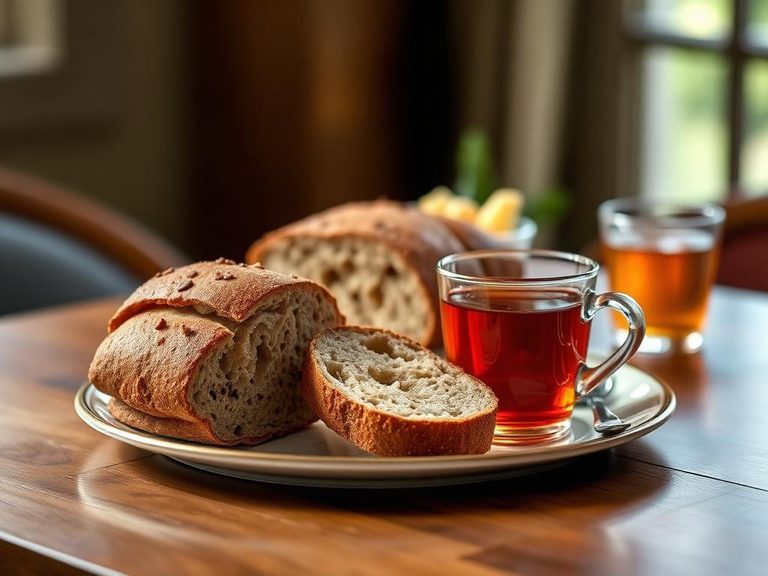
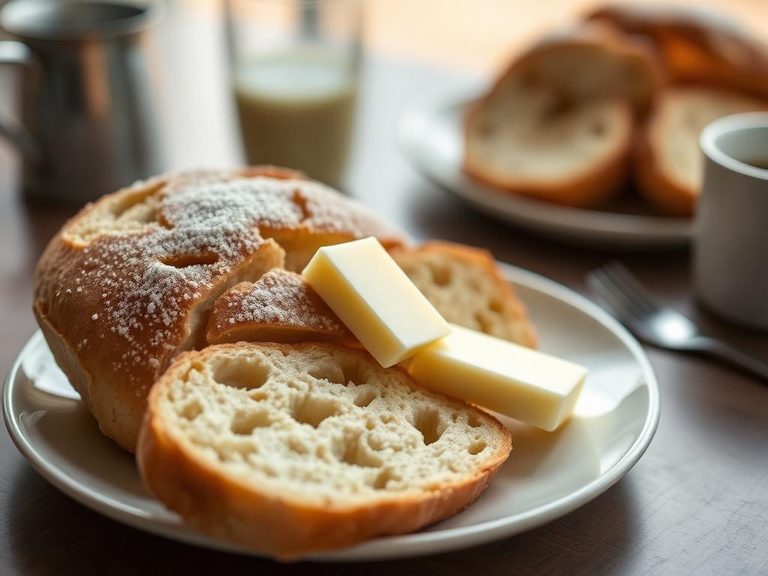
Tennis Bread, also known as Apache bread, is a dense, round, slightly sweet white bread with a soft, cake-like crumb and a lightly golden crust. It's a staple in West African cuisine, particularly Nigeria, where it's often enjoyed for breakfast or as a snack. With 258 calories per 100g, it provides a quick energy source from its high carbohydrate content, though it is relatively low in protein and fat.
Calorie split: 14% protein · 82% carbs · 4% fat
↓ Full nutrition💚 Why it's loved
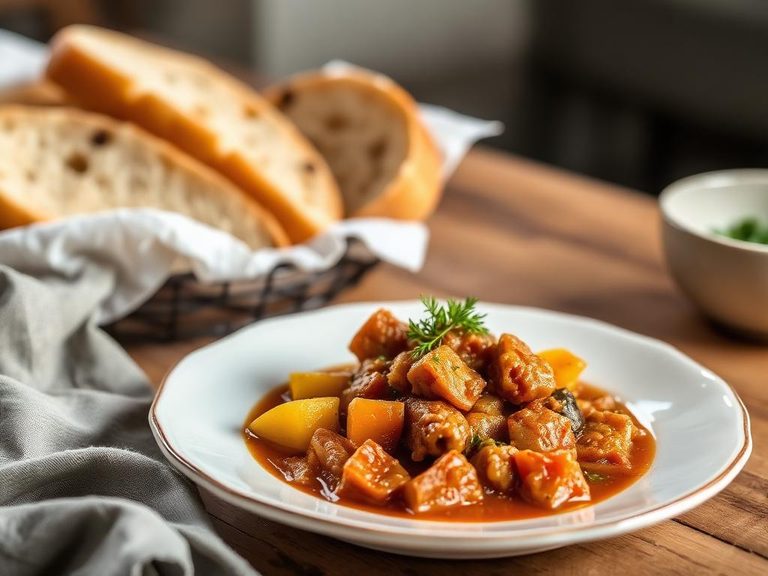
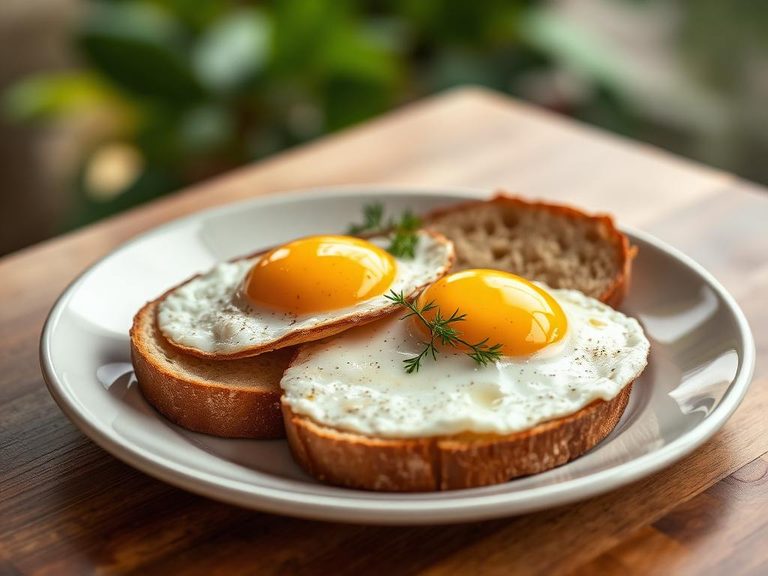
People love Tennis Bread for its mild, slightly sweet flavor and soft, sponge-like texture that pairs perfectly with butter, eggs, or stews. It's a nostalgic comfort food in many West African households, often associated with quick, satisfying meals.
⚠️ Watch-outs & how to enjoy it better
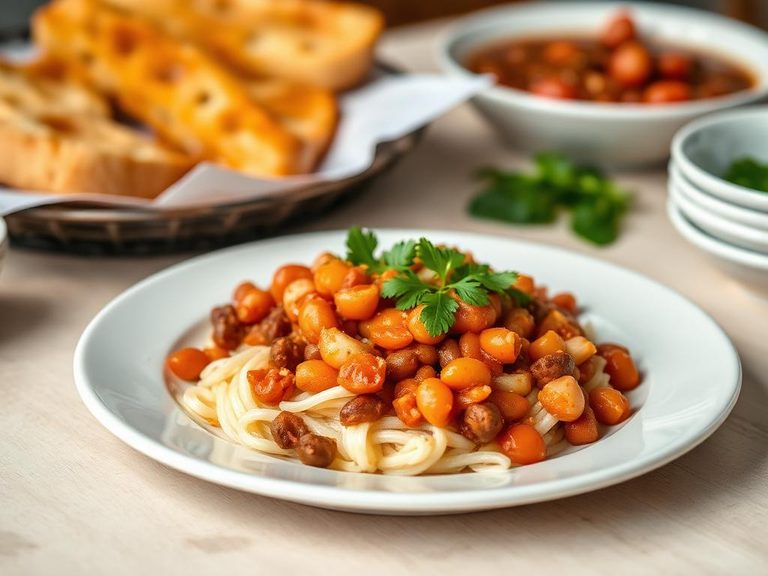
Its high glycemic index can cause rapid blood sugar spikes, making it less suitable for diabetics or those managing blood sugar. To counteract this, pair it with protein (like eggs or beans) or healthy fats (like avocado) to slow digestion. Being a refined wheat product, it may also contain common allergens like gluten.
Key benefits
- Quick energy source due to high carbohydrate content
- Low in fat, making it a lighter bread option
- Contains some dietary fiber for digestive health
- Simple, affordable staple food
- Versatile base for both sweet and savory toppings
🍽️ Popular dishes
🌍 Where it's eaten
💡 Did you know?
The name 'Tennis Bread' is thought to derive from its round shape, which resembles a tennis ball, not from any connection to the sport itself.
Full nutrition (USDA data · scales with serving)
| Water | 33.8 g |
| Energy | 258 kcal |
| Energy | 1082 kj |
| Protein | 9.0 g |
| Total lipid (fat) | 1.1 g |
| Ash | 2.9 g |
| Carbohydrate, by difference | 53.3 g |
| Fiber, total dietary | 2.6 g |
| Total Sugars | 3.0 g |
| Sucrose | 0.37 g |
| Glucose | 0.17 g |
| Fructose | 0.13 g |
| Lactose | 0.00 g |
| Maltose | 2.4 g |
| Galactose | 0.00 g |
| Starch | 45.1 g |
| Calcium, Ca | 67.0 mg |
| Iron, Fe | 3.4 mg |
| Magnesium, Mg | 28.0 mg |
| Phosphorus, P | 160 mg |
| Potassium, K | 100 mg |
| Sodium, Na | 810 mg |
| Zinc, Zn | 0.53 mg |
| Copper, Cu | 0.03 mg |
| Manganese, Mn | 0.48 mg |
| Selenium, Se | 15.5 ug |
| Thiamin | 0.69 mg |
| Riboflavin | 0.29 mg |
| Niacin | 3.4 mg |
| Pantothenic acid | 0.39 mg |
| Vitamin B-6 | 0.06 mg |
| Folate, total | 162 ug |
| Folic acid | 128 ug |
| Folate, food | 34.0 ug |
| Folate, DFE | 252 ug |
| Vitamin E (alpha-tocopherol) | 0.07 mg |
| Tocopherol, beta | 0.04 mg |
| Tocopherol, gamma | 0.50 mg |
| Tocopherol, delta | 0.00 mg |
| Tocotrienol, alpha | 0.04 mg |
| Tocotrienol, beta | 0.00 mg |
| Tocotrienol, gamma | 0.00 mg |
| Tocotrienol, delta | 0.00 mg |
| Vitamin K (phylloquinone) | 0.20 ug |
| Vitamin K (Dihydrophylloquinone) | 0.00 ug |
| Vitamin K (Menaquinone-4) | 0.00 ug |
Fat & fatty acid profile (per 100g)
| Fatty acids, total saturated | 0.27 g |
| SFA 8:0 | 0.00 g |
| SFA 10:0 | 0.00 g |
| SFA 12:0 | 0.00 g |
| SFA 14:0 | 0.00 g |
| SFA 15:0 | 0.00 g |
| SFA 16:0 | 0.25 g |
| SFA 17:0 | 0.00 g |
| SFA 18:0 | 0.02 g |
| SFA 20:0 | 0.00 g |
| SFA 22:0 | 0.00 g |
| SFA 24:0 | 0.00 g |
| Fatty acids, total monounsaturated | 0.12 g |
| MUFA 14:1 | 0.00 g |
| MUFA 15:1 | 0.00 g |
| MUFA 16:1 | 0.00 g |
| MUFA 17:1 | 0.00 g |
| MUFA 18:1 | 0.12 g |
| MUFA 20:1 | 0.00 g |
| MUFA 22:1 | 0.00 g |
| MUFA 24:1 c | 0.00 g |
| Fatty acids, total polyunsaturated | 0.59 g |
| PUFA 18:2 | 0.56 g |
| PUFA 18:3 | 0.03 g |
| PUFA 18:4 | 0.00 g |
| PUFA 20:2 n-6 c,c | 0.00 g |
| PUFA 20:3 | 0.00 g |
| PUFA 20:4 | 0.00 g |
| PUFA 20:5 n-3 (EPA) | 0.00 g |
| PUFA 21:5 | 0.00 g |
| PUFA 22:4 | 0.00 g |
| PUFA 22:5 n-3 (DPA) | 0.00 g |
| PUFA 22:6 n-3 (DHA) | 0.00 g |
FAQ
Is Tennis Bread the same as regular white bread?
No, it's denser, slightly sweeter, and has a softer, more cake-like texture compared to standard sliced white bread.
Can I use Tennis Bread for sandwiches?
Yes, though its soft texture works best for lighter fillings. It's more commonly used for open-faced toppings or torn and dipped into soups and stews.
How should I store Tennis Bread?
Keep it in an airtight container at room temperature for up to 2 days. For longer storage, slice and freeze it, then toast slices directly from frozen.
Nutrient density (calculated · NRF9.3)
Nutrient Rich Foods index: beneficial nutrients (protein, fiber, vitamins, minerals) minus saturated fat, added sugar & sodium, per 100 kcal.
NRF9.3 index — Fulgoni, Keast & Drewnowski, 2009. Computed from USDA nutrients.
Weight-loss friendliness (composite index)
Energy density 2.58 kcal/g · 14% calories from protein · 2.6 g fiber · 3.0 g sugar per 100 g.
Composite of energy density (Rolls et al., 1999), protein & fiber satiety, minus sugar. A calculated heuristic — ranks satiety-per-calorie, not a clinical measure.
Dietary load (calculated from USDA values)
Potential renal acid load. Positive = acid-forming, negative = alkaline-forming.
Sodium-to-potassium ratio: 8.10 (lower is better — aim for ≤ 1)
Sodium:potassium per WHO potassium guidance. Computed from USDA nutrients.