

Sweet potato, boiled, no added fat
Common food

Photo: Wikipedia
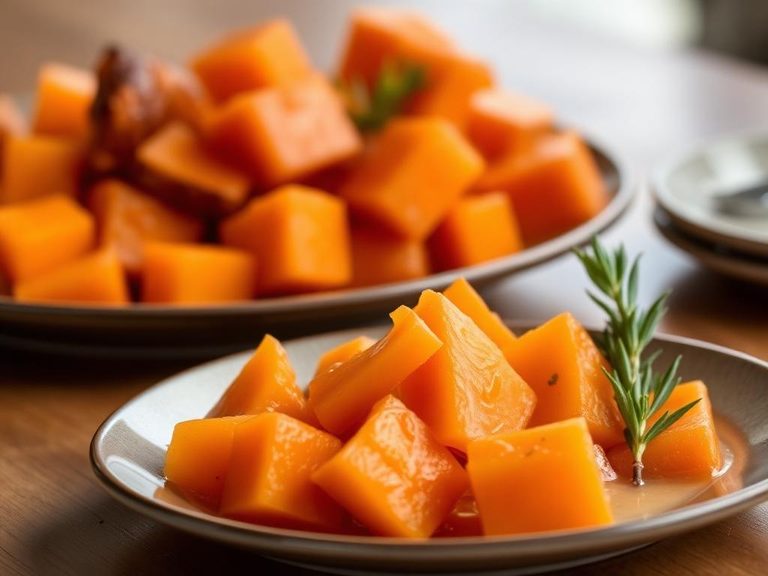
A humble, vibrant orange tuber transformed by simple boiling, its flesh becomes incredibly tender and moist with a natural, earthy sweetness that intensifies as it cooks. Nutritionally, it's a powerhouse of complex carbohydrates and fiber for sustained energy, with a notable dose of beta-carotene (vitamin A precursor) that gives it its signature color.
Calorie split: 8% protein · 88% carbs · 4% fat
↓ Full nutrition💚 Why it's loved
People adore its comforting, naturally sweet flavor and soft, creamy texture that requires no embellishment. It's a beloved, versatile staple that can be a simple side, a baby's first food, or a base for countless global dishes.
⚠️ Watch-outs & how to enjoy it better
Its high carbohydrate content can cause a more pronounced blood sugar spike compared to non-starchy vegetables, so portion control is key for those monitoring glucose levels. To mitigate this, pair it with a source of protein (like beans or yogurt) or healthy fat (like avocado or a drizzle of olive oil) to slow digestion.
Key benefits
- Excellent source of beta-carotene (vitamin A) for eye and immune health
- High in dietary fiber, promoting digestive health and sati.g.ety
- Provides complex carbohydrates for steady, low-glycemic energy
- Naturally low in fat and contains no added sodium
- Rich in potassium, which supports heart and muscle function
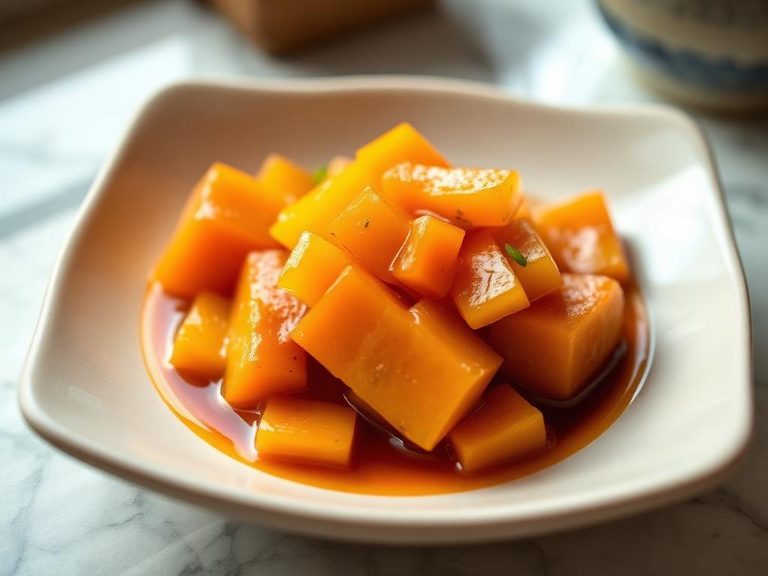
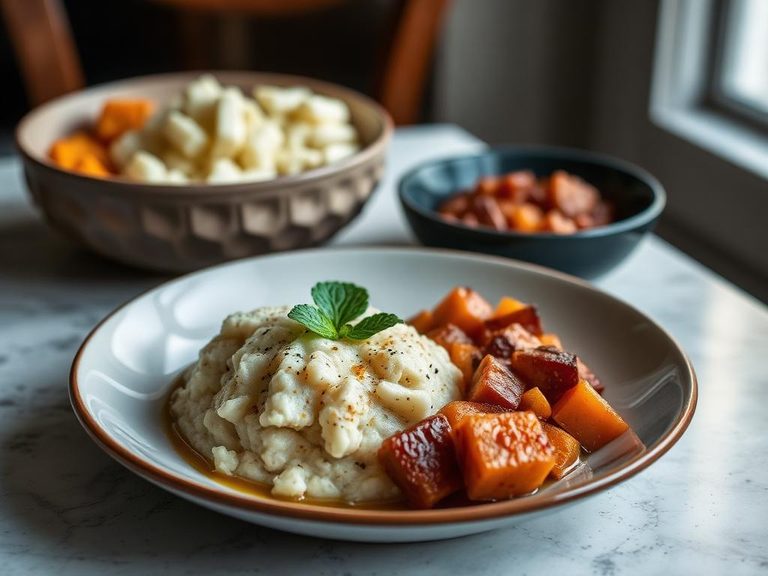
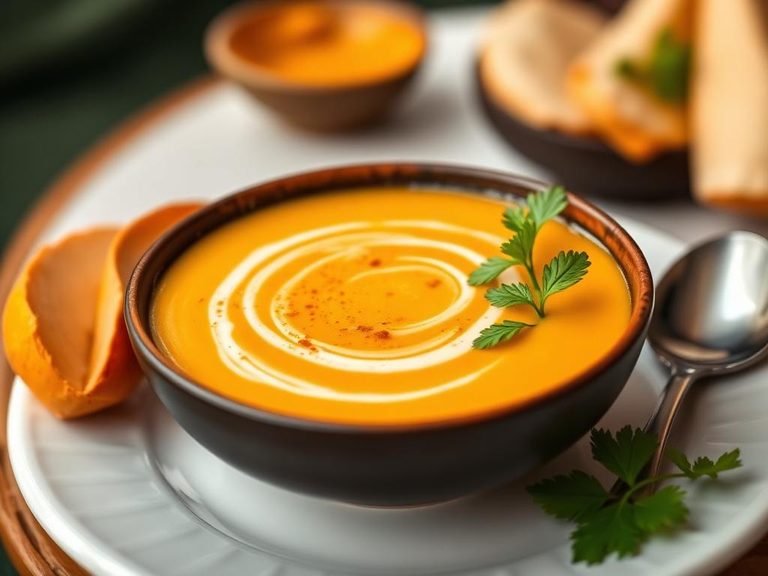
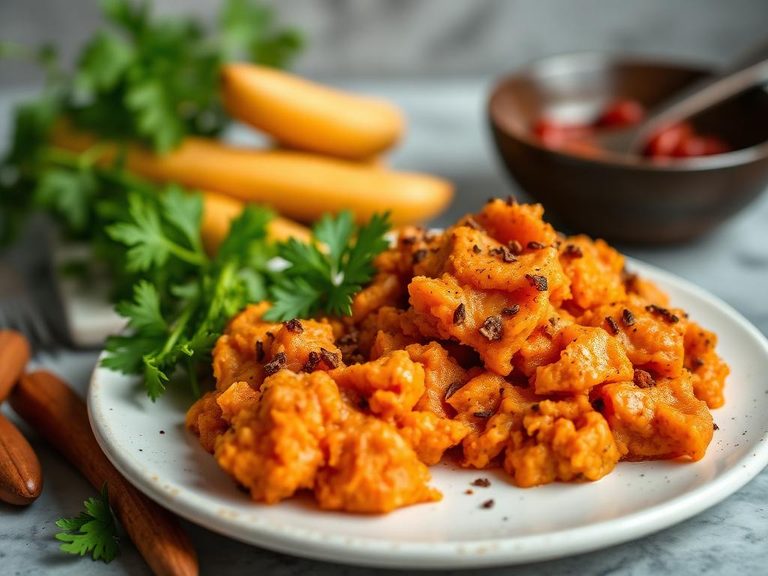
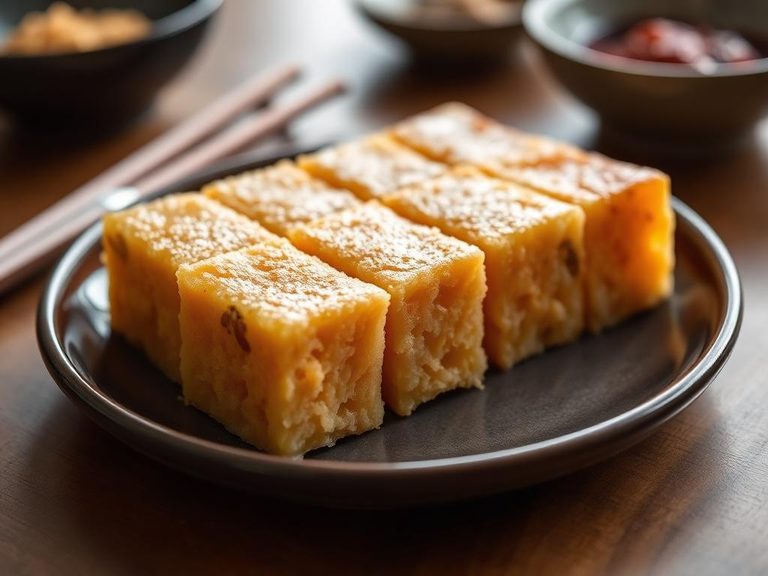
🍽️ Popular dishes
🌍 Where it's eaten
💡 Did you know?
The record for the heaviest sweet potato is over 81 kg (179 lb), grown in Peru—a testament to its potential as a calorie-dense food security crop.
Full nutrition (USDA data · scales with serving)
| Water | 78.4 g |
| Energy | 82.0 kcal |
| Protein | 1.6 g |
| Total lipid (fat) | 0.39 g |
| Carbohydrate, by difference | 18.0 g |
| Fiber, total dietary | 3.1 g |
| Total Sugars | 6.3 g |
| Calcium, Ca | 23.0 mg |
| Iron, Fe | 0.42 mg |
| Magnesium, Mg | 20.0 mg |
| Phosphorus, P | 38.0 mg |
| Potassium, K | 504 mg |
| Sodium, Na | 154 mg |
| Zinc, Zn | 0.35 mg |
| Copper, Cu | 0.19 mg |
| Selenium, Se | 0.00 ug |
| Vitamin C, total ascorbic acid | 13.1 mg |
| Thiamin | 0.04 mg |
| Riboflavin | 0.06 mg |
| Niacin | 0.43 mg |
| Vitamin B-6 | 0.12 mg |
| Folate, total | 10.0 ug |
| Folic acid | 0.00 ug |
| Folate, food | 10.0 ug |
| Folate, DFE | 10.0 ug |
| Choline, total | 12.8 mg |
| Vitamin B-12 | 0.00 ug |
| Vitamin B-12, added | 0.00 ug |
| Vitamin A, RAE | 699 ug |
| Retinol | 0.00 ug |
| Carotene, beta | 8387 ug |
| Carotene, alpha | 7.0 ug |
| Cryptoxanthin, beta | 0.00 ug |
| Lycopene | 0.00 ug |
| Lutein + zeaxanthin | 0.00 ug |
| Vitamin E (alpha-tocopherol) | 0.27 mg |
| Vitamin E, added | 0.00 mg |
| Vitamin D (D2 + D3) | 0.00 ug |
| Vitamin K (phylloquinone) | 0.20 ug |
| Alcohol, ethyl | 0.00 g |
| Caffeine | 0.00 mg |
| Theobromine | 0.00 mg |
Fat & fatty acid profile (per 100g)
| Fatty acids, total saturated | 0.02 g |
| SFA 4:0 | 0.00 g |
| SFA 6:0 | 0.00 g |
| SFA 8:0 | 0.00 g |
| SFA 10:0 | 0.00 g |
| SFA 12:0 | 0.00 g |
| SFA 14:0 | 0.00 g |
| SFA 16:0 | 0.02 g |
| SFA 18:0 | 0.00 g |
| Fatty acids, total monounsaturated | 0.00 g |
| MUFA 16:1 | 0.00 g |
| MUFA 18:1 | 0.00 g |
| MUFA 20:1 | 0.00 g |
| MUFA 22:1 | 0.00 g |
| Fatty acids, total polyunsaturated | 0.01 g |
| PUFA 18:2 | 0.01 g |
| PUFA 18:3 | 0.00 g |
| PUFA 18:4 | 0.00 g |
| PUFA 20:4 | 0.00 g |
| PUFA 20:5 n-3 (EPA) | 0.00 g |
| PUFA 22:5 n-3 (DPA) | 0.00 g |
| PUFA 22:6 n-3 (DHA) | 0.00 g |
| Cholesterol | 0.00 mg |
Amino acid profile (per 100g)
Estimated from Snacks, sweet potato chips, unsalted — USDA does not publish this profile for Sweet potato.
| Tryptophan | 0.10 g |
| Threonine | 0.26 g |
| Isoleucine | 0.17 g |
| Leucine | 0.29 g |
| Lysine | 0.20 g |
| Methionine | 0.09 g |
| Cystine | 0.07 g |
| Phenylalanine | 0.28 g |
| Tyrosine | 0.11 g |
| Valine | 0.27 g |
| Arginine | 0.17 g |
| Histidine | 0.10 g |
| Alanine | 0.24 g |
| Aspartic acid | 1.2 g |
| Glutamic acid | 0.48 g |
| Glycine | 0.20 g |
| Proline | 0.16 g |
| Serine | 0.28 g |
FAQ
Why does my boiled sweet potato sometimes turn out watery or mushy?
This is often due to the variety. Some sweet potatoes, especially those with higher sugar and moisture content (like many orange-fleshed types), can become very soft when boiled. Using a waxy, lower-moisture variety or steaming instead of boiling can help maintain a firmer texture.
Is the skin edible after boiling?
Yes, the skin is edible and nutritious, containing fiber and potassium. It will be soft after boiling. Simply scrub it well before cooking, and you can eat it or peel it off easily after boiling.
How can I store leftover boiled sweet potato?
Cool it quickly, then store in an airtight container in the refrigerator for up to 3-4 days. It can be reheated in the microwave, oven, or added directly to soups and salads. For longer storage, mash or cube it and freeze for up to 10-12 months.
Nutrient density (calculated · NRF9.3)
Nutrient Rich Foods index: beneficial nutrients (protein, fiber, vitamins, minerals) minus saturated fat, added sugar & sodium, per 100 kcal.
NRF9.3 index — Fulgoni, Keast & Drewnowski, 2009. Computed from USDA nutrients.
Weight-loss friendliness (composite index)
Energy density 0.82 kcal/g · 8% calories from protein · 3.1 g fiber · 6.3 g sugar per 100 g.
Composite of energy density (Rolls et al., 1999), protein & fiber satiety, minus sugar. A calculated heuristic — ranks satiety-per-calorie, not a clinical measure.
Dietary load (calculated from USDA values)
Potential renal acid load. Positive = acid-forming, negative = alkaline-forming.
Sodium-to-potassium ratio: 0.31 (lower is better — aim for ≤ 1)
Sodium:potassium per WHO potassium guidance. Computed from USDA nutrients.