

Sugar, brown
Common food

Photo: Wikipedia
Brown sugar is refined white sugar with molasses added back, giving it a moist, sandy texture and a warm, caramel-like flavor. Its deep amber color comes from the molasses, which also contributes trace minerals like calcium, potassium, and iron. Nutritionally, it's almost pure carbohydrate (98g per 100g), providing quick energy but no significant protein, fat, or fiber.
Calorie split: 0% protein · 100% carbs · 0% fat
↓ Full nutrition💚 Why it's loved
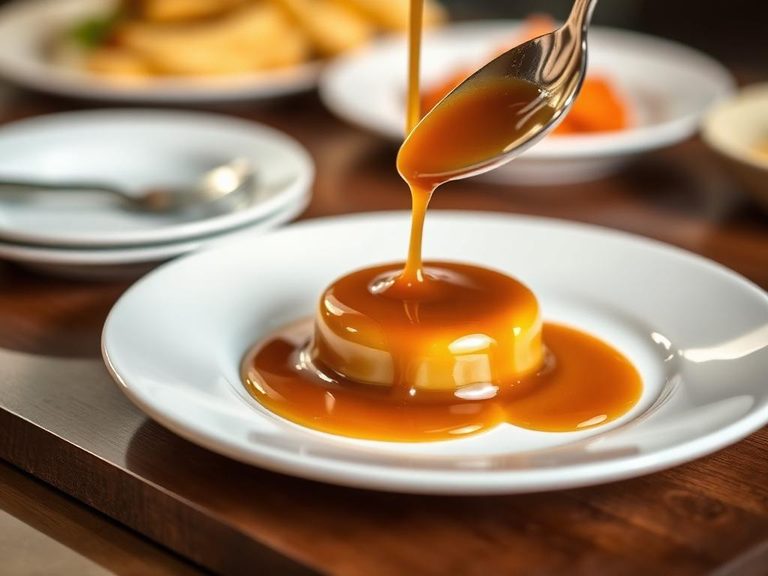
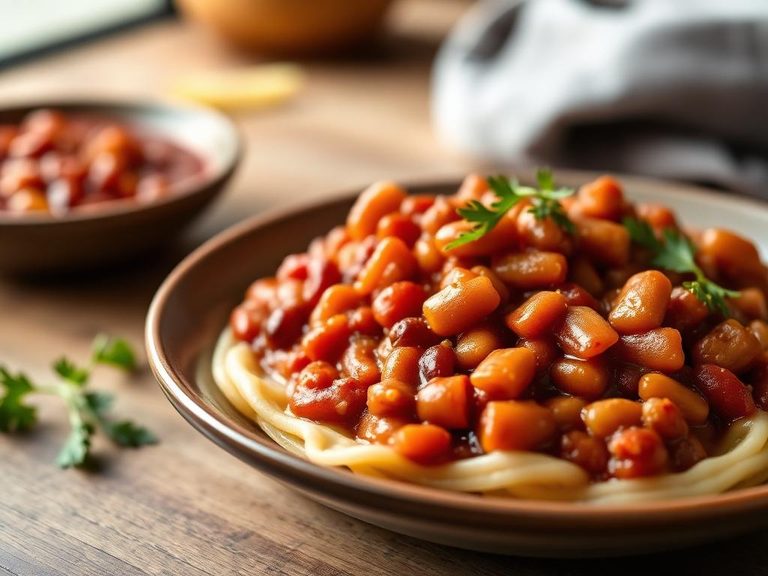
People love brown sugar for its complex, warm sweetness that's less sharp than white sugar, and its ability to add moisture and a tender crumb to baked goods. It's a staple in comfort foods like cookies, caramel sauces, and baked beans, evoking a sense of homemade warmth.
⚠️ Watch-outs & how to enjoy it better
As a concentrated source of sugar, it can cause rapid blood-sugar spikes and offers 'empty calories' with minimal nutrients. To mitigate this, pair it with protein or healthy fats (e.g., nuts, yogurt) to slow absorption, use it sparingly as a flavor enhancer rather than a main ingredient, and opt for recipes where its flavor shines so a little goes a long way.
Key benefits
- Quick source of energy for the brain and muscles
- Adds moisture and chewiness to baked goods
- Provides trace minerals (calcium, potassium, iron) from molasses
- Enhances flavor with deep caramel and toffee notes
- Helps create a crisp crust in cookies and cakes
🍽️ Popular dishes




🌍 Where it's eaten
💡 Did you know?
The 'wet' or 'dry' feel of brown sugar is determined by its molasses content; dark brown sugar has about twice as much molasses as light brown, making it moister and more flavorful.
Full nutrition (USDA data · scales with serving)
| Water | 1.3 g |
| Energy | 380 kcal |
| Protein | 0.12 g |
| Total lipid (fat) | 0.00 g |
| Carbohydrate, by difference | 98.1 g |
| Fiber, total dietary | 0.00 g |
| Total Sugars | 97.0 g |
| Calcium, Ca | 83.0 mg |
| Iron, Fe | 0.71 mg |
| Magnesium, Mg | 9.0 mg |
| Phosphorus, P | 4.0 mg |
| Potassium, K | 133 mg |
| Sodium, Na | 28.0 mg |
| Zinc, Zn | 0.03 mg |
| Copper, Cu | 0.05 mg |
| Selenium, Se | 1.2 ug |
| Vitamin C, total ascorbic acid | 0.00 mg |
| Thiamin | 0.00 mg |
| Riboflavin | 0.00 mg |
| Niacin | 0.11 mg |
| Vitamin B-6 | 0.04 mg |
| Folate, total | 1.0 ug |
| Folic acid | 0.00 ug |
| Folate, food | 1.0 ug |
| Folate, DFE | 1.0 ug |
| Choline, total | 2.3 mg |
| Vitamin B-12 | 0.00 ug |
| Vitamin B-12, added | 0.00 ug |
| Vitamin A, RAE | 0.00 ug |
| Retinol | 0.00 ug |
| Carotene, beta | 0.00 ug |
| Carotene, alpha | 0.00 ug |
| Cryptoxanthin, beta | 0.00 ug |
| Lycopene | 0.00 ug |
| Lutein + zeaxanthin | 0.00 ug |
| Vitamin E (alpha-tocopherol) | 0.00 mg |
| Vitamin E, added | 0.00 mg |
| Vitamin D (D2 + D3) | 0.00 ug |
| Vitamin K (phylloquinone) | 0.00 ug |
| Alcohol, ethyl | 0.00 g |
| Caffeine | 0.00 mg |
| Theobromine | 0.00 mg |
Fat & fatty acid profile (per 100g)
| Fatty acids, total saturated | 0.00 g |
| SFA 4:0 | 0.00 g |
| SFA 6:0 | 0.00 g |
| SFA 8:0 | 0.00 g |
| SFA 10:0 | 0.00 g |
| SFA 12:0 | 0.00 g |
| SFA 14:0 | 0.00 g |
| SFA 16:0 | 0.00 g |
| SFA 18:0 | 0.00 g |
| Fatty acids, total monounsaturated | 0.00 g |
| MUFA 16:1 | 0.00 g |
| MUFA 18:1 | 0.00 g |
| MUFA 20:1 | 0.00 g |
| MUFA 22:1 | 0.00 g |
| Fatty acids, total polyunsaturated | 0.00 g |
| PUFA 18:2 | 0.00 g |
| PUFA 18:3 | 0.00 g |
| PUFA 18:4 | 0.00 g |
| PUFA 20:4 | 0.00 g |
| PUFA 20:5 n-3 (EPA) | 0.00 g |
| PUFA 22:5 n-3 (DPA) | 0.00 g |
| PUFA 22:6 n-3 (DHA) | 0.00 g |
| Cholesterol | 0.00 mg |
Amino acid profile (per 100g)
Estimated from Snacks, rice cakes, brown rice, sesame seed — USDA does not publish this profile for Sugar.
| Tryptophan | 0.10 g |
| Threonine | 0.28 g |
| Isoleucine | 0.32 g |
| Leucine | 0.63 g |
| Lysine | 0.29 g |
| Methionine | 0.17 g |
| Cystine | 0.09 g |
| Phenylalanine | 0.39 g |
| Tyrosine | 0.29 g |
| Valine | 0.44 g |
| Arginine | 0.59 g |
| Histidine | 0.19 g |
| Alanine | 0.44 g |
| Aspartic acid | 0.71 g |
| Glutamic acid | 1.6 g |
| Glycine | 0.38 g |
| Proline | 0.35 g |
| Serine | 0.39 g |
FAQ
What's the difference between light and dark brown sugar?
The difference is the amount of molasses. Dark brown sugar contains about twice as much molasses as light brown, giving it a stronger, more caramel-like flavor and a moister texture.
Can I substitute white sugar for brown sugar in a recipe?
You can, but you'll lose the moisture, chewiness, and caramel flavor. For every cup of brown sugar, use 1 cup of white sugar plus 1 tablespoon of molasses to approximate the taste and texture.
Why does my brown sugar get hard?
It hardens because it loses moisture to the air, causing the sugar crystals to bond. To soften it, place it in an airtight container with a slice of bread, an apple, or a damp paper towel for a day.
Nutrient density (calculated · NRF9.3)
Nutrient Rich Foods index: beneficial nutrients (protein, fiber, vitamins, minerals) minus saturated fat, added sugar & sodium, per 100 kcal.
NRF9.3 index — Fulgoni, Keast & Drewnowski, 2009. Computed from USDA nutrients.
Weight-loss friendliness (composite index)
Energy density 3.80 kcal/g · 0% calories from protein · 0.0 g fiber · 97.0 g sugar per 100 g.
Composite of energy density (Rolls et al., 1999), protein & fiber satiety, minus sugar. A calculated heuristic — ranks satiety-per-calorie, not a clinical measure.
Dietary load (calculated from USDA values)
Potential renal acid load. Positive = acid-forming, negative = alkaline-forming.
Sodium-to-potassium ratio: 0.21 (lower is better — aim for ≤ 1)
Sodium:potassium per WHO potassium guidance. Computed from USDA nutrients.