

Stewed dried beef, Puerto Rican style
Common food
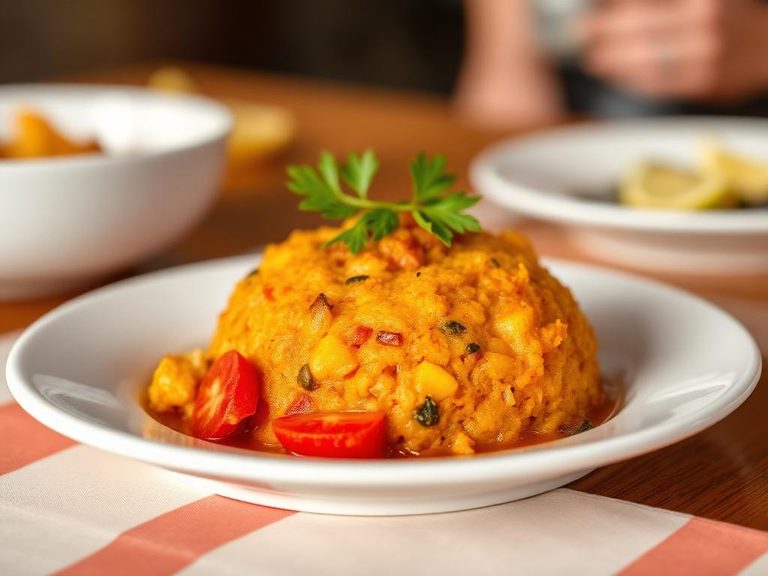
Carne guisada seca is a rich, savory Puerto Rican stew made from slow-braised beef chunks that have been dried and then rehydrated in a deeply seasoned tomato-based sauce. The meat becomes incredibly tender, almost melting, with a concentrated beefy flavor, while the sauce is a thick, savory gravy with a subtle sweetness from sofrito. It's a protein-packed dish with a high fat content, making it a hearty and satisfying meal.
Calorie split: 27% protein · 6% carbs · 67% fat
↓ Full nutrition💚 Why it's loved
People love it for its deep, complex flavor that develops from the long, slow cooking process, where the meat absorbs the rich, aromatic sofrito and tomato sauce. It's a beloved comfort food in Puerto Rican cuisine, often served at family gatherings and holidays, evoking a strong sense of tradition and home.
⚠️ Watch-outs & how to enjoy it better
The high fat content, particularly saturated fat, may be a concern for those monitoring heart health or calorie intake. The dish can also be high in sodium depending on the seasoning and broth used. To counteract this, serve it with a large portion of steamed vegetables or a fresh salad to add fiber and volume, and use low-sodium broth or control the added salt during cooking.
Key benefits
- Excellent source of complete protein for muscle maintenance and repair.
- High in iron and B vitamins, particularly B12, from the beef.
- The slow-cooking process helps break down connective tissue, making nutrients more bioavailable.
- Provides a substantial amount of energy from protein and fats.
- Can be a source of zinc and selenium, important for immune function.
🍽️ Popular dishes
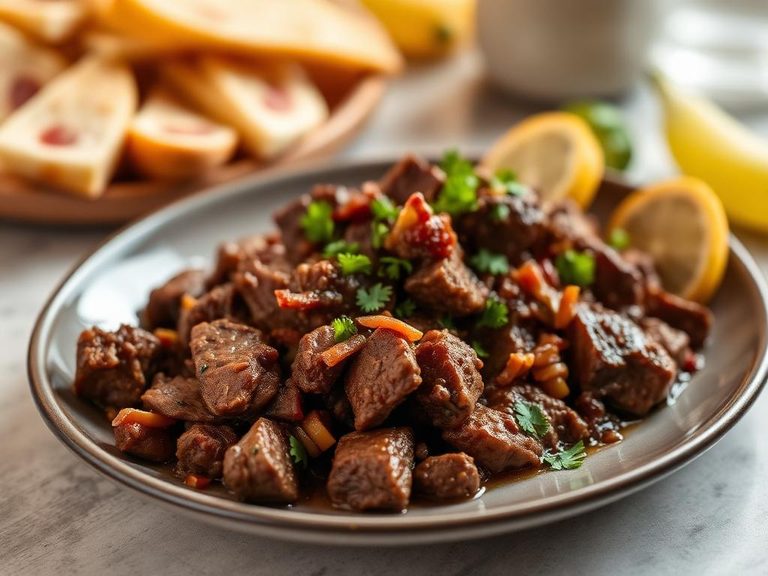
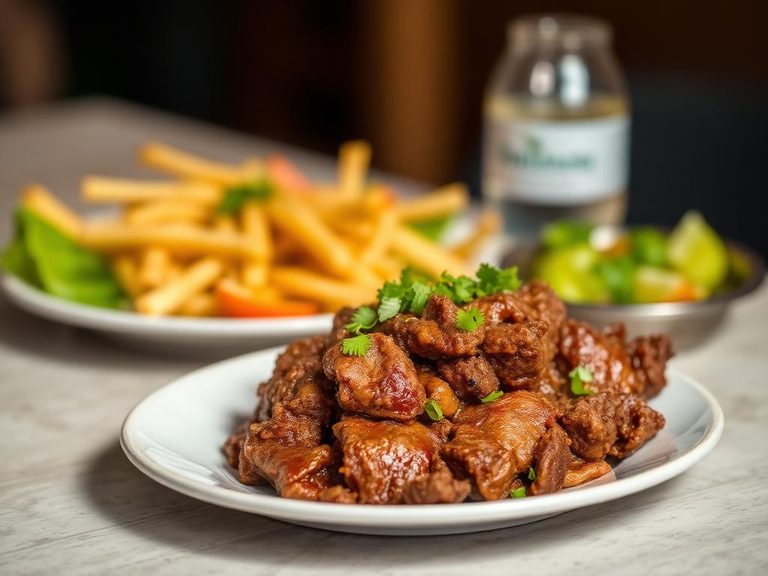
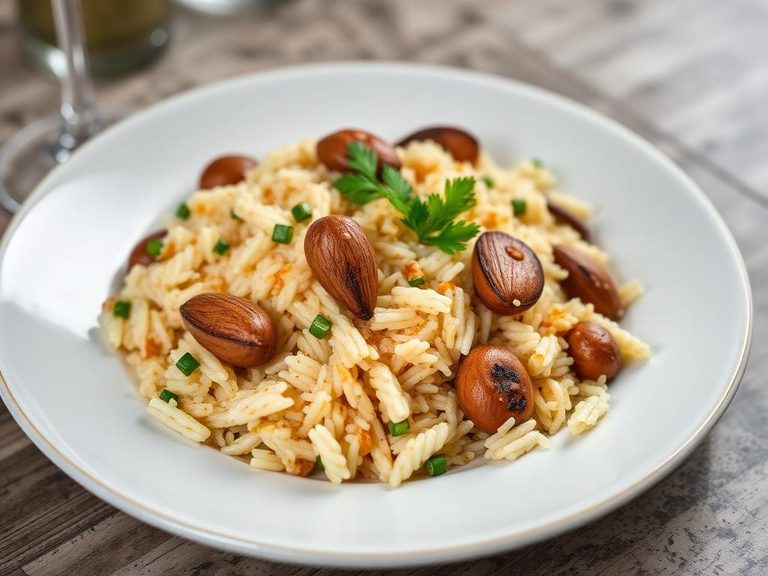
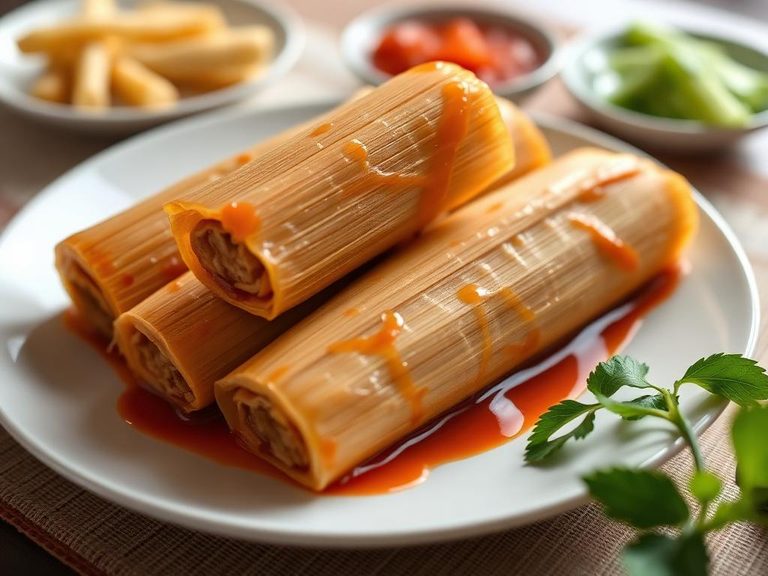
🌍 Where it's eaten
💡 Did you know?
The 'dried' in 'dried beef' often refers to beef that has been salt-cured and air-dried (like cecina), not dehydrated like jerky, which is then rehydrated and stewed, giving it a uniquely firm yet tender texture.
Full nutrition (USDA data · scales with serving)
| Water | 52.8 g |
| Energy | 258 kcal |
| Protein | 17.7 g |
| Total lipid (fat) | 19.1 g |
| Carbohydrate, by difference | 3.9 g |
| Fiber, total dietary | 0.80 g |
| Total Sugars | 2.5 g |
| Calcium, Ca | 20.0 mg |
| Iron, Fe | 1.6 mg |
| Magnesium, Mg | 16.0 mg |
| Phosphorus, P | 113 mg |
| Potassium, K | 218 mg |
| Sodium, Na | 1770 mg |
| Zinc, Zn | 2.8 mg |
| Copper, Cu | 0.08 mg |
| Selenium, Se | 18.1 ug |
| Vitamin C, total ascorbic acid | 7.5 mg |
| Thiamin | 0.04 mg |
| Riboflavin | 0.11 mg |
| Niacin | 2.8 mg |
| Vitamin B-6 | 0.16 mg |
| Folate, total | 8.0 ug |
| Folic acid | 0.00 ug |
| Folate, food | 8.0 ug |
| Folate, DFE | 8.0 ug |
| Choline, total | 4.6 mg |
| Vitamin B-12 | 0.65 ug |
| Vitamin B-12, added | 0.00 ug |
| Vitamin A, RAE | 8.0 ug |
| Retinol | 0.00 ug |
| Carotene, beta | 90.0 ug |
| Carotene, alpha | 6.0 ug |
| Cryptoxanthin, beta | 3.0 ug |
| Lycopene | 2055 ug |
| Lutein + zeaxanthin | 47.0 ug |
| Vitamin E (alpha-tocopherol) | 4.3 mg |
| Vitamin E, added | 0.00 mg |
| Vitamin D (D2 + D3) | 0.00 ug |
| Vitamin K (phylloquinone) | 5.7 ug |
| Alcohol, ethyl | 0.00 g |
| Caffeine | 0.00 mg |
| Theobromine | 0.00 mg |
Fat & fatty acid profile (per 100g)
| Fatty acids, total saturated | 3.4 g |
| SFA 4:0 | 0.00 g |
| SFA 6:0 | 0.00 g |
| SFA 8:0 | 0.00 g |
| SFA 10:0 | 0.00 g |
| SFA 12:0 | 0.00 g |
| SFA 14:0 | 0.06 g |
| SFA 16:0 | 2.5 g |
| SFA 18:0 | 0.64 g |
| Fatty acids, total monounsaturated | 7.3 g |
| MUFA 16:1 | 0.14 g |
| MUFA 18:1 | 7.1 g |
| MUFA 20:1 | 0.06 g |
| MUFA 22:1 | 0.00 g |
| Fatty acids, total polyunsaturated | 7.3 g |
| PUFA 18:2 | 7.2 g |
| PUFA 18:3 | 0.18 g |
| PUFA 18:4 | 0.00 g |
| PUFA 20:4 | 0.01 g |
| PUFA 20:5 n-3 (EPA) | 0.00 g |
| PUFA 22:5 n-3 (DPA) | 0.00 g |
| PUFA 22:6 n-3 (DHA) | 0.00 g |
| Cholesterol | 45.0 mg |
Amino acid profile (per 100g)
Estimated from Peaches, dried, sulfured, stewed, with added sugar — USDA does not publish this profile for Stewed dried beef.
| Tryptophan | 0.00 g |
| Threonine | 0.04 g |
| Isoleucine | 0.03 g |
| Leucine | 0.06 g |
| Lysine | 0.03 g |
| Methionine | 0.03 g |
| Cystine | 0.01 g |
| Phenylalanine | 0.03 g |
| Tyrosine | 0.03 g |
| Valine | 0.06 g |
| Arginine | 0.03 g |
| Histidine | 0.02 g |
| Alanine | 0.06 g |
| Aspartic acid | 0.18 g |
| Glutamic acid | 0.16 g |
| Glycine | 0.04 g |
| Proline | 0.04 g |
| Serine | 0.05 g |
FAQ
What cut of beef is best for stewed dried beef?
Traditionally, tougher, well-marbled cuts like chuck roast or round steak are ideal. They have enough fat and connective tissue to become tender and flavorful during the long, slow stewing process.
How is 'dried beef' different from regular beef for stew?
'Dried beef' for this dish is typically salt-cured and air-dried (like cecina), which concentrates its flavor and gives it a denser texture. It must be rehydrated and often desalted before stewing, unlike fresh beef which is used directly.
Can I make this dish with fresh beef instead?
Yes, you can use fresh beef chuck or round. The flavor will be slightly different—less concentrated and salty—but you can achieve a similar tender, stewed texture by cooking it low and slow in the same sauce.
Nutrient density (calculated · NRF9.3)
Nutrient Rich Foods index: beneficial nutrients (protein, fiber, vitamins, minerals) minus saturated fat, added sugar & sodium, per 100 kcal.
NRF9.3 index — Fulgoni, Keast & Drewnowski, 2009. Computed from USDA nutrients.
Weight-loss friendliness (composite index)
Energy density 2.58 kcal/g · 27% calories from protein · 0.8 g fiber · 2.5 g sugar per 100 g.
Composite of energy density (Rolls et al., 1999), protein & fiber satiety, minus sugar. A calculated heuristic — ranks satiety-per-calorie, not a clinical measure.
Dietary load (calculated from USDA values)
Potential renal acid load. Positive = acid-forming, negative = alkaline-forming.
Sodium-to-potassium ratio: 8.12 (lower is better — aim for ≤ 1)
Sodium:potassium per WHO potassium guidance. Computed from USDA nutrients.