

Spices, rosemary, dried
Whole food · Spices and Herbs

Photo: Wikipedia
Dried rosemary is a potent, piney herb with needle-like leaves that release a woody, camphoraceous aroma when crushed. Its flavor is intensely aromatic, slightly bitter, and resinous, with a texture that is tough and fibrous unless finely ground. Nutritionally, it is a powerhouse of dietary fiber and antioxidants, with a surprisingly high calorie density for a spice.
Calorie split: 5% protein · 62% carbs · 33% fat
↓ Full nutrition💚 Why it's loved
People love rosemary for its bold, unforgettable aroma that instantly evokes rustic Mediterranean cooking and the warmth of a herb garden. Its versatility shines in everything from roasted meats and breads to infused oils, making it a cornerstone of savory flavor building.
⚠️ Watch-outs & how to enjoy it better
Its intense, pine-like flavor can become overpowering or medicinal if used excessively, potentially overwhelming delicate dishes. The tough, needle-like leaves can be unpleasant if not finely chopped or ground, posing a minor choking hazard for some. To counteract, use it sparingly (start with 1/4 teaspoon for a dish), crush or grind the leaves to release flavor without the texture, and pair it with fatty ingredients like olive oil or meats to mellow its sharpness.
Key benefits
- Extremely high in dietary fiber (42.6g per 100g)
- Rich in antioxidants like carnosic acid and rosmarinic acid
- Contains anti-inflammatory compounds
- May support digestion and gut health due to fiber content
- Provides iron, calcium, and vitamin B6 in small amounts
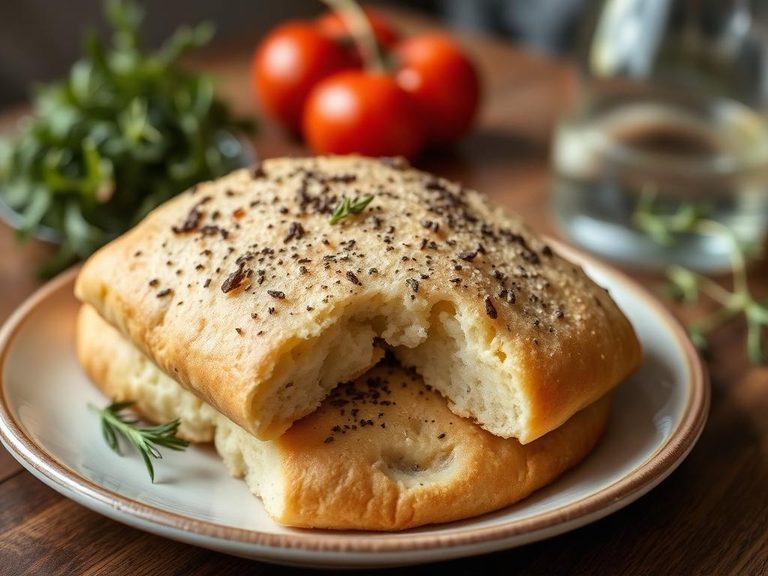
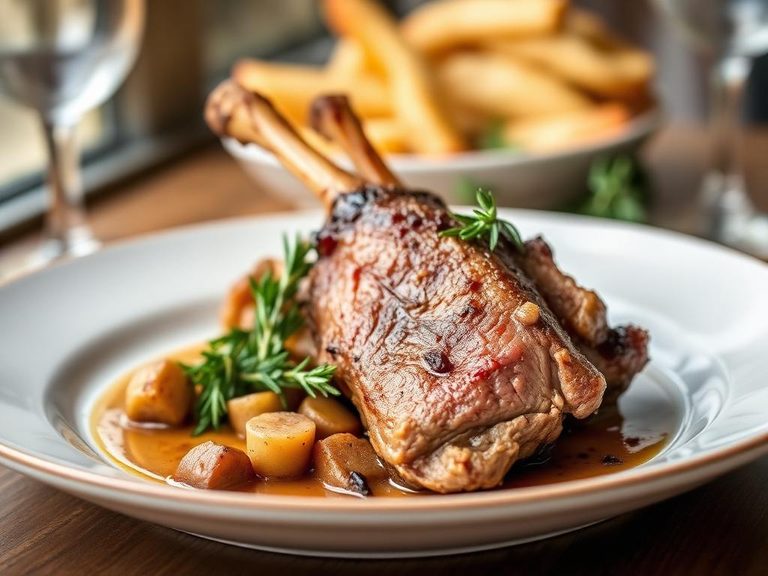
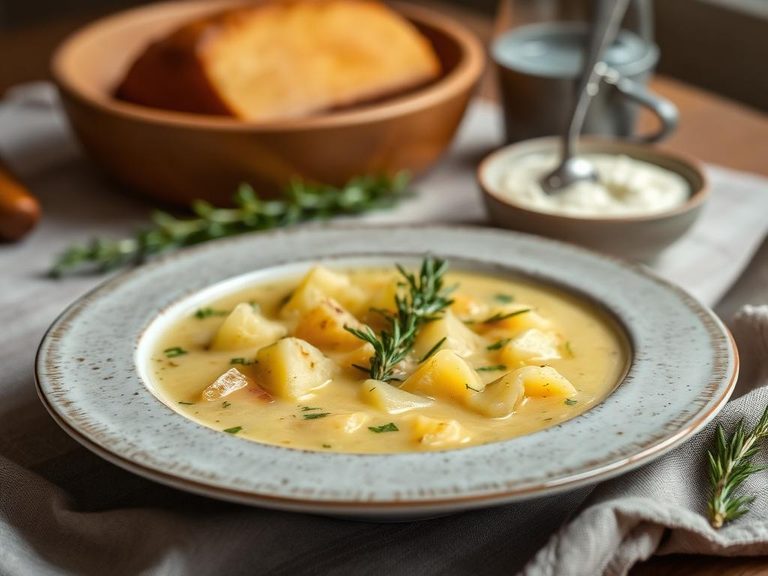
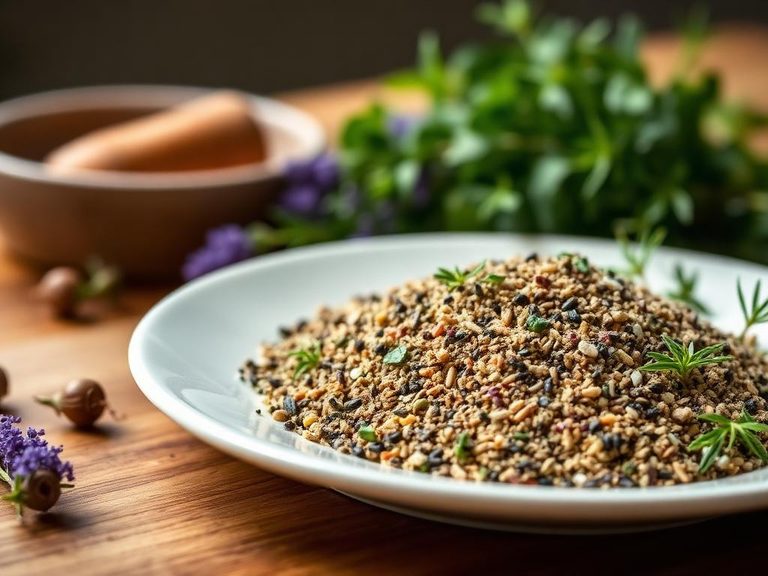
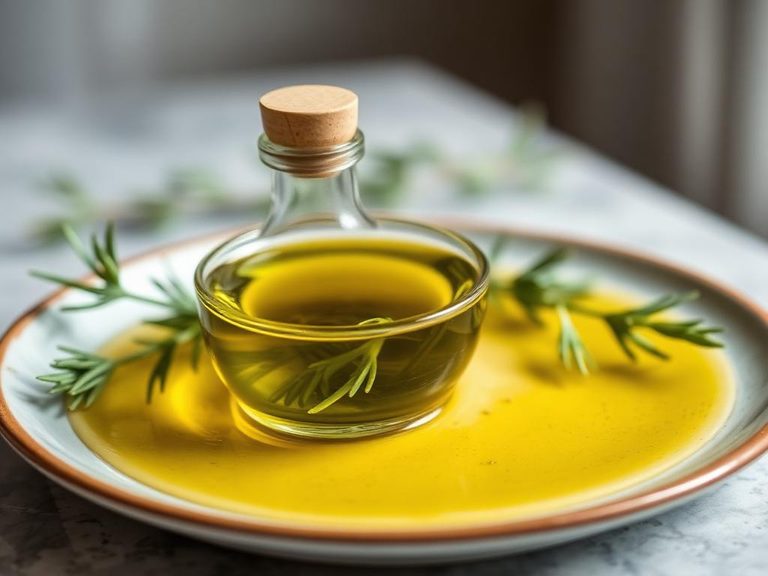
🍽️ Popular dishes
🌍 Where it's eaten
💡 Did you know?
Ancient Greeks believed rosemary improved memory, and students would wear rosemary garlands while studying for exams.
Full nutrition (USDA data · scales with serving)
| Water | 9.3 g |
| Energy | 331 kcal |
| Energy | 1387 kj |
| Protein | 4.9 g |
| Total lipid (fat) | 15.2 g |
| Ash | 6.5 g |
| Carbohydrate, by difference | 64.1 g |
| Fiber, total dietary | 42.6 g |
| Calcium, Ca | 1280 mg |
| Iron, Fe | 29.3 mg |
| Magnesium, Mg | 220 mg |
| Phosphorus, P | 70.0 mg |
| Potassium, K | 955 mg |
| Sodium, Na | 50.0 mg |
| Zinc, Zn | 3.2 mg |
| Copper, Cu | 0.55 mg |
| Manganese, Mn | 1.9 mg |
| Selenium, Se | 4.6 ug |
| Vitamin C, total ascorbic acid | 61.2 mg |
| Thiamin | 0.51 mg |
| Riboflavin | 0.43 mg |
| Niacin | 1.0 mg |
| Vitamin B-6 | 1.7 mg |
| Folate, total | 307 ug |
| Folic acid | 0.00 ug |
| Folate, food | 307 ug |
| Folate, DFE | 307 ug |
| Vitamin B-12 | 0.00 ug |
| Vitamin A, RAE | 156 ug |
| Retinol | 0.00 ug |
| Vitamin A, IU | 3128 iu |
| Vitamin D (D2 + D3), International Units | 0.00 iu |
| Vitamin D (D2 + D3) | 0.00 ug |
| Alcohol, ethyl | 0.00 g |
Fat & fatty acid profile (per 100g)
| Fatty acids, total saturated | 7.4 g |
| SFA 4:0 | 0.00 g |
| SFA 6:0 | 0.00 g |
| SFA 8:0 | 0.00 g |
| SFA 10:0 | 0.05 g |
| SFA 12:0 | 0.04 g |
| SFA 14:0 | 0.32 g |
| SFA 15:0 | 0.13 g |
| SFA 16:0 | 5.0 g |
| SFA 17:0 | 0.09 g |
| SFA 18:0 | 0.60 g |
| SFA 20:0 | 0.38 g |
| SFA 22:0 | 0.39 g |
| SFA 24:0 | 0.29 g |
| Fatty acids, total monounsaturated | 3.0 g |
| MUFA 14:1 | 0.06 g |
| MUFA 16:1 | 0.17 g |
| MUFA 18:1 | 2.7 g |
| MUFA 20:1 | 0.13 g |
| MUFA 22:1 | 0.00 g |
| Fatty acids, total polyunsaturated | 2.3 g |
| PUFA 18:2 | 1.2 g |
| PUFA 18:3 | 1.1 g |
| PUFA 18:4 | 0.00 g |
| PUFA 20:4 | 0.00 g |
| PUFA 20:5 n-3 (EPA) | 0.00 g |
| PUFA 22:5 n-3 (DPA) | 0.00 g |
| PUFA 22:6 n-3 (DHA) | 0.00 g |
| Cholesterol | 0.00 mg |
| Phytosterols | 58.0 mg |
Amino acid profile (per 100g)
Estimated from Spices, fenugreek seed — USDA does not publish this profile for Spices.
| Tryptophan | 0.39 g |
| Threonine | 0.90 g |
| Isoleucine | 1.2 g |
| Leucine | 1.8 g |
| Lysine | 1.7 g |
| Methionine | 0.34 g |
| Cystine | 0.37 g |
| Phenylalanine | 1.1 g |
| Tyrosine | 0.76 g |
| Valine | 1.1 g |
| Arginine | 2.5 g |
| Histidine | 0.67 g |
| Alanine | 1.0 g |
| Aspartic acid | 2.7 g |
| Glutamic acid | 4.0 g |
| Glycine | 1.3 g |
| Proline | 1.2 g |
| Serine | 1.2 g |
FAQ
Can you eat dried rosemary leaves whole?
While edible, whole dried rosemary needles are very tough and fibrous. It's best to crush them between your fingers, grind them in a mortar and pestle, or use a spice grinder to avoid an unpleasant texture in your food.
How does dried rosemary compare to fresh?
Dried rosemary has a more concentrated, slightly more bitter and camphor-like flavor than fresh. Use about 1/3 the amount of dried rosemary in place of fresh, as its flavor intensifies during cooking.
Is the high fiber content in dried rosemary actually beneficial?
Yes, but in the tiny quantities typically used as a spice (e.g., 1-2 grams), the fiber contribution is minimal. Its primary benefits come from its aromatic compounds and antioxidants, not its macronutrient profile.
Nutrient density (calculated · NRF9.3)
Nutrient Rich Foods index: beneficial nutrients (protein, fiber, vitamins, minerals) minus saturated fat, added sugar & sodium, per 100 kcal.
NRF9.3 index — Fulgoni, Keast & Drewnowski, 2009. Computed from USDA nutrients.
Weight-loss friendliness (composite index)
Energy density 3.31 kcal/g · 6% calories from protein · 42.6 g fiber · 0.0 g sugar per 100 g.
Composite of energy density (Rolls et al., 1999), protein & fiber satiety, minus sugar. A calculated heuristic — ranks satiety-per-calorie, not a clinical measure.
Dietary load (calculated from USDA values)
Potential renal acid load. Positive = acid-forming, negative = alkaline-forming.
Sodium-to-potassium ratio: 0.05 (lower is better — aim for ≤ 1)
Sodium:potassium per WHO potassium guidance. Computed from USDA nutrients.