

Soup, split pea
Common food

Photo: Wikipedia
A thick, hearty soup made from dried split peas, often cooked with ham or vegetables until the peas break down into a velvety, creamy consistency. Its flavor is earthy, subtly sweet, and deeply savory, with a comforting, rustic texture. It's a nutritional powerhouse, offering a good amount of plant-based protein and fiber for very few calories.
Calorie split: 23% protein · 67% carbs · 10% fat
↓ Full nutrition💚 Why it's loved
People love it for its deep, comforting flavor and satisfying, thick texture that feels like a warm hug on a cold day. It's also incredibly versatile, easily customized with smoked meats, herbs, or spices, and is a staple in many cultures from Europe to the Caribbean.
⚠️ Watch-outs & how to enjoy it better
The high fiber and complex carbohydrates can cause bloating or gas in some individuals, especially if not used to legumes. To mitigate this, start with a smaller portion and ensure you drink plenty of water. Additionally, some commercial versions are high in sodium, so look for low-sodium varieties or make it at home to control salt levels.
Key benefits
- Excellent source of dietary fiber, supporting digestive health and satiety.
- High in plant-based protein, making it a filling meal for vegetarians and vegans.
- Low in fat and calories, ideal for weight management.
- Rich in essential minerals like iron, potassium, and folate.
- Naturally gluten-free, suitable for those with celiac disease or gluten sensitivity.
🍽️ Popular dishes

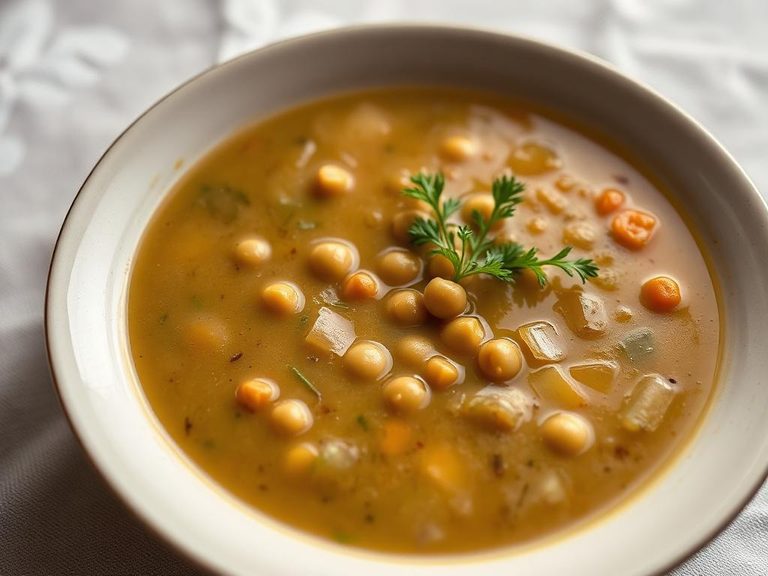
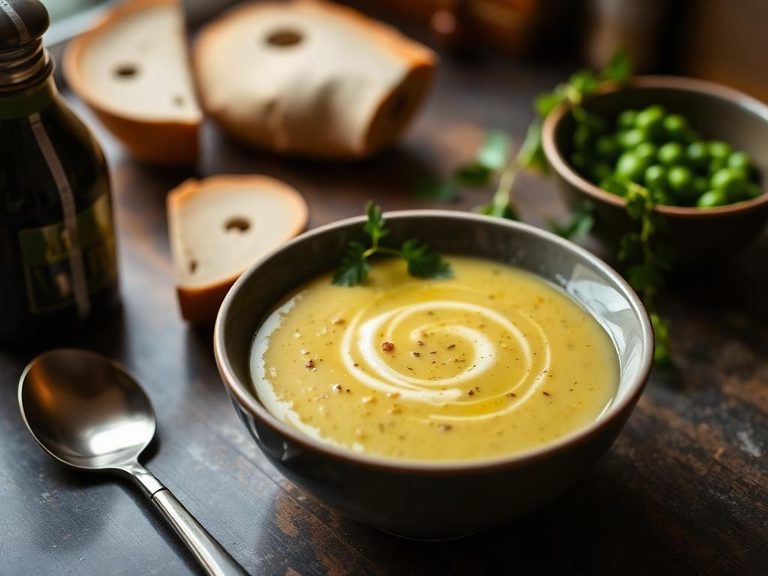
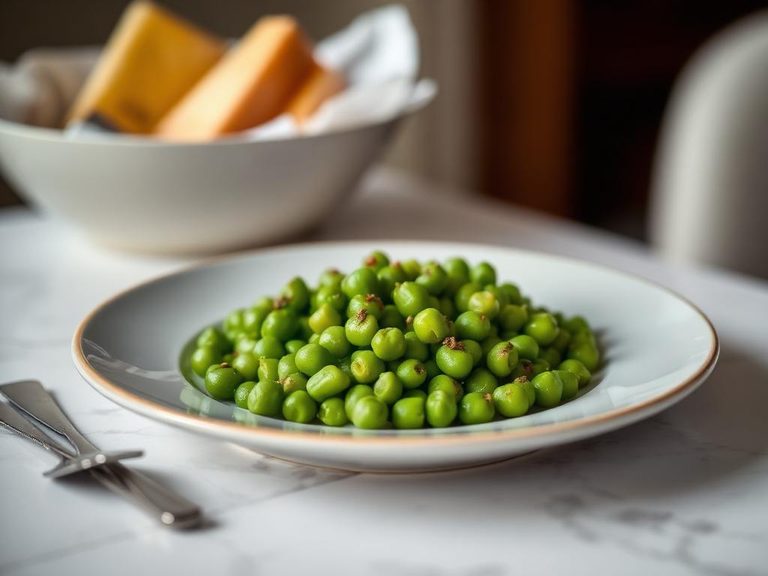
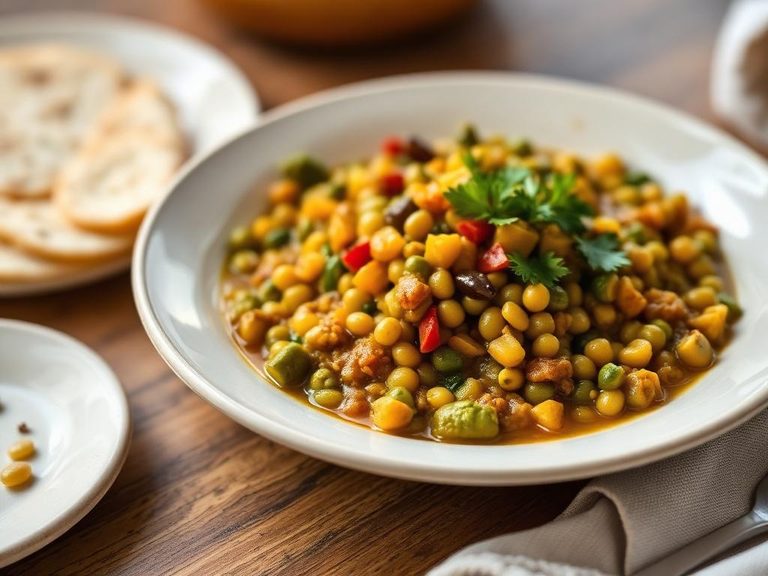
🌍 Where it's eaten
💡 Did you know?
The classic pairing of split pea soup with ham is so iconic in the Netherlands that it's traditionally served with rye bread and smoked sausage, and there's even a specific Dutch word, 'erwtensoep,' for the thick, hearty version.
Full nutrition (USDA data · scales with serving)
| Water | 84.1 g |
| Energy | 61.0 kcal |
| Protein | 3.5 g |
| Total lipid (fat) | 0.70 g |
| Carbohydrate, by difference | 10.6 g |
| Fiber, total dietary | 3.8 g |
| Total Sugars | 2.2 g |
| Calcium, Ca | 15.0 mg |
| Iron, Fe | 0.55 mg |
| Magnesium, Mg | 18.0 mg |
| Phosphorus, P | 47.0 mg |
| Potassium, K | 200 mg |
| Sodium, Na | 244 mg |
| Zinc, Zn | 0.44 mg |
| Copper, Cu | 0.09 mg |
| Selenium, Se | 0.30 ug |
| Vitamin C, total ascorbic acid | 1.6 mg |
| Thiamin | 0.09 mg |
| Riboflavin | 0.04 mg |
| Niacin | 0.47 mg |
| Vitamin B-6 | 0.05 mg |
| Folate, total | 32.0 ug |
| Folic acid | 0.00 ug |
| Folate, food | 32.0 ug |
| Folate, DFE | 32.0 ug |
| Choline, total | 14.8 mg |
| Vitamin B-12 | 0.00 ug |
| Vitamin B-12, added | 0.00 ug |
| Vitamin A, RAE | 52.0 ug |
| Retinol | 0.00 ug |
| Carotene, beta | 526 ug |
| Carotene, alpha | 213 ug |
| Cryptoxanthin, beta | 0.00 ug |
| Lycopene | 0.00 ug |
| Lutein + zeaxanthin | 34.0 ug |
| Vitamin E (alpha-tocopherol) | 0.17 mg |
| Vitamin E, added | 0.00 mg |
| Vitamin D (D2 + D3) | 0.00 ug |
| Vitamin K (phylloquinone) | 5.3 ug |
| Alcohol, ethyl | 0.00 g |
| Caffeine | 0.00 mg |
| Theobromine | 0.00 mg |
Fat & fatty acid profile (per 100g)
| Fatty acids, total saturated | 0.10 g |
| SFA 4:0 | 0.00 g |
| SFA 6:0 | 0.00 g |
| SFA 8:0 | 0.00 g |
| SFA 10:0 | 0.00 g |
| SFA 12:0 | 0.00 g |
| SFA 14:0 | 0.00 g |
| SFA 16:0 | 0.07 g |
| SFA 18:0 | 0.02 g |
| Fatty acids, total monounsaturated | 0.25 g |
| MUFA 16:1 | 0.00 g |
| MUFA 18:1 | 0.24 g |
| MUFA 20:1 | 0.01 g |
| MUFA 22:1 | 0.00 g |
| Fatty acids, total polyunsaturated | 0.27 g |
| PUFA 18:2 | 0.24 g |
| PUFA 18:3 | 0.03 g |
| PUFA 18:4 | 0.00 g |
| PUFA 20:4 | 0.00 g |
| PUFA 20:5 n-3 (EPA) | 0.00 g |
| PUFA 22:5 n-3 (DPA) | 0.00 g |
| PUFA 22:6 n-3 (DHA) | 0.00 g |
| Cholesterol | 0.00 mg |
Amino acid profile (per 100g)
Estimated from Restaurant, Latino, black bean soup — USDA does not publish this profile for Soup.
| Tryptophan | 0.04 g |
| Threonine | 0.17 g |
| Isoleucine | 0.16 g |
| Leucine | 0.32 g |
| Lysine | 0.27 g |
| Methionine | 0.10 g |
| Cystine | 0.04 g |
| Phenylalanine | 0.16 g |
| Tyrosine | 0.13 g |
| Valine | 0.20 g |
| Arginine | 0.35 g |
| Histidine | 0.09 g |
| Alanine | 0.35 g |
| Aspartic acid | 0.38 g |
| Glutamic acid | 0.72 g |
| Glycine | 0.58 g |
| Proline | 0.36 g |
| Serine | 0.20 g |
FAQ
Is split pea soup high in protein?
Yes, split pea soup is a good source of plant-based protein, with about 3.55g per 100g, making it a nutritious option for vegetarians and vegans.
Can I make split pea soup without meat?
Absolutely! You can make a delicious vegetarian or vegan version by using vegetable broth and adding herbs, spices, and vegetables like carrots, celery, and onions for flavor.
How long does split pea soup last in the fridge?
Properly stored in an airtight container, split pea soup can last for 3 to 5 days in the refrigerator. It also freezes well for up to 3 months.
Nutrient density (calculated · NRF9.3)
Nutrient Rich Foods index: beneficial nutrients (protein, fiber, vitamins, minerals) minus saturated fat, added sugar & sodium, per 100 kcal.
NRF9.3 index — Fulgoni, Keast & Drewnowski, 2009. Computed from USDA nutrients.
Weight-loss friendliness (composite index)
Energy density 0.61 kcal/g · 23% calories from protein · 3.8 g fiber · 2.2 g sugar per 100 g.
Composite of energy density (Rolls et al., 1999), protein & fiber satiety, minus sugar. A calculated heuristic — ranks satiety-per-calorie, not a clinical measure.
Dietary load (calculated from USDA values)
Potential renal acid load. Positive = acid-forming, negative = alkaline-forming.
Sodium-to-potassium ratio: 1.22 (lower is better — aim for ≤ 1)
Sodium:potassium per WHO potassium guidance. Computed from USDA nutrients.