

Soup, bean with pork, canned, condensed
Whole food · Soups, Sauces, and Gravies

Photo: Wikipedia
This is a pantry staple: a thick, savory concentrate of tender beans and savory pork in a rich, seasoned broth. Its taste is deeply comforting—a balance of earthy bean sweetness, smoky pork, and a hint of tomato, with a hearty, chunky texture that becomes perfectly spoonable when diluted. Nutritionally, it's a fiber and protein powerhouse, delivering over 6 grams of fiber per 100g to keep you full.
Calorie split: 18% protein · 52% carbs · 30% fat
↓ Full nutrition💚 Why it's loved
People love it for its nostalgic, no-fuss comfort—a warm, satisfying bowl that's ready in minutes. Its versatility makes it a beloved base for quick meals, from a simple soup to a hearty chili or a topping for baked potatoes.
⚠️ Watch-outs & how to enjoy it better
The condensed form is typically high in sodium, which can be a concern for blood pressure. It may also cause digestive discomfort in some due to the beans' oligosaccharides. To counteract, rinse the prepared soup lightly (if texture allows) or dilute it more than directed, and pair it with a fresh, low-sodium side salad or a piece of fruit to balance the meal.
Key benefits
- Excellent source of dietary fiber (5.9g per 100g).
- Provides a good plant-and-animal protein blend (5.88g per 100g).
- Convenient, shelf-stable source of complex carbohydrates.
- Contains iron and B vitamins from the pork and beans.
🍽️ Popular dishes
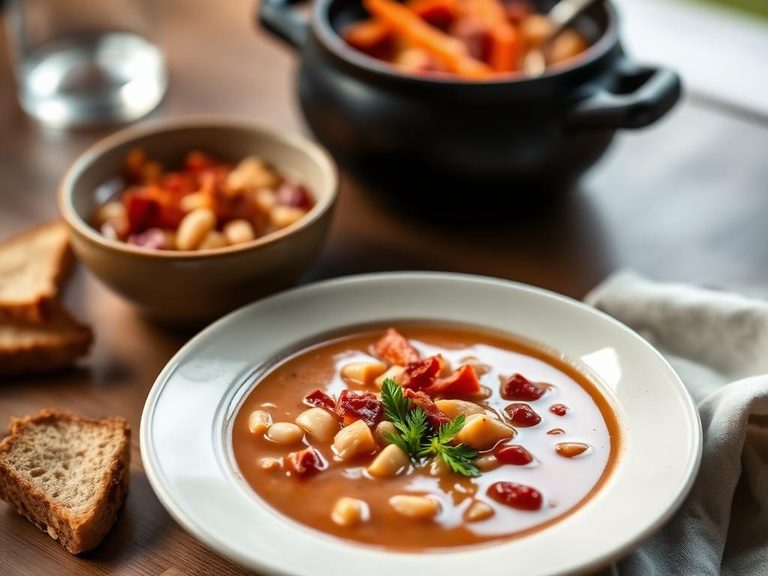
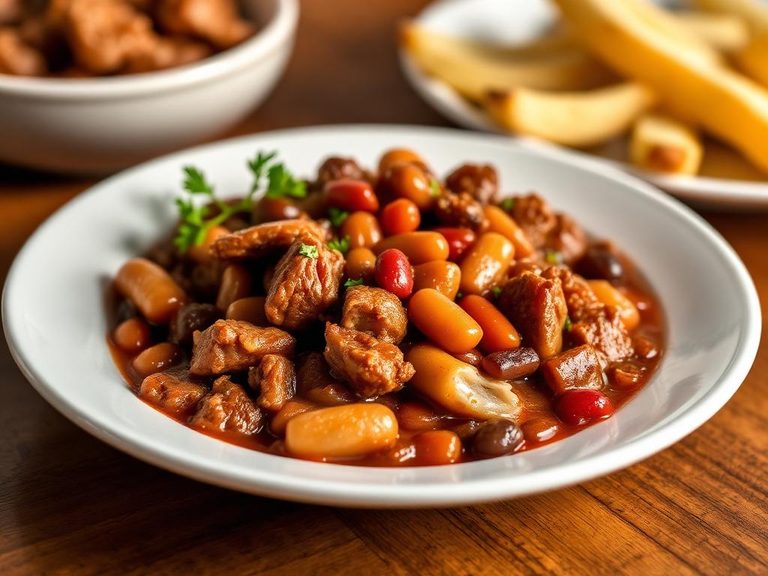
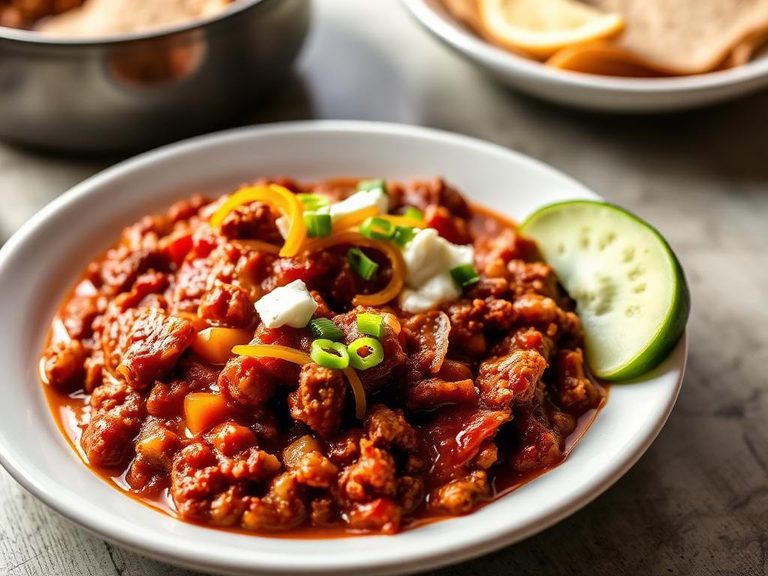
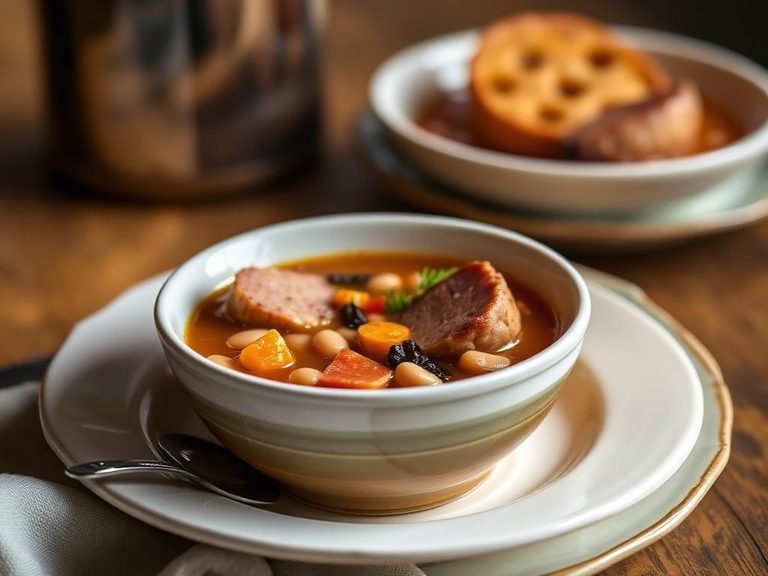
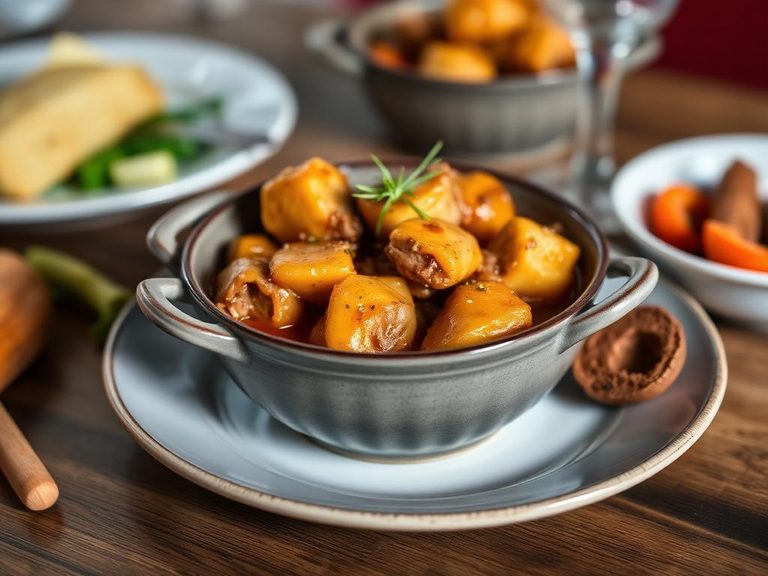
🌍 Where it's eaten
💡 Did you know?
The 'condensed' label means you're buying a thick paste; historically, canning it this way saved significant shipping weight and space, making it a crucial food for armies and expeditions.
Full nutrition (USDA data · scales with serving)
| Water | 70.2 g |
| Energy | 129 kcal |
| Energy | 540 kj |
| Protein | 5.9 g |
| Total lipid (fat) | 4.4 g |
| Ash | 2.6 g |
| Carbohydrate, by difference | 17.0 g |
| Fiber, total dietary | 5.9 g |
| Total Sugars | 3.0 g |
| Calcium, Ca | 60.0 mg |
| Iron, Fe | 1.5 mg |
| Magnesium, Mg | 33.0 mg |
| Phosphorus, P | 98.0 mg |
| Potassium, K | 375 mg |
| Sodium, Na | 672 mg |
| Zinc, Zn | 0.77 mg |
| Copper, Cu | 0.30 mg |
| Manganese, Mn | 0.50 mg |
| Selenium, Se | 6.4 ug |
| Vitamin C, total ascorbic acid | 1.2 mg |
| Thiamin | 0.07 mg |
| Riboflavin | 0.03 mg |
| Niacin | 0.42 mg |
| Pantothenic acid | 0.07 mg |
| Vitamin B-6 | 0.03 mg |
| Folate, total | 24.0 ug |
| Folic acid | 0.00 ug |
| Folate, food | 24.0 ug |
| Folate, DFE | 24.0 ug |
| Choline, total | 26.7 mg |
| Vitamin B-12 | 0.03 ug |
| Vitamin B-12, added | 0.00 ug |
| Vitamin A, RAE | 34.0 ug |
| Retinol | 1.0 ug |
| Carotene, beta | 336 ug |
| Carotene, alpha | 118 ug |
| Cryptoxanthin, beta | 0.00 ug |
| Vitamin A, IU | 662 iu |
| Lycopene | 5946 ug |
| Lutein + zeaxanthin | 9.0 ug |
| Vitamin E (alpha-tocopherol) | 0.87 mg |
| Vitamin E, added | 0.00 mg |
| Vitamin D (D2 + D3), International Units | 0.00 iu |
| Vitamin D (D2 + D3) | 0.00 ug |
| Vitamin K (phylloquinone) | 2.4 ug |
| Alcohol, ethyl | 0.00 g |
| Caffeine | 0.00 mg |
| Theobromine | 0.00 mg |
Fat & fatty acid profile (per 100g)
| Fatty acids, total saturated | 1.1 g |
| SFA 4:0 | 0.00 g |
| SFA 6:0 | 0.00 g |
| SFA 8:0 | 0.00 g |
| SFA 10:0 | 0.02 g |
| SFA 12:0 | 0.01 g |
| SFA 14:0 | 0.05 g |
| SFA 16:0 | 0.70 g |
| SFA 18:0 | 0.28 g |
| Fatty acids, total monounsaturated | 1.6 g |
| MUFA 16:1 | 0.07 g |
| MUFA 18:1 | 1.5 g |
| MUFA 20:1 | 0.00 g |
| MUFA 22:1 | 0.00 g |
| Fatty acids, total polyunsaturated | 1.4 g |
| PUFA 18:2 | 1.0 g |
| PUFA 18:3 | 0.33 g |
| PUFA 18:4 | 0.00 g |
| PUFA 20:4 | 0.00 g |
| PUFA 20:5 n-3 (EPA) | 0.00 g |
| PUFA 22:5 n-3 (DPA) | 0.00 g |
| PUFA 22:6 n-3 (DHA) | 0.00 g |
| Cholesterol | 2.0 mg |
Amino acid profile (per 100g)
| Tryptophan | 0.06 g |
| Threonine | 0.24 g |
| Isoleucine | 0.29 g |
| Leucine | 0.48 g |
| Lysine | 0.40 g |
| Methionine | 0.07 g |
| Cystine | 0.07 g |
| Phenylalanine | 0.33 g |
| Tyrosine | 0.18 g |
| Valine | 0.32 g |
| Arginine | 0.31 g |
| Histidine | 0.15 g |
| Alanine | 0.29 g |
| Aspartic acid | 0.66 g |
| Glutamic acid | 1.1 g |
| Glycine | 0.28 g |
| Proline | 0.27 g |
| Serine | 0.29 g |
FAQ
How do I prepare canned condensed bean soup?
Typically, you empty the can into a saucepan, fill the empty can with water (or milk for creaminess), stir it in, and heat gently until simmering. Always check the can's label for specific instructions.
Can I eat it straight from the can?
It's safe but not recommended. The condensed soup is very thick, salty, and intense in flavor. Diluting and heating it improves both the taste and texture significantly.
Is it a healthy choice?
It can be part of a balanced diet. It's high in fiber and protein, but also often high in sodium. Look for 'low sodium' versions and pair it with vegetables and whole grains for a complete meal.
Nutrient density (calculated · NRF9.3)
Nutrient Rich Foods index: beneficial nutrients (protein, fiber, vitamins, minerals) minus saturated fat, added sugar & sodium, per 100 kcal.
NRF9.3 index — Fulgoni, Keast & Drewnowski, 2009. Computed from USDA nutrients.
Weight-loss friendliness (composite index)
Energy density 1.29 kcal/g · 18% calories from protein · 5.9 g fiber · 3.0 g sugar per 100 g.
Composite of energy density (Rolls et al., 1999), protein & fiber satiety, minus sugar. A calculated heuristic — ranks satiety-per-calorie, not a clinical measure.
Dietary load (calculated from USDA values)
Potential renal acid load. Positive = acid-forming, negative = alkaline-forming.
Sodium-to-potassium ratio: 1.79 (lower is better — aim for ≤ 1)
Sodium:potassium per WHO potassium guidance. Computed from USDA nutrients.