

Rice, white, with carrots, fat added
Common food

Photo: Wikipedia
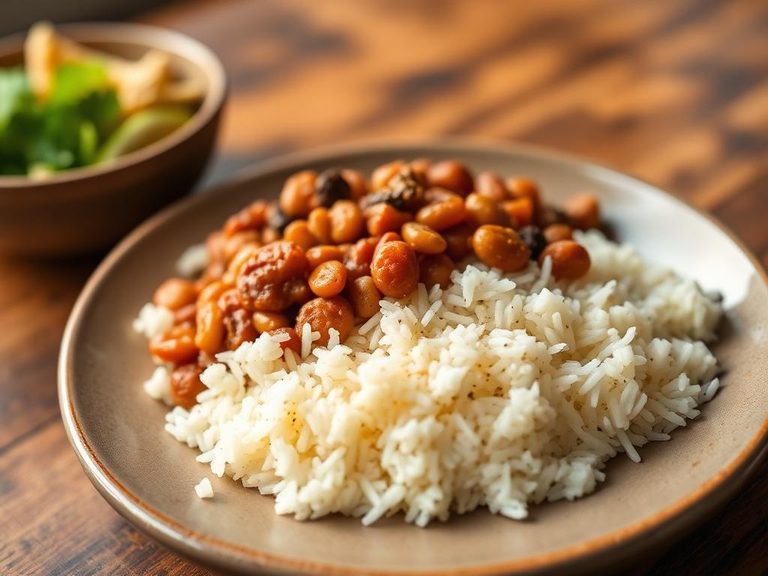
This is a simple, comforting side dish of fluffy white rice studded with sweet, tender carrot pieces and enriched with a touch of fat for richness and mouthfeel. The texture is soft and slightly chewy, with the carrots adding a subtle, earthy sweetness. It provides a quick source of energy from its carbohydrate content, with a modest amount of fat to enhance satiety.
Calorie split: 7% protein · 75% carbs · 18% fat
↓ Full nutrition💚 Why it's loved
People love it for its comforting, mild flavor and the satisfying contrast between the soft rice and slightly sweet, tender carrots. It's a beloved, versatile staple in many cultures, often serving as the perfect neutral canvas for richer, saucier main dishes.
⚠️ Watch-outs & how to enjoy it better
The primary downside is its high glycemic load, which can cause blood sugar spikes, especially for those with insulin resistance or diabetes. To counteract this, pair it with a source of protein (like chicken or beans) and healthy fat (like avocado or nuts), and practice portion control by limiting servings to about 1/2 to 1 cup.
Key benefits
- Provides quick energy from complex carbohydrates.
- Carrots add beta-carotene (vitamin A precursor) and fiber.
- Added fat improves nutrient absorption of fat-soluble vitamins.
- Simple, low-protein side dish suitable for many diets.
- Versatile base for pairing with proteins or stews.
🍽️ Popular dishes
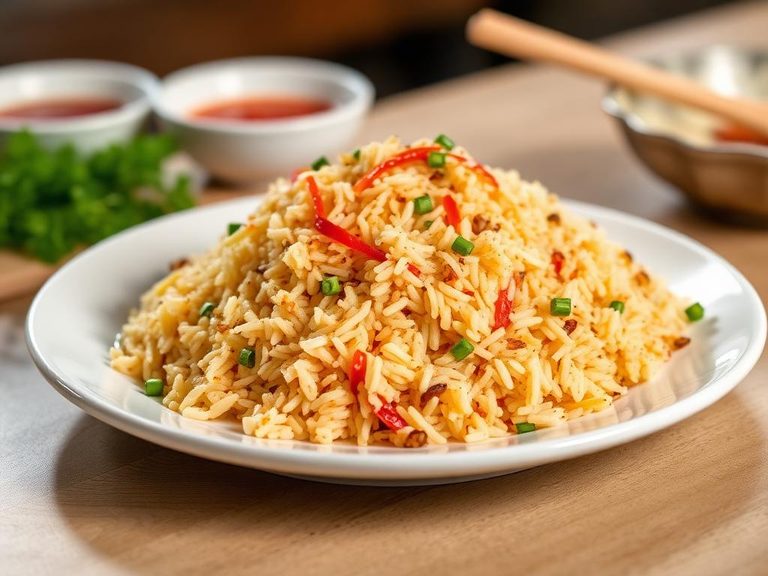
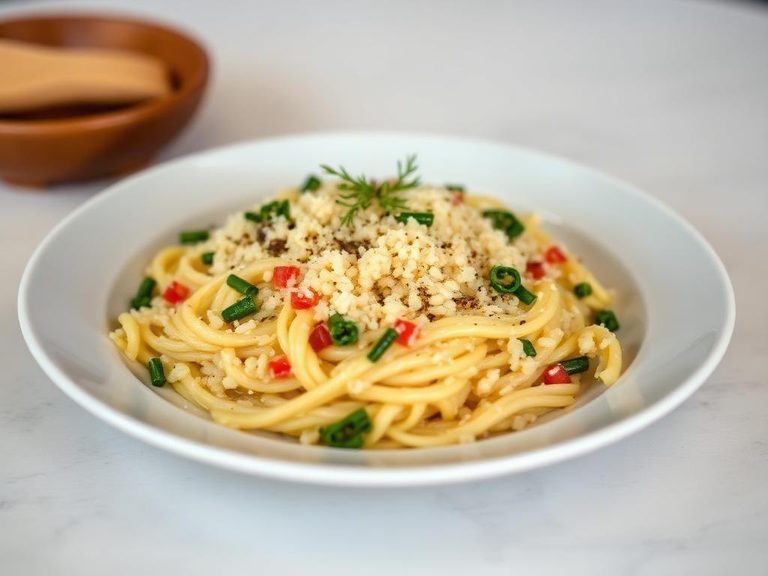
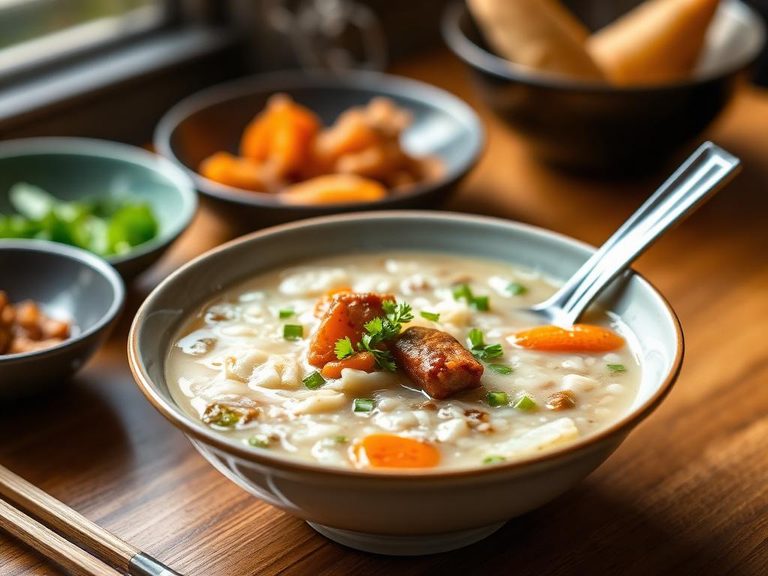
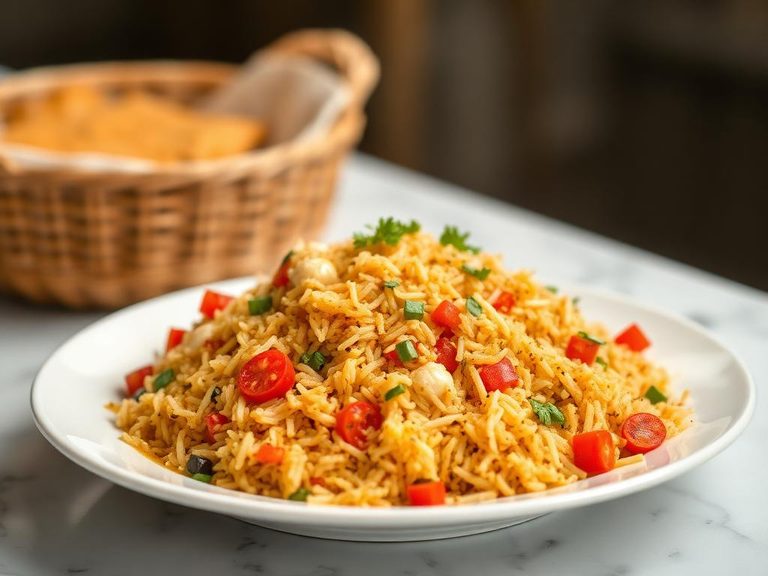
🌍 Where it's eaten
💡 Did you know?
The orange color of carrots, which can tint the rice, comes from beta-carotene, a pigment so potent that eating large amounts can temporarily turn your skin a yellowish-orange hue—a harmless condition called carotenemia.
Full nutrition (USDA data · scales with serving)
| Water | 71.9 g |
| Energy | 123 kcal |
| Protein | 2.2 g |
| Total lipid (fat) | 2.4 g |
| Carbohydrate, by difference | 22.6 g |
| Fiber, total dietary | 1.0 g |
| Total Sugars | 0.86 g |
| Calcium, Ca | 15.0 mg |
| Iron, Fe | 0.97 mg |
| Magnesium, Mg | 11.0 mg |
| Phosphorus, P | 39.0 mg |
| Potassium, K | 82.0 mg |
| Sodium, Na | 195 mg |
| Zinc, Zn | 0.41 mg |
| Copper, Cu | 0.06 mg |
| Selenium, Se | 5.7 ug |
| Vitamin C, total ascorbic acid | 0.90 mg |
| Thiamin | 0.14 mg |
| Riboflavin | 0.02 mg |
| Niacin | 1.2 mg |
| Vitamin B-6 | 0.10 mg |
| Folate, total | 46.0 ug |
| Folic acid | 40.0 ug |
| Folate, food | 6.0 ug |
| Folate, DFE | 75.0 ug |
| Choline, total | 3.7 mg |
| Vitamin B-12 | 0.00 ug |
| Vitamin B-12, added | 0.00 ug |
| Vitamin A, RAE | 204 ug |
| Retinol | 0.00 ug |
| Carotene, beta | 2000 ug |
| Carotene, alpha | 906 ug |
| Cryptoxanthin, beta | 0.00 ug |
| Lycopene | 0.00 ug |
| Lutein + zeaxanthin | 165 ug |
| Vitamin E (alpha-tocopherol) | 0.69 mg |
| Vitamin E, added | 0.00 mg |
| Vitamin D (D2 + D3) | 0.00 ug |
| Vitamin K (phylloquinone) | 5.5 ug |
| Alcohol, ethyl | 0.00 g |
| Caffeine | 0.00 mg |
| Theobromine | 0.00 mg |
Fat & fatty acid profile (per 100g)
| Fatty acids, total saturated | 0.35 g |
| SFA 4:0 | 0.00 g |
| SFA 6:0 | 0.00 g |
| SFA 8:0 | 0.00 g |
| SFA 10:0 | 0.00 g |
| SFA 12:0 | 0.00 g |
| SFA 14:0 | 0.00 g |
| SFA 16:0 | 0.27 g |
| SFA 18:0 | 0.07 g |
| Fatty acids, total monounsaturated | 0.98 g |
| MUFA 16:1 | 0.01 g |
| MUFA 18:1 | 0.96 g |
| MUFA 20:1 | 0.01 g |
| MUFA 22:1 | 0.00 g |
| Fatty acids, total polyunsaturated | 0.91 g |
| PUFA 18:2 | 0.80 g |
| PUFA 18:3 | 0.10 g |
| PUFA 18:4 | 0.00 g |
| PUFA 20:4 | 0.00 g |
| PUFA 20:5 n-3 (EPA) | 0.00 g |
| PUFA 22:5 n-3 (DPA) | 0.00 g |
| PUFA 22:6 n-3 (DHA) | 0.00 g |
| Cholesterol | 0.00 mg |
Amino acid profile (per 100g)
Estimated from Snacks, rice cakes, brown rice, sesame seed — USDA does not publish this profile for Rice.
| Tryptophan | 0.10 g |
| Threonine | 0.28 g |
| Isoleucine | 0.32 g |
| Leucine | 0.63 g |
| Lysine | 0.29 g |
| Methionine | 0.17 g |
| Cystine | 0.09 g |
| Phenylalanine | 0.39 g |
| Tyrosine | 0.29 g |
| Valine | 0.44 g |
| Arginine | 0.59 g |
| Histidine | 0.19 g |
| Alanine | 0.44 g |
| Aspartic acid | 0.71 g |
| Glutamic acid | 1.6 g |
| Glycine | 0.38 g |
| Proline | 0.35 g |
| Serine | 0.39 g |
FAQ
Is white rice with carrots a healthy food?
It can be part of a healthy diet as a source of energy and some vitamins, but it's high in refined carbohydrates and low in protein. Balance it with lean protein and vegetables for a more nutritious meal.
How can I reduce the blood sugar impact of this dish?
Pair it with protein (like chicken, fish, or lentils) and healthy fats (like olive oil or nuts) to slow digestion. Also, consider using a smaller portion and mixing in non-starchy vegetables.
What is the difference between this and a vegetable pilaf?
This is a basic preparation with just carrots and fat. A vegetable pilaf often includes more vegetables (like peas, onions, or bell peppers), spices, and may be cooked in broth for richer flavor.
Nutrient density (calculated · NRF9.3)
Nutrient Rich Foods index: beneficial nutrients (protein, fiber, vitamins, minerals) minus saturated fat, added sugar & sodium, per 100 kcal.
NRF9.3 index — Fulgoni, Keast & Drewnowski, 2009. Computed from USDA nutrients.
Weight-loss friendliness (composite index)
Energy density 1.23 kcal/g · 7% calories from protein · 1.0 g fiber · 0.9 g sugar per 100 g.
Composite of energy density (Rolls et al., 1999), protein & fiber satiety, minus sugar. A calculated heuristic — ranks satiety-per-calorie, not a clinical measure.
Dietary load (calculated from USDA values)
Potential renal acid load. Positive = acid-forming, negative = alkaline-forming.
Sodium-to-potassium ratio: 2.38 (lower is better — aim for ≤ 1)
Sodium:potassium per WHO potassium guidance. Computed from USDA nutrients.