

Rice, white and wild, cooked, NS as to fat
Common food

Photo: Wikipedia
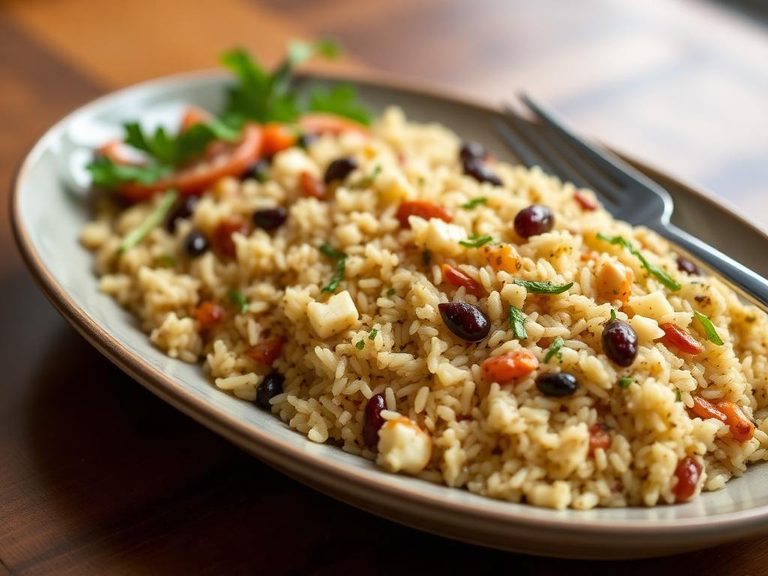
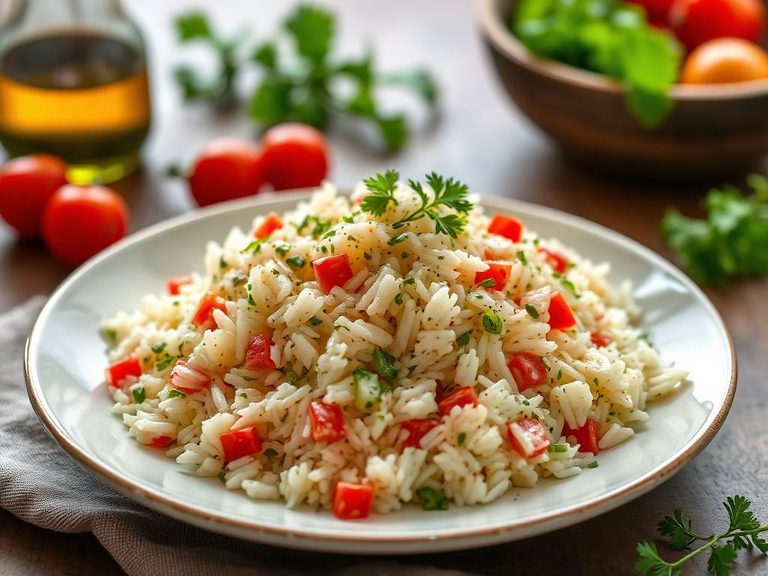
This is a comforting blend of fluffy white rice and chewy, nutty wild rice, creating a visually striking mix of pale grains and dark, elongated kernels. The texture is a delightful contrast: the white rice is soft and mild, while the wild rice offers a firm, satisfying bite with an earthy flavor. Nutritionally, it's a moderate-energy, low-fat carbohydrate source with a modest protein boost from the wild rice.
Calorie split: 8% protein · 75% carbs · 17% fat
↓ Full nutrition💚 Why it's loved
People love this blend for its perfect balance of comfort and sophistication—the familiar softness of white rice elevated by the gourmet, nutty character of wild rice. It's a versatile side that feels special enough for a dinner party yet simple enough for a weeknight meal.
⚠️ Watch-outs & how to enjoy it better
The blend is a high-glycemic carbohydrate that can cause blood sugar spikes, especially for those with diabetes or insulin resistance. To counteract this, pair it with a source of protein (like grilled chicken or beans) and healthy fat (like avocado or olive oil) to slow digestion and stabilize blood sugar. Also, watch portion sizes if managing calorie intake.
Key benefits
- Provides quick and sustained energy from a blend of fast and slow-digesting carbs.
- Contains more fiber and protein than plain white rice due to the wild rice component.
- Naturally low in fat and sugar, making it a versatile base for many dishes.
- Wild rice contributes antioxidants and minerals like manganese and phosphorus.
🍽️ Popular dishes
🌍 Where it's eaten
💡 Did you know?
True wild rice is not actually rice at all—it's the semi-aquatic seed of a native North American grass (Zizania), while white rice comes from the Oryza sativa plant.
Full nutrition (USDA data · scales with serving)
| Water | 73.5 g |
| Energy | 112 kcal |
| Protein | 2.2 g |
| Total lipid (fat) | 2.1 g |
| Carbohydrate, by difference | 20.6 g |
| Fiber, total dietary | 0.50 g |
| Total Sugars | 0.13 g |
| Calcium, Ca | 11.0 mg |
| Iron, Fe | 0.98 mg |
| Magnesium, Mg | 14.0 mg |
| Phosphorus, P | 41.0 mg |
| Potassium, K | 41.0 mg |
| Sodium, Na | 510 mg |
| Zinc, Zn | 0.50 mg |
| Copper, Cu | 0.08 mg |
| Selenium, Se | 3.4 ug |
| Vitamin C, total ascorbic acid | 0.00 mg |
| Thiamin | 0.10 mg |
| Riboflavin | 0.02 mg |
| Niacin | 1.2 mg |
| Vitamin B-6 | 0.05 mg |
| Folate, total | 38.0 ug |
| Folic acid | 34.0 ug |
| Folate, food | 4.0 ug |
| Folate, DFE | 62.0 ug |
| Choline, total | 3.0 mg |
| Vitamin B-12 | 0.00 ug |
| Vitamin B-12, added | 0.00 ug |
| Vitamin A, RAE | 20.0 ug |
| Retinol | 19.0 ug |
| Carotene, beta | 15.0 ug |
| Carotene, alpha | 0.00 ug |
| Cryptoxanthin, beta | 0.00 ug |
| Lycopene | 0.00 ug |
| Lutein + zeaxanthin | 9.0 ug |
| Vitamin E (alpha-tocopherol) | 0.28 mg |
| Vitamin E, added | 0.00 mg |
| Vitamin D (D2 + D3) | 0.10 ug |
| Vitamin K (phylloquinone) | 2.3 ug |
| Alcohol, ethyl | 0.00 g |
| Caffeine | 0.00 mg |
| Theobromine | 0.00 mg |
Fat & fatty acid profile (per 100g)
| Fatty acids, total saturated | 0.41 g |
| SFA 4:0 | 0.00 g |
| SFA 6:0 | 0.00 g |
| SFA 8:0 | 0.00 g |
| SFA 10:0 | 0.00 g |
| SFA 12:0 | 0.00 g |
| SFA 14:0 | 0.00 g |
| SFA 16:0 | 0.24 g |
| SFA 18:0 | 0.15 g |
| Fatty acids, total monounsaturated | 0.99 g |
| MUFA 16:1 | 0.00 g |
| MUFA 18:1 | 0.98 g |
| MUFA 20:1 | 0.00 g |
| MUFA 22:1 | 0.00 g |
| Fatty acids, total polyunsaturated | 0.65 g |
| PUFA 18:2 | 0.58 g |
| PUFA 18:3 | 0.07 g |
| PUFA 18:4 | 0.00 g |
| PUFA 20:4 | 0.00 g |
| PUFA 20:5 n-3 (EPA) | 0.00 g |
| PUFA 22:5 n-3 (DPA) | 0.00 g |
| PUFA 22:6 n-3 (DHA) | 0.00 g |
| Cholesterol | 0.00 mg |
Amino acid profile (per 100g)
Estimated from Snacks, rice cakes, brown rice, sesame seed — USDA does not publish this profile for Rice.
| Tryptophan | 0.10 g |
| Threonine | 0.28 g |
| Isoleucine | 0.32 g |
| Leucine | 0.63 g |
| Lysine | 0.29 g |
| Methionine | 0.17 g |
| Cystine | 0.09 g |
| Phenylalanine | 0.39 g |
| Tyrosine | 0.29 g |
| Valine | 0.44 g |
| Arginine | 0.59 g |
| Histidine | 0.19 g |
| Alanine | 0.44 g |
| Aspartic acid | 0.71 g |
| Glutamic acid | 1.6 g |
| Glycine | 0.38 g |
| Proline | 0.35 g |
| Serine | 0.39 g |
FAQ
Is this blend gluten-free?
Naturally, yes. Both white rice and pure wild rice are gluten-free grains. However, always check packaged blends for potential cross-contamination or added seasonings if you have celiac disease.
Why is the cooking time longer than plain white rice?
The wild rice kernels have a very tough outer husk that requires more water and time to soften. A typical blend needs 40-50 minutes of simmering, compared to 15-20 minutes for white rice alone.
How do I get the grains to separate nicely instead of becoming mushy?
Rinse the blend thoroughly before cooking to remove excess starch. Use the correct water ratio (about 1:2.5) and avoid stirring while it simmers. Once done, let it rest covered for 5 minutes, then fluff gently with a fork.
Nutrient density (calculated · NRF9.3)
Nutrient Rich Foods index: beneficial nutrients (protein, fiber, vitamins, minerals) minus saturated fat, added sugar & sodium, per 100 kcal.
NRF9.3 index — Fulgoni, Keast & Drewnowski, 2009. Computed from USDA nutrients.
Weight-loss friendliness (composite index)
Energy density 1.12 kcal/g · 8% calories from protein · 0.5 g fiber · 0.1 g sugar per 100 g.
Composite of energy density (Rolls et al., 1999), protein & fiber satiety, minus sugar. A calculated heuristic — ranks satiety-per-calorie, not a clinical measure.
Dietary load (calculated from USDA values)
Potential renal acid load. Positive = acid-forming, negative = alkaline-forming.
Sodium-to-potassium ratio: 12.44 (lower is better — aim for ≤ 1)
Sodium:potassium per WHO potassium guidance. Computed from USDA nutrients.