

Rice milk
Common food

Photo: Wikipedia
Rice milk is a creamy, plant-based beverage made by blending milled rice with water, resulting in a naturally sweet, mild flavor with a slightly chalky, thin texture. It's the most hypoallergenic of the common milk alternatives, making it a staple for those with multiple food sensitivities. Nutritionally, it's primarily a source of quick-digesting carbohydrates, offering minimal protein and fat.
Calorie split: 2% protein · 79% carbs · 19% fat
↓ Full nutrition💚 Why it's loved
People love its gentle, subtly sweet taste that doesn't overpower cereals, smoothies, or baked goods. Its hypoallergenic nature makes it a safe and comforting choice for families navigating multiple dietary restrictions.
⚠️ Watch-outs & how to enjoy it better
Its high glycemic index can cause rapid blood sugar spikes, making it less suitable for diabetics without careful pairing. It's also very low in protein (0.28g/100g) and may contain trace arsenic from rice cultivation. Counteract these by mixing it with protein powder or nut butter in smoothies, choosing fortified versions, and using it as one part of a balanced meal rather than a primary protein source.
Key benefits
- Naturally free of dairy, soy, and nuts.
- Low in saturated fat and contains no cholesterol.
- Often fortified with calcium and vitamin D.
- Good source of energy from carbohydrates.
- Mild flavor pairs well with sweet dishes.
🍽️ Popular dishes
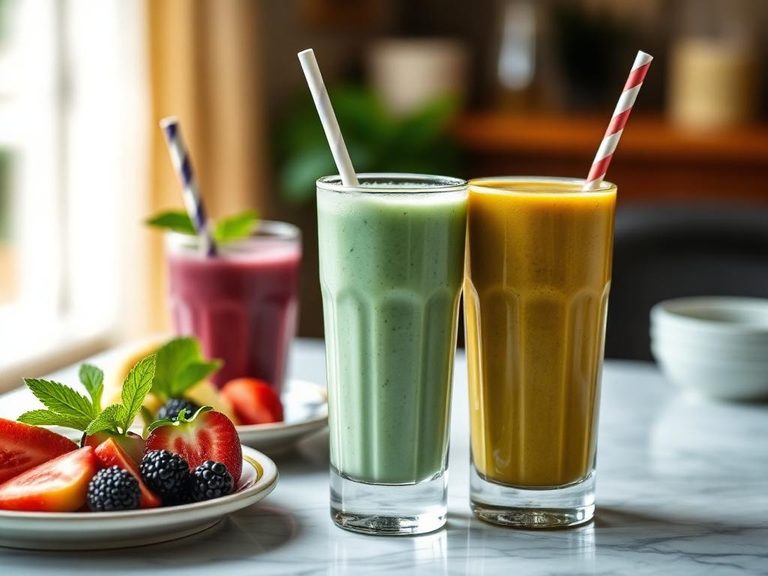
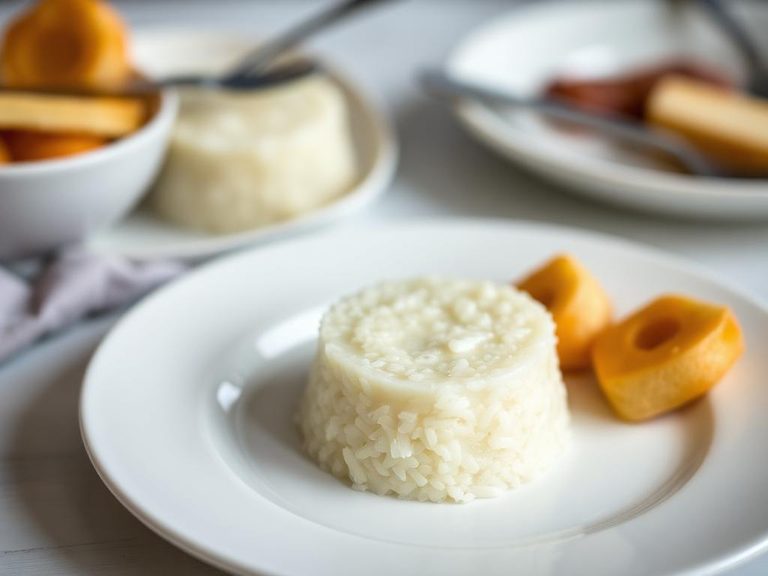


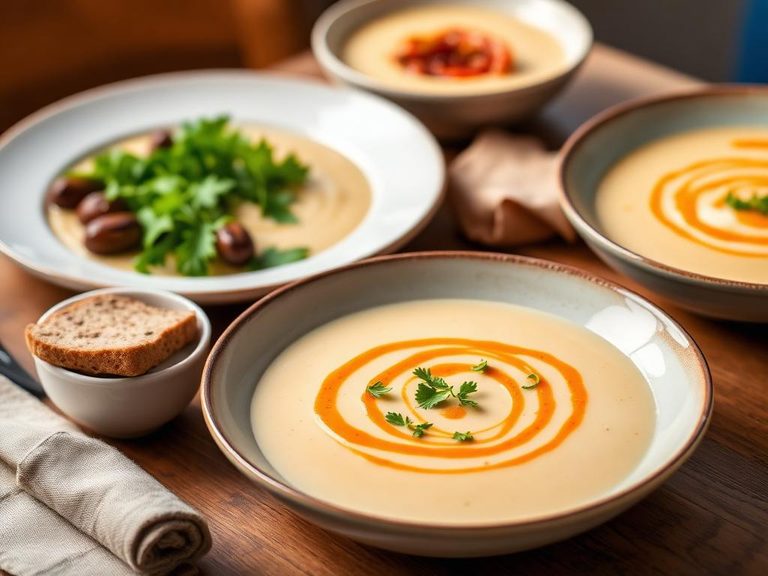
🌍 Where it's eaten
💡 Did you know?
Commercial rice milk is often made from brown rice, but the bran is typically filtered out, which is why its fiber content (0.3g/100g) is surprisingly low.
Full nutrition (USDA data · scales with serving)
| Water | 89.3 g |
| Energy | 47.0 kcal |
| Protein | 0.28 g |
| Total lipid (fat) | 0.97 g |
| Carbohydrate, by difference | 9.2 g |
| Fiber, total dietary | 0.30 g |
| Total Sugars | 5.3 g |
| Calcium, Ca | 118 mg |
| Iron, Fe | 0.20 mg |
| Magnesium, Mg | 11.0 mg |
| Phosphorus, P | 56.0 mg |
| Potassium, K | 27.0 mg |
| Sodium, Na | 39.0 mg |
| Zinc, Zn | 0.13 mg |
| Copper, Cu | 0.04 mg |
| Selenium, Se | 2.2 ug |
| Vitamin C, total ascorbic acid | 0.00 mg |
| Thiamin | 0.03 mg |
| Riboflavin | 0.14 mg |
| Niacin | 0.39 mg |
| Vitamin B-6 | 0.04 mg |
| Folate, total | 2.0 ug |
| Folic acid | 0.00 ug |
| Folate, food | 2.0 ug |
| Folate, DFE | 2.0 ug |
| Choline, total | 2.1 mg |
| Vitamin B-12 | 0.63 ug |
| Vitamin B-12, added | 0.63 ug |
| Vitamin A, RAE | 63.0 ug |
| Retinol | 63.0 ug |
| Carotene, beta | 0.00 ug |
| Carotene, alpha | 0.00 ug |
| Cryptoxanthin, beta | 0.00 ug |
| Lycopene | 0.00 ug |
| Lutein + zeaxanthin | 0.00 ug |
| Vitamin E (alpha-tocopherol) | 0.47 mg |
| Vitamin E, added | 0.13 mg |
| Vitamin D (D2 + D3) | 1.0 ug |
| Vitamin K (phylloquinone) | 0.20 ug |
| Alcohol, ethyl | 0.00 g |
| Caffeine | 0.00 mg |
| Theobromine | 0.00 mg |
Fat & fatty acid profile (per 100g)
| Fatty acids, total saturated | 0.00 g |
| SFA 4:0 | 0.00 g |
| SFA 6:0 | 0.00 g |
| SFA 8:0 | 0.00 g |
| SFA 10:0 | 0.00 g |
| SFA 12:0 | 0.00 g |
| SFA 14:0 | 0.00 g |
| SFA 16:0 | 0.00 g |
| SFA 18:0 | 0.00 g |
| Fatty acids, total monounsaturated | 0.63 g |
| MUFA 16:1 | 0.00 g |
| MUFA 18:1 | 0.62 g |
| MUFA 20:1 | 0.00 g |
| MUFA 22:1 | 0.00 g |
| Fatty acids, total polyunsaturated | 0.31 g |
| PUFA 18:2 | 0.30 g |
| PUFA 18:3 | 0.01 g |
| PUFA 18:4 | 0.00 g |
| PUFA 20:4 | 0.00 g |
| PUFA 20:5 n-3 (EPA) | 0.00 g |
| PUFA 22:5 n-3 (DPA) | 0.00 g |
| PUFA 22:6 n-3 (DHA) | 0.00 g |
| Cholesterol | 0.00 mg |
Amino acid profile (per 100g)
Estimated from Puddings, rice, dry mix, prepared with whole milk — USDA does not publish this profile for Rice milk.
| Tryptophan | 0.04 g |
| Threonine | 0.13 g |
| Isoleucine | 0.17 g |
| Leucine | 0.27 g |
| Lysine | 0.22 g |
| Methionine | 0.07 g |
| Cystine | 0.03 g |
| Phenylalanine | 0.13 g |
| Tyrosine | 0.13 g |
| Valine | 0.18 g |
| Arginine | 0.10 g |
| Histidine | 0.07 g |
| Alanine | 0.10 g |
| Aspartic acid | 0.21 g |
| Glutamic acid | 0.58 g |
| Glycine | 0.06 g |
| Proline | 0.27 g |
| Serine | 0.15 g |
FAQ
Is rice milk a good source of protein?
No, it is very low in protein (about 0.3g per 100g). It should not be relied upon as a protein source, especially for growing children or those with high protein needs.
Why is rice milk not recommended for infants?
It lacks sufficient protein, fat, and essential nutrients required for infant development and can contain trace inorganic arsenic. Breast milk, formula, or nutrient-dense whole foods are appropriate.
How does it compare nutritionally to cow's milk?
It has fewer calories and no saturated fat or cholesterol, but also contains negligible protein and calcium unless fortified. Cow's milk is a more complete source of protein, fat, and naturally occurring vitamins.
Nutrient density (calculated · NRF9.3)
Nutrient Rich Foods index: beneficial nutrients (protein, fiber, vitamins, minerals) minus saturated fat, added sugar & sodium, per 100 kcal.
NRF9.3 index — Fulgoni, Keast & Drewnowski, 2009. Computed from USDA nutrients.
Weight-loss friendliness (composite index)
Energy density 0.47 kcal/g · 2% calories from protein · 0.3 g fiber · 5.3 g sugar per 100 g.
Composite of energy density (Rolls et al., 1999), protein & fiber satiety, minus sugar. A calculated heuristic — ranks satiety-per-calorie, not a clinical measure.
Dietary load (calculated from USDA values)
Potential renal acid load. Positive = acid-forming, negative = alkaline-forming.
Sodium-to-potassium ratio: 1.44 (lower is better — aim for ≤ 1)
Sodium:potassium per WHO potassium guidance. Computed from USDA nutrients.