

Rice, fried, with pork
Common food

Photo: Wikipedia
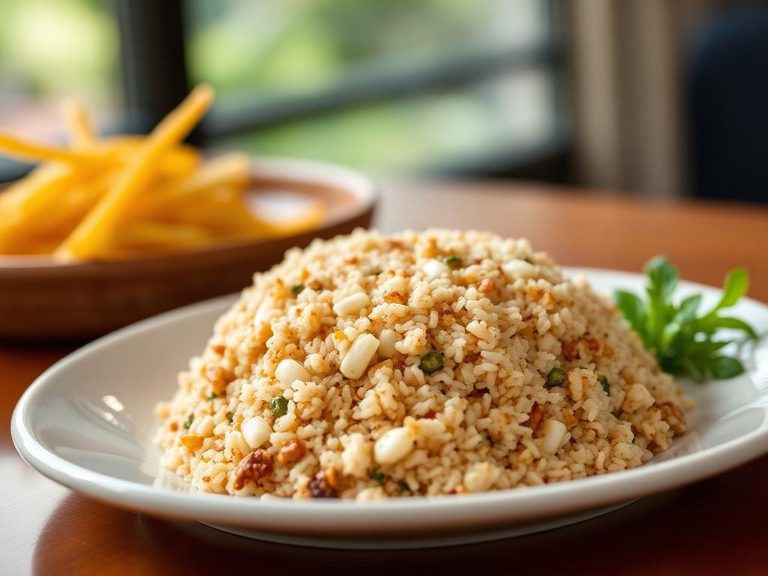
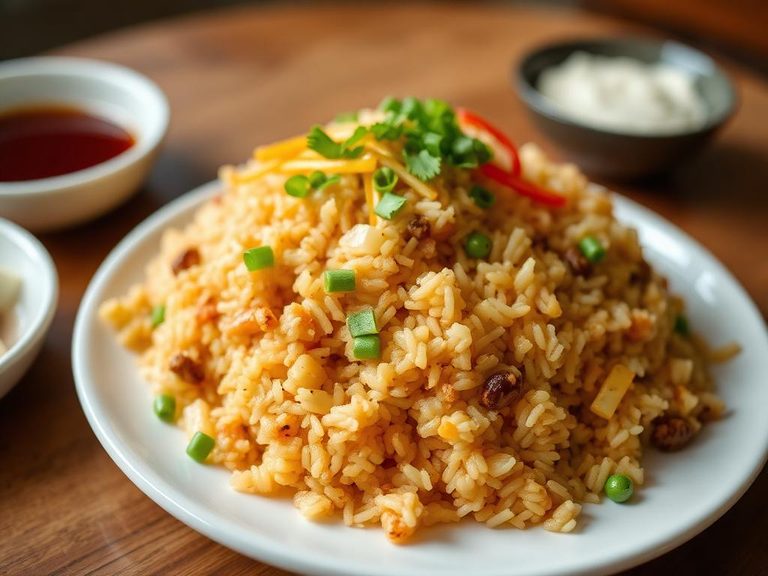
Fried rice with pork is a savory, aromatic staple where day-old rice is stir-fried with tender pork, eggs, and vegetables, achieving a delightful texture—grains separate, slightly chewy, and kissed with a smoky 'wok hei' flavor. Nutritionally, it's a balanced, energy-dense meal, providing a solid protein boost from the pork and eggs alongside quick-release carbohydrates for sustained energy. The dish is a masterful transformation of simple leftovers into a complex, satisfying feast.
Calorie split: 17% protein · 62% carbs · 21% fat
↓ Full nutrition💚 Why it's loved
People adore it for its incredible umami depth and the comforting, homestyle flavor that varies from family to family. It's the ultimate culinary recycling, turning yesterday's rice into a beloved, flavorful meal that feels both indulgent and practical.
⚠️ Watch-outs & how to enjoy it better
The dish can be high in sodium and refined carbohydrates, which may cause blood-sugar spikes for some. To counteract this, opt for low-sodium soy sauce, load up on non-starchy vegetables like broccoli or snap peas, and pair with a side of pickled vegetables or a simple salad to add fiber and slow digestion.
Key benefits
- Excellent source of high-quality protein for muscle maintenance.
- Provides quick energy from complex carbohydrates.
- Contains essential B vitamins and minerals like iron and zinc from pork.
- Highly versatile for incorporating various vegetables and leftovers.
- A complete, balanced meal in a single bowl.
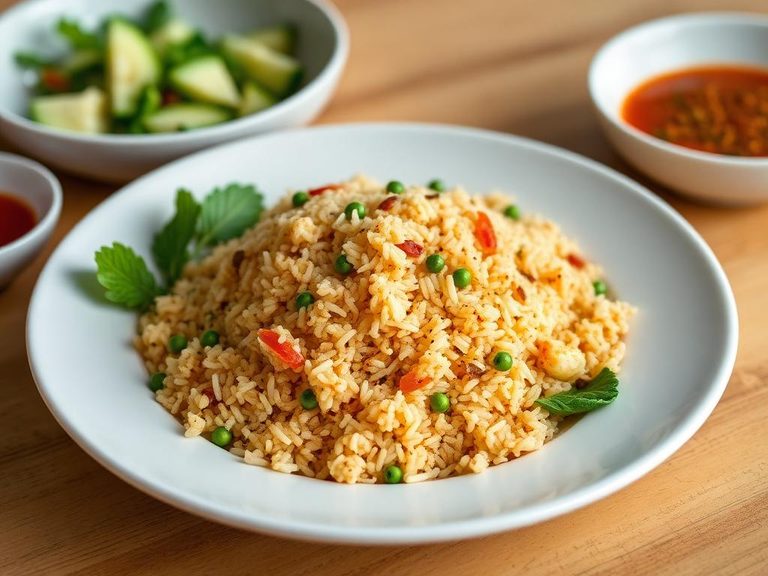
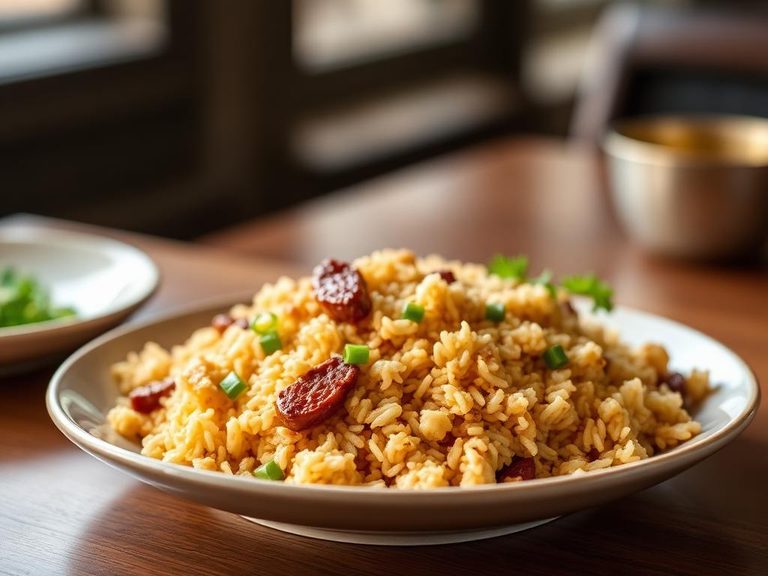
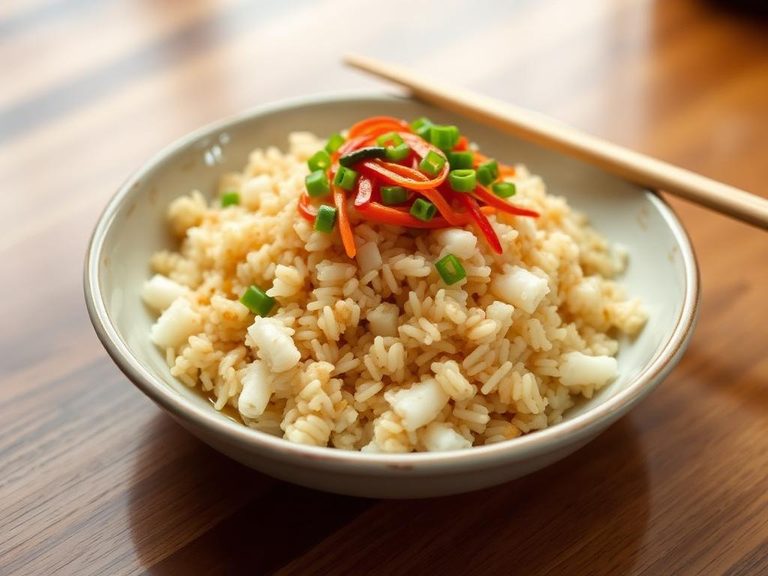
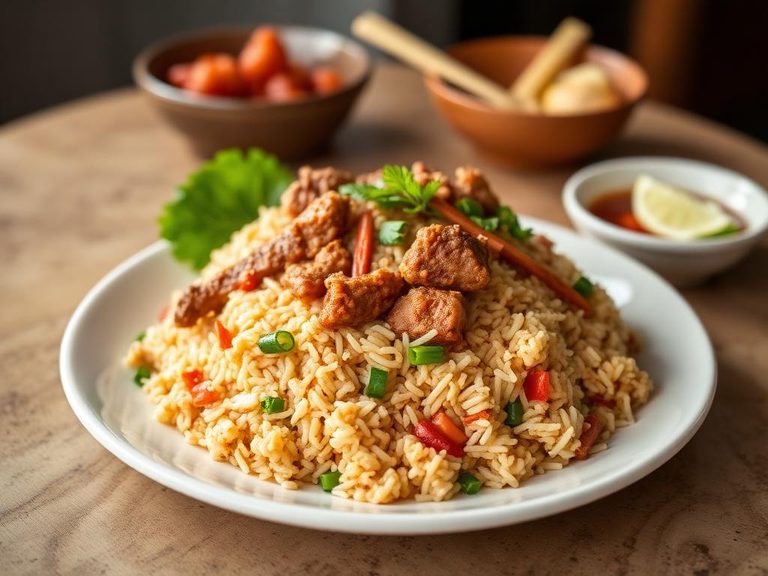
🍽️ Popular dishes
🌍 Where it's eaten
💡 Did you know?
The key to authentic, non-mushy fried rice is using rice that has been cooked and refrigerated for at least 12 hours; the retrograded starch grains separate perfectly in the wok, preventing clumping.
Full nutrition (USDA data · scales with serving)
| Water | 59.6 g |
| Energy | 179 kcal |
| Protein | 7.6 g |
| Total lipid (fat) | 4.2 g |
| Carbohydrate, by difference | 27.6 g |
| Fiber, total dietary | 0.90 g |
| Total Sugars | 0.53 g |
| Calcium, Ca | 12.0 mg |
| Iron, Fe | 0.55 mg |
| Magnesium, Mg | 13.0 mg |
| Phosphorus, P | 75.0 mg |
| Potassium, K | 122 mg |
| Sodium, Na | 316 mg |
| Zinc, Zn | 0.97 mg |
| Copper, Cu | 0.08 mg |
| Selenium, Se | 12.3 ug |
| Vitamin C, total ascorbic acid | 3.3 mg |
| Thiamin | 0.17 mg |
| Riboflavin | 0.07 mg |
| Niacin | 1.4 mg |
| Vitamin B-6 | 0.11 mg |
| Folate, total | 5.0 ug |
| Folic acid | 0.00 ug |
| Folate, food | 5.0 ug |
| Folate, DFE | 5.0 ug |
| Choline, total | 19.4 mg |
| Vitamin B-12 | 0.11 ug |
| Vitamin B-12, added | 0.00 ug |
| Vitamin A, RAE | 19.0 ug |
| Retinol | 9.0 ug |
| Carotene, beta | 109 ug |
| Carotene, alpha | 32.0 ug |
| Cryptoxanthin, beta | 0.00 ug |
| Lycopene | 3.0 ug |
| Lutein + zeaxanthin | 88.0 ug |
| Vitamin E (alpha-tocopherol) | 0.14 mg |
| Vitamin E, added | 0.00 mg |
| Vitamin D (D2 + D3) | 0.10 ug |
| Vitamin K (phylloquinone) | 2.4 ug |
| Alcohol, ethyl | 0.00 g |
| Caffeine | 0.00 mg |
| Theobromine | 0.00 mg |
Fat & fatty acid profile (per 100g)
| Fatty acids, total saturated | 0.95 g |
| SFA 4:0 | 0.00 g |
| SFA 6:0 | 0.00 g |
| SFA 8:0 | 0.00 g |
| SFA 10:0 | 0.00 g |
| SFA 12:0 | 0.00 g |
| SFA 14:0 | 0.03 g |
| SFA 16:0 | 0.62 g |
| SFA 18:0 | 0.27 g |
| Fatty acids, total monounsaturated | 1.1 g |
| MUFA 16:1 | 0.05 g |
| MUFA 18:1 | 1.1 g |
| MUFA 20:1 | 0.02 g |
| MUFA 22:1 | 0.00 g |
| Fatty acids, total polyunsaturated | 1.1 g |
| PUFA 18:2 | 0.95 g |
| PUFA 18:3 | 0.11 g |
| PUFA 18:4 | 0.00 g |
| PUFA 20:4 | 0.01 g |
| PUFA 20:5 n-3 (EPA) | 0.00 g |
| PUFA 22:5 n-3 (DPA) | 0.00 g |
| PUFA 22:6 n-3 (DHA) | 0.00 g |
| Cholesterol | 27.0 mg |
Amino acid profile (per 100g)
Estimated from Snacks, rice cakes, brown rice, sesame seed — USDA does not publish this profile for Rice.
| Tryptophan | 0.10 g |
| Threonine | 0.28 g |
| Isoleucine | 0.32 g |
| Leucine | 0.63 g |
| Lysine | 0.29 g |
| Methionine | 0.17 g |
| Cystine | 0.09 g |
| Phenylalanine | 0.39 g |
| Tyrosine | 0.29 g |
| Valine | 0.44 g |
| Arginine | 0.59 g |
| Histidine | 0.19 g |
| Alanine | 0.44 g |
| Aspartic acid | 0.71 g |
| Glutamic acid | 1.6 g |
| Glycine | 0.38 g |
| Proline | 0.35 g |
| Serine | 0.39 g |
FAQ
Why is my fried rice mushy instead of having separate grains?
The most common reason is using freshly cooked, warm rice. Always use cold, day-old rice. Also, ensure your wok or pan is very hot before adding ingredients, and avoid overcrowding the pan.
What cut of pork is best for fried rice?
Tender, quick-cooking cuts like pork loin or tenderloin are ideal. They can be sliced or diced small and will remain juicy after a fast stir-fry.
How can I make it healthier?
Increase the ratio of vegetables to rice, use lean pork, reduce sodium by seasoning with garlic, ginger, and white pepper, and consider using brown rice for added fiber.
Nutrient density (calculated · NRF9.3)
Nutrient Rich Foods index: beneficial nutrients (protein, fiber, vitamins, minerals) minus saturated fat, added sugar & sodium, per 100 kcal.
NRF9.3 index — Fulgoni, Keast & Drewnowski, 2009. Computed from USDA nutrients.
Weight-loss friendliness (composite index)
Energy density 1.79 kcal/g · 17% calories from protein · 0.9 g fiber · 0.5 g sugar per 100 g.
Composite of energy density (Rolls et al., 1999), protein & fiber satiety, minus sugar. A calculated heuristic — ranks satiety-per-calorie, not a clinical measure.
Dietary load (calculated from USDA values)
Potential renal acid load. Positive = acid-forming, negative = alkaline-forming.
Sodium-to-potassium ratio: 2.59 (lower is better — aim for ≤ 1)
Sodium:potassium per WHO potassium guidance. Computed from USDA nutrients.