

Potato salad, made with light Italian dressing
Common food

Photo: Wikipedia
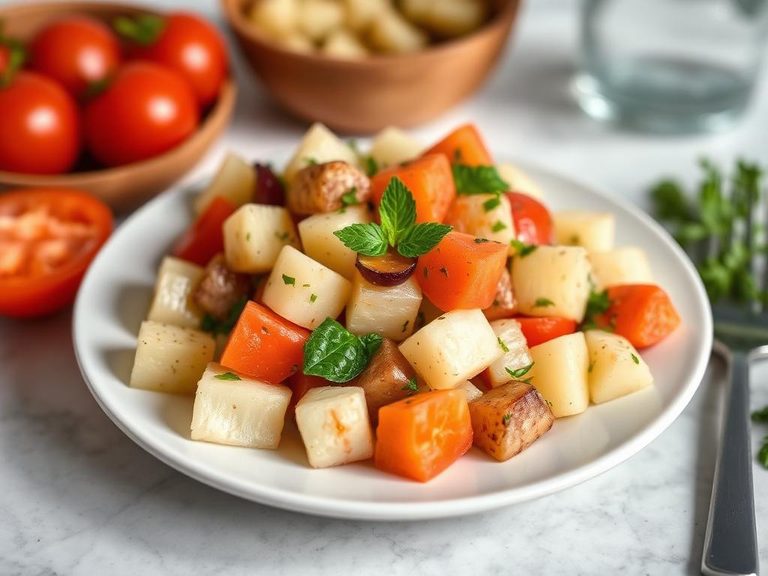
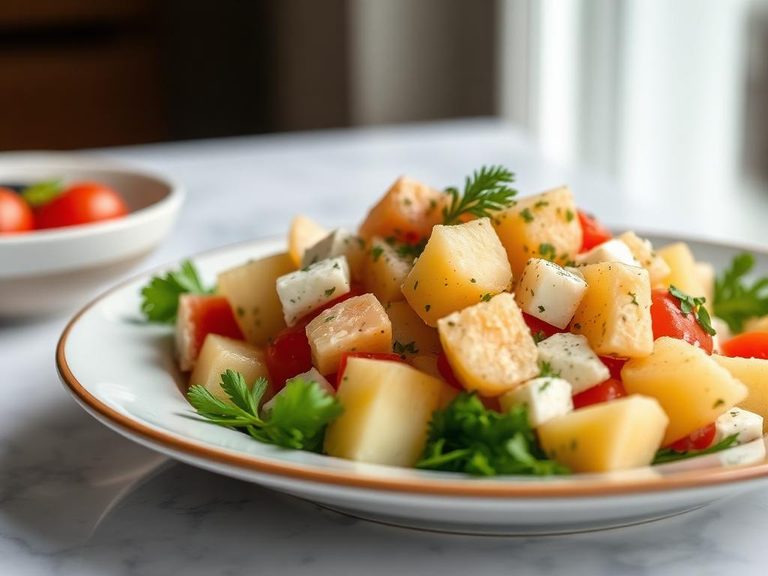
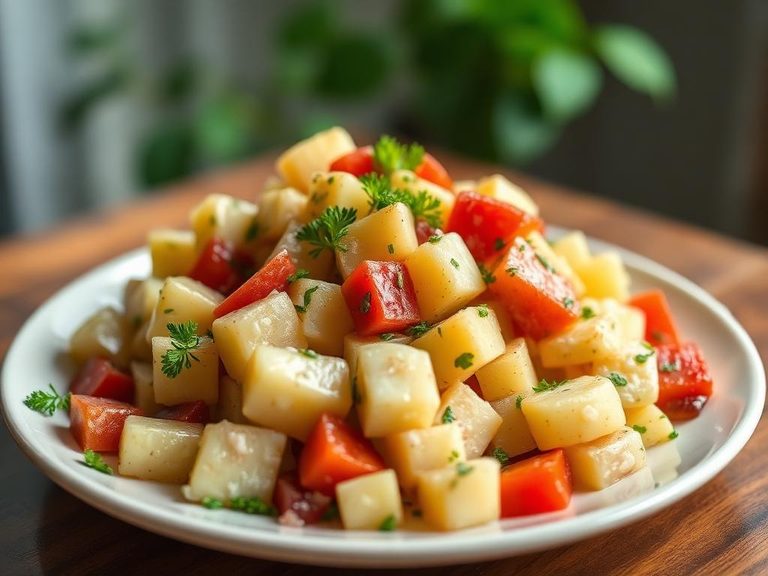
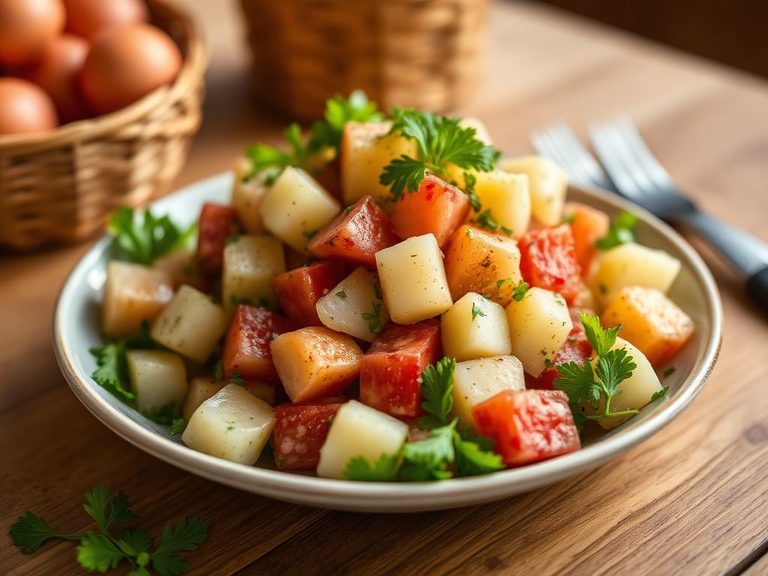
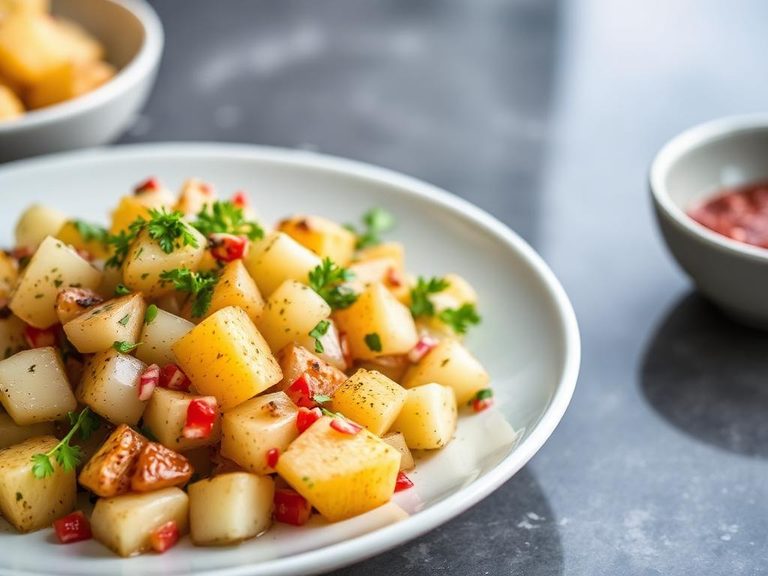
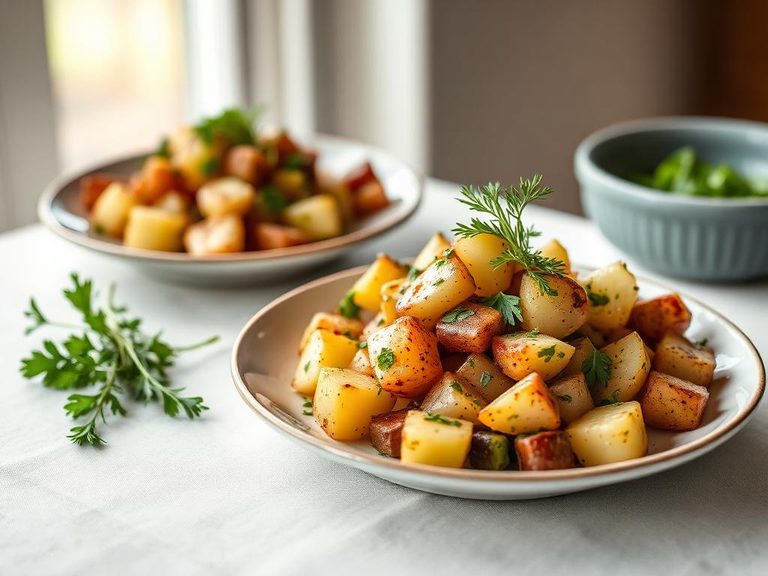
This is a light, tangy twist on the classic potato salad, where tender potato chunks are tossed in a zesty Italian vinaigrette instead of a creamy mayonnaise base. The texture is refreshingly crisp and clean, with the potatoes providing a satisfying, starchy bite against the bright, herby dressing. Nutritionally, it's a significantly lighter side dish, offering substantial carbohydrates for energy with minimal fat.
Calorie split: 7% protein · 81% carbs · 12% fat
↓ Full nutrition💚 Why it's loved
People love it for its refreshing, non-cloying flavor that cuts through richer main dishes, making it a perfect summer barbecue or picnic staple. Its versatility allows for endless additions like olives, peppers, or fresh herbs, and it represents a lighter, often more Mediterranean-inspired take on a traditional comfort food.
⚠️ Watch-outs & how to enjoy it better
The vinegar-based dressing can cause a quicker blood-sugar spike compared to fat-rich dressings, which may be a concern for some. It can also be high in sodium from the dressing and added salt. To counteract this, pair it with a protein source (like grilled chicken or beans) and healthy fats (like avocado or nuts) to slow digestion, and be mindful of portion size.
Key benefits
- Lower in fat and calories than mayonnaise-based versions.
- Good source of quick-release carbohydrates for energy.
- Contains dietary fiber from the potatoes.
- Hydrating due to the vinegar-based dressing.
- Often includes fresh herbs and vegetables for added micronutrients.
🍽️ Popular dishes
🌍 Where it's eaten
💡 Did you know?
Using an Italian vinaigrette instead of mayonnaise not only cuts calories but also helps the potato salad stay fresh longer at outdoor events, as the vinegar acts as a natural preservative.
Full nutrition (USDA data · scales with serving)
| Water | 78.7 g |
| Energy | 85.0 kcal |
| Protein | 1.4 g |
| Total lipid (fat) | 1.2 g |
| Carbohydrate, by difference | 17.5 g |
| Fiber, total dietary | 1.5 g |
| Total Sugars | 2.4 g |
| Calcium, Ca | 11.0 mg |
| Iron, Fe | 0.29 mg |
| Magnesium, Mg | 17.0 mg |
| Phosphorus, P | 34.0 mg |
| Potassium, K | 282 mg |
| Sodium, Na | 210 mg |
| Zinc, Zn | 0.23 mg |
| Copper, Cu | 0.13 mg |
| Selenium, Se | 0.50 ug |
| Vitamin C, total ascorbic acid | 6.0 mg |
| Thiamin | 0.08 mg |
| Riboflavin | 0.02 mg |
| Niacin | 1.0 mg |
| Vitamin B-6 | 0.22 mg |
| Folate, total | 9.0 ug |
| Folic acid | 0.00 ug |
| Folate, food | 9.0 ug |
| Folate, DFE | 9.0 ug |
| Choline, total | 11.1 mg |
| Vitamin B-12 | 0.00 ug |
| Vitamin B-12, added | 0.00 ug |
| Vitamin A, RAE | 1.0 ug |
| Retinol | 0.00 ug |
| Carotene, beta | 12.0 ug |
| Carotene, alpha | 0.00 ug |
| Cryptoxanthin, beta | 0.00 ug |
| Lycopene | 0.00 ug |
| Lutein + zeaxanthin | 18.0 ug |
| Vitamin E (alpha-tocopherol) | 0.73 mg |
| Vitamin E, added | 0.00 mg |
| Vitamin D (D2 + D3) | 0.00 ug |
| Vitamin K (phylloquinone) | 4.9 ug |
| Alcohol, ethyl | 0.00 g |
| Caffeine | 0.00 mg |
| Theobromine | 0.00 mg |
Fat & fatty acid profile (per 100g)
| Fatty acids, total saturated | 0.16 g |
| SFA 4:0 | 0.00 g |
| SFA 6:0 | 0.00 g |
| SFA 8:0 | 0.00 g |
| SFA 10:0 | 0.00 g |
| SFA 12:0 | 0.00 g |
| SFA 14:0 | 0.00 g |
| SFA 16:0 | 0.11 g |
| SFA 18:0 | 0.04 g |
| Fatty acids, total monounsaturated | 0.29 g |
| MUFA 16:1 | 0.00 g |
| MUFA 18:1 | 0.28 g |
| MUFA 20:1 | 0.01 g |
| MUFA 22:1 | 0.00 g |
| Fatty acids, total polyunsaturated | 0.58 g |
| PUFA 18:2 | 0.49 g |
| PUFA 18:3 | 0.08 g |
| PUFA 18:4 | 0.00 g |
| PUFA 20:4 | 0.00 g |
| PUFA 20:5 n-3 (EPA) | 0.00 g |
| PUFA 22:5 n-3 (DPA) | 0.00 g |
| PUFA 22:6 n-3 (DHA) | 0.00 g |
| Cholesterol | 0.00 mg |
Amino acid profile (per 100g)
Estimated from Potato salad, home-prepared — USDA does not publish this profile for Potato salad.
| Tryptophan | 0.04 g |
| Threonine | 0.12 g |
| Isoleucine | 0.14 g |
| Leucine | 0.20 g |
| Lysine | 0.17 g |
| Methionine | 0.07 g |
| Cystine | 0.05 g |
| Phenylalanine | 0.14 g |
| Tyrosine | 0.10 g |
| Valine | 0.17 g |
| Arginine | 0.15 g |
| Histidine | 0.06 g |
| Alanine | 0.12 g |
| Aspartic acid | 0.42 g |
| Glutamic acid | 0.39 g |
| Glycine | 0.09 g |
| Proline | 0.10 g |
| Serine | 0.16 g |
FAQ
How is this different from traditional potato salad?
The primary difference is the dressing: this version uses a light Italian vinaigrette (oil, vinegar, herbs) instead of a creamy, mayonnaise-based dressing, resulting in a tangier, lower-fat dish.
Can I make it ahead of time?
Yes, it often tastes better after marinating for a few hours, allowing the potatoes to absorb the dressing. However, the potatoes may absorb more liquid over time, so you might need to add a splash of vinegar or a drizzle of oil before serving.
What type of potato works best?
Waxy potatoes like Red Bliss, Yukon Gold, or new potatoes hold their shape well after boiling and are ideal for salads. Starchy potatoes like Russets can become too fluffy and may fall apart.
Nutrient density (calculated · NRF9.3)
Nutrient Rich Foods index: beneficial nutrients (protein, fiber, vitamins, minerals) minus saturated fat, added sugar & sodium, per 100 kcal.
NRF9.3 index — Fulgoni, Keast & Drewnowski, 2009. Computed from USDA nutrients.
Weight-loss friendliness (composite index)
Energy density 0.85 kcal/g · 7% calories from protein · 1.5 g fiber · 2.4 g sugar per 100 g.
Composite of energy density (Rolls et al., 1999), protein & fiber satiety, minus sugar. A calculated heuristic — ranks satiety-per-calorie, not a clinical measure.
Dietary load (calculated from USDA values)
Potential renal acid load. Positive = acid-forming, negative = alkaline-forming.
Sodium-to-potassium ratio: 0.74 (lower is better — aim for ≤ 1)
Sodium:potassium per WHO potassium guidance. Computed from USDA nutrients.