

Potato, roasted, from fresh, peel not eaten, made with butter
Common food
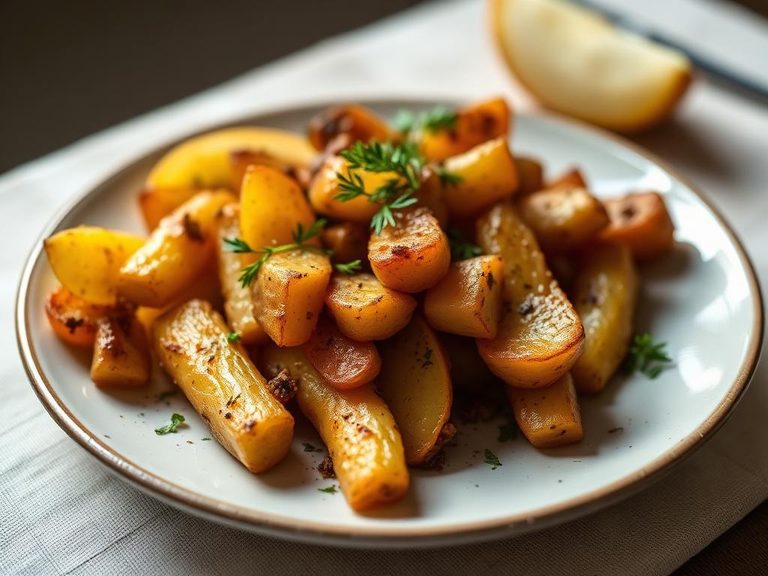
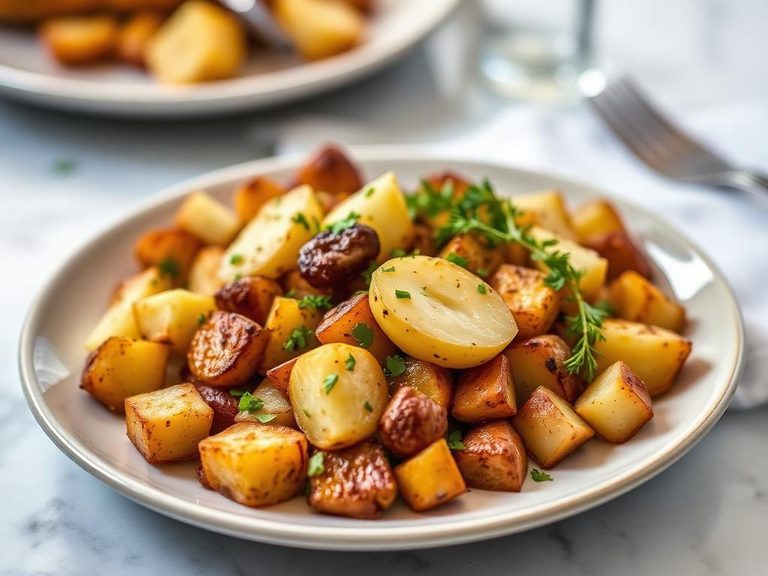
A butter-roasted potato is a golden, crispy-skinned cube or wedge with a fluffy, creamy interior. The butter infuses a rich, savory flavor and helps achieve a satisfying crunch. At 123 kcal per 100g, it's a comforting, energy-dense side dish.
Calorie split: 6% protein · 65% carbs · 29% fat
↓ Full nutrition💚 Why it's loved
People love the universal comfort of a perfectly roasted potato—the contrast between the crispy, buttery exterior and the soft, steaming inside is deeply satisfying. It's a beloved, adaptable side that complements everything from a Sunday roast to a simple weeknight meal.
⚠️ Watch-outs & how to enjoy it better
The high glycemic index can cause rapid blood-sugar spikes, especially for those with diabetes or insulin resistance. The added butter also increases saturated fat content. To mitigate, pair with a protein (like chicken or beans) and non-starchy vegetables to slow digestion, and practice portion control.
Key benefits
- Good source of potassium and vitamin B6
- Provides quick, accessible energy from carbohydrates
- Contains resistant starch if cooled after cooking
- The butter adds fat-soluble vitamins like A and D
- A versatile base for many herbs and spices
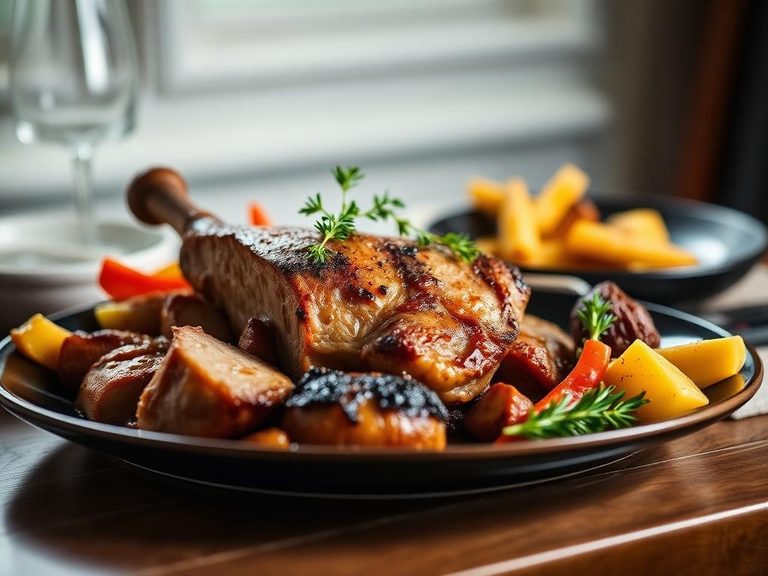
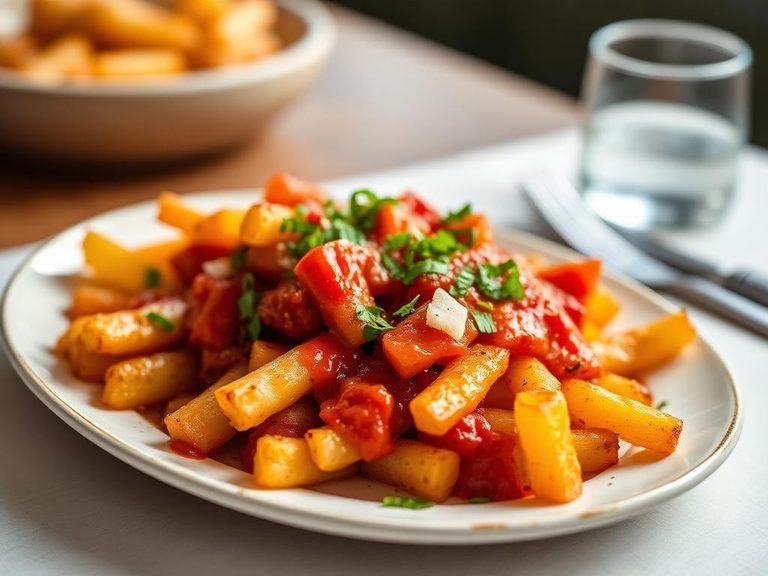
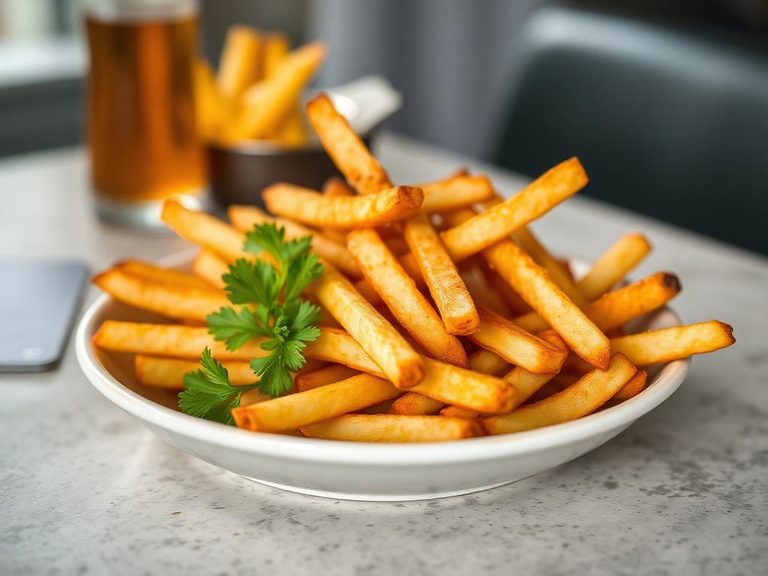
🍽️ Popular dishes
🌍 Where it's eaten
💡 Did you know?
The specific cooking method here—roasting with butter—creates a Maillard reaction on the potato's surface, generating over 50 new aromatic compounds that contribute to its complex, savory flavor.
Full nutrition (USDA data · scales with serving)
| Water | 72.3 g |
| Energy | 123 kcal |
| Protein | 1.9 g |
| Total lipid (fat) | 4.0 g |
| Carbohydrate, by difference | 20.4 g |
| Fiber, total dietary | 1.4 g |
| Total Sugars | 1.6 g |
| Calcium, Ca | 6.0 mg |
| Iron, Fe | 0.34 mg |
| Magnesium, Mg | 24.0 mg |
| Phosphorus, P | 48.0 mg |
| Potassium, K | 372 mg |
| Sodium, Na | 176 mg |
| Zinc, Zn | 0.28 mg |
| Copper, Cu | 0.20 mg |
| Selenium, Se | 0.30 ug |
| Vitamin C, total ascorbic acid | 12.1 mg |
| Thiamin | 0.10 mg |
| Riboflavin | 0.02 mg |
| Niacin | 1.3 mg |
| Vitamin B-6 | 0.29 mg |
| Folate, total | 9.0 ug |
| Folic acid | 0.00 ug |
| Folate, food | 9.0 ug |
| Folate, DFE | 9.0 ug |
| Choline, total | 14.6 mg |
| Vitamin B-12 | 0.00 ug |
| Vitamin B-12, added | 0.00 ug |
| Vitamin A, RAE | 36.0 ug |
| Retinol | 35.0 ug |
| Carotene, beta | 8.0 ug |
| Carotene, alpha | 0.00 ug |
| Cryptoxanthin, beta | 0.00 ug |
| Lycopene | 0.00 ug |
| Lutein + zeaxanthin | 0.00 ug |
| Vitamin E (alpha-tocopherol) | 0.04 mg |
| Vitamin E, added | 0.00 mg |
| Vitamin D (D2 + D3) | 0.00 ug |
| Vitamin K (phylloquinone) | 0.60 ug |
| Alcohol, ethyl | 0.00 g |
| Caffeine | 0.00 mg |
| Theobromine | 0.00 mg |
Fat & fatty acid profile (per 100g)
| Fatty acids, total saturated | 2.2 g |
| SFA 4:0 | 0.10 g |
| SFA 6:0 | 0.07 g |
| SFA 8:0 | 0.04 g |
| SFA 10:0 | 0.09 g |
| SFA 12:0 | 0.11 g |
| SFA 14:0 | 0.34 g |
| SFA 16:0 | 1.0 g |
| SFA 18:0 | 0.36 g |
| Fatty acids, total monounsaturated | 0.80 g |
| MUFA 16:1 | 0.05 g |
| MUFA 18:1 | 0.71 g |
| MUFA 20:1 | 0.01 g |
| MUFA 22:1 | 0.00 g |
| Fatty acids, total polyunsaturated | 0.16 g |
| PUFA 18:2 | 0.14 g |
| PUFA 18:3 | 0.03 g |
| PUFA 18:4 | 0.00 g |
| PUFA 20:4 | 0.01 g |
| PUFA 20:5 n-3 (EPA) | 0.00 g |
| PUFA 22:5 n-3 (DPA) | 0.00 g |
| PUFA 22:6 n-3 (DHA) | 0.00 g |
| Cholesterol | 11.0 mg |
Amino acid profile (per 100g)
Estimated from Snacks, potato chips, made from dried potatoes, reduced fat — USDA does not publish this profile for Potato.
| Tryptophan | 0.04 g |
| Threonine | 0.24 g |
| Isoleucine | 0.25 g |
| Leucine | 0.37 g |
| Lysine | 0.35 g |
| Methionine | 0.07 g |
| Cystine | 0.07 g |
| Phenylalanine | 0.26 g |
| Tyrosine | 0.22 g |
| Valine | 0.33 g |
| Arginine | 0.27 g |
| Histidine | 0.13 g |
| Alanine | 0.20 g |
| Aspartic acid | 1.1 g |
| Glutamic acid | 0.94 g |
| Glycine | 0.19 g |
| Proline | 0.20 g |
| Serine | 0.23 g |
FAQ
Why are my roasted potatoes not crispy?
The key is high heat (425°F/220°C or above), ensuring the potatoes are dry before tossing with fat, and not overcrowding the pan. Using a starchy potato like Russet also helps.
Can I make this with less fat?
Yes. You can use a smaller amount of butter mixed with a high-smoke-point oil, or toss the potatoes in just enough oil to coat lightly. Using an air fryer can also reduce the needed fat.
What's the best potato for roasting?
Starchy potatoes like Russets or Maris Pipers become fluffy inside and crisp outside. Waxy potatoes like Yukon Golds hold their shape better but may be less fluffy.
Nutrient density (calculated · NRF9.3)
Nutrient Rich Foods index: beneficial nutrients (protein, fiber, vitamins, minerals) minus saturated fat, added sugar & sodium, per 100 kcal.
NRF9.3 index — Fulgoni, Keast & Drewnowski, 2009. Computed from USDA nutrients.
Weight-loss friendliness (composite index)
Energy density 1.23 kcal/g · 6% calories from protein · 1.4 g fiber · 1.6 g sugar per 100 g.
Composite of energy density (Rolls et al., 1999), protein & fiber satiety, minus sugar. A calculated heuristic — ranks satiety-per-calorie, not a clinical measure.
Dietary load (calculated from USDA values)
Potential renal acid load. Positive = acid-forming, negative = alkaline-forming.
Sodium-to-potassium ratio: 0.47 (lower is better — aim for ≤ 1)
Sodium:potassium per WHO potassium guidance. Computed from USDA nutrients.