

Potato, french fries, from frozen, fried
Common food
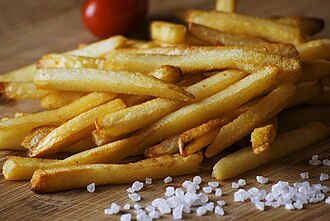
Photo: Wikipedia
These are golden, crispy potato sticks made from frozen, pre-cut potatoes deep-fried to a satisfying crunch. They offer a classic salty, savory flavor with a fluffy interior and a distinct, crunchy exterior. Nutritionally, they are a high-energy, carbohydrate-rich food with a significant fat content from frying.
Calorie split: 4% protein · 40% carbs · 55% fat
↓ Full nutrition💚 Why it's loved
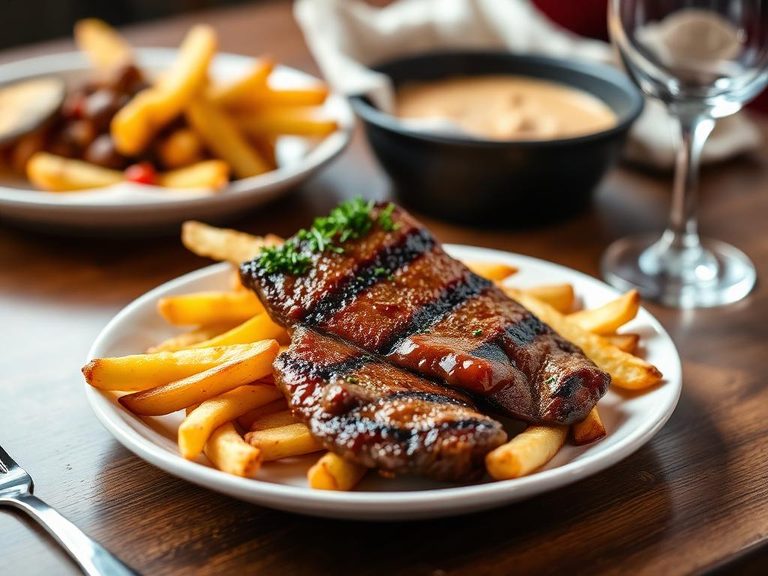
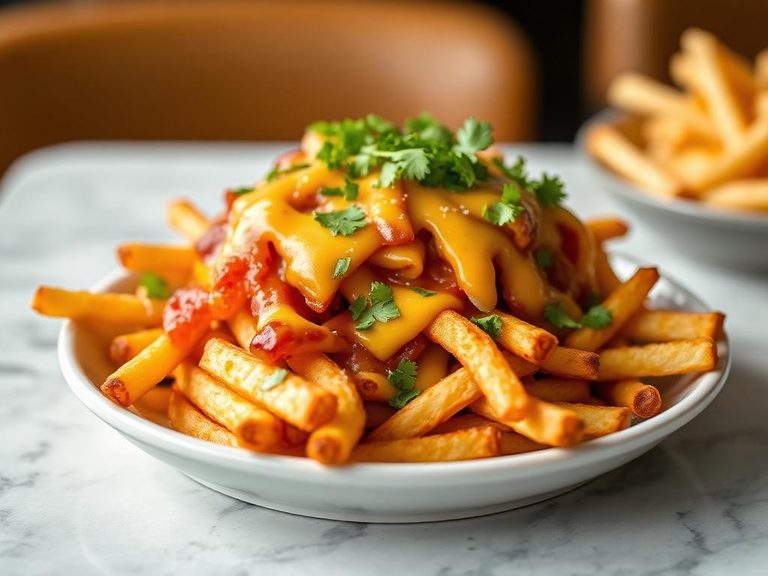
People adore them for their irresistible combination of salty crunch and soft, fluffy potato inside—a universal comfort food. They are incredibly versatile, pairing with everything from burgers and steak to being enjoyed on their own with a variety of dipping sauces.
⚠️ Watch-outs & how to enjoy it better
The high fat and calorie density can contribute to weight gain if overconsumed, and the refined carbohydrates may cause rapid blood-sugar spikes. To counteract this, practice portion control, pair them with a source of protein (like grilled chicken) or fiber (like a side salad) to slow digestion, and opt for baking or air-frying at home to reduce added fat.
Key benefits
- Quick and convenient meal or side dish
- Provides a quick source of energy from carbohydrates
- A familiar comfort food for many cultures
- Can be a source of potassium from the potato
- Offers a satisfying textural contrast (crisp outside, soft inside)
🍽️ Popular dishes
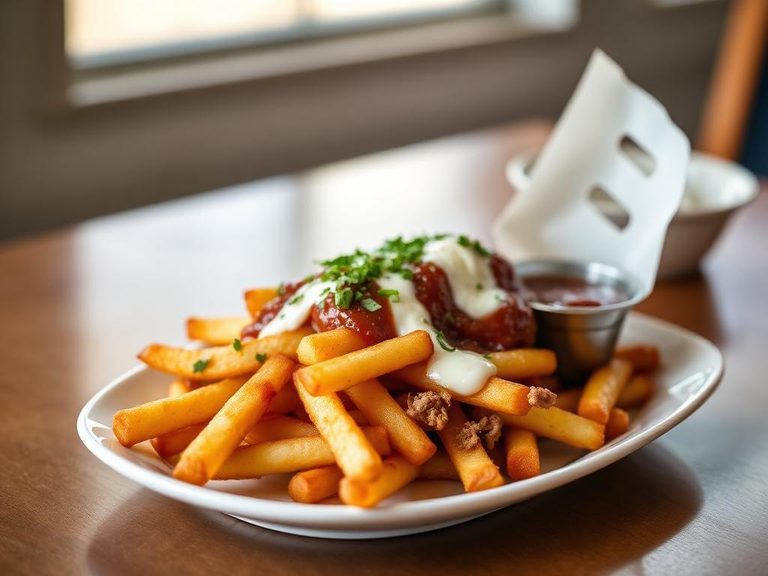
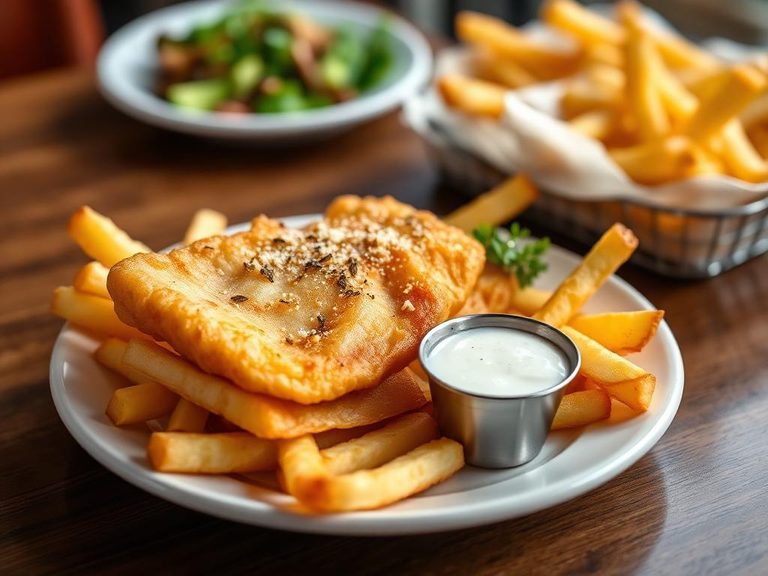
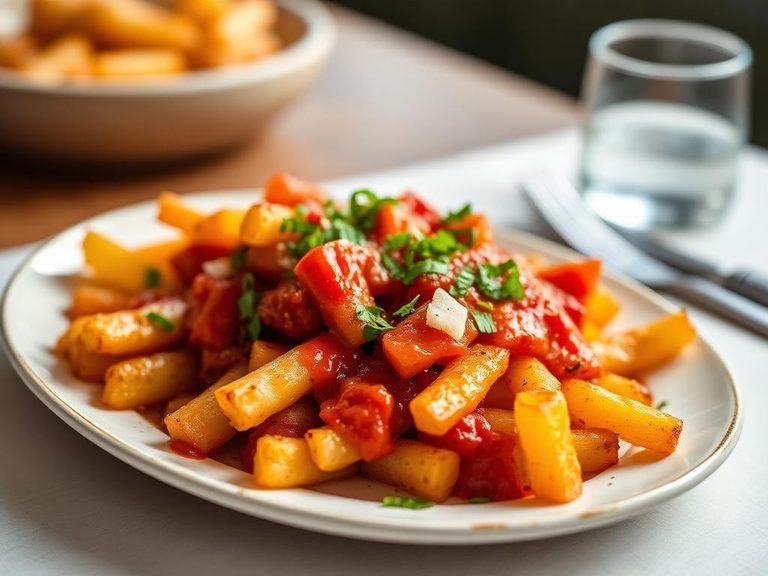
🌍 Where it's eaten
💡 Did you know?
The debate over whether French fries originated in France or Belgium is a long-standing culinary dispute, with Belgians claiming they've been frying potatoes since the late 17th century.
Full nutrition (USDA data · scales with serving)
| Water | 58.6 g |
| Energy | 225 kcal |
| Protein | 2.5 g |
| Total lipid (fat) | 14.1 g |
| Carbohydrate, by difference | 23.2 g |
| Fiber, total dietary | 1.8 g |
| Total Sugars | 0.34 g |
| Calcium, Ca | 11.0 mg |
| Iron, Fe | 0.53 mg |
| Magnesium, Mg | 22.0 mg |
| Phosphorus, P | 79.0 mg |
| Potassium, K | 435 mg |
| Sodium, Na | 295 mg |
| Zinc, Zn | 0.32 mg |
| Copper, Cu | 0.10 mg |
| Selenium, Se | 0.40 ug |
| Vitamin C, total ascorbic acid | 7.8 mg |
| Thiamin | 0.12 mg |
| Riboflavin | 0.03 mg |
| Niacin | 1.9 mg |
| Vitamin B-6 | 0.24 mg |
| Folate, total | 21.0 ug |
| Folic acid | 0.00 ug |
| Folate, food | 21.0 ug |
| Folate, DFE | 21.0 ug |
| Choline, total | 21.6 mg |
| Vitamin B-12 | 0.00 ug |
| Vitamin B-12, added | 0.00 ug |
| Vitamin A, RAE | 0.00 ug |
| Retinol | 0.00 ug |
| Carotene, beta | 3.0 ug |
| Carotene, alpha | 0.00 ug |
| Cryptoxanthin, beta | 0.00 ug |
| Lycopene | 0.00 ug |
| Lutein + zeaxanthin | 15.0 ug |
| Vitamin E (alpha-tocopherol) | 2.1 mg |
| Vitamin E, added | 0.00 mg |
| Vitamin D (D2 + D3) | 0.00 ug |
| Vitamin K (phylloquinone) | 15.9 ug |
| Alcohol, ethyl | 0.00 g |
| Caffeine | 0.00 mg |
| Theobromine | 0.00 mg |
Fat & fatty acid profile (per 100g)
| Fatty acids, total saturated | 2.0 g |
| SFA 4:0 | 0.00 g |
| SFA 6:0 | 0.00 g |
| SFA 8:0 | 0.01 g |
| SFA 10:0 | 0.02 g |
| SFA 12:0 | 0.01 g |
| SFA 14:0 | 0.02 g |
| SFA 16:0 | 1.4 g |
| SFA 18:0 | 0.40 g |
| Fatty acids, total monounsaturated | 5.6 g |
| MUFA 16:1 | 0.04 g |
| MUFA 18:1 | 5.4 g |
| MUFA 20:1 | 0.10 g |
| MUFA 22:1 | 0.00 g |
| Fatty acids, total polyunsaturated | 4.9 g |
| PUFA 18:2 | 4.2 g |
| PUFA 18:3 | 0.61 g |
| PUFA 18:4 | 0.00 g |
| PUFA 20:4 | 0.00 g |
| PUFA 20:5 n-3 (EPA) | 0.00 g |
| PUFA 22:5 n-3 (DPA) | 0.00 g |
| PUFA 22:6 n-3 (DHA) | 0.00 g |
| Cholesterol | 0.00 mg |
Amino acid profile (per 100g)
Estimated from Snacks, potato chips, made from dried potatoes, reduced fat — USDA does not publish this profile for Potato.
| Tryptophan | 0.04 g |
| Threonine | 0.24 g |
| Isoleucine | 0.25 g |
| Leucine | 0.37 g |
| Lysine | 0.35 g |
| Methionine | 0.07 g |
| Cystine | 0.07 g |
| Phenylalanine | 0.26 g |
| Tyrosine | 0.22 g |
| Valine | 0.33 g |
| Arginine | 0.27 g |
| Histidine | 0.13 g |
| Alanine | 0.20 g |
| Aspartic acid | 1.1 g |
| Glutamic acid | 0.94 g |
| Glycine | 0.19 g |
| Proline | 0.20 g |
| Serine | 0.23 g |
FAQ
Are frozen french fries less healthy than homemade?
Not necessarily. Frozen fries can be comparable to restaurant fries in fat and sodium. Making them at home gives you full control over the type and amount of oil, salt, and cooking method (like baking), often resulting in a healthier product.
Why do they sometimes turn out soggy?
Sogginess is often caused by overcrowding the pan or fryer, which drops the oil temperature and causes steaming instead of frying. Ensure the oil is hot enough (around 350°F/175°C) and cook in batches. For oven fries, spread them in a single layer on a hot baking sheet.
Can I reheat them to regain crispiness?
Yes, but avoid the microwave. Reheat them in a preheated oven, toaster oven, or air fryer at a high temperature (400°F/200°C) for a few minutes to re-crisp the exterior.
Nutrient density (calculated · NRF9.3)
Nutrient Rich Foods index: beneficial nutrients (protein, fiber, vitamins, minerals) minus saturated fat, added sugar & sodium, per 100 kcal.
NRF9.3 index — Fulgoni, Keast & Drewnowski, 2009. Computed from USDA nutrients.
Weight-loss friendliness (composite index)
Energy density 2.25 kcal/g · 4% calories from protein · 1.8 g fiber · 0.3 g sugar per 100 g.
Composite of energy density (Rolls et al., 1999), protein & fiber satiety, minus sugar. A calculated heuristic — ranks satiety-per-calorie, not a clinical measure.
Dietary load (calculated from USDA values)
Potential renal acid load. Positive = acid-forming, negative = alkaline-forming.
Sodium-to-potassium ratio: 0.68 (lower is better — aim for ≤ 1)
Sodium:potassium per WHO potassium guidance. Computed from USDA nutrients.