

Potato chips, restructured, plain
Common food

Photo: Wikipedia
These are not your average potato chips. They are restructured from potato flakes or granules into a uniform, often thicker, shape before being fried, resulting in a satisfyingly sturdy crunch and a consistent, starchy potato flavor. Nutritionally, they are a calorie-dense energy source, with a macronutrient profile dominated by fats and carbohydrates.
Calorie split: 3% protein · 40% carbs · 57% fat
↓ Full nutrition💚 Why it's loved
People adore them for their reliable, hearty crunch and the comforting, savory taste of potato that pairs perfectly with dips, sandwiches, or on their own. Their sturdy structure makes them ideal for dipping without breaking, and they are a staple of casual gatherings, movie nights, and lunchboxes.
⚠️ Watch-outs & how to enjoy it better
The high fat and calorie content can contribute to weight gain if consumed in excess, and the refined carbohydrates may cause blood-sugar spikes. To counteract this, practice strict portion control (e.g., a single serving is about 15 chips) and pair them with a protein-rich food like cheese, hummus, or a handful of nuts to slow digestion and promote satiety.
Key benefits
- Provides a quick source of energy from carbohydrates and fats
- Contains some dietary fiber, which aids digestion
- Offers a small amount of plant-based protein
- The restructured form often leads to a more uniform texture and cook
- A common, shelf-stable snack available globally
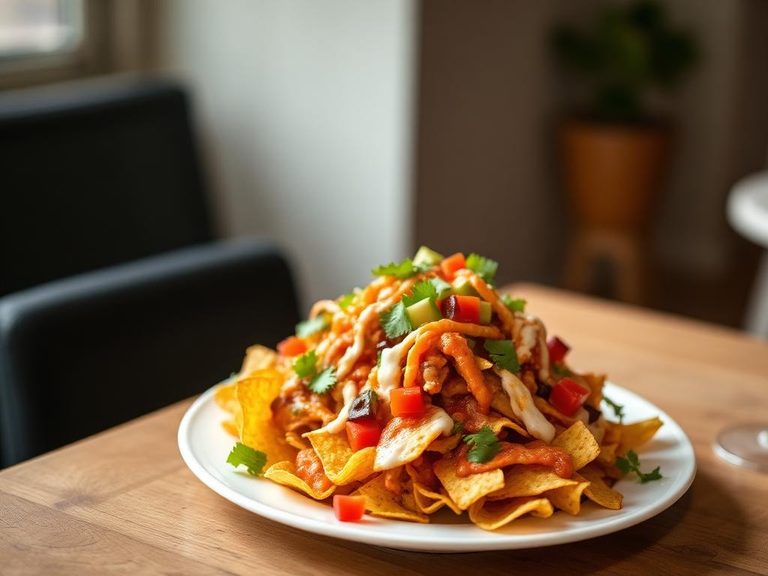
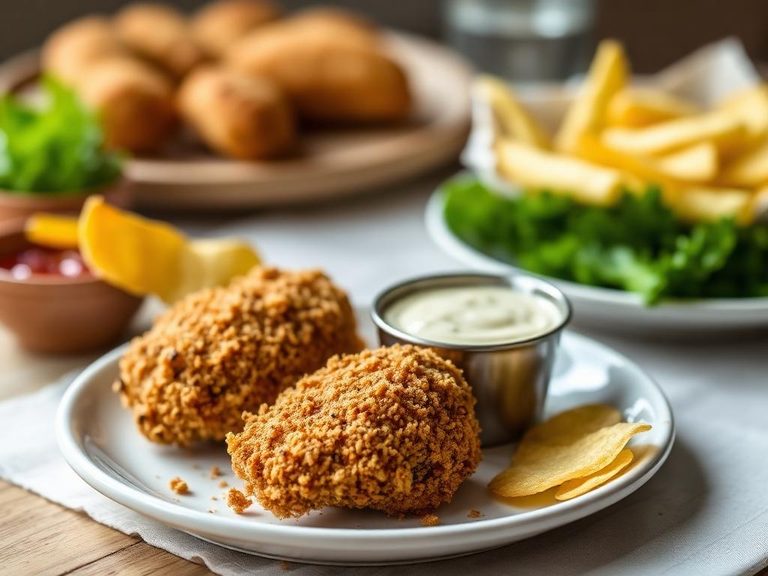
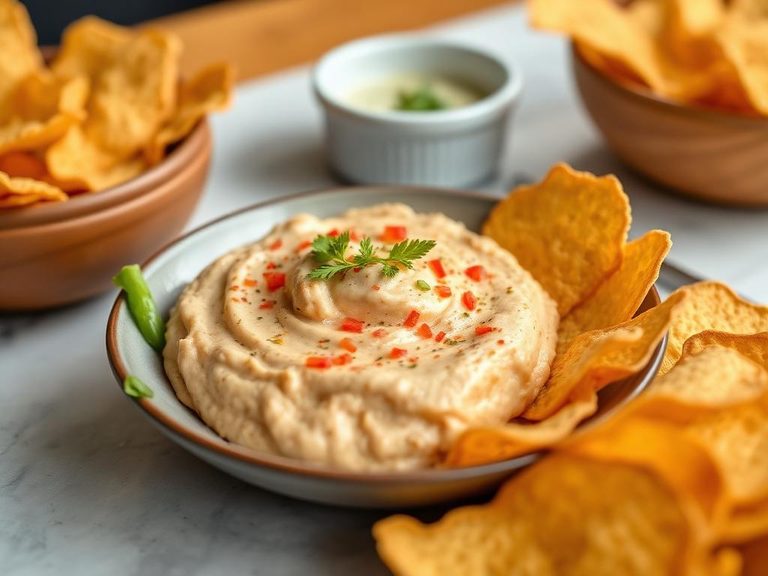
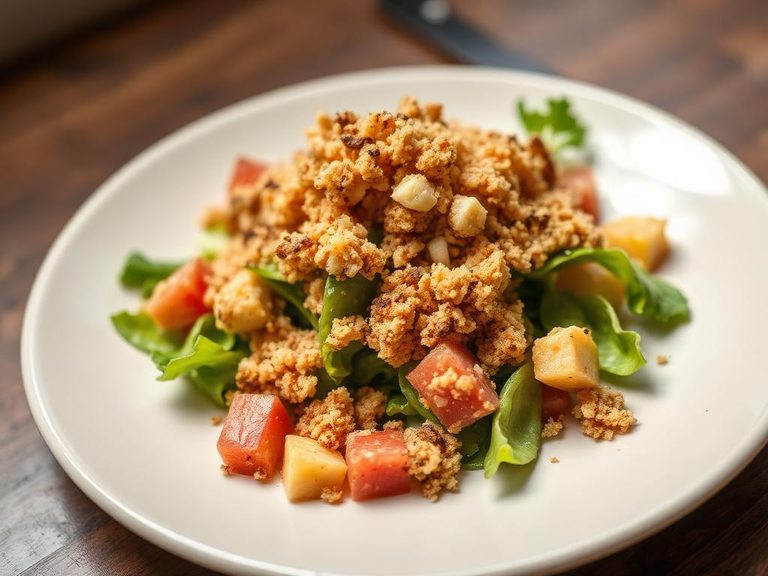
🍽️ Popular dishes

🌍 Where it's eaten
💡 Did you know?
The 'restructured' process was developed to use potato fragments and peels that would otherwise be wasted, turning them into a perfectly shaped, marketable chip.
Full nutrition (USDA data · scales with serving)
| Water | 2.4 g |
| Energy | 543 kcal |
| Protein | 4.6 g |
| Total lipid (fat) | 35.2 g |
| Carbohydrate, by difference | 55.2 g |
| Fiber, total dietary | 2.9 g |
| Total Sugars | 0.76 g |
| Calcium, Ca | 17.0 mg |
| Iron, Fe | 0.80 mg |
| Magnesium, Mg | 40.0 mg |
| Phosphorus, P | 110 mg |
| Potassium, K | 635 mg |
| Sodium, Na | 643 mg |
| Zinc, Zn | 0.58 mg |
| Copper, Cu | 0.14 mg |
| Selenium, Se | 0.40 ug |
| Vitamin C, total ascorbic acid | 1.2 mg |
| Thiamin | 0.21 mg |
| Riboflavin | 0.07 mg |
| Niacin | 2.6 mg |
| Vitamin B-6 | 0.49 mg |
| Folate, total | 19.0 ug |
| Folic acid | 0.00 ug |
| Folate, food | 19.0 ug |
| Folate, DFE | 19.0 ug |
| Choline, total | 32.7 mg |
| Vitamin B-12 | 0.00 ug |
| Vitamin B-12, added | 0.00 ug |
| Vitamin A, RAE | 0.00 ug |
| Retinol | 0.00 ug |
| Carotene, beta | 0.00 ug |
| Carotene, alpha | 0.00 ug |
| Cryptoxanthin, beta | 0.00 ug |
| Lycopene | 0.00 ug |
| Lutein + zeaxanthin | 0.00 ug |
| Vitamin E (alpha-tocopherol) | 13.7 mg |
| Vitamin E, added | 0.00 mg |
| Vitamin D (D2 + D3) | 0.00 ug |
| Vitamin K (phylloquinone) | 7.2 ug |
| Alcohol, ethyl | 0.00 g |
| Caffeine | 0.00 mg |
| Theobromine | 0.00 mg |
Fat & fatty acid profile (per 100g)
| Fatty acids, total saturated | 8.6 g |
| SFA 4:0 | 0.00 g |
| SFA 6:0 | 0.00 g |
| SFA 8:0 | 0.01 g |
| SFA 10:0 | 0.00 g |
| SFA 12:0 | 0.00 g |
| SFA 14:0 | 0.28 g |
| SFA 16:0 | 7.3 g |
| SFA 18:0 | 0.82 g |
| Fatty acids, total monounsaturated | 6.1 g |
| MUFA 16:1 | 0.18 g |
| MUFA 18:1 | 5.9 g |
| MUFA 20:1 | 0.03 g |
| MUFA 22:1 | 0.00 g |
| Fatty acids, total polyunsaturated | 15.5 g |
| PUFA 18:2 | 15.4 g |
| PUFA 18:3 | 0.05 g |
| PUFA 18:4 | 0.00 g |
| PUFA 20:4 | 0.01 g |
| PUFA 20:5 n-3 (EPA) | 0.00 g |
| PUFA 22:5 n-3 (DPA) | 0.00 g |
| PUFA 22:6 n-3 (DHA) | 0.00 g |
| Cholesterol | 0.00 mg |
Amino acid profile (per 100g)
Estimated from Snacks, potato chips, made from dried potatoes, sour-cream and onion-flavor — USDA does not publish this profile for Potato chips.
| Tryptophan | 0.07 g |
| Threonine | 0.28 g |
| Isoleucine | 0.31 g |
| Leucine | 0.48 g |
| Lysine | 0.44 g |
| Methionine | 0.10 g |
| Cystine | 0.08 g |
| Phenylalanine | 0.29 g |
| Tyrosine | 0.25 g |
| Valine | 0.38 g |
| Arginine | 0.31 g |
| Histidine | 0.15 g |
| Alanine | 0.25 g |
| Aspartic acid | 0.93 g |
| Glutamic acid | 1.1 g |
| Glycine | 0.21 g |
| Proline | 0.37 g |
| Serine | 0.29 g |
FAQ
How are restructured potato chips different from regular potato chips?
Regular chips are sliced from whole potatoes, while restructured chips are made from a dough of potato flakes, starch, and water, which is then rolled, cut, and fried. This gives them a more uniform shape, texture, and often a thicker, sturdier build.
Why are they higher in calories than some other snacks?
The restructured dough absorbs oil during frying, leading to a high fat content (over 35g per 100g). Combined with the dense carbohydrate base, this makes them a very energy-dense food.
Are they gluten-free?
Not necessarily. While potatoes are naturally gluten-free, the restructured process may involve additives or flavorings that contain wheat. Always check the ingredient list for allergen information if you have celiac disease or gluten sensitivity.
Nutrient density (calculated · NRF9.3)
Nutrient Rich Foods index: beneficial nutrients (protein, fiber, vitamins, minerals) minus saturated fat, added sugar & sodium, per 100 kcal.
NRF9.3 index — Fulgoni, Keast & Drewnowski, 2009. Computed from USDA nutrients.
Weight-loss friendliness (composite index)
Energy density 5.43 kcal/g · 3% calories from protein · 2.9 g fiber · 0.8 g sugar per 100 g.
Composite of energy density (Rolls et al., 1999), protein & fiber satiety, minus sugar. A calculated heuristic — ranks satiety-per-calorie, not a clinical measure.
Dietary load (calculated from USDA values)
Potential renal acid load. Positive = acid-forming, negative = alkaline-forming.
Sodium-to-potassium ratio: 1.01 (lower is better — aim for ≤ 1)
Sodium:potassium per WHO potassium guidance. Computed from USDA nutrients.