

Pork, ribs
Common food

Photo: Wikipedia
Pork ribs are a succulent, bone-in cut prized for their rich, meaty flavor and tender texture when slow-cooked. With a notable 254 kcal and 15.12g of fat per 100g, they deliver a satisfying, energy-dense meal. The protein content of 16.22g supports muscle maintenance, though the moderate sugar (9.89g) often comes from added glazes or sauces.
Calorie split: 26% protein · 19% carbs · 55% fat
↓ Full nutrition💚 Why it's loved
People adore pork ribs for their deep, savory umami flavor and the satisfying experience of meat falling off the bone. They are a cultural staple in barbecue traditions, symbolizing communal feasts and comfort food.
⚠️ Watch-outs & how to enjoy it better
The high fat and calorie content can be a concern for those managing weight or heart health. The sugar in many rib preparations (like BBQ sauce) can cause blood-sugar spikes; to counteract, pair with fiber-rich vegetables (e.g., coleslaw) and opt for dry rubs or vinegar-based sauces instead of sugary glazes.
Key benefits
- High-quality protein source for muscle repair
- Rich in B vitamins (especially B12) for energy metabolism
- Contains essential minerals like zinc and selenium
- Provides dietary fat for nutrient absorption and satiety
- Versatile for various cooking methods (grilling, smoking, braising)
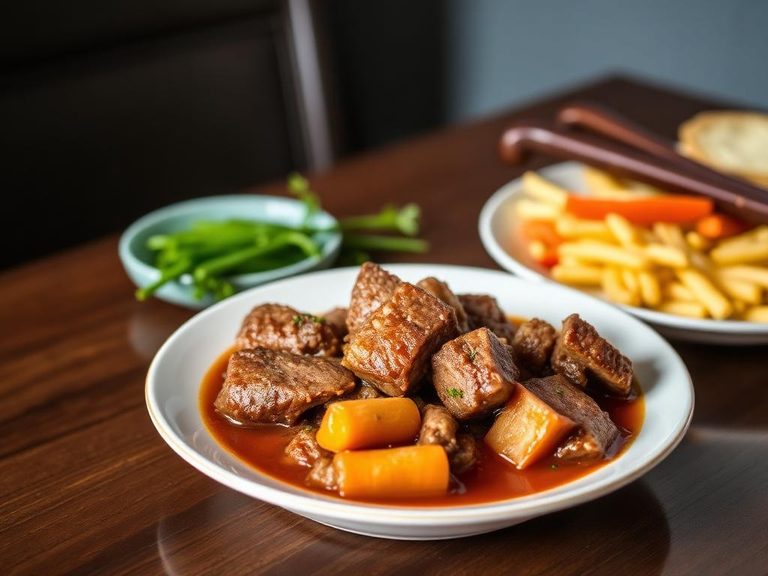
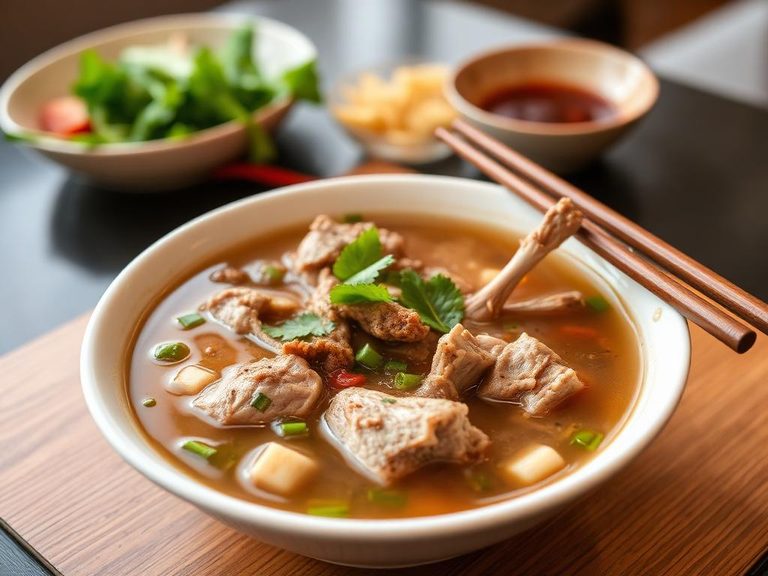
🍽️ Popular dishes
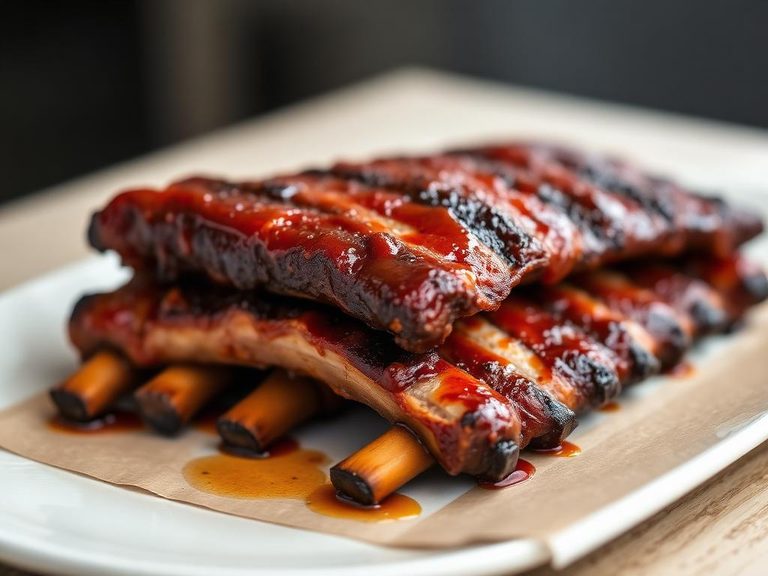
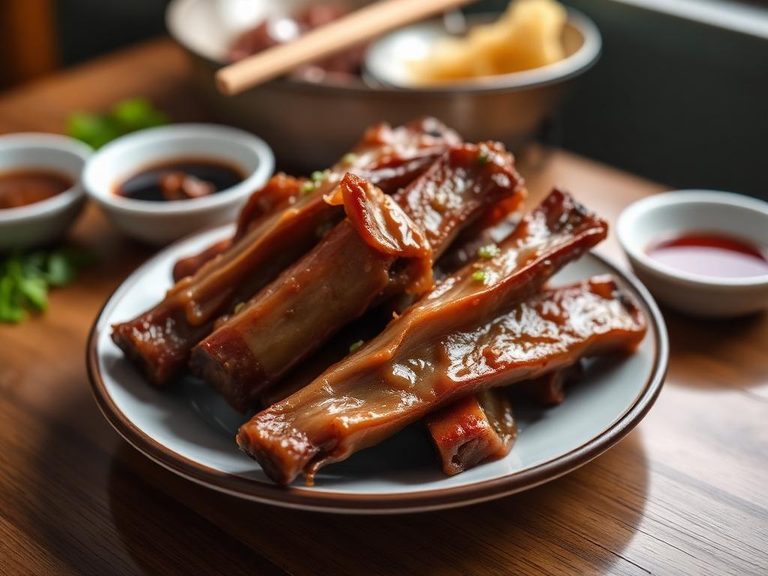
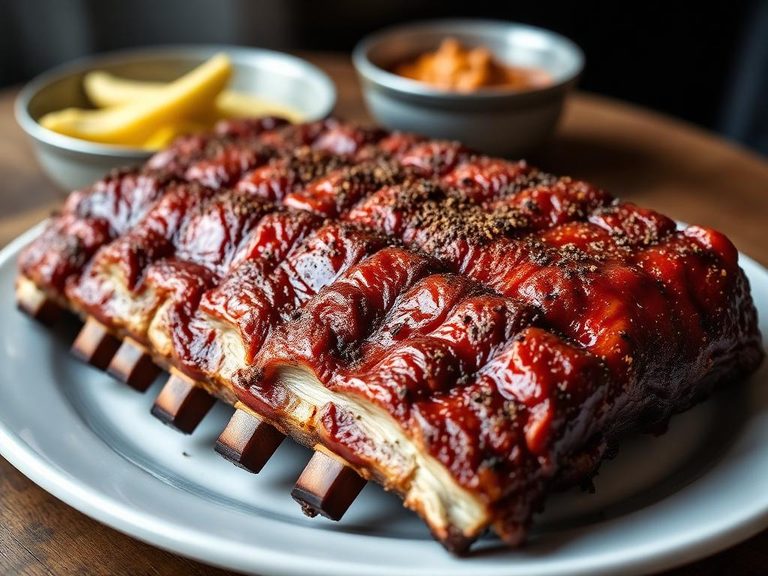
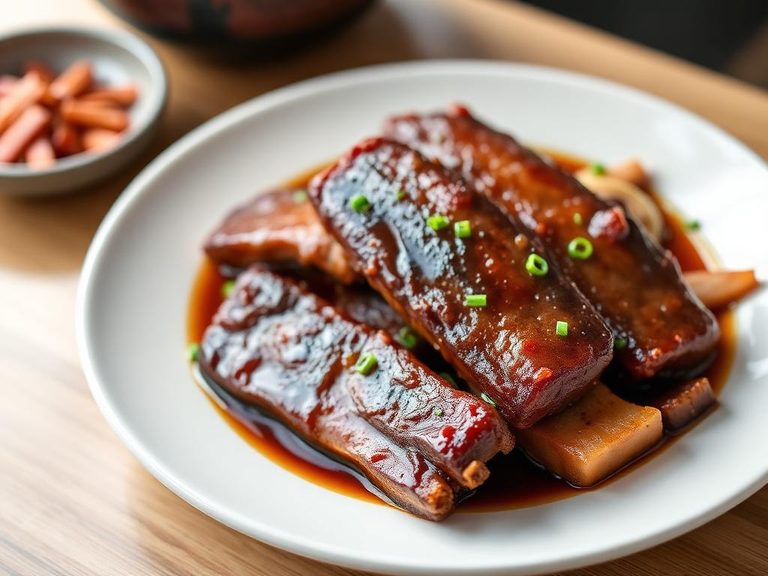
🌍 Where it's eaten
💡 Did you know?
The term 'baby back ribs' refers to ribs from the upper part of the pig's ribcage, which are smaller and leaner than spare ribs, not from a young pig.
Full nutrition (USDA data · scales with serving)
| Water | 54.4 g |
| Energy | 254 kcal |
| Protein | 16.2 g |
| Total lipid (fat) | 15.1 g |
| Carbohydrate, by difference | 12.1 g |
| Fiber, total dietary | 0.30 g |
| Total Sugars | 9.9 g |
| Calcium, Ca | 42.0 mg |
| Iron, Fe | 0.83 mg |
| Magnesium, Mg | 16.0 mg |
| Phosphorus, P | 121 mg |
| Potassium, K | 236 mg |
| Sodium, Na | 678 mg |
| Zinc, Zn | 2.2 mg |
| Copper, Cu | 0.10 mg |
| Selenium, Se | 22.7 ug |
| Vitamin C, total ascorbic acid | 0.20 mg |
| Thiamin | 0.33 mg |
| Riboflavin | 0.25 mg |
| Niacin | 5.5 mg |
| Vitamin B-6 | 0.31 mg |
| Folate, total | 1.0 ug |
| Folic acid | 0.00 ug |
| Folate, food | 1.0 ug |
| Folate, DFE | 1.0 ug |
| Choline, total | 56.7 mg |
| Vitamin B-12 | 0.51 ug |
| Vitamin B-12, added | 0.00 ug |
| Vitamin A, RAE | 7.0 ug |
| Retinol | 4.0 ug |
| Carotene, beta | 40.0 ug |
| Carotene, alpha | 0.00 ug |
| Cryptoxanthin, beta | 1.0 ug |
| Lycopene | 1354 ug |
| Lutein + zeaxanthin | 26.0 ug |
| Vitamin E (alpha-tocopherol) | 0.41 mg |
| Vitamin E, added | 0.00 mg |
| Vitamin D (D2 + D3) | 0.80 ug |
| Vitamin K (phylloquinone) | 0.50 ug |
| Alcohol, ethyl | 0.00 g |
| Caffeine | 0.00 mg |
| Theobromine | 0.00 mg |
Fat & fatty acid profile (per 100g)
| Fatty acids, total saturated | 5.4 g |
| SFA 4:0 | 0.00 g |
| SFA 6:0 | 0.00 g |
| SFA 8:0 | 0.00 g |
| SFA 10:0 | 0.01 g |
| SFA 12:0 | 0.01 g |
| SFA 14:0 | 0.20 g |
| SFA 16:0 | 3.3 g |
| SFA 18:0 | 1.8 g |
| Fatty acids, total monounsaturated | 6.5 g |
| MUFA 16:1 | 0.31 g |
| MUFA 18:1 | 6.1 g |
| MUFA 20:1 | 0.11 g |
| MUFA 22:1 | 0.01 g |
| Fatty acids, total polyunsaturated | 2.5 g |
| PUFA 18:2 | 2.2 g |
| PUFA 18:3 | 0.11 g |
| PUFA 18:4 | 0.00 g |
| PUFA 20:4 | 0.06 g |
| PUFA 20:5 n-3 (EPA) | 0.00 g |
| PUFA 22:5 n-3 (DPA) | 0.01 g |
| PUFA 22:6 n-3 (DHA) | 0.00 g |
| Cholesterol | 58.0 mg |
Amino acid profile (per 100g)
Estimated from Pork, cured, salt pork, raw — USDA does not publish this profile for Pork.
| Tryptophan | 0.02 g |
| Threonine | 0.17 g |
| Isoleucine | 0.13 g |
| Leucine | 0.35 g |
| Lysine | 0.42 g |
| Methionine | 0.07 g |
| Cystine | 0.04 g |
| Phenylalanine | 0.19 g |
| Tyrosine | 0.08 g |
| Valine | 0.24 g |
| Arginine | 0.52 g |
| Histidine | 0.06 g |
| Alanine | 0.28 g |
| Aspartic acid | 0.42 g |
| Glutamic acid | 0.69 g |
| Glycine | 0.36 g |
| Proline | 0.27 g |
| Serine | 0.19 g |
FAQ
Are pork ribs high in protein?
Yes, with 16.22g per 100g, they are a good protein source, though not as lean as chicken breast.
How can I reduce the fat content in pork ribs?
Choose leaner cuts like baby back ribs, trim visible fat, and use dry cooking methods like grilling or baking instead of frying.
Is the sugar in pork ribs natural or added?
Most sugar comes from added sauces or marinades; plain ribs have minimal natural sugar, so check labels or use homemade rubs.
Can people with dietary restrictions eat pork ribs?
Those on low-fat or low-sugar diets should limit portions; individuals with pork allergies or religious restrictions should avoid them.
Nutrient density (calculated · NRF9.3)
Nutrient Rich Foods index: beneficial nutrients (protein, fiber, vitamins, minerals) minus saturated fat, added sugar & sodium, per 100 kcal.
NRF9.3 index — Fulgoni, Keast & Drewnowski, 2009. Computed from USDA nutrients.
Weight-loss friendliness (composite index)
Energy density 2.54 kcal/g · 26% calories from protein · 0.3 g fiber · 9.9 g sugar per 100 g.
Composite of energy density (Rolls et al., 1999), protein & fiber satiety, minus sugar. A calculated heuristic — ranks satiety-per-calorie, not a clinical measure.
Dietary load (calculated from USDA values)
Potential renal acid load. Positive = acid-forming, negative = alkaline-forming.
Sodium-to-potassium ratio: 2.87 (lower is better — aim for ≤ 1)
Sodium:potassium per WHO potassium guidance. Computed from USDA nutrients.