

Pizza, cheese, from restaurant or fast food, thick crust
Common food
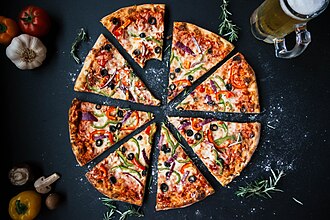
Photo: Wikipedia
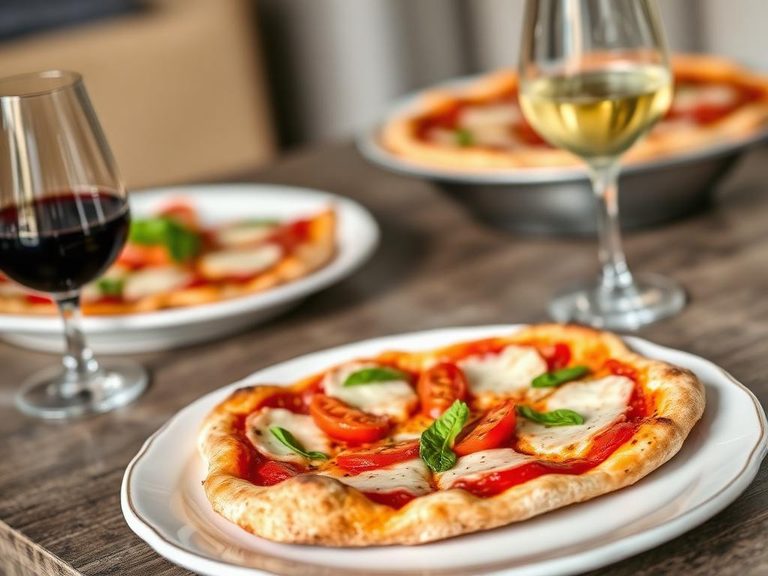
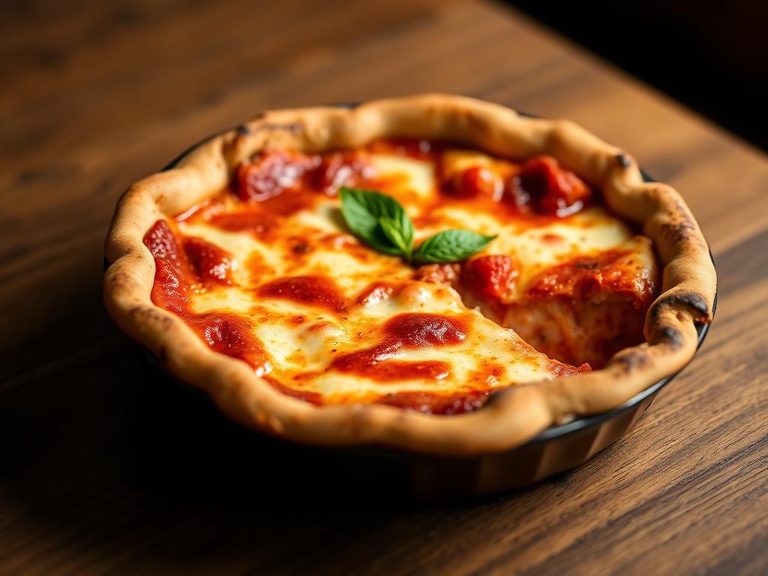
A hearty, satisfying slice of thick-crust cheese pizza features a chewy, bread-like base topped with a layer of melted, stretchy mozzarella and a savory tomato sauce. The crust provides a substantial, doughy foundation, while the cheese offers a rich, salty, and creamy contrast. At 271 calories per 100g, it's a calorie-dense meal primarily from carbohydrates and fats.
Calorie split: 16% protein · 49% carbs · 35% fat
↓ Full nutrition💚 Why it's loved
People adore it for the comforting, umami-rich combination of salty cheese, tangy sauce, and a chewy crust that's both filling and indulgent. It's a universally social food, perfect for sharing and customizing with endless topping combinations.
⚠️ Watch-outs & how to enjoy it better
The refined carbs and high fat content can lead to blood sugar spikes and are calorie-heavy, making it a concern for those managing weight or blood sugar. The cheese is a common dairy allergen, and the meal can be high in sodium. To counteract, pair a slice with a large, leafy green salad to add fiber and volume, practice portion control (e.g., one slice with sides), and choose a thinner crust to reduce the glycemic load.
Key benefits
- Provides a good source of protein from cheese and dough
- Offers quick energy from its carbohydrate-rich crust
- Contains calcium and phosphorus from the dairy topping
- Can be a vehicle for other nutrient-dense toppings like vegetables
🍽️ Popular dishes
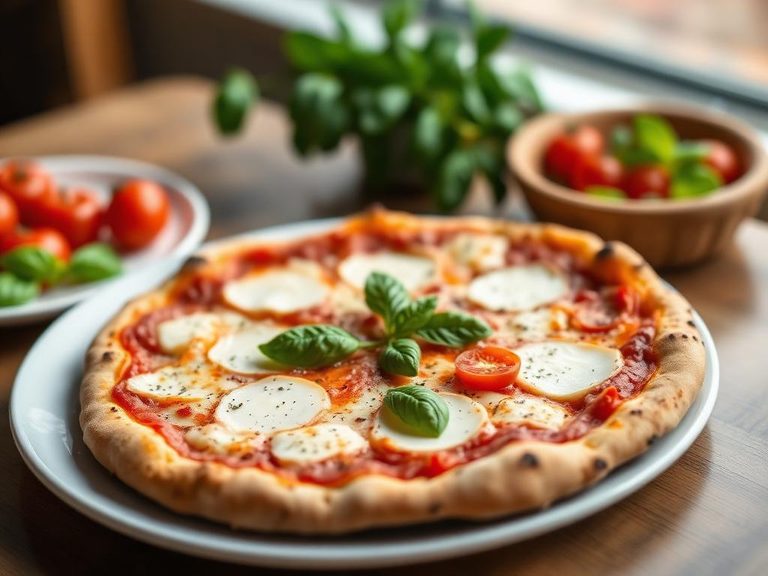
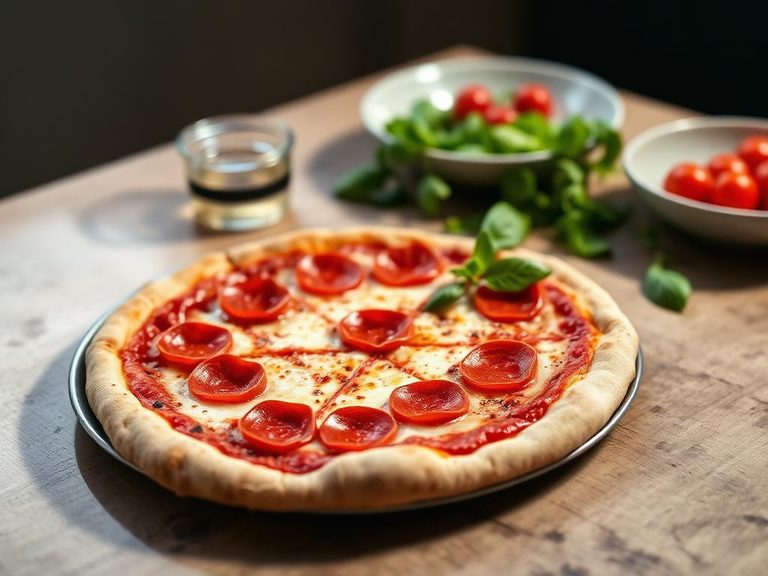
🌍 Where it's eaten
💡 Did you know?
The world's largest pizza, officially measured in Rome in 2012, covered 13,580 square feet—roughly the size of a football field—and was named 'Ottavia' after the first Roman emperor.
Full nutrition (USDA data · scales with serving)
| Water | 43.0 g |
| Energy | 271 kcal |
| Protein | 10.8 g |
| Total lipid (fat) | 10.5 g |
| Carbohydrate, by difference | 33.2 g |
| Fiber, total dietary | 2.2 g |
| Total Sugars | 3.3 g |
| Calcium, Ca | 179 mg |
| Iron, Fe | 2.5 mg |
| Magnesium, Mg | 23.0 mg |
| Phosphorus, P | 209 mg |
| Potassium, K | 169 mg |
| Sodium, Na | 540 mg |
| Zinc, Zn | 1.3 mg |
| Copper, Cu | 0.10 mg |
| Selenium, Se | 18.1 ug |
| Vitamin C, total ascorbic acid | 1.2 mg |
| Thiamin | 0.36 mg |
| Riboflavin | 0.20 mg |
| Niacin | 3.5 mg |
| Vitamin B-6 | 0.06 mg |
| Folate, total | 106 ug |
| Folic acid | 66.0 ug |
| Folate, food | 40.0 ug |
| Folate, DFE | 152 ug |
| Choline, total | 16.6 mg |
| Vitamin B-12 | 0.35 ug |
| Vitamin B-12, added | 0.00 ug |
| Vitamin A, RAE | 69.0 ug |
| Retinol | 61.0 ug |
| Carotene, beta | 93.0 ug |
| Carotene, alpha | 0.00 ug |
| Cryptoxanthin, beta | 0.00 ug |
| Lycopene | 1927 ug |
| Lutein + zeaxanthin | 22.0 ug |
| Vitamin E (alpha-tocopherol) | 0.82 mg |
| Vitamin E, added | 0.00 mg |
| Vitamin D (D2 + D3) | 0.00 ug |
| Vitamin K (phylloquinone) | 10.0 ug |
| Alcohol, ethyl | 0.00 g |
| Caffeine | 0.00 mg |
| Theobromine | 0.00 mg |
Fat & fatty acid profile (per 100g)
| Fatty acids, total saturated | 4.2 g |
| SFA 4:0 | 0.10 g |
| SFA 6:0 | 0.08 g |
| SFA 8:0 | 0.05 g |
| SFA 10:0 | 0.14 g |
| SFA 12:0 | 0.17 g |
| SFA 14:0 | 0.57 g |
| SFA 16:0 | 2.1 g |
| SFA 18:0 | 0.85 g |
| Fatty acids, total monounsaturated | 2.6 g |
| MUFA 16:1 | 0.11 g |
| MUFA 18:1 | 2.4 g |
| MUFA 20:1 | 0.04 g |
| MUFA 22:1 | 0.00 g |
| Fatty acids, total polyunsaturated | 2.8 g |
| PUFA 18:2 | 2.4 g |
| PUFA 18:3 | 0.31 g |
| PUFA 18:4 | 0.00 g |
| PUFA 20:4 | 0.01 g |
| PUFA 20:5 n-3 (EPA) | 0.00 g |
| PUFA 22:5 n-3 (DPA) | 0.00 g |
| PUFA 22:6 n-3 (DHA) | 0.00 g |
| Cholesterol | 17.0 mg |
Amino acid profile (per 100g)
Estimated from Fast Food, Pizza Chain, 14" pizza, cheese topping, stuffed crust — USDA does not publish this profile for Pizza.
| Tryptophan | 0.12 g |
| Threonine | 0.39 g |
| Isoleucine | 0.57 g |
| Leucine | 1.1 g |
| Lysine | 0.59 g |
| Methionine | 0.27 g |
| Phenylalanine | 0.64 g |
| Tyrosine | 0.40 g |
| Valine | 0.71 g |
| Arginine | 0.44 g |
| Histidine | 0.32 g |
| Alanine | 0.38 g |
| Aspartic acid | 0.81 g |
| Glutamic acid | 3.4 g |
| Glycine | 0.31 g |
| Proline | 1.7 g |
| Serine | 0.58 g |
| Hydroxyproline | 0.00 g |
FAQ
Is thick-crust pizza healthier than thin crust?
Generally, no. A thick crust contains more refined carbohydrates and calories per slice compared to a thin crust, which can lead to a larger blood sugar spike. A thin crust might allow for better portion control.
How can I make this meal more balanced?
Pair one or two slices with a large side salad dressed with olive oil and vinegar, or add vegetable toppings like peppers, onions, and mushrooms to increase fiber and nutrient density.
Why is restaurant pizza so much higher in calories than homemade?
Restaurants often use more cheese, oil, and sugar in the sauce for enhanced flavor and texture, and the thicker crust itself is more calorically dense than a typical homemade version.
Nutrient density (calculated · NRF9.3)
Nutrient Rich Foods index: beneficial nutrients (protein, fiber, vitamins, minerals) minus saturated fat, added sugar & sodium, per 100 kcal.
NRF9.3 index — Fulgoni, Keast & Drewnowski, 2009. Computed from USDA nutrients.
Weight-loss friendliness (composite index)
Energy density 2.71 kcal/g · 16% calories from protein · 2.2 g fiber · 3.3 g sugar per 100 g.
Composite of energy density (Rolls et al., 1999), protein & fiber satiety, minus sugar. A calculated heuristic — ranks satiety-per-calorie, not a clinical measure.
Dietary load (calculated from USDA values)
Potential renal acid load. Positive = acid-forming, negative = alkaline-forming.
Sodium-to-potassium ratio: 3.20 (lower is better — aim for ≤ 1)
Sodium:potassium per WHO potassium guidance. Computed from USDA nutrients.