

Pickles, fried
Common food

Photo: Wikipedia
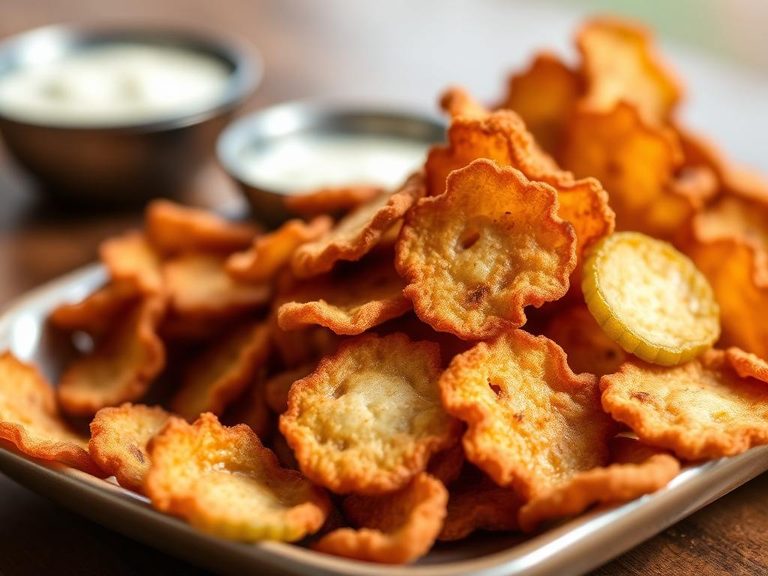
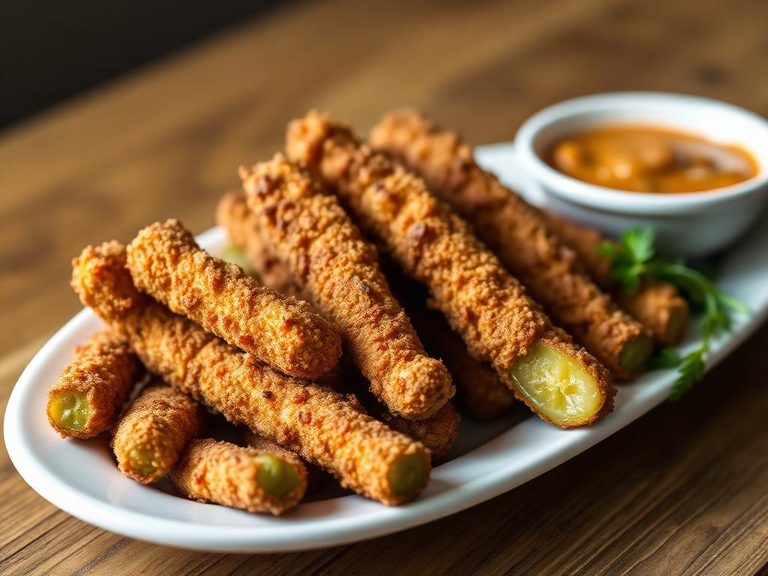
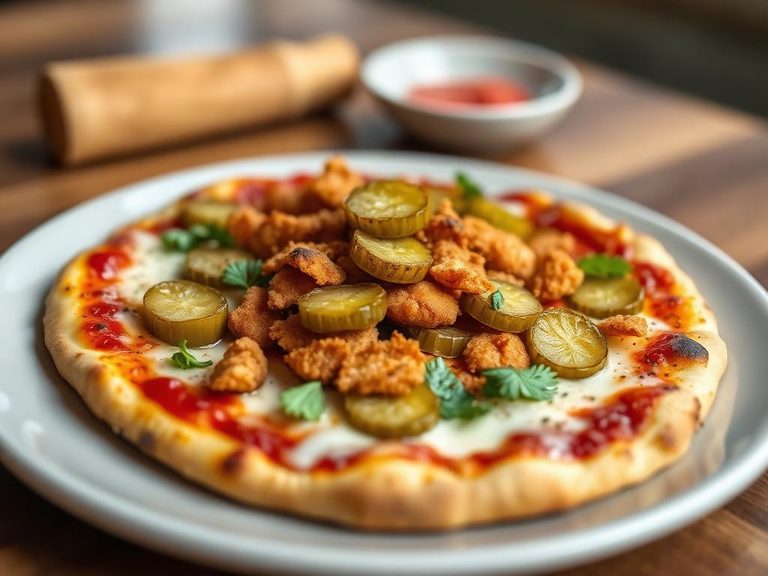
Fried pickles are crispy, golden-brown slices or spears of dill pickle, coated in a seasoned batter or cornmeal crust and deep-fried until crunchy. The interior remains tangy and juicy, creating a satisfying contrast of textures. Nutritionally, they are a calorie-dense, high-fat side or appetizer, with the batter contributing most of the carbohydrates.
Calorie split: 6% protein · 39% carbs · 55% fat
↓ Full nutrition💚 Why it's loved
People love the addictive combination of a salty, sour, and savory punch with a hot, crunchy exterior. They are a beloved bar snack and appetizer, especially in the Southern United States, often served with creamy dipping sauces.
⚠️ Watch-outs & how to enjoy it better
The deep-frying process adds significant fat and calories, making them a poor choice for low-fat diets. The high sodium from the pickling brine and batter can be a concern for blood pressure, and the refined carbs can cause blood sugar spikes. To mitigate, pair with a protein-rich dip like ranch or Greek yogurt, practice strict portion control, and consider baking or air-frying as a lighter alternative.
Key benefits
- Quick source of energy from fats and carbs
- Provides a small amount of dietary fiber
- Contains trace minerals from the cucumber pickle
- Offers a satisfying crunch and tangy flavor
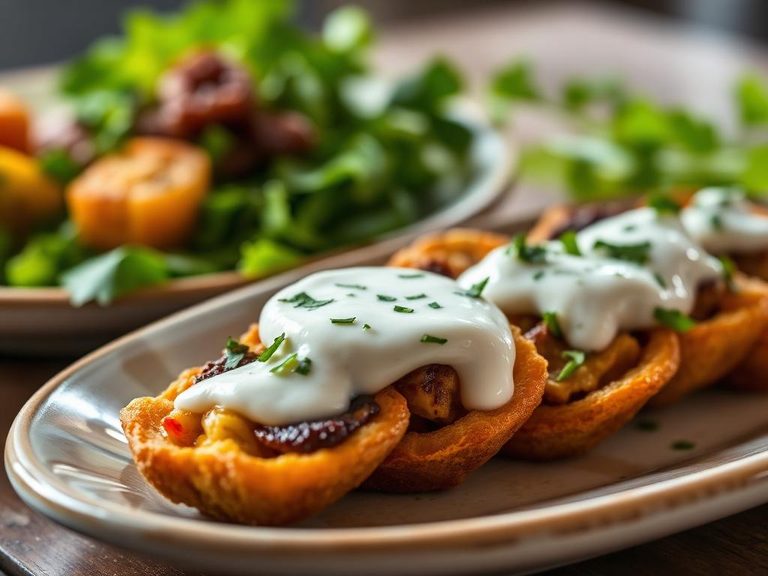
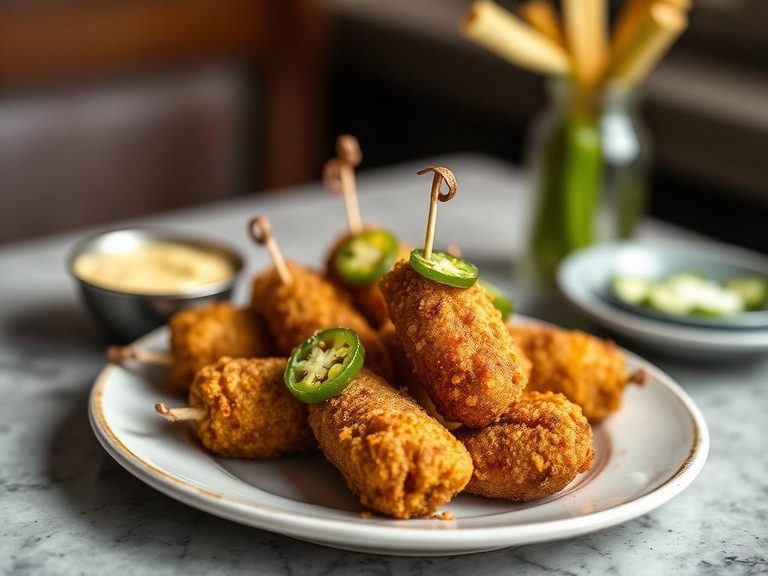
🍽️ Popular dishes
🌍 Where it's eaten
💡 Did you know?
The first known recipe for fried pickles appeared in a 1960s Arkansas newspaper, but they gained widespread fame after being featured at the 1965 Arkansas State Fair.
Full nutrition (USDA data · scales with serving)
| Water | 61.0 g |
| Energy | 213 kcal |
| Protein | 3.4 g |
| Total lipid (fat) | 12.9 g |
| Carbohydrate, by difference | 20.7 g |
| Fiber, total dietary | 1.2 g |
| Total Sugars | 0.82 g |
| Calcium, Ca | 45.0 mg |
| Iron, Fe | 1.6 mg |
| Magnesium, Mg | 11.0 mg |
| Phosphorus, P | 45.0 mg |
| Potassium, K | 84.0 mg |
| Sodium, Na | 620 mg |
| Zinc, Zn | 0.30 mg |
| Copper, Cu | 0.06 mg |
| Selenium, Se | 5.3 ug |
| Vitamin C, total ascorbic acid | 0.80 mg |
| Thiamin | 0.27 mg |
| Riboflavin | 0.15 mg |
| Niacin | 1.8 mg |
| Vitamin B-6 | 0.03 mg |
| Folate, total | 44.0 ug |
| Folic acid | 33.0 ug |
| Folate, food | 11.0 ug |
| Folate, DFE | 67.0 ug |
| Choline, total | 12.9 mg |
| Vitamin B-12 | 0.04 ug |
| Vitamin B-12, added | 0.00 ug |
| Vitamin A, RAE | 6.0 ug |
| Retinol | 5.0 ug |
| Carotene, beta | 17.0 ug |
| Carotene, alpha | 0.00 ug |
| Cryptoxanthin, beta | 1.0 ug |
| Lycopene | 0.00 ug |
| Lutein + zeaxanthin | 92.0 ug |
| Vitamin E (alpha-tocopherol) | 1.6 mg |
| Vitamin E, added | 0.00 mg |
| Vitamin D (D2 + D3) | 0.10 ug |
| Vitamin K (phylloquinone) | 28.7 ug |
| Alcohol, ethyl | 0.00 g |
| Caffeine | 0.00 mg |
| Theobromine | 0.00 mg |
Fat & fatty acid profile (per 100g)
| Fatty acids, total saturated | 2.0 g |
| SFA 4:0 | 0.00 g |
| SFA 6:0 | 0.00 g |
| SFA 8:0 | 0.00 g |
| SFA 10:0 | 0.00 g |
| SFA 12:0 | 0.00 g |
| SFA 14:0 | 0.01 g |
| SFA 16:0 | 1.4 g |
| SFA 18:0 | 0.49 g |
| Fatty acids, total monounsaturated | 2.8 g |
| MUFA 16:1 | 0.02 g |
| MUFA 18:1 | 2.7 g |
| MUFA 20:1 | 0.07 g |
| MUFA 22:1 | 0.00 g |
| Fatty acids, total polyunsaturated | 7.2 g |
| PUFA 18:2 | 6.3 g |
| PUFA 18:3 | 0.83 g |
| PUFA 18:4 | 0.00 g |
| PUFA 20:4 | 0.00 g |
| PUFA 20:5 n-3 (EPA) | 0.00 g |
| PUFA 22:5 n-3 (DPA) | 0.00 g |
| PUFA 22:6 n-3 (DHA) | 0.00 g |
| Cholesterol | 11.0 mg |
Amino acid profile (per 100g)
Estimated from Pickles, cucumber, sweet (includes bread and butter pickles) — USDA does not publish this profile for Pickles.
| Tryptophan | 0.01 g |
| Threonine | 0.02 g |
| Isoleucine | 0.02 g |
| Leucine | 0.03 g |
| Lysine | 0.03 g |
| Methionine | 0.01 g |
| Cystine | 0.01 g |
| Phenylalanine | 0.02 g |
| Tyrosine | 0.01 g |
| Valine | 0.02 g |
| Arginine | 0.03 g |
| Histidine | 0.01 g |
| Alanine | 0.03 g |
| Aspartic acid | 0.04 g |
| Glutamic acid | 0.17 g |
| Glycine | 0.03 g |
| Proline | 0.01 g |
| Serine | 0.03 g |
FAQ
What kind of pickles are best for frying?
Dill pickle chips or spears are standard because their firm texture and strong flavor hold up well to the heat and batter. Bread-and-butter pickles are too sweet and soft.
Can I make fried pickles without deep-frying?
Yes, you can bake them on a wire rack or use an air fryer for a crispier result with less oil. Pat the pickles very dry first to ensure crispiness.
Why are my fried pickles soggy?
The most common reason is not drying the pickles thoroughly before coating. Excess moisture creates steam and prevents the batter from crisping. Also, ensure your oil is hot enough (350-375°F / 175-190°C).
Nutrient density (calculated · NRF9.3)
Nutrient Rich Foods index: beneficial nutrients (protein, fiber, vitamins, minerals) minus saturated fat, added sugar & sodium, per 100 kcal.
NRF9.3 index — Fulgoni, Keast & Drewnowski, 2009. Computed from USDA nutrients.
Weight-loss friendliness (composite index)
Energy density 2.13 kcal/g · 6% calories from protein · 1.2 g fiber · 0.8 g sugar per 100 g.
Composite of energy density (Rolls et al., 1999), protein & fiber satiety, minus sugar. A calculated heuristic — ranks satiety-per-calorie, not a clinical measure.
Dietary load (calculated from USDA values)
Potential renal acid load. Positive = acid-forming, negative = alkaline-forming.
Sodium-to-potassium ratio: 7.38 (lower is better — aim for ≤ 1)
Sodium:potassium per WHO potassium guidance. Computed from USDA nutrients.