

Persimmon, raw
Common food

Photo: Wikipedia
The raw persimmon is a vibrant, glossy fruit, typically orange to deep red, with a texture that ranges from crisp and apple-like (in Fuyu varieties) to soft and honey-like (in Hachiya varieties). Its flavor is a sweet, rich blend of honey, apricot, and a subtle spicy note, with a tannic astringency in some types when unripe. Nutritionally, it's a low-calorie powerhouse, delivering significant dietary fiber and natural sugars for quick energy.
Calorie split: 3% protein · 95% carbs · 2% fat
↓ Full nutrition💚 Why it's loved
People cherish persimmons for their unique, luxurious sweetness that intensifies as they ripen, offering a taste of autumn. They are versatile, enjoyed fresh, dried into a chewy confection, or used in both sweet and savory dishes.
⚠️ Watch-outs & how to enjoy it better
Unripe Hachiya persimmons contain high levels of soluble tannins, causing an unpleasant, astringent mouthfeel that can feel like a dry, fuzzy coating. To counteract this, ensure Hachiya persimmons are completely soft and jelly-like before eating, or slice and freeze them for use in baking, which neutralizes the tannins.
Key benefits
- Excellent source of dietary fiber, supporting digestive health.
- Rich in antioxidants like beta-carotene and vitamin A for eye health.
- Provides a good amount of vitamin C, an immune system booster.
- Contains manganese, essential for bone health and metabolism.
- Low in fat and a source of quick, natural energy from carbohydrates.
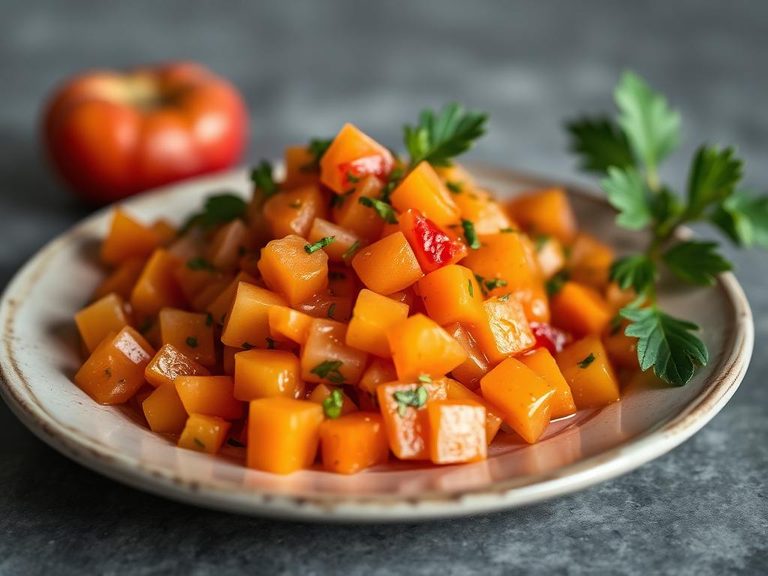
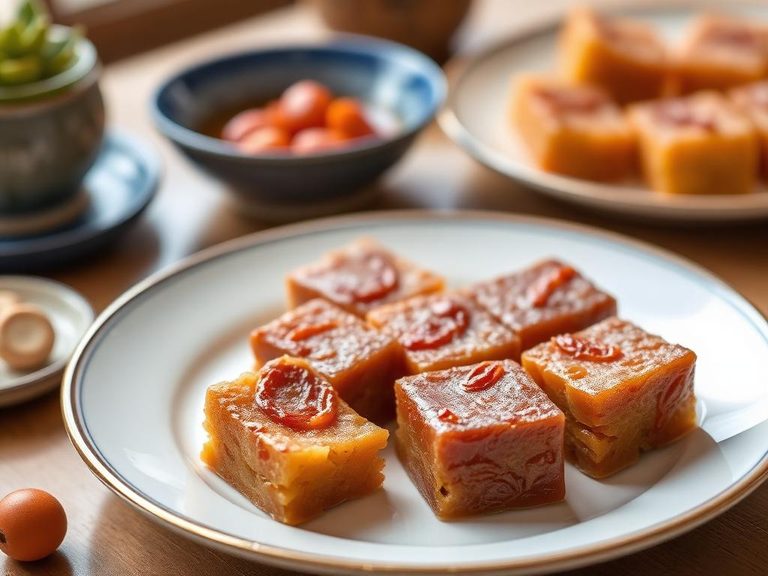
🍽️ Popular dishes
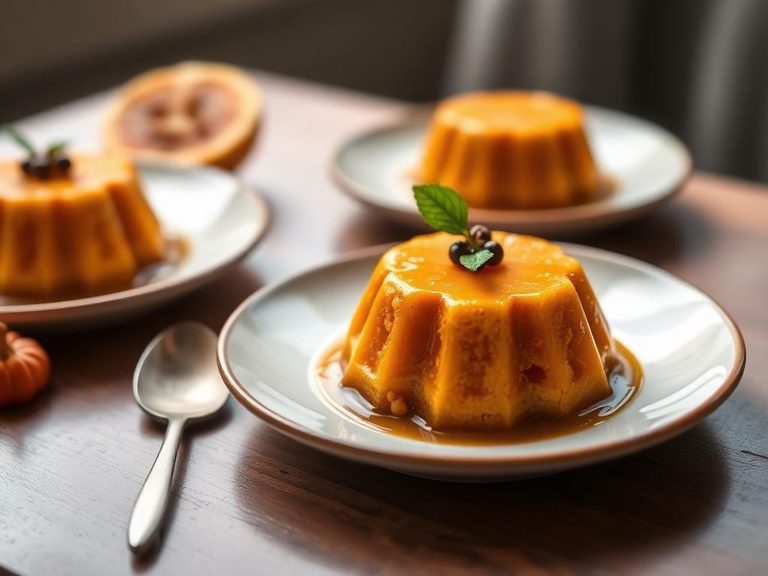
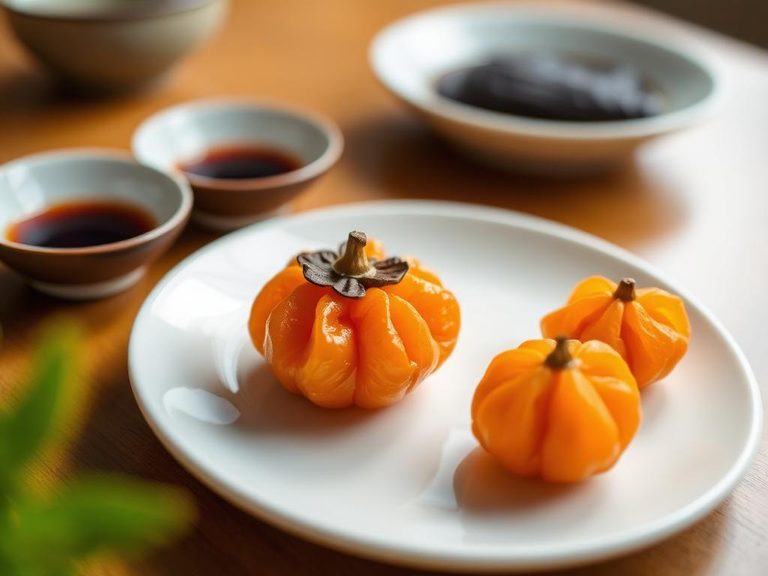
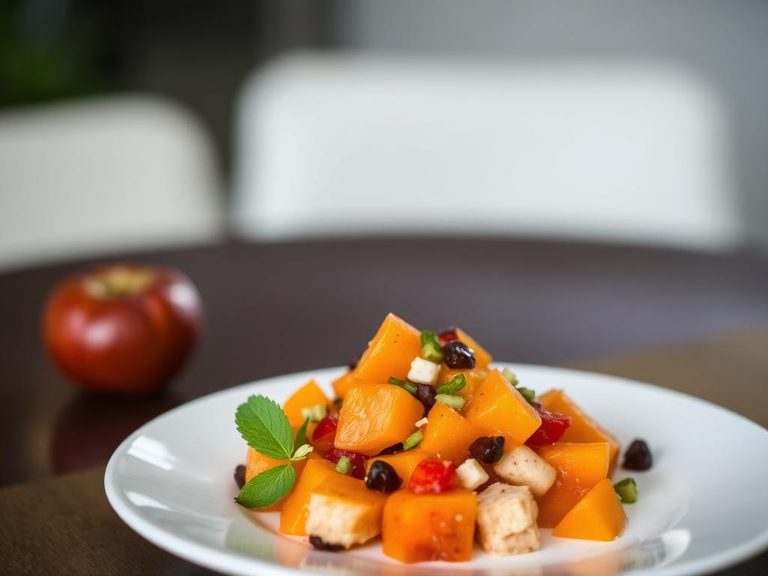
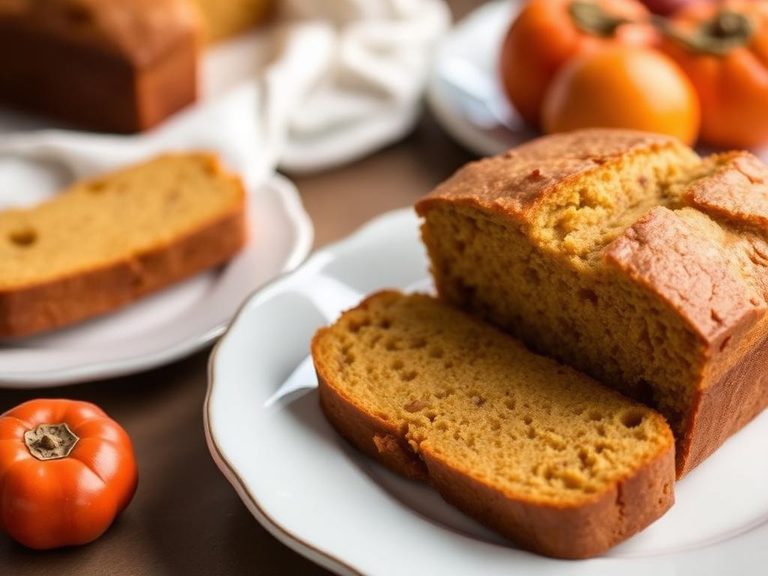
🌍 Where it's eaten
💡 Did you know?
The word 'persimmon' comes from the Algonquian word 'putchamin,' meaning 'a dry fruit,' which early colonists adopted to describe the fruit's unique, puckering effect when eaten unripe.
Full nutrition (USDA data · scales with serving)
| Water | 80.3 g |
| Energy | 70.0 kcal |
| Protein | 0.58 g |
| Total lipid (fat) | 0.19 g |
| Carbohydrate, by difference | 18.6 g |
| Fiber, total dietary | 3.6 g |
| Total Sugars | 12.5 g |
| Calcium, Ca | 8.0 mg |
| Iron, Fe | 0.15 mg |
| Magnesium, Mg | 9.0 mg |
| Phosphorus, P | 17.0 mg |
| Potassium, K | 161 mg |
| Sodium, Na | 1.0 mg |
| Zinc, Zn | 0.11 mg |
| Copper, Cu | 0.11 mg |
| Selenium, Se | 0.60 ug |
| Vitamin C, total ascorbic acid | 7.5 mg |
| Thiamin | 0.03 mg |
| Riboflavin | 0.02 mg |
| Niacin | 0.10 mg |
| Vitamin B-6 | 0.10 mg |
| Folate, total | 8.0 ug |
| Folic acid | 0.00 ug |
| Folate, food | 8.0 ug |
| Folate, DFE | 8.0 ug |
| Choline, total | 7.6 mg |
| Vitamin B-12 | 0.00 ug |
| Vitamin B-12, added | 0.00 ug |
| Vitamin A, RAE | 81.0 ug |
| Retinol | 0.00 ug |
| Carotene, beta | 253 ug |
| Carotene, alpha | 0.00 ug |
| Cryptoxanthin, beta | 1447 ug |
| Lycopene | 159 ug |
| Lutein + zeaxanthin | 834 ug |
| Vitamin E (alpha-tocopherol) | 0.73 mg |
| Vitamin E, added | 0.00 mg |
| Vitamin D (D2 + D3) | 0.00 ug |
| Vitamin K (phylloquinone) | 2.6 ug |
| Alcohol, ethyl | 0.00 g |
| Caffeine | 0.00 mg |
| Theobromine | 0.00 mg |
Fat & fatty acid profile (per 100g)
| Fatty acids, total saturated | 0.02 g |
| SFA 4:0 | 0.00 g |
| SFA 6:0 | 0.00 g |
| SFA 8:0 | 0.00 g |
| SFA 10:0 | 0.00 g |
| SFA 12:0 | 0.00 g |
| SFA 14:0 | 0.00 g |
| SFA 16:0 | 0.02 g |
| SFA 18:0 | 0.00 g |
| Fatty acids, total monounsaturated | 0.04 g |
| MUFA 16:1 | 0.00 g |
| MUFA 18:1 | 0.04 g |
| MUFA 20:1 | 0.00 g |
| MUFA 22:1 | 0.00 g |
| Fatty acids, total polyunsaturated | 0.04 g |
| PUFA 18:2 | 0.04 g |
| PUFA 18:3 | 0.00 g |
| PUFA 18:4 | 0.00 g |
| PUFA 20:4 | 0.00 g |
| PUFA 20:5 n-3 (EPA) | 0.00 g |
| PUFA 22:5 n-3 (DPA) | 0.00 g |
| PUFA 22:6 n-3 (DHA) | 0.00 g |
| Cholesterol | 0.00 mg |
Amino acid profile (per 100g)
Estimated from Persimmons, japanese, raw — USDA does not publish this profile for Persimmon.
| Tryptophan | 0.01 g |
| Threonine | 0.03 g |
| Isoleucine | 0.03 g |
| Leucine | 0.04 g |
| Lysine | 0.03 g |
| Methionine | 0.01 g |
| Cystine | 0.01 g |
| Phenylalanine | 0.03 g |
| Tyrosine | 0.02 g |
| Valine | 0.03 g |
| Arginine | 0.03 g |
| Histidine | 0.01 g |
| Alanine | 0.03 g |
| Aspartic acid | 0.06 g |
| Glutamic acid | 0.08 g |
| Glycine | 0.03 g |
| Proline | 0.02 g |
| Serine | 0.02 g |
FAQ
What's the difference between Fuyu and Hachiya persimmons?
Fuyu persimmons are squat and tomato-shaped; they are non-astringent and can be eaten firm and crisp like an apple. Hachiya persimmons are acorn-shaped and must be eaten only when completely soft and ripe, or they will be intensely astringent and unpleasant.
Can you eat persimmon skin?
Yes, the skin of both Fuyu and ripe Hachiya persimmons is edible and contains fiber and nutrients. Simply wash the fruit thoroughly before eating.
How do I ripen a hard persimmon?
For Hachiya persimmons, place them in a paper bag with an apple or banana at room temperature for a few days. The ethylene gas from the other fruit will speed up ripening. Fuyu persimmons are meant to be eaten firm.
Nutrient density (calculated · NRF9.3)
Nutrient Rich Foods index: beneficial nutrients (protein, fiber, vitamins, minerals) minus saturated fat, added sugar & sodium, per 100 kcal.
NRF9.3 index — Fulgoni, Keast & Drewnowski, 2009. Computed from USDA nutrients.
Weight-loss friendliness (composite index)
Energy density 0.70 kcal/g · 3% calories from protein · 3.6 g fiber · 12.5 g sugar per 100 g.
Composite of energy density (Rolls et al., 1999), protein & fiber satiety, minus sugar. A calculated heuristic — ranks satiety-per-calorie, not a clinical measure.
Dietary load (calculated from USDA values)
Potential renal acid load. Positive = acid-forming, negative = alkaline-forming.
Sodium-to-potassium ratio: 0.01 (lower is better — aim for ≤ 1)
Sodium:potassium per WHO potassium guidance. Computed from USDA nutrients.