

Persimmon, dried
Common food

Photo: Wikipedia
Dried persimmon is a chewy, intensely sweet fruit leather, often sold whole or sliced, with a deep amber color and a flavor reminiscent of honey and dates. Its nutrition is dominated by a massive 96g of carbohydrates per 100g, primarily from natural sugars, making it a potent energy source. The drying process concentrates its natural sweetness and fiber, resulting in a dense, satisfying snack.
Calorie split: 2% protein · 97% carbs · 1% fat
↓ Full nutrition💚 Why it's loved
People love it for its intense, candy-like sweetness and satisfying chewy texture, making it a beloved natural treat. It's also cherished for its cultural significance in East Asian cuisines, where it's often a seasonal delicacy or gift.
⚠️ Watch-outs & how to enjoy it better
Its extremely high sugar content (80g per 100g) can cause rapid blood-sugar spikes, so portion control is key. Pair it with a handful of nuts or cheese to add protein and fat, which slows sugar absorption. Some may also find the sticky texture difficult to handle.
Key benefits
- High in dietary fiber for digestive health
- Rich in antioxidants like beta-carotene and lycopene
- Good source of potassium for heart function
- Provides quick, natural energy from concentrated sugars
- Contains vitamins A and C
🍽️ Popular dishes
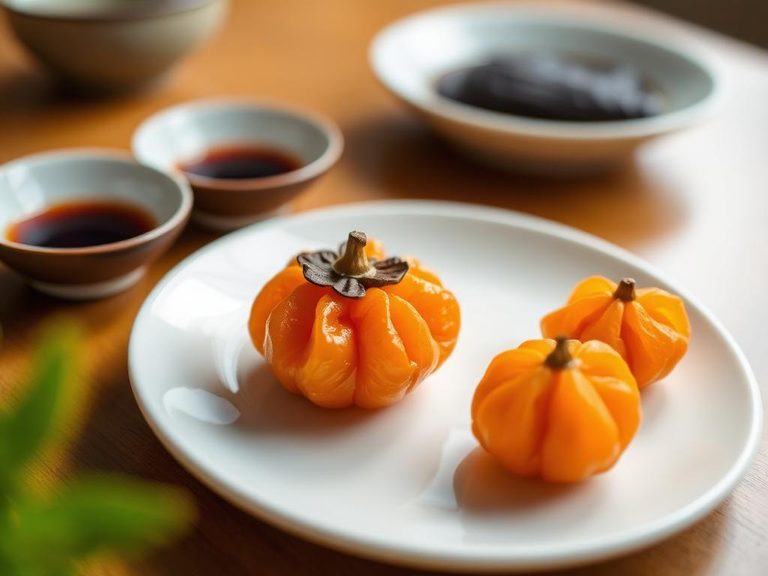
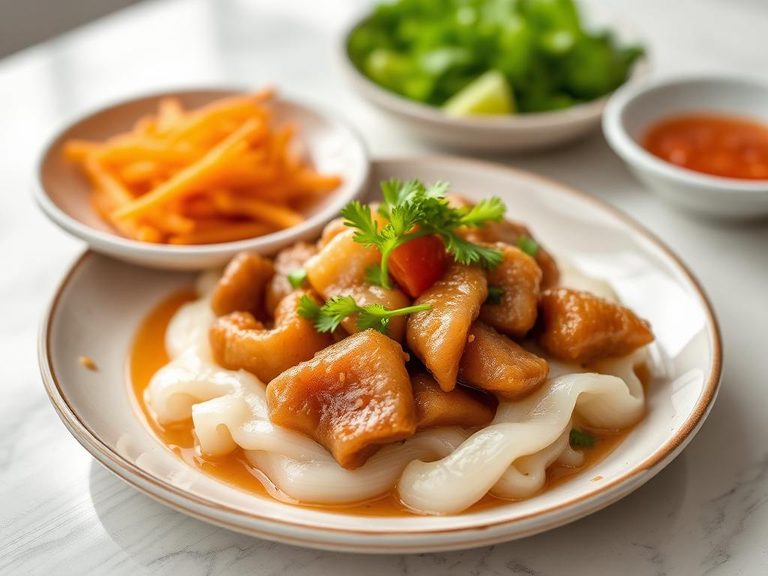
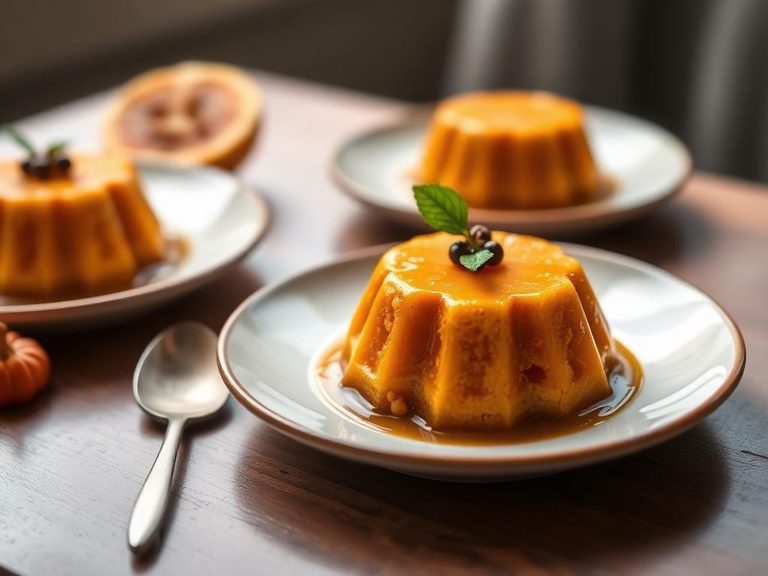
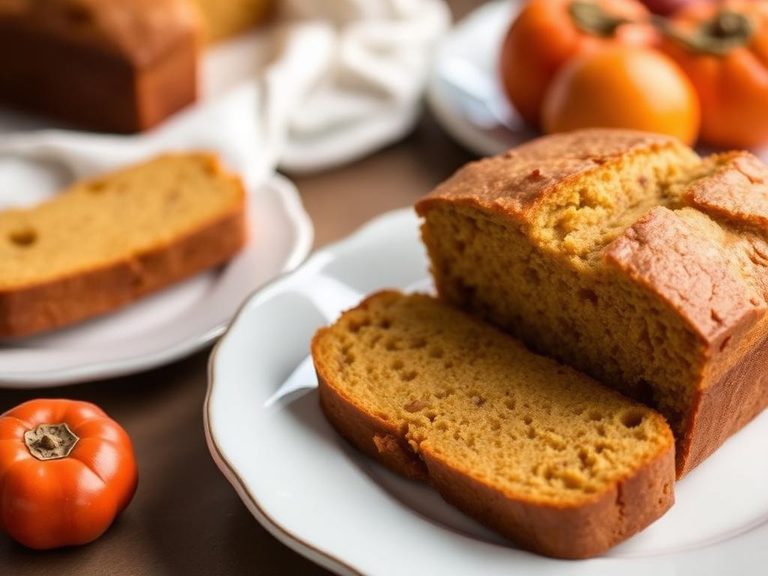
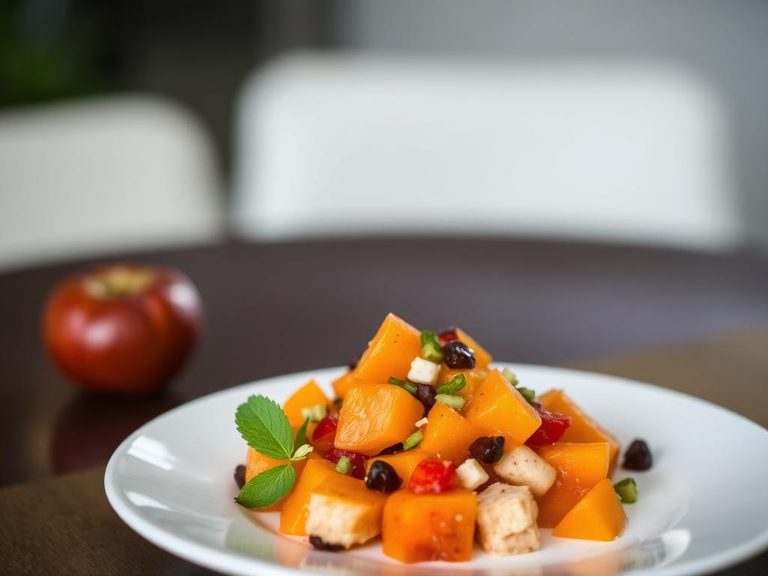
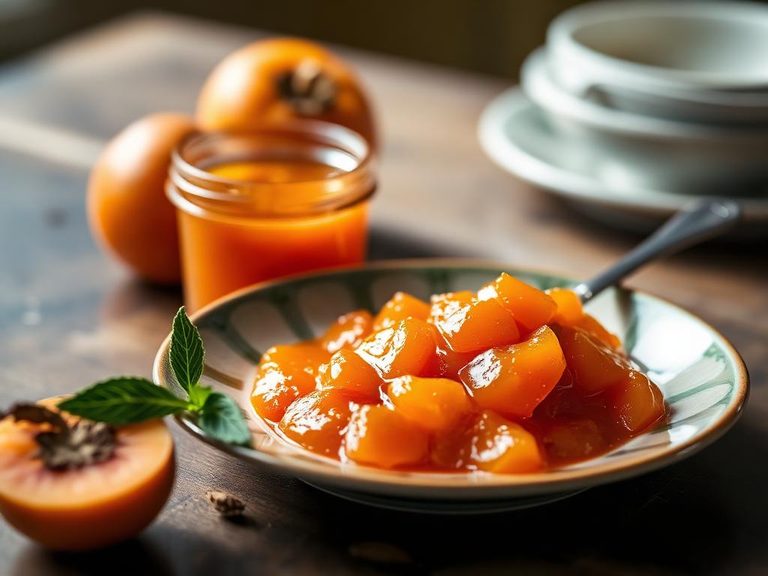
🌍 Where it's eaten
💡 Did you know?
Traditional Japanese hoshigaki are individually massaged by hand over several weeks as they dry to break down the pulp and encourage the natural sugars to crystallize into a white, powdery coating on the surface.
Full nutrition (USDA data · scales with serving)
| Water | 0.86 g |
| Energy | 374 kcal |
| Protein | 1.5 g |
| Total lipid (fat) | 0.66 g |
| Carbohydrate, by difference | 96.1 g |
| Fiber, total dietary | 9.6 g |
| Total Sugars | 80.1 g |
| Calcium, Ca | 22.0 mg |
| Iron, Fe | 0.42 mg |
| Magnesium, Mg | 24.0 mg |
| Phosphorus, P | 45.0 mg |
| Potassium, K | 429 mg |
| Sodium, Na | 3.0 mg |
| Zinc, Zn | 0.30 mg |
| Copper, Cu | 0.30 mg |
| Selenium, Se | 1.9 ug |
| Vitamin C, total ascorbic acid | 4.0 mg |
| Thiamin | 0.06 mg |
| Riboflavin | 0.06 mg |
| Niacin | 0.24 mg |
| Vitamin B-6 | 0.24 mg |
| Folate, total | 11.0 ug |
| Folic acid | 0.00 ug |
| Folate, food | 11.0 ug |
| Folate, DFE | 11.0 ug |
| Choline, total | 20.2 mg |
| Vitamin B-12 | 0.00 ug |
| Vitamin B-12, added | 0.00 ug |
| Vitamin A, RAE | 108 ug |
| Retinol | 0.00 ug |
| Carotene, beta | 336 ug |
| Carotene, alpha | 0.00 ug |
| Cryptoxanthin, beta | 1922 ug |
| Lycopene | 211 ug |
| Lutein + zeaxanthin | 1108 ug |
| Vitamin E (alpha-tocopherol) | 1.9 mg |
| Vitamin E, added | 0.00 mg |
| Vitamin D (D2 + D3) | 0.00 ug |
| Vitamin K (phylloquinone) | 6.9 ug |
| Alcohol, ethyl | 0.00 g |
| Caffeine | 0.00 mg |
| Theobromine | 0.00 mg |
Fat & fatty acid profile (per 100g)
| Fatty acids, total saturated | 0.05 g |
| SFA 4:0 | 0.00 g |
| SFA 6:0 | 0.00 g |
| SFA 8:0 | 0.00 g |
| SFA 10:0 | 0.00 g |
| SFA 12:0 | 0.00 g |
| SFA 14:0 | 0.00 g |
| SFA 16:0 | 0.04 g |
| SFA 18:0 | 0.01 g |
| Fatty acids, total monounsaturated | 0.10 g |
| MUFA 16:1 | 0.00 g |
| MUFA 18:1 | 0.10 g |
| MUFA 20:1 | 0.00 g |
| MUFA 22:1 | 0.00 g |
| Fatty acids, total polyunsaturated | 0.11 g |
| PUFA 18:2 | 0.10 g |
| PUFA 18:3 | 0.01 g |
| PUFA 18:4 | 0.00 g |
| PUFA 20:4 | 0.00 g |
| PUFA 20:5 n-3 (EPA) | 0.00 g |
| PUFA 22:5 n-3 (DPA) | 0.00 g |
| PUFA 22:6 n-3 (DHA) | 0.00 g |
| Cholesterol | 0.00 mg |
Amino acid profile (per 100g)
Estimated from Persimmons, japanese, raw — USDA does not publish this profile for Persimmon.
| Tryptophan | 0.01 g |
| Threonine | 0.03 g |
| Isoleucine | 0.03 g |
| Leucine | 0.04 g |
| Lysine | 0.03 g |
| Methionine | 0.01 g |
| Cystine | 0.01 g |
| Phenylalanine | 0.03 g |
| Tyrosine | 0.02 g |
| Valine | 0.03 g |
| Arginine | 0.03 g |
| Histidine | 0.01 g |
| Alanine | 0.03 g |
| Aspartic acid | 0.06 g |
| Glutamic acid | 0.08 g |
| Glycine | 0.03 g |
| Proline | 0.02 g |
| Serine | 0.02 g |
FAQ
Why does my dried persimmon have a white powder on it?
That white powder is called 'bloom' or 'frost.' It's not mold; it's a natural crystallization of the fruit's sugars (glucose and fructose) that occurs during the drying process, especially with traditional methods like hoshigaki. It's a sign of quality and adds a pleasant sweetness.
How should I store dried persimmons?
For short-term use (a few weeks), store them in an airtight container at room temperature in a cool, dark place. For longer storage (up to a year), keep them in the refrigerator or freezer to prevent them from becoming too hard or developing off-flavors.
Can I rehydrate dried persimmons?
Yes. Soak them in warm water for 15-30 minutes to soften them for use in baking or puddings. You can also use the flavorful soaking liquid as a sweet addition to teas or cocktails.
Nutrient density (calculated · NRF9.3)
Nutrient Rich Foods index: beneficial nutrients (protein, fiber, vitamins, minerals) minus saturated fat, added sugar & sodium, per 100 kcal.
NRF9.3 index — Fulgoni, Keast & Drewnowski, 2009. Computed from USDA nutrients.
Weight-loss friendliness (composite index)
Energy density 3.74 kcal/g · 2% calories from protein · 9.6 g fiber · 80.1 g sugar per 100 g.
Composite of energy density (Rolls et al., 1999), protein & fiber satiety, minus sugar. A calculated heuristic — ranks satiety-per-calorie, not a clinical measure.
Dietary load (calculated from USDA values)
Potential renal acid load. Positive = acid-forming, negative = alkaline-forming.
Sodium-to-potassium ratio: 0.01 (lower is better — aim for ≤ 1)
Sodium:potassium per WHO potassium guidance. Computed from USDA nutrients.