

Hoshigaki
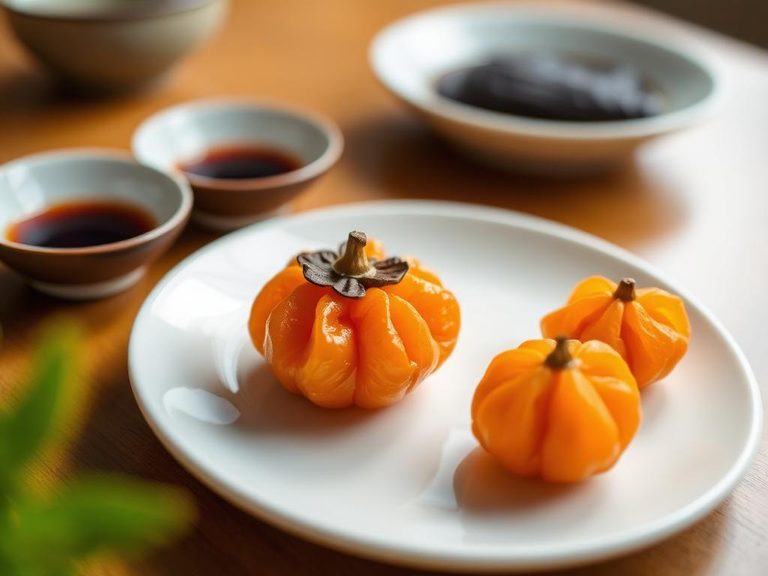
Hoshigaki is a traditional Japanese dried persimmon, made by peeling and air-drying the fruit, often with a gentle massage to distribute sugars and create a soft, chewy texture. The primary ingredient is the persimmon fruit itself, typically from the Hachiya variety. It is a beloved seasonal treat in Japan, especially enjoyed during the New Year.
🍽️ Nutrition at a glance
Hoshigaki is naturally high in carbohydrates, primarily from sugars, with minimal fat and protein. It is an excellent source of dietary fiber, vitamin A, and potassium, and a single piece contains roughly 100-120 calories.
Nutrition breakdown
| Calories | 115 kcal |
| Protein | 0.5 g |
| Carbs | 29 g |
| Fat | 0.1 g |
| Fiber | 3 g |
| Sugar | 23 g |
| Sodium | 2 mg |
| Vitamin A (as Beta-carotene) | 1500 mcg RAE |
| Potassium | 350 mg |
| Manganese | 0.5 mg |
| Vitamin B6 | 0.2 mg |
| Copper | 0.15 mg |
| Magnesium | 15 mg |
Per 1 piece (approx. 50 g) · estimated, varies by recipe
💡 What's interesting
The drying process concentrates the fruit's natural sugars, causing a white, powdery coating called 'gama' (persimmon frost) to bloom on the surface, which is a sign of quality and sweetness. Nutritionally, the drying process significantly increases the concentration of antioxidants like beta-carotene compared to the fresh fruit.
AI estimate may be inaccurate · Terms