

Pear, canned, NFS
Common food

Photo: Wikipedia
Canned pears are tender, sweet segments preserved in syrup or juice, offering a soft, melt-in-your-mouth texture distinct from fresh fruit. They provide a quick source of carbohydrates and a modest amount of dietary fiber. With a low protein and fat content, they are primarily an energy-dense, sweet treat.
Calorie split: 1% protein · 98% carbs · 1% fat
↓ Full nutrition💚 Why it's loved
People love them for their consistent sweetness and comforting, soft texture, which makes them a nostalgic staple in desserts and a reliable pantry item. Their versatility allows them to be used in everything from simple snacks to elaborate baked goods.
⚠️ Watch-outs & how to enjoy it better
The primary downside is the high sugar content from added syrups, which can cause rapid blood-sugar spikes, making portion control key for those monitoring glucose levels. To counteract this, choose pears canned in water or 100% juice, and pair them with a source of protein or healthy fat, like Greek yogurt or nuts, to slow sugar absorption.
Key benefits
- Quick source of energy from natural and added sugars
- Provides dietary fiber to support digestive health
- Long shelf life and convenient, ready-to-eat format
- Soft texture is easy to chew and digest
- Can be a palatable way to increase fruit intake
🍽️ Popular dishes


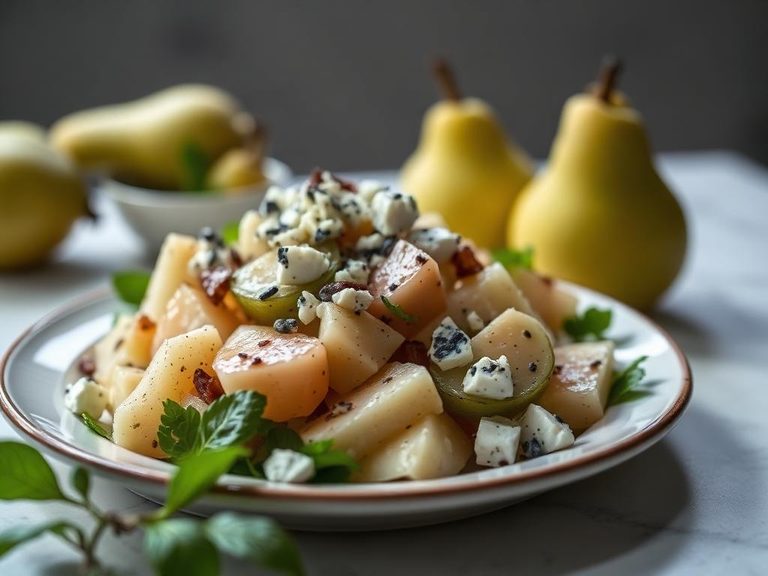

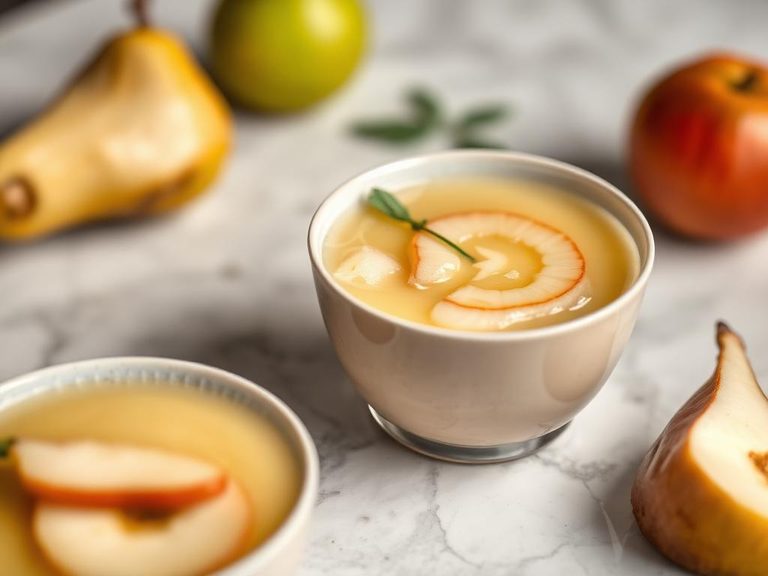
🌍 Where it's eaten
💡 Did you know?
The canning process for pears often uses a calcium chloride additive to keep the fruit firm, which is why canned pear slices maintain their shape so well despite being soft.
Full nutrition (USDA data · scales with serving)
| Water | 86.0 g |
| Energy | 52.0 kcal |
| Protein | 0.20 g |
| Total lipid (fat) | 0.06 g |
| Carbohydrate, by difference | 13.5 g |
| Fiber, total dietary | 1.5 g |
| Total Sugars | 11.8 g |
| Calcium, Ca | 5.0 mg |
| Iron, Fe | 0.25 mg |
| Magnesium, Mg | 5.0 mg |
| Phosphorus, P | 8.0 mg |
| Potassium, K | 75.0 mg |
| Sodium, Na | 3.0 mg |
| Zinc, Zn | 0.09 mg |
| Copper, Cu | 0.05 mg |
| Selenium, Se | 0.00 ug |
| Vitamin C, total ascorbic acid | 1.0 mg |
| Thiamin | 0.01 mg |
| Riboflavin | 0.01 mg |
| Niacin | 0.06 mg |
| Vitamin B-6 | 0.02 mg |
| Folate, total | 1.0 ug |
| Folic acid | 0.00 ug |
| Folate, food | 1.0 ug |
| Folate, DFE | 1.0 ug |
| Choline, total | 3.4 mg |
| Vitamin B-12 | 0.00 ug |
| Vitamin B-12, added | 0.00 ug |
| Vitamin A, RAE | 0.00 ug |
| Retinol | 0.00 ug |
| Carotene, beta | 0.00 ug |
| Carotene, alpha | 0.00 ug |
| Cryptoxanthin, beta | 0.00 ug |
| Lycopene | 0.00 ug |
| Lutein + zeaxanthin | 34.0 ug |
| Vitamin E (alpha-tocopherol) | 0.07 mg |
| Vitamin E, added | 0.00 mg |
| Vitamin D (D2 + D3) | 0.00 ug |
| Vitamin K (phylloquinone) | 0.30 ug |
| Alcohol, ethyl | 0.00 g |
| Caffeine | 0.00 mg |
| Theobromine | 0.00 mg |
Fat & fatty acid profile (per 100g)
| Fatty acids, total saturated | 0.01 g |
| SFA 4:0 | 0.00 g |
| SFA 6:0 | 0.00 g |
| SFA 8:0 | 0.00 g |
| SFA 10:0 | 0.00 g |
| SFA 12:0 | 0.00 g |
| SFA 14:0 | 0.00 g |
| SFA 16:0 | 0.00 g |
| SFA 18:0 | 0.00 g |
| Fatty acids, total monounsaturated | 0.01 g |
| MUFA 16:1 | 0.00 g |
| MUFA 18:1 | 0.01 g |
| MUFA 20:1 | 0.00 g |
| MUFA 22:1 | 0.00 g |
| Fatty acids, total polyunsaturated | 0.01 g |
| PUFA 18:2 | 0.01 g |
| PUFA 18:3 | 0.00 g |
| PUFA 18:4 | 0.00 g |
| PUFA 20:4 | 0.00 g |
| PUFA 20:5 n-3 (EPA) | 0.00 g |
| PUFA 22:5 n-3 (DPA) | 0.00 g |
| PUFA 22:6 n-3 (DHA) | 0.00 g |
| Cholesterol | 0.00 mg |
Amino acid profile (per 100g)
Estimated from Pears, canned, juice pack, solids and liquids — USDA does not publish this profile for Pear.
| Threonine | 0.01 g |
| Isoleucine | 0.01 g |
| Leucine | 0.02 g |
| Lysine | 0.01 g |
| Methionine | 0.00 g |
| Cystine | 0.00 g |
| Phenylalanine | 0.01 g |
| Tyrosine | 0.00 g |
| Valine | 0.01 g |
| Arginine | 0.01 g |
| Histidine | 0.00 g |
| Alanine | 0.01 g |
| Aspartic acid | 0.07 g |
| Glutamic acid | 0.03 g |
| Glycine | 0.01 g |
| Proline | 0.01 g |
| Serine | 0.01 g |
FAQ
Are canned pears as nutritious as fresh pears?
Canned pears retain most of the vitamins and fiber of fresh pears, but the canning process can reduce some heat-sensitive nutrients like vitamin C. The main nutritional difference is often the added sugar in the syrup, which increases the calorie and sugar content compared to fresh fruit.
What does 'NFS' mean on a canned pear label?
'NFS' stands for 'Not Further Specified.' It indicates that the nutrition facts are for canned pears in general, without specifying whether they are packed in heavy syrup, light syrup, or juice.
How should I store leftover canned pears?
Once opened, transfer any unused pears and their liquid to a covered container in the refrigerator. They will typically keep well for 3 to 4 days.
Nutrient density (calculated · NRF9.3)
Nutrient Rich Foods index: beneficial nutrients (protein, fiber, vitamins, minerals) minus saturated fat, added sugar & sodium, per 100 kcal.
NRF9.3 index — Fulgoni, Keast & Drewnowski, 2009. Computed from USDA nutrients.
Weight-loss friendliness (composite index)
Energy density 0.52 kcal/g · 2% calories from protein · 1.5 g fiber · 11.8 g sugar per 100 g.
Composite of energy density (Rolls et al., 1999), protein & fiber satiety, minus sugar. A calculated heuristic — ranks satiety-per-calorie, not a clinical measure.
Dietary load (calculated from USDA values)
Potential renal acid load. Positive = acid-forming, negative = alkaline-forming.
Sodium-to-potassium ratio: 0.04 (lower is better — aim for ≤ 1)
Sodium:potassium per WHO potassium guidance. Computed from USDA nutrients.