

Fruit cocktail, (peach and pineapple and pear and grape and cherry), canned, juice pack, solids and liquids
Whole food · Fruits and Fruit Juices

Photo: Wikipedia
This is a classic medley of diced peaches, pears, grapes, pineapples, and a bright red cherry, all suspended in a light, sweet juice. The texture is a pleasant mix of soft, yielding fruit with a slight bite from the grapes and pineapple. Nutritionally, it's a low-fat, hydrating snack that primarily delivers quick energy from its natural and added sugars.
Calorie split: 4% protein · 96% carbs · 0% fat
↓ Full nutrition💚 Why it's loved
People love it for its cheerful, nostalgic appeal and the burst of sweet-tart flavors in every spoonful. It's a versatile staple that can be enjoyed straight from the can, folded into yogurt, or used as a simple, colorful topping.
⚠️ Watch-outs & how to enjoy it better
The primary downside is the high sugar content (over 10g per 100g), which can cause blood sugar spikes, making it less ideal for those managing diabetes or watching sugar intake. To counteract this, pair a small portion with a source of protein or healthy fat, like Greek yogurt or a handful of nuts, to slow sugar absorption. Also, be mindful of the added juice syrup; choosing 'in 100% juice' varieties can reduce added sugars.
Key benefits
- Provides quick, easily digestible energy from fruit sugars.
- Offers a small amount of dietary fiber from mixed fruits.
- Contains vitamin C from pineapple and cherries.
- Low in fat and cholesterol-free.
- Convenient, pre-portioned source of fruit servings.
🍽️ Popular dishes
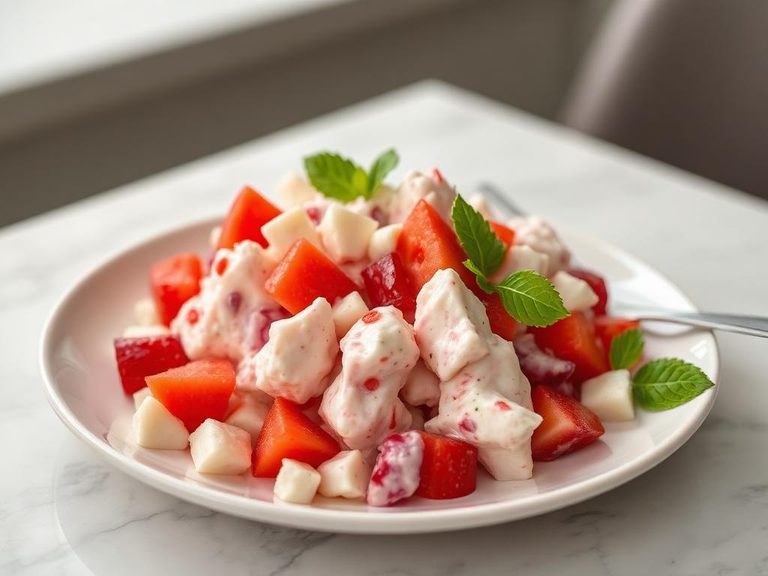
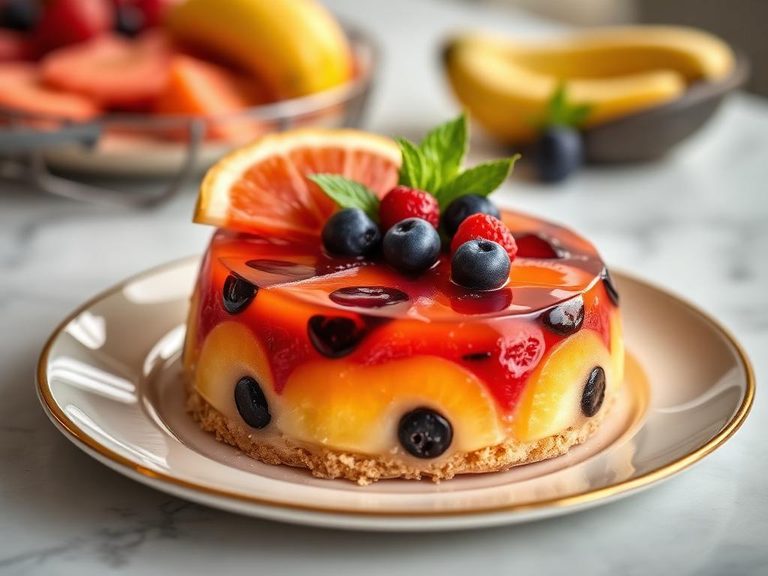
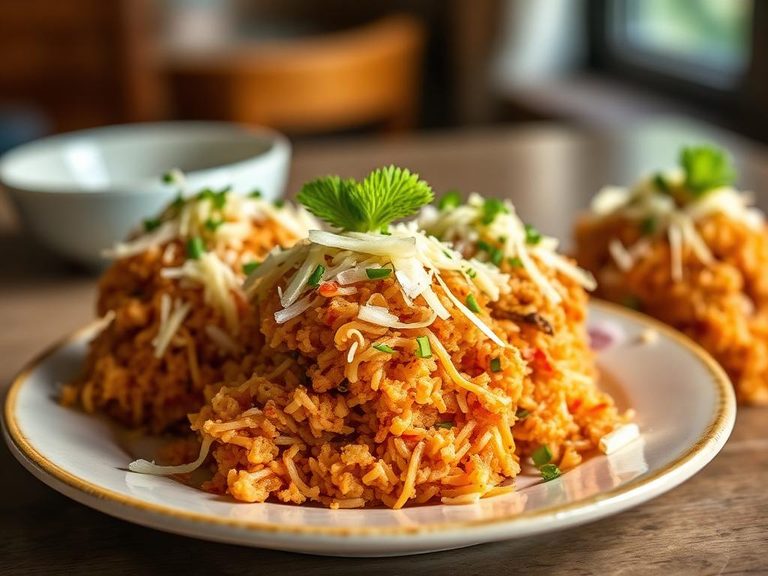
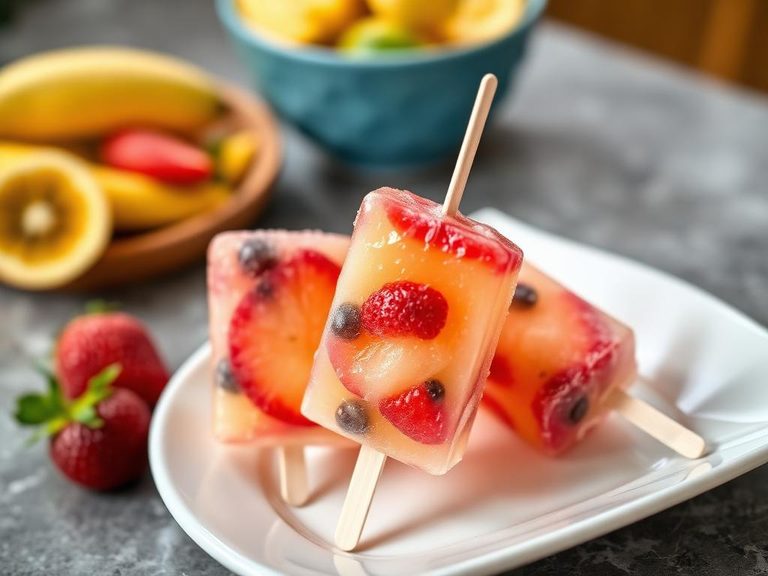
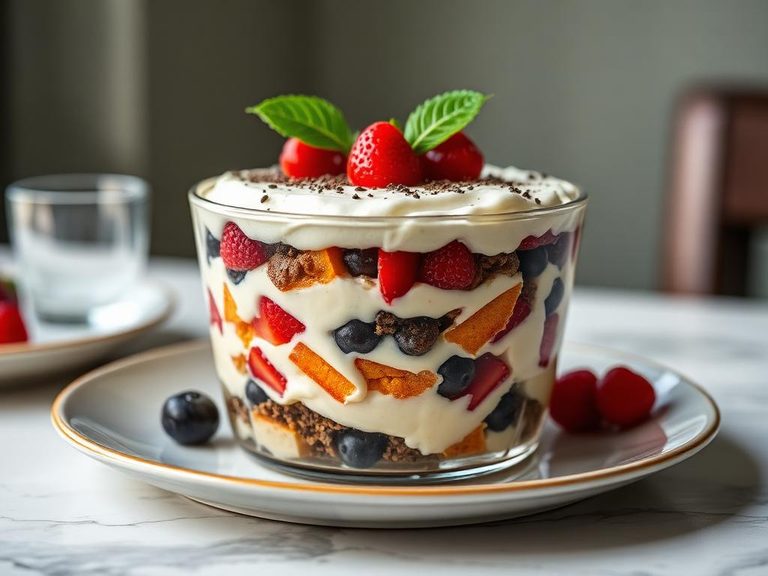
🌍 Where it's eaten
💡 Did you know?
The iconic bright red maraschino cherry in the mix is almost always a separate, processed addition, as its color and sweetness are far more intense than the other canned fruits.
Full nutrition (USDA data · scales with serving)
| Water | 87.4 g |
| Energy | 46.0 kcal |
| Energy | 192 kj |
| Protein | 0.46 g |
| Total lipid (fat) | 0.01 g |
| Ash | 0.23 g |
| Carbohydrate, by difference | 11.9 g |
| Fiber, total dietary | 1.0 g |
| Total Sugars | 10.9 g |
| Calcium, Ca | 8.0 mg |
| Iron, Fe | 0.21 mg |
| Magnesium, Mg | 7.0 mg |
| Phosphorus, P | 14.0 mg |
| Potassium, K | 95.0 mg |
| Sodium, Na | 4.0 mg |
| Zinc, Zn | 0.09 mg |
| Copper, Cu | 0.06 mg |
| Manganese, Mn | 0.15 mg |
| Selenium, Se | 0.50 ug |
| Vitamin C, total ascorbic acid | 2.7 mg |
| Thiamin | 0.01 mg |
| Riboflavin | 0.02 mg |
| Niacin | 0.40 mg |
| Pantothenic acid | 0.06 mg |
| Vitamin B-6 | 0.05 mg |
| Folate, total | 3.0 ug |
| Folic acid | 0.00 ug |
| Folate, food | 3.0 ug |
| Folate, DFE | 3.0 ug |
| Choline, total | 4.0 mg |
| Vitamin B-12 | 0.00 ug |
| Vitamin B-12, added | 0.00 ug |
| Vitamin A, RAE | 15.0 ug |
| Retinol | 0.00 ug |
| Carotene, beta | 154 ug |
| Carotene, alpha | 0.00 ug |
| Cryptoxanthin, beta | 58.0 ug |
| Vitamin A, IU | 305 iu |
| Lycopene | 0.00 ug |
| Lutein + zeaxanthin | 75.0 ug |
| Vitamin E (alpha-tocopherol) | 0.40 mg |
| Vitamin E, added | 0.00 mg |
| Vitamin D (D2 + D3), International Units | 0.00 iu |
| Vitamin D (D2 + D3) | 0.00 ug |
| Vitamin K (phylloquinone) | 2.6 ug |
| Alcohol, ethyl | 0.00 g |
| Caffeine | 0.00 mg |
| Theobromine | 0.00 mg |
Fat & fatty acid profile (per 100g)
| Fatty acids, total saturated | 0.00 g |
| SFA 4:0 | 0.00 g |
| SFA 6:0 | 0.00 g |
| SFA 8:0 | 0.00 g |
| SFA 10:0 | 0.00 g |
| SFA 12:0 | 0.00 g |
| SFA 14:0 | 0.00 g |
| SFA 16:0 | 0.00 g |
| SFA 18:0 | 0.00 g |
| Fatty acids, total monounsaturated | 0.00 g |
| MUFA 16:1 | 0.00 g |
| MUFA 18:1 | 0.00 g |
| MUFA 20:1 | 0.00 g |
| MUFA 22:1 | 0.00 g |
| Fatty acids, total polyunsaturated | 0.00 g |
| PUFA 18:2 | 0.00 g |
| PUFA 18:3 | 0.00 g |
| PUFA 18:4 | 0.00 g |
| PUFA 20:4 | 0.00 g |
| PUFA 20:5 n-3 (EPA) | 0.00 g |
| PUFA 22:5 n-3 (DPA) | 0.00 g |
| PUFA 22:6 n-3 (DHA) | 0.00 g |
| Fatty acids, total trans | 0.00 g |
| Cholesterol | 0.00 mg |
FAQ
Is the juice in the can healthy to drink?
The juice is typically the fruit's own juice plus added sugar or syrup. While it contains some vitamins, it's also concentrated sugar. Drinking it adds extra calories and sugar; using it in smoothies or as a base for a light syrup can be a better use.
How is this different from fresh fruit salad?
Canned fruit cocktail is pre-cooked (blanched) for preservation, which softens its texture and slightly alters its flavor. It often includes added sweetener and is available year-round, whereas fresh fruit salad relies on seasonal produce and has a firmer, brighter taste.
Can I use it in savory dishes?
Yes, it's a classic ingredient in some retro savory dishes like 'Pig in a Blanket' (with hot dogs) or as a sweet component in certain Asian-inspired salads or glazes for ham or chicken, where its sweetness balances salty or spicy flavors.
Nutrient density (calculated · NRF9.3)
Nutrient Rich Foods index: beneficial nutrients (protein, fiber, vitamins, minerals) minus saturated fat, added sugar & sodium, per 100 kcal.
NRF9.3 index — Fulgoni, Keast & Drewnowski, 2009. Computed from USDA nutrients.
Weight-loss friendliness (composite index)
Energy density 0.46 kcal/g · 4% calories from protein · 1.0 g fiber · 10.9 g sugar per 100 g.
Composite of energy density (Rolls et al., 1999), protein & fiber satiety, minus sugar. A calculated heuristic — ranks satiety-per-calorie, not a clinical measure.
Dietary load (calculated from USDA values)
Potential renal acid load. Positive = acid-forming, negative = alkaline-forming.
Sodium-to-potassium ratio: 0.04 (lower is better — aim for ≤ 1)
Sodium:potassium per WHO potassium guidance. Computed from USDA nutrients.