

Fruit salad, (peach and pear and apricot and pineapple and cherry), canned, juice pack, solids and liquids
Whole food · Fruits and Fruit Juices

Photo: Wikipedia
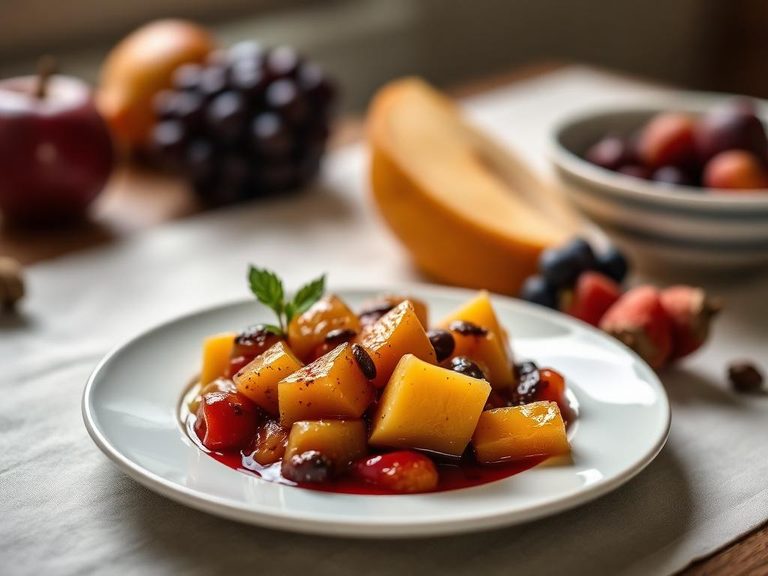
This is a vibrant mix of diced peaches, pears, apricots, pineapple, and cherries, preserved in their own juice. The texture is a delightful contrast of soft, tender fruit with the occasional firm bite from a pear or cherry. Nutritionally, it's a light, low-fat source of quick energy and fiber, with a natural sweetness that comes without added sugars.
Calorie split: 4% protein · 96% carbs · 0% fat
↓ Full nutrition💚 Why it's loved
People love it for its refreshing, sweet-tart flavor and the convenience of having a pre-mixed, ready-to-eat fruit medley. It's a nostalgic, versatile staple that works equally well as a light dessert, a breakfast topping, or a quick snack.
⚠️ Watch-outs & how to enjoy it better
Despite being packed in juice, the natural sugars can cause a blood-sugar spike for some, especially if eaten alone. To counteract this, pair it with a source of protein or healthy fat like Greek yogurt, cottage cheese, or a handful of nuts to slow digestion and stabilize energy levels.
Key benefits
- Low in fat and calories
- Good source of dietary fiber
- Provides quick, natural energy from fruit carbs
- No added sugars in the juice pack
- Offers a mix of vitamins from different fruits
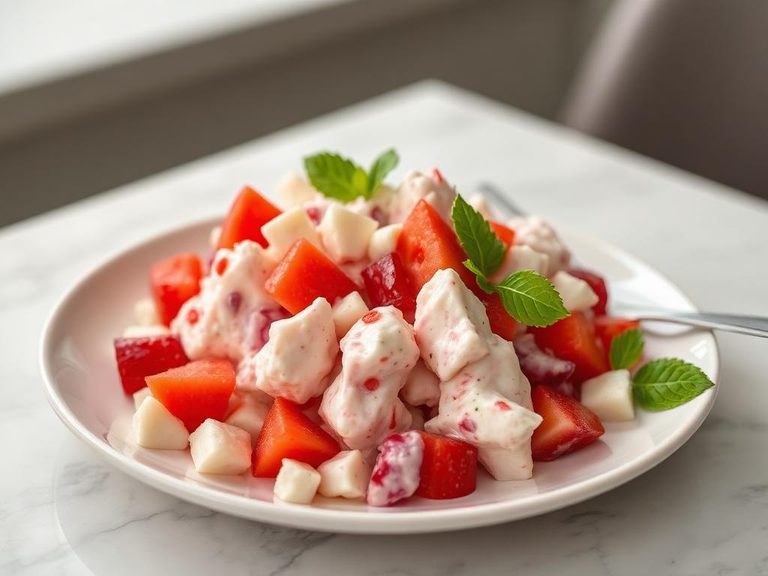
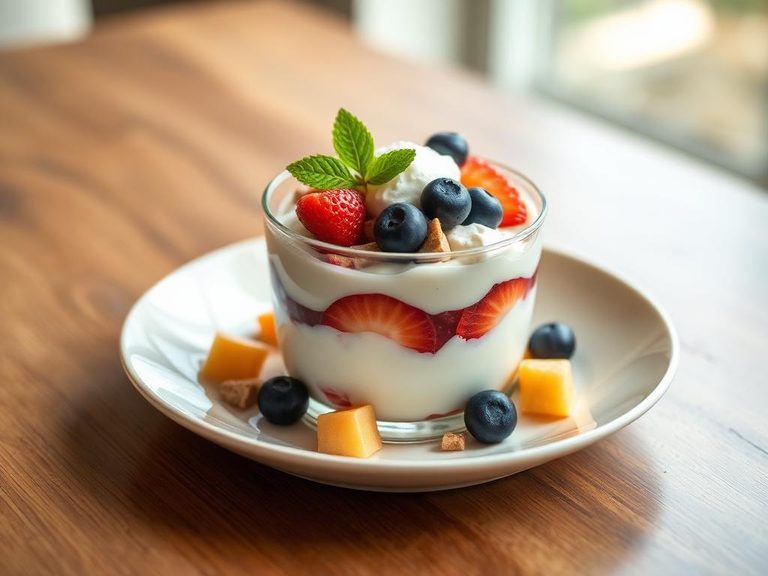
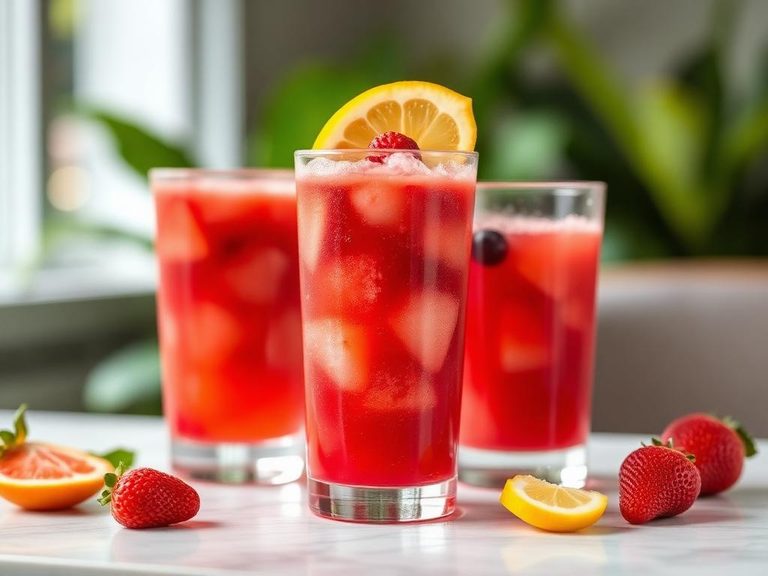
🍽️ Popular dishes

🌍 Where it's eaten
💡 Did you know?
The classic 'fruit cocktail' in a can was patented in 1926 by the California Packing Corporation (now Del Monte), and its specific mix of peaches, pears, grapes, pineapple, and cherries was designed for visual appeal, with the bright red maraschino cherry as the signature 'jewel'.
Full nutrition (USDA data · scales with serving)
| Water | 86.2 g |
| Energy | 50.0 kcal |
| Energy | 209 kj |
| Protein | 0.51 g |
| Total lipid (fat) | 0.03 g |
| Ash | 0.26 g |
| Carbohydrate, by difference | 13.1 g |
| Fiber, total dietary | 1.0 g |
| Calcium, Ca | 11.0 mg |
| Iron, Fe | 0.25 mg |
| Magnesium, Mg | 8.0 mg |
| Phosphorus, P | 14.0 mg |
| Potassium, K | 116 mg |
| Sodium, Na | 5.0 mg |
| Zinc, Zn | 0.14 mg |
| Copper, Cu | 0.05 mg |
| Manganese, Mn | 0.15 mg |
| Vitamin C, total ascorbic acid | 3.3 mg |
| Thiamin | 0.01 mg |
| Riboflavin | 0.01 mg |
| Niacin | 0.36 mg |
| Pantothenic acid | 0.05 mg |
| Vitamin B-6 | 0.03 mg |
| Folate, total | 3.0 ug |
| Folic acid | 0.00 ug |
| Folate, food | 3.0 ug |
| Folate, DFE | 3.0 ug |
| Vitamin B-12 | 0.00 ug |
| Vitamin A, RAE | 30.0 ug |
| Retinol | 0.00 ug |
| Vitamin A, IU | 600 iu |
| Vitamin D (D2 + D3), International Units | 0.00 iu |
| Vitamin D (D2 + D3) | 0.00 ug |
Fat & fatty acid profile (per 100g)
| Fatty acids, total saturated | 0.00 g |
| SFA 16:0 | 0.00 g |
| SFA 18:0 | 0.00 g |
| Fatty acids, total monounsaturated | 0.01 g |
| MUFA 18:1 | 0.01 g |
| Fatty acids, total polyunsaturated | 0.01 g |
| PUFA 18:2 | 0.01 g |
| PUFA 18:3 | 0.00 g |
| Fatty acids, total trans | 0.00 g |
| Cholesterol | 0.00 mg |
FAQ
Is canned fruit salad as healthy as fresh?
It can be a healthy choice, especially when packed in 100% juice. The canning process preserves nutrients like fiber and some vitamins, though some heat-sensitive vitamins (like Vitamin C) may be reduced. The key advantage is no added sugars, unlike syrup-packed versions.
Why is the fruit so soft?
The canning process involves heating the fruit to ensure safety, which breaks down the cell walls and softens the texture. This makes it very tender and easy to eat, but it won't have the crispness of fresh fruit.
Can I use the juice from the can?
Absolutely! The liquid is the fruit's own juice and is full of flavor. Use it to sweeten smoothies, make a light syrup for other dishes, or as a base for a refreshing drink.
Nutrient density (calculated · NRF9.3)
Nutrient Rich Foods index: beneficial nutrients (protein, fiber, vitamins, minerals) minus saturated fat, added sugar & sodium, per 100 kcal.
NRF9.3 index — Fulgoni, Keast & Drewnowski, 2009. Computed from USDA nutrients.
Weight-loss friendliness (composite index)
Energy density 0.50 kcal/g · 4% calories from protein · 1.0 g fiber · 0.0 g sugar per 100 g.
Composite of energy density (Rolls et al., 1999), protein & fiber satiety, minus sugar. A calculated heuristic — ranks satiety-per-calorie, not a clinical measure.
Dietary load (calculated from USDA values)
Potential renal acid load. Positive = acid-forming, negative = alkaline-forming.
Sodium-to-potassium ratio: 0.04 (lower is better — aim for ≤ 1)
Sodium:potassium per WHO potassium guidance. Computed from USDA nutrients.