

Fruit salad, (peach and pear and apricot and pineapple and cherry), canned, water pack, solids and liquids
Whole food · Fruits and Fruit Juices

Photo: Wikipedia
This is a vibrant, refreshing medley of peaches, pears, apricots, pineapple, and cherries, gently preserved in water to retain their natural, bright flavors. The texture is a delightful mix of soft, yielding stone fruits, slightly firmer pear, and juicy pineapple chunks, all bathed in a light, naturally sweet syrup. With just 30 calories per 100g and zero added sugar, it's a light, hydrating treat that delivers a quick energy boost from its natural carbohydrates.
Calorie split: 4% protein · 94% carbs · 2% fat
↓ Full nutrition💚 Why it's loved
People love it for its instant, no-prep burst of sunny, tropical flavors and its nostalgic appeal as a classic, light dessert. It's incredibly versatile, serving as a standalone snack, a topping for yogurt or cottage cheese, or a key ingredient in chilled soups and cocktails.
⚠️ Watch-outs & how to enjoy it better
While the sugar is natural, the concentrated fruit syrup can cause a quicker blood sugar spike compared to whole fruit, which is a consideration for those monitoring glucose levels. The canning process can also soften textures, which some may find less appealing than fresh fruit. To counteract, pair a portion with a source of protein or fat, like a handful of nuts or a dollop of Greek yogurt, to slow sugar absorption.
Key benefits
- Very low in calories and fat, making it a light snack or dessert option.
- Provides a quick source of natural energy from fruit carbohydrates.
- Contains dietary fiber, which supports digestive health.
- Offers a convenient way to consume a variety of fruits year-round.
- Hydrating due to its high water content from the canning liquid.
🍽️ Popular dishes
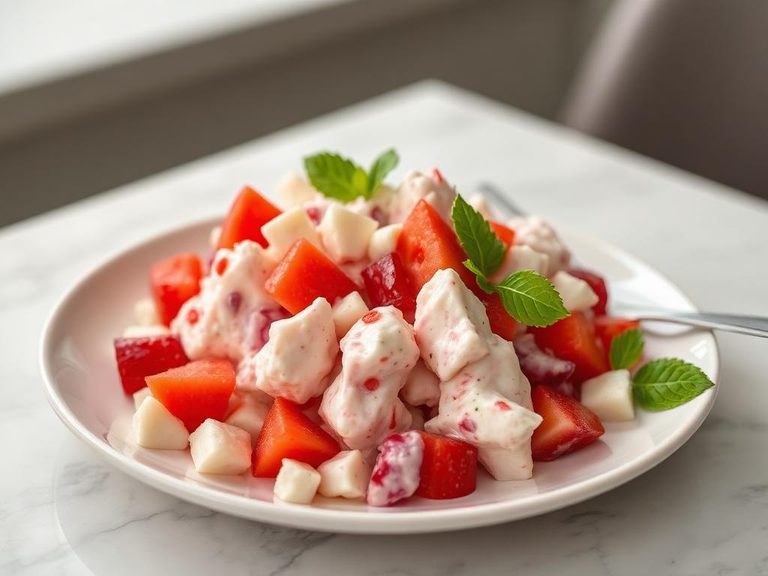

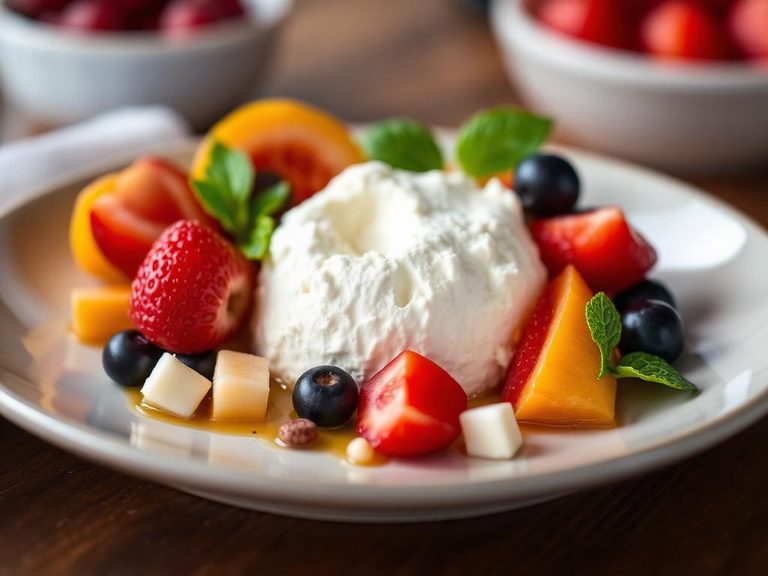
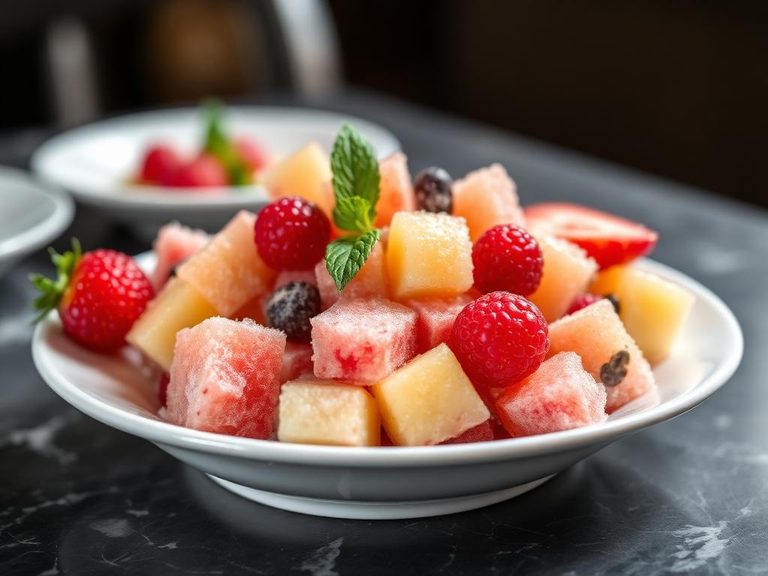
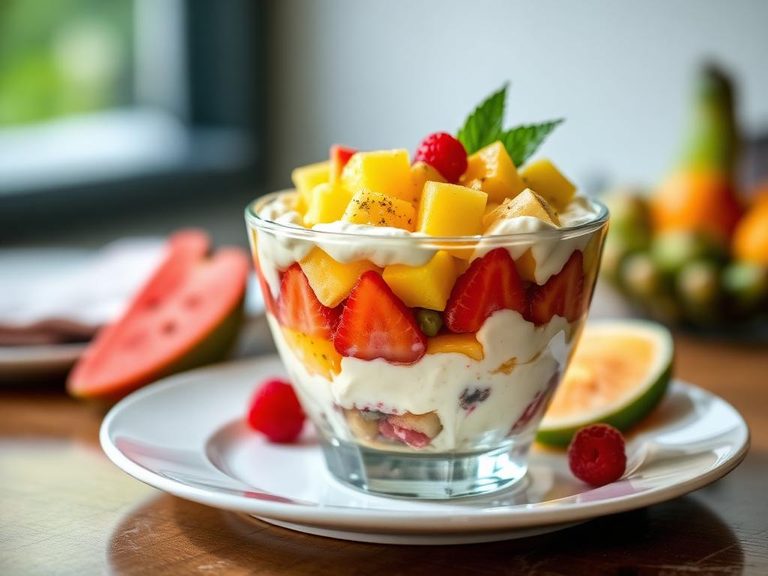

🌍 Where it's eaten
💡 Did you know?
The classic 'fruit cocktail' mix was standardized in the early 20th century to ensure a colorful, balanced blend, with the maraschino cherry serving as the signature 'jewel' in the can.
Full nutrition (USDA data · scales with serving)
| Water | 91.5 g |
| Energy | 30.0 kcal |
| Energy | 126 kj |
| Protein | 0.35 g |
| Total lipid (fat) | 0.07 g |
| Ash | 0.22 g |
| Carbohydrate, by difference | 7.9 g |
| Fiber, total dietary | 1.0 g |
| Calcium, Ca | 7.0 mg |
| Iron, Fe | 0.30 mg |
| Magnesium, Mg | 5.0 mg |
| Phosphorus, P | 9.0 mg |
| Potassium, K | 78.0 mg |
| Sodium, Na | 3.0 mg |
| Zinc, Zn | 0.08 mg |
| Copper, Cu | 0.07 mg |
| Manganese, Mn | 0.15 mg |
| Vitamin C, total ascorbic acid | 1.9 mg |
| Thiamin | 0.01 mg |
| Riboflavin | 0.02 mg |
| Niacin | 0.37 mg |
| Pantothenic acid | 0.05 mg |
| Vitamin B-6 | 0.03 mg |
| Folate, total | 3.0 ug |
| Folic acid | 0.00 ug |
| Folate, food | 3.0 ug |
| Folate, DFE | 3.0 ug |
| Vitamin B-12 | 0.00 ug |
| Vitamin A, RAE | 22.0 ug |
| Retinol | 0.00 ug |
| Vitamin A, IU | 440 iu |
| Vitamin D (D2 + D3), International Units | 0.00 iu |
| Vitamin D (D2 + D3) | 0.00 ug |
Fat & fatty acid profile (per 100g)
| Fatty acids, total saturated | 0.01 g |
| SFA 16:0 | 0.01 g |
| SFA 18:0 | 0.00 g |
| Fatty acids, total monounsaturated | 0.01 g |
| MUFA 18:1 | 0.01 g |
| Fatty acids, total polyunsaturated | 0.03 g |
| PUFA 18:2 | 0.03 g |
| PUFA 18:3 | 0.00 g |
| Fatty acids, total trans | 0.00 g |
| Cholesterol | 0.00 mg |
FAQ
No, the liquid is typically water or a light syrup made from water and some of the fruit's natural sugars, not a concentrated fruit juice. It's safe and tasty to consume.
Can I use this in baking?
Absolutely. It's excellent in cakes, muffins, and cobblers. Just be sure to drain it well first and consider reducing other liquids in the recipe slightly.
How does it compare nutritionally to fresh fruit?
It's very similar in calories and carbs but may have slightly less vitamin C due to the heat of canning. The key difference is convenience and texture, not a major nutritional gap.
Nutrient density (calculated · NRF9.3)
Nutrient Rich Foods index: beneficial nutrients (protein, fiber, vitamins, minerals) minus saturated fat, added sugar & sodium, per 100 kcal.
NRF9.3 index — Fulgoni, Keast & Drewnowski, 2009. Computed from USDA nutrients.
Weight-loss friendliness (composite index)
Energy density 0.30 kcal/g · 5% calories from protein · 1.0 g fiber · 0.0 g sugar per 100 g.
Composite of energy density (Rolls et al., 1999), protein & fiber satiety, minus sugar. A calculated heuristic — ranks satiety-per-calorie, not a clinical measure.
Dietary load (calculated from USDA values)
Potential renal acid load. Positive = acid-forming, negative = alkaline-forming.
Sodium-to-potassium ratio: 0.04 (lower is better — aim for ≤ 1)
Sodium:potassium per WHO potassium guidance. Computed from USDA nutrients.