

Peanuts, dry roasted, salted
Common food
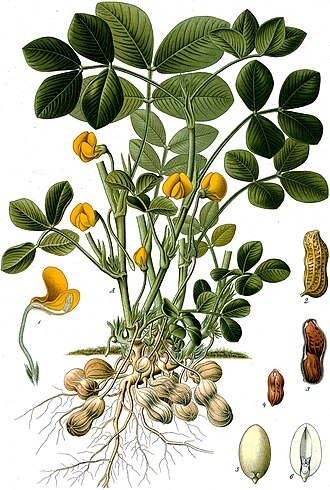
Photo: Wikipedia
Dry roasted, salted peanuts are a crunchy, savory snack with a deep, toasty flavor and a satisfying, slightly oily texture. They pack a powerful nutritional punch, offering a substantial 24.35 grams of protein and nearly 50 grams of healthy fats per 100 grams, making them an energy-dense food.
Calorie split: 15% protein · 14% carbs · 71% fat
↓ Full nutrition💚 Why it's loved
People adore the addictive, savory crunch and the rich, nutty flavor that comes from the roasting process. Their incredible versatility makes them a perfect standalone snack, a staple in trail mixes, and a foundational ingredient in cuisines worldwide.
⚠️ Watch-outs & how to enjoy it better
The added salt can contribute to excessive sodium intake, and their high calorie density requires mindful portion control. As a top allergen, peanuts pose a severe risk for those with allergies; individuals watching blood sugar should pair them with lower-carb foods to balance the meal.
Key benefits
- Excellent source of plant-based protein for muscle maintenance.
- Rich in heart-healthy monounsaturated fats.
- Provides dietary fiber for digestive health.
- Contains important minerals like magnesium and phosphorus.
- Offers a quick, sustained energy boost.
🍽️ Popular dishes
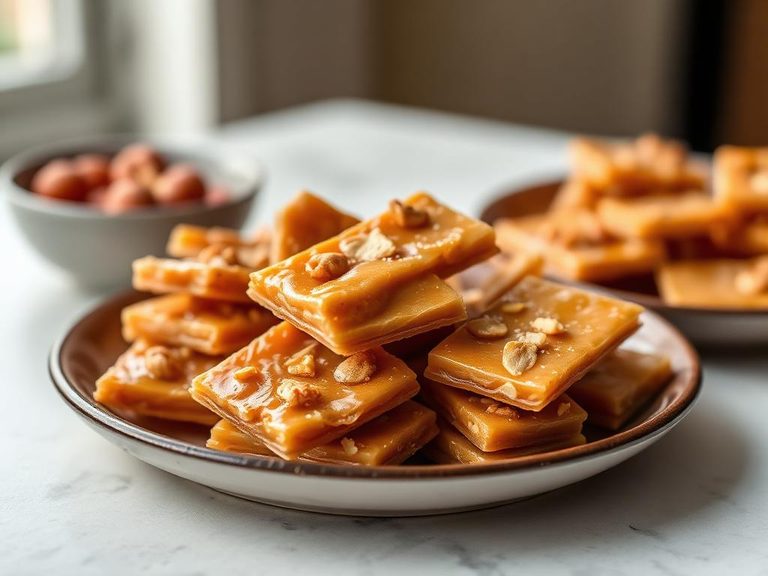
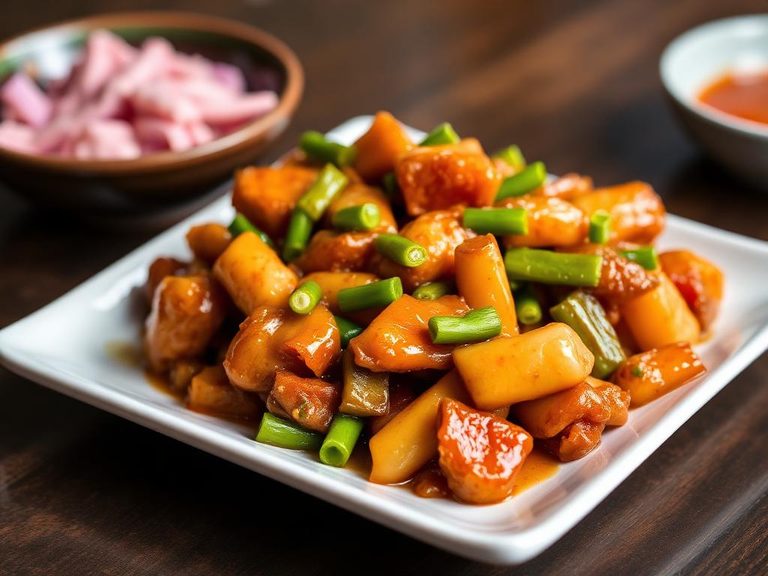


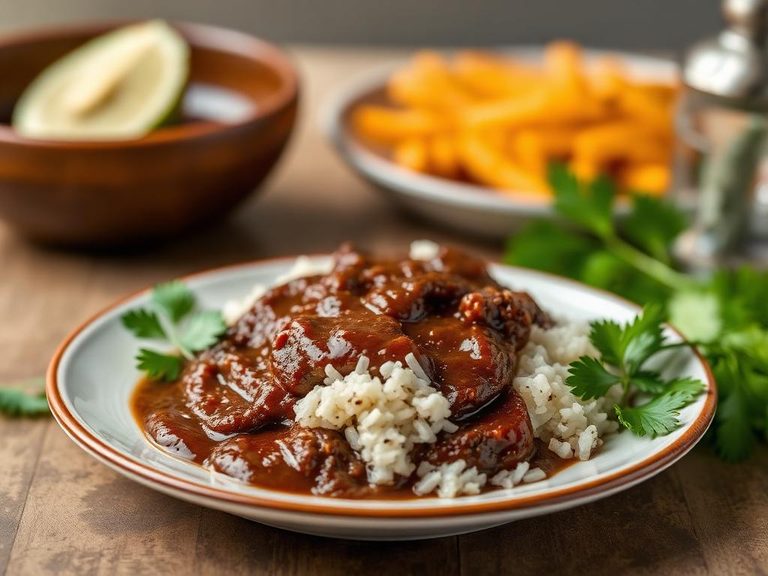
🌍 Where it's eaten
💡 Did you know?
Peanuts aren't true nuts; they are legumes that develop underground, a process called geocarpy, which is why they're also known as groundnuts.
Full nutrition (USDA data · scales with serving)
| Water | 1.8 g |
| Energy | 587 kcal |
| Protein | 24.4 g |
| Total lipid (fat) | 49.7 g |
| Carbohydrate, by difference | 21.3 g |
| Fiber, total dietary | 8.4 g |
| Total Sugars | 4.9 g |
| Calcium, Ca | 58.0 mg |
| Iron, Fe | 1.6 mg |
| Magnesium, Mg | 178 mg |
| Phosphorus, P | 363 mg |
| Potassium, K | 634 mg |
| Sodium, Na | 410 mg |
| Zinc, Zn | 2.8 mg |
| Copper, Cu | 0.43 mg |
| Selenium, Se | 9.3 ug |
| Vitamin C, total ascorbic acid | 0.00 mg |
| Thiamin | 0.15 mg |
| Riboflavin | 0.20 mg |
| Niacin | 14.4 mg |
| Vitamin B-6 | 0.47 mg |
| Folate, total | 97.0 ug |
| Folic acid | 0.00 ug |
| Folate, food | 97.0 ug |
| Folate, DFE | 97.0 ug |
| Choline, total | 64.6 mg |
| Vitamin B-12 | 0.00 ug |
| Vitamin B-12, added | 0.00 ug |
| Vitamin A, RAE | 0.00 ug |
| Retinol | 0.00 ug |
| Carotene, beta | 0.00 ug |
| Carotene, alpha | 0.00 ug |
| Cryptoxanthin, beta | 0.00 ug |
| Lycopene | 0.00 ug |
| Lutein + zeaxanthin | 0.00 ug |
| Vitamin E (alpha-tocopherol) | 4.9 mg |
| Vitamin E, added | 0.00 mg |
| Vitamin D (D2 + D3) | 0.00 ug |
| Vitamin K (phylloquinone) | 0.00 ug |
| Alcohol, ethyl | 0.00 g |
| Caffeine | 0.00 mg |
| Theobromine | 0.00 mg |
Fat & fatty acid profile (per 100g)
| Fatty acids, total saturated | 7.7 g |
| SFA 4:0 | 0.00 g |
| SFA 6:0 | 0.00 g |
| SFA 8:0 | 0.00 g |
| SFA 10:0 | 0.00 g |
| SFA 12:0 | 0.00 g |
| SFA 14:0 | 0.02 g |
| SFA 16:0 | 4.0 g |
| SFA 18:0 | 1.2 g |
| Fatty acids, total monounsaturated | 26.2 g |
| MUFA 16:1 | 0.03 g |
| MUFA 18:1 | 25.4 g |
| MUFA 20:1 | 0.63 g |
| MUFA 22:1 | 0.06 g |
| Fatty acids, total polyunsaturated | 9.8 g |
| PUFA 18:2 | 9.7 g |
| PUFA 18:3 | 0.03 g |
| PUFA 18:4 | 0.00 g |
| PUFA 20:4 | 0.02 g |
| PUFA 20:5 n-3 (EPA) | 0.00 g |
| PUFA 22:5 n-3 (DPA) | 0.00 g |
| PUFA 22:6 n-3 (DHA) | 0.00 g |
| Cholesterol | 0.00 mg |
Amino acid profile (per 100g)
Estimated from Snacks, popcorn, caramel-coated, without peanuts — USDA does not publish this profile for Peanuts.
| Tryptophan | 0.04 g |
| Threonine | 0.15 g |
| Isoleucine | 0.16 g |
| Leucine | 0.28 g |
| Lysine | 0.28 g |
| Methionine | 0.07 g |
| Cystine | 0.04 g |
| Phenylalanine | 0.15 g |
| Tyrosine | 0.11 g |
| Valine | 0.18 g |
| Arginine | 0.23 g |
| Histidine | 0.11 g |
| Alanine | 0.21 g |
| Aspartic acid | 0.39 g |
| Glutamic acid | 0.66 g |
| Glycine | 0.22 g |
| Proline | 0.17 g |
| Serine | 0.16 g |
FAQ
Are dry roasted peanuts healthy?
Yes, they are nutrient-dense, providing protein, healthy fats, fiber, and vitamins. However, the added salt means they should be eaten in moderation, especially by those monitoring sodium intake.
Why are peanuts so high in calories?
Peanuts are calorie-dense primarily due to their high fat content (about 50g per 100g). These are mostly beneficial unsaturated fats, which are a concentrated source of energy.
Can peanuts be part of a weight management diet?
In controlled portions, yes. Their protein and fiber promote satiety, which can help reduce overall calorie intake. The key is sticking to a standard serving size, like a small handful.
Nutrient density (calculated · NRF9.3)
Nutrient Rich Foods index: beneficial nutrients (protein, fiber, vitamins, minerals) minus saturated fat, added sugar & sodium, per 100 kcal.
NRF9.3 index — Fulgoni, Keast & Drewnowski, 2009. Computed from USDA nutrients.
Weight-loss friendliness (composite index)
Energy density 5.87 kcal/g · 17% calories from protein · 8.4 g fiber · 4.9 g sugar per 100 g.
Composite of energy density (Rolls et al., 1999), protein & fiber satiety, minus sugar. A calculated heuristic — ranks satiety-per-calorie, not a clinical measure.
Dietary load (calculated from USDA values)
Potential renal acid load. Positive = acid-forming, negative = alkaline-forming.
Sodium-to-potassium ratio: 0.65 (lower is better — aim for ≤ 1)
Sodium:potassium per WHO potassium guidance. Computed from USDA nutrients.