

Peanut butter and jelly sandwich, frozen commercial product without crusts
Common food

Photo: Wikipedia
A frozen, crustless sandwich featuring creamy peanut butter and sweet grape jelly, designed for quick, nostalgic snacking. The bread is soft and slightly dense from freezing, while the filling is smooth and sweet, offering a classic comfort-food experience. Nutritionally, it provides a moderate calorie boost with a balanced mix of protein and carbs, though it is relatively low in fiber.
Calorie split: 12% protein · 48% carbs · 40% fat
↓ Full nutrition💚 Why it's loved
People love it for its nostalgic, childhood appeal and the perfect balance of salty peanut butter and sweet jelly. It's a no-fuss, portable snack that satisfies both sweet and savory cravings in one bite.
⚠️ Watch-outs & how to enjoy it better
The high sugar content (15g per 100g) and processed bread can lead to blood-sugar spikes, and it's a common allergen for those with peanut sensitivities. To counteract this, pair it with a source of protein or fat (like a handful of nuts or a cheese stick) to slow sugar absorption, and consider eating only half as a portion control measure.
Key benefits
- Provides a quick source of energy from carbohydrates and fat.
- Contains plant-based protein from peanut butter.
- Convenient, pre-portioned, and ready-to-eat.
- Offers a familiar, comforting taste profile.
🍽️ Popular dishes
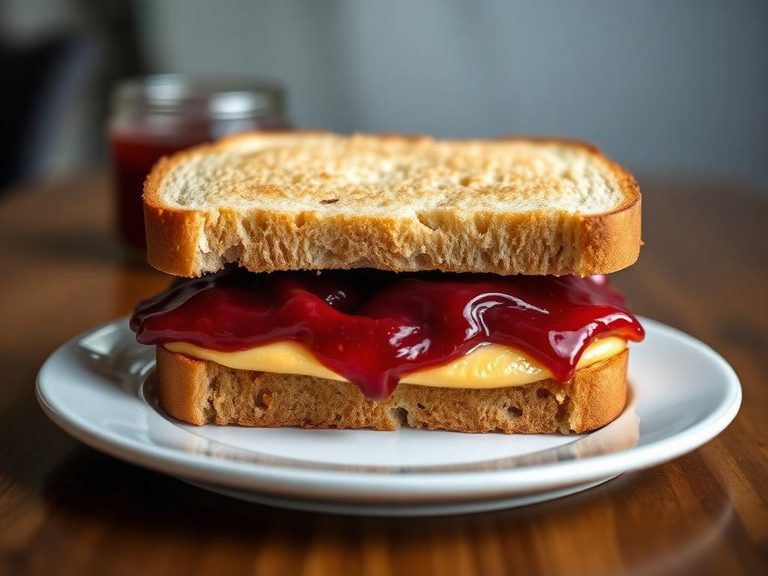
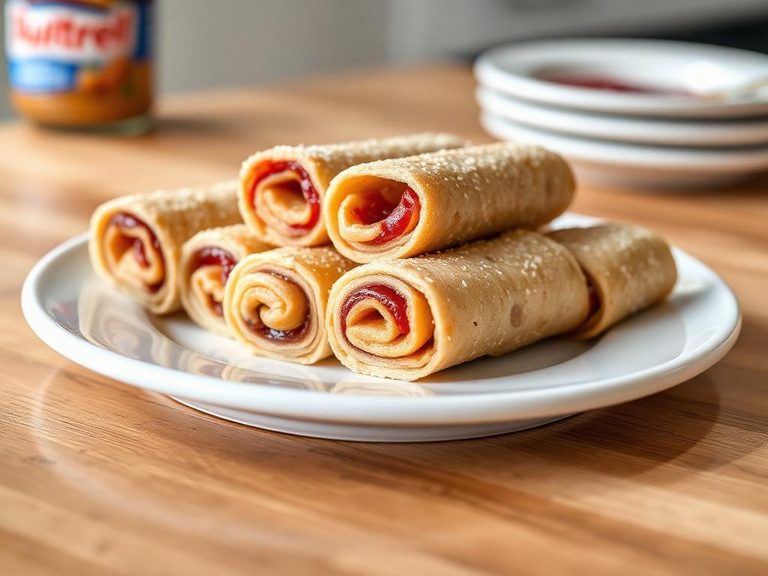
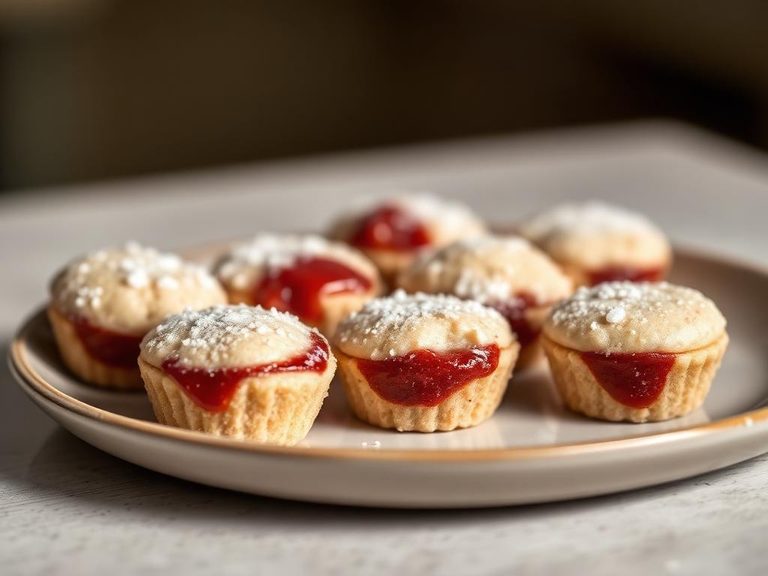
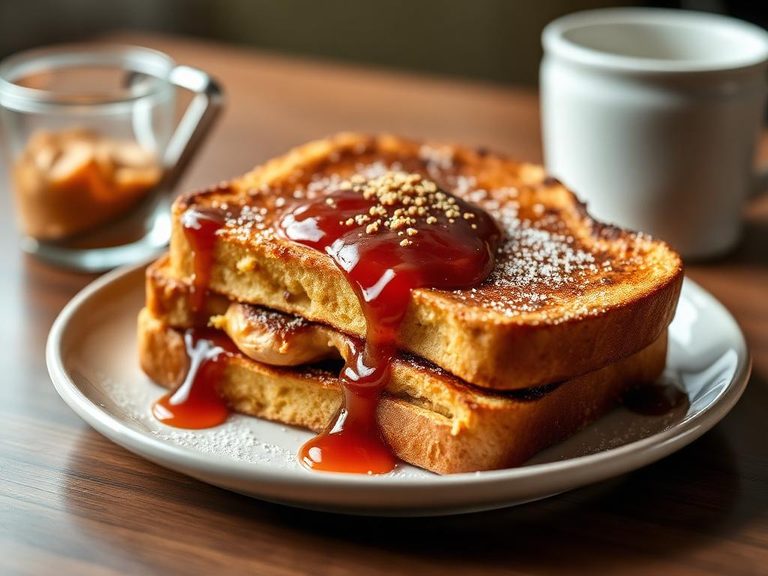
🌍 Where it's eaten
💡 Did you know?
The first known recipe for a peanut butter and jelly sandwich appeared in a 1901 Boston cooking school magazine, but it wasn't until the 1920s, when sliced bread and pre-packaged peanut butter became widespread, that it became a staple of American school lunches.
Full nutrition (USDA data · scales with serving)
| Water | 24.8 g |
| Energy | 361 kcal |
| Protein | 11.4 g |
| Total lipid (fat) | 16.6 g |
| Carbohydrate, by difference | 45.2 g |
| Fiber, total dietary | 2.8 g |
| Total Sugars | 15.0 g |
| Calcium, Ca | 128 mg |
| Iron, Fe | 2.3 mg |
| Magnesium, Mg | 64.0 mg |
| Phosphorus, P | 157 mg |
| Potassium, K | 232 mg |
| Sodium, Na | 368 mg |
| Zinc, Zn | 1.2 mg |
| Copper, Cu | 0.19 mg |
| Selenium, Se | 13.7 ug |
| Vitamin C, total ascorbic acid | 0.20 mg |
| Thiamin | 0.32 mg |
| Riboflavin | 0.19 mg |
| Niacin | 6.3 mg |
| Vitamin B-6 | 0.18 mg |
| Folate, total | 85.0 ug |
| Folic acid | 46.0 ug |
| Folate, food | 39.0 ug |
| Folate, DFE | 117 ug |
| Choline, total | 27.7 mg |
| Vitamin B-12 | 0.00 ug |
| Vitamin B-12, added | 0.00 ug |
| Vitamin A, RAE | 0.00 ug |
| Retinol | 0.00 ug |
| Carotene, beta | 1.0 ug |
| Carotene, alpha | 0.00 ug |
| Cryptoxanthin, beta | 0.00 ug |
| Lycopene | 0.00 ug |
| Lutein + zeaxanthin | 28.0 ug |
| Vitamin E (alpha-tocopherol) | 2.7 mg |
| Vitamin E, added | 0.00 mg |
| Vitamin D (D2 + D3) | 0.00 ug |
| Vitamin K (phylloquinone) | 0.20 ug |
| Alcohol, ethyl | 0.00 g |
| Caffeine | 0.00 mg |
| Theobromine | 0.00 mg |
Fat & fatty acid profile (per 100g)
| Fatty acids, total saturated | 3.4 g |
| SFA 4:0 | 0.00 g |
| SFA 6:0 | 0.00 g |
| SFA 8:0 | 0.00 g |
| SFA 10:0 | 0.00 g |
| SFA 12:0 | 0.01 g |
| SFA 14:0 | 0.01 g |
| SFA 16:0 | 1.6 g |
| SFA 18:0 | 0.76 g |
| Fatty acids, total monounsaturated | 7.8 g |
| MUFA 16:1 | 0.02 g |
| MUFA 18:1 | 7.5 g |
| MUFA 20:1 | 0.17 g |
| MUFA 22:1 | 0.01 g |
| Fatty acids, total polyunsaturated | 4.6 g |
| PUFA 18:2 | 4.4 g |
| PUFA 18:3 | 0.12 g |
| PUFA 18:4 | 0.00 g |
| PUFA 20:4 | 0.01 g |
| PUFA 20:5 n-3 (EPA) | 0.00 g |
| PUFA 22:5 n-3 (DPA) | 0.00 g |
| PUFA 22:6 n-3 (DHA) | 0.00 g |
| Cholesterol | 0.00 mg |
Amino acid profile (per 100g)
Estimated from Cookies, peanut butter, refrigerated dough, baked — USDA does not publish this profile for Peanut butter and jelly sandwich.
| Tryptophan | 0.11 g |
| Threonine | 0.30 g |
| Isoleucine | 0.36 g |
| Leucine | 0.63 g |
| Lysine | 0.37 g |
| Methionine | 0.14 g |
| Cystine | 0.16 g |
| Phenylalanine | 0.45 g |
| Tyrosine | 0.32 g |
| Valine | 0.41 g |
| Arginine | 0.69 g |
| Histidine | 0.21 g |
| Alanine | 0.35 g |
| Aspartic acid | 0.77 g |
| Glutamic acid | 2.2 g |
| Glycine | 0.41 g |
| Proline | 0.64 g |
| Serine | 0.49 g |
FAQ
Is a frozen PB&J sandwich healthy?
It's a convenient, energy-dense snack with some protein, but it's also high in sugar and processed ingredients. It's best enjoyed occasionally as part of a balanced diet, not as a primary meal.
How long does a frozen PB&J last?
Commercially frozen products can last 6-12 months in the freezer if kept at a consistent temperature. Once thawed, it should be eaten within a day or two for best texture and safety.
Can I make a healthier version at home?
Yes, use whole-grain bread, natural peanut butter (no added sugar), and a low-sugar fruit spread. You can also add sliced bananas or chia seeds for extra fiber and nutrients.
Nutrient density (calculated · NRF9.3)
Nutrient Rich Foods index: beneficial nutrients (protein, fiber, vitamins, minerals) minus saturated fat, added sugar & sodium, per 100 kcal.
NRF9.3 index — Fulgoni, Keast & Drewnowski, 2009. Computed from USDA nutrients.
Weight-loss friendliness (composite index)
Energy density 3.61 kcal/g · 13% calories from protein · 2.8 g fiber · 15.0 g sugar per 100 g.
Composite of energy density (Rolls et al., 1999), protein & fiber satiety, minus sugar. A calculated heuristic — ranks satiety-per-calorie, not a clinical measure.
Dietary load (calculated from USDA values)
Potential renal acid load. Positive = acid-forming, negative = alkaline-forming.
Sodium-to-potassium ratio: 1.59 (lower is better — aim for ≤ 1)
Sodium:potassium per WHO potassium guidance. Computed from USDA nutrients.