

Peanut butter and jelly
Common food
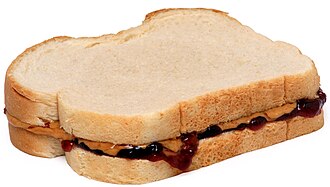
Photo: Wikipedia
A classic sandwich of creamy or crunchy peanut butter paired with sweet fruit jelly or jam, layered between slices of bread. It offers a satisfying contrast of savory, salty, and sweet flavors with a rich, sticky texture. Nutritionally, it's a calorie-dense food with a solid protein and fat base, but also a significant amount of sugar.
Calorie split: 10% protein · 40% carbs · 50% fat
↓ Full nutrition💚 Why it's loved
It's beloved for its perfect balance of salty and sweet, and its nostalgic, comforting simplicity that evokes childhood memories. The combination is endlessly customizable with different breads, nut butters, and fruit spreads.
⚠️ Watch-outs & how to enjoy it better
The high sugar content in many jellies and jams can lead to rapid blood sugar spikes. It is also a common allergen (peanuts) and can be high in sodium. To mitigate, choose natural peanut butter with no added sugar, opt for low-sugar or no-sugar-added fruit spreads, and pair the sandwich with a side of vegetables or a piece of whole fruit to add fiber.
Key benefits
- Provides plant-based protein from peanuts.
- Offers quick energy from carbohydrates.
- Contains heart-healthy monounsaturated fats.
- A convenient, no-cook meal or snack.
- Can be a good source of niacin and magnesium.
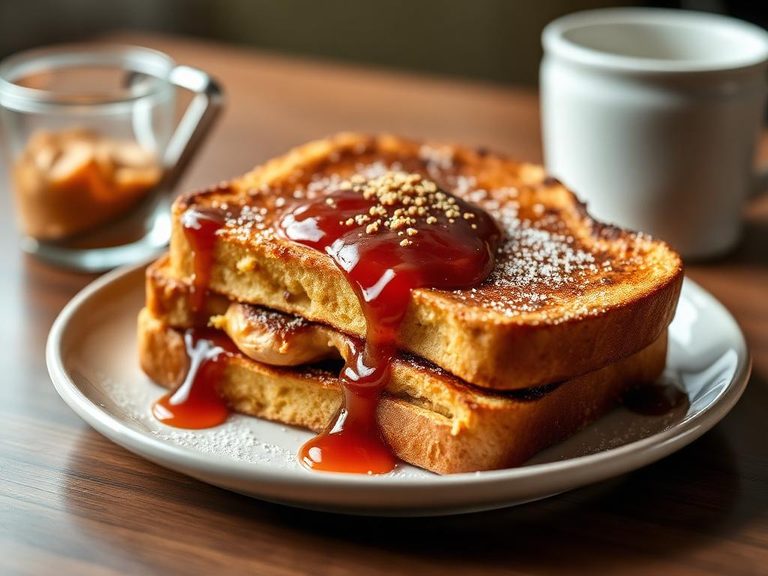
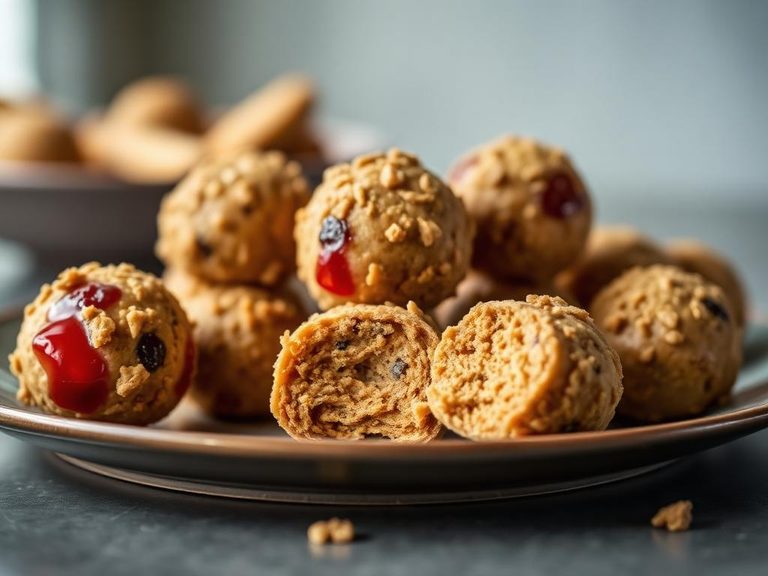
🍽️ Popular dishes
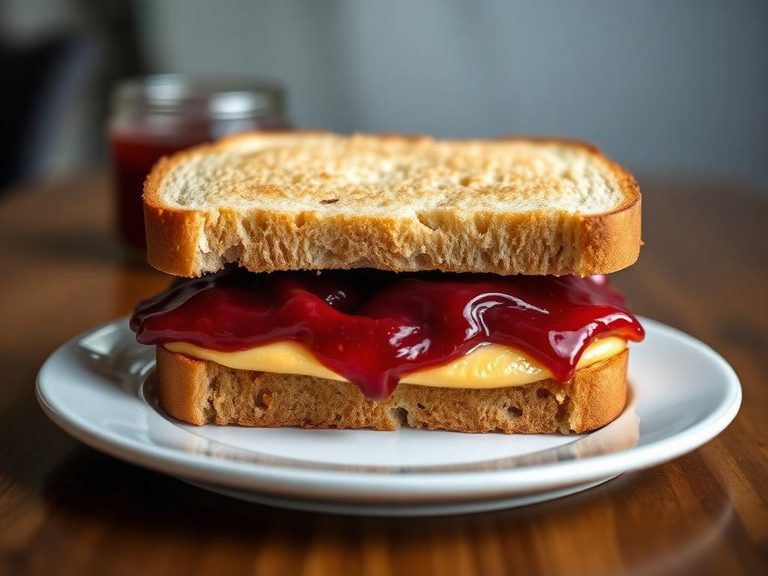
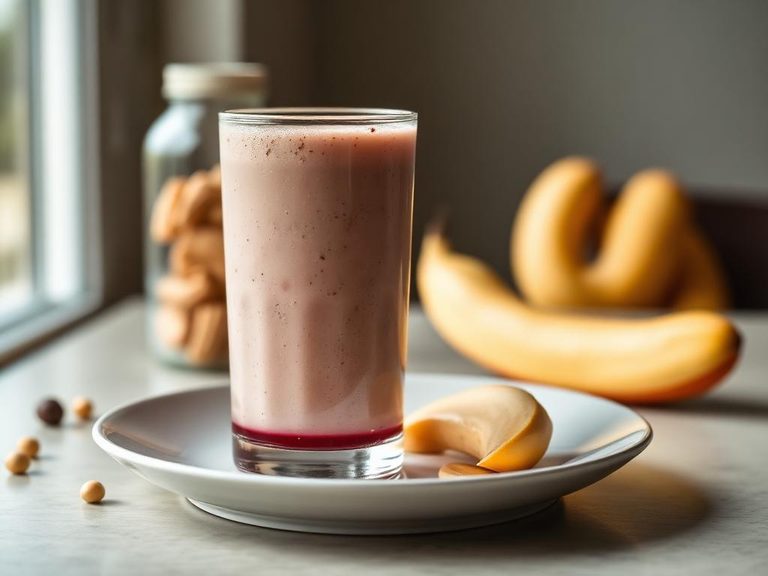
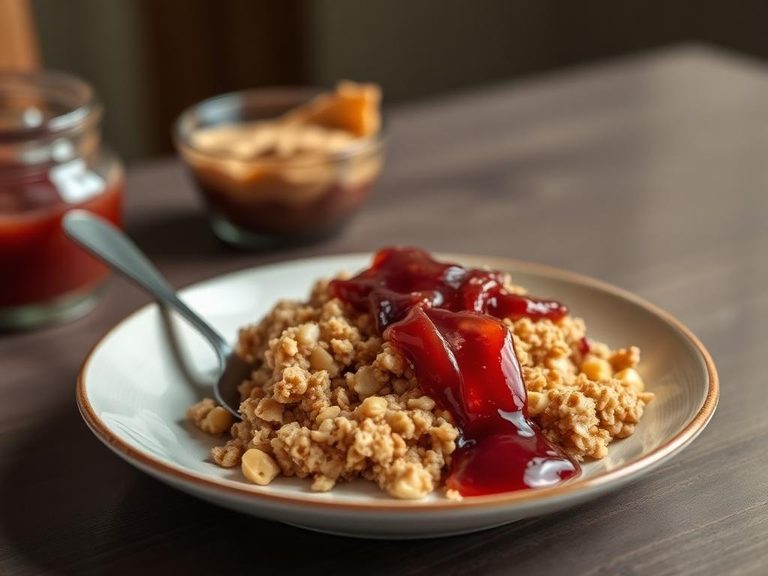
🌍 Where it's eaten
💡 Did you know?
The first known peanut butter and jelly sandwich recipe appeared in a 1901 Boston cooking school magazine, but the sandwich didn't become a household staple until after World War II, when both peanut butter and jelly were included in U.S. soldiers' military rations.
Full nutrition (USDA data · scales with serving)
| Water | 15.5 g |
| Energy | 432 kcal |
| Protein | 11.2 g |
| Total lipid (fat) | 25.7 g |
| Carbohydrate, by difference | 46.1 g |
| Fiber, total dietary | 3.0 g |
| Total Sugars | 30.9 g |
| Calcium, Ca | 28.0 mg |
| Iron, Fe | 0.96 mg |
| Magnesium, Mg | 87.0 mg |
| Phosphorus, P | 170 mg |
| Potassium, K | 306 mg |
| Sodium, Na | 228 mg |
| Zinc, Zn | 1.3 mg |
| Copper, Cu | 0.22 mg |
| Selenium, Se | 2.2 ug |
| Vitamin C, total ascorbic acid | 0.40 mg |
| Thiamin | 0.08 mg |
| Riboflavin | 0.11 mg |
| Niacin | 6.6 mg |
| Vitamin B-6 | 0.23 mg |
| Folate, total | 44.0 ug |
| Folic acid | 0.00 ug |
| Folate, food | 44.0 ug |
| Folate, DFE | 44.0 ug |
| Choline, total | 36.6 mg |
| Vitamin B-12 | 0.00 ug |
| Vitamin B-12, added | 0.00 ug |
| Vitamin A, RAE | 0.00 ug |
| Retinol | 0.00 ug |
| Carotene, beta | 2.0 ug |
| Carotene, alpha | 0.00 ug |
| Cryptoxanthin, beta | 0.00 ug |
| Lycopene | 0.00 ug |
| Lutein + zeaxanthin | 11.0 ug |
| Vitamin E (alpha-tocopherol) | 4.5 mg |
| Vitamin E, added | 0.00 mg |
| Vitamin D (D2 + D3) | 0.00 ug |
| Vitamin K (phylloquinone) | 0.30 ug |
| Alcohol, ethyl | 0.00 g |
| Caffeine | 0.00 mg |
| Theobromine | 0.00 mg |
Fat & fatty acid profile (per 100g)
| Fatty acids, total saturated | 5.2 g |
| SFA 4:0 | 0.00 g |
| SFA 6:0 | 0.00 g |
| SFA 8:0 | 0.00 g |
| SFA 10:0 | 0.00 g |
| SFA 12:0 | 0.00 g |
| SFA 14:0 | 0.01 g |
| SFA 16:0 | 2.4 g |
| SFA 18:0 | 1.1 g |
| Fatty acids, total monounsaturated | 13.0 g |
| MUFA 16:1 | 0.01 g |
| MUFA 18:1 | 12.4 g |
| MUFA 20:1 | 0.29 g |
| MUFA 22:1 | 0.02 g |
| Fatty acids, total polyunsaturated | 6.3 g |
| PUFA 18:2 | 6.1 g |
| PUFA 18:3 | 0.01 g |
| PUFA 18:4 | 0.00 g |
| PUFA 20:4 | 0.01 g |
| PUFA 20:5 n-3 (EPA) | 0.00 g |
| PUFA 22:5 n-3 (DPA) | 0.00 g |
| PUFA 22:6 n-3 (DHA) | 0.00 g |
| Cholesterol | 0.00 mg |
Amino acid profile (per 100g)
Estimated from Cookies, peanut butter, refrigerated dough, baked — USDA does not publish this profile for Peanut butter and jelly.
| Tryptophan | 0.11 g |
| Threonine | 0.30 g |
| Isoleucine | 0.36 g |
| Leucine | 0.63 g |
| Lysine | 0.37 g |
| Methionine | 0.14 g |
| Cystine | 0.16 g |
| Phenylalanine | 0.45 g |
| Tyrosine | 0.32 g |
| Valine | 0.41 g |
| Arginine | 0.69 g |
| Histidine | 0.21 g |
| Alanine | 0.35 g |
| Aspartic acid | 0.77 g |
| Glutamic acid | 2.2 g |
| Glycine | 0.41 g |
| Proline | 0.64 g |
| Serine | 0.49 g |
FAQ
Is peanut butter and jelly a healthy meal?
It can be part of a balanced diet. Choose whole-grain bread, natural peanut butter, and low-sugar jelly to maximize nutrients like fiber and protein while minimizing added sugars.
Why does my peanut butter and jelly sandwich make the bread soggy?
The sugar and moisture in the jelly can migrate into the bread. To prevent this, spread a thin layer of peanut butter on both slices of bread first, creating a barrier before adding the jelly in the middle.
Can I make a peanut butter and jelly sandwich without bread?
Absolutely. Popular alternatives include using apple slices, celery sticks, rice cakes, tortillas, or even pancakes as the base for the peanut butter and jelly.
Nutrient density (calculated · NRF9.3)
Nutrient Rich Foods index: beneficial nutrients (protein, fiber, vitamins, minerals) minus saturated fat, added sugar & sodium, per 100 kcal.
NRF9.3 index — Fulgoni, Keast & Drewnowski, 2009. Computed from USDA nutrients.
Weight-loss friendliness (composite index)
Energy density 4.32 kcal/g · 10% calories from protein · 3.0 g fiber · 30.9 g sugar per 100 g.
Composite of energy density (Rolls et al., 1999), protein & fiber satiety, minus sugar. A calculated heuristic — ranks satiety-per-calorie, not a clinical measure.
Dietary load (calculated from USDA values)
Potential renal acid load. Positive = acid-forming, negative = alkaline-forming.
Sodium-to-potassium ratio: 0.75 (lower is better — aim for ≤ 1)
Sodium:potassium per WHO potassium guidance. Computed from USDA nutrients.