

Pate, liver, not specified, canned
Whole food · Sausages and Luncheon Meats

Photo: Wikipedia
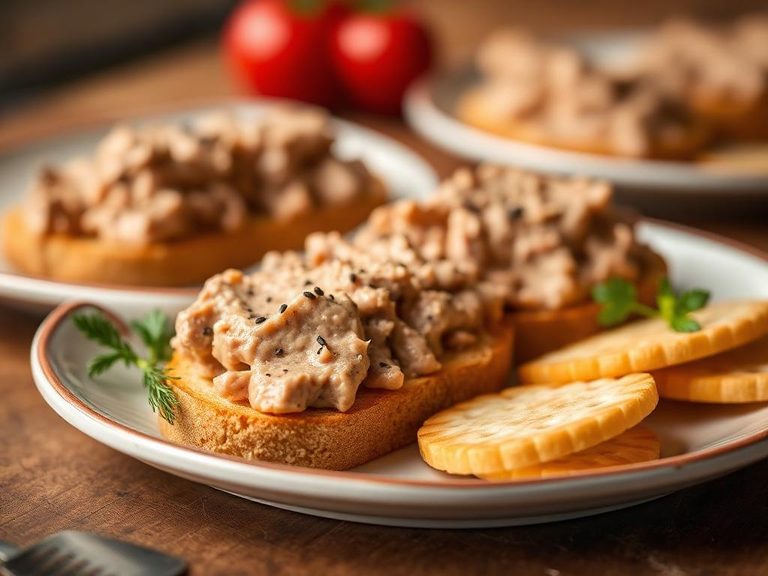
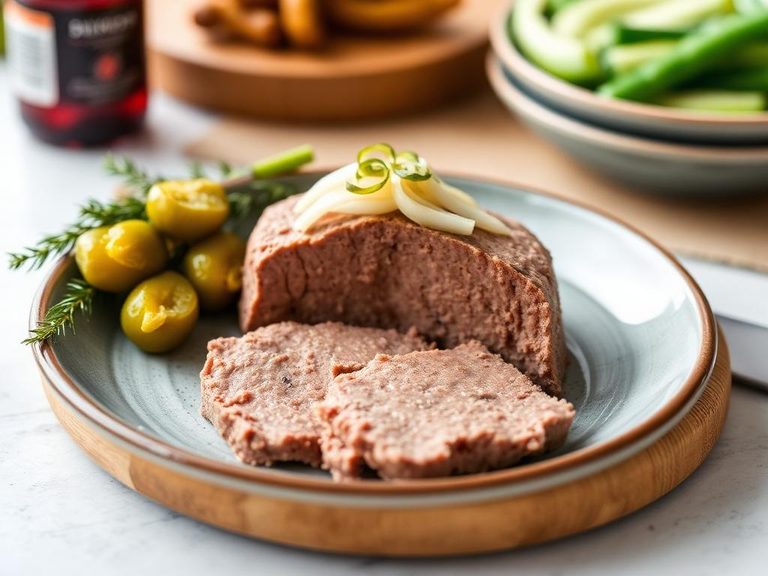
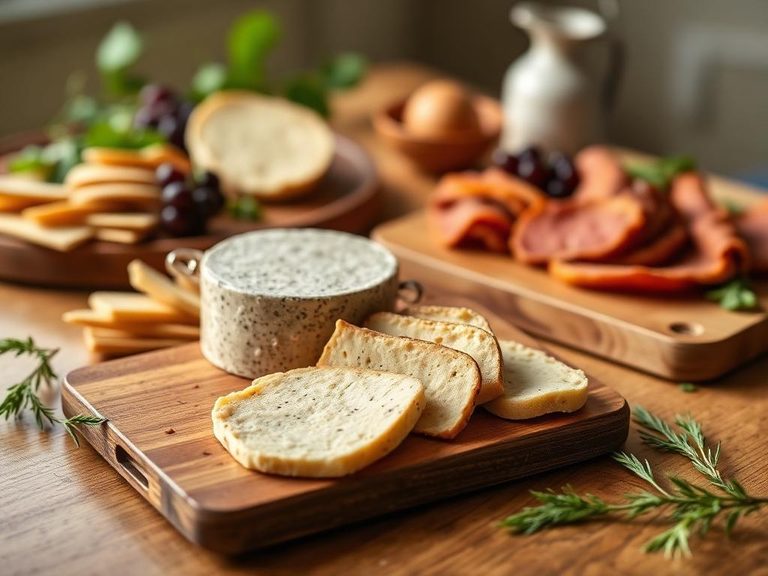
Canned liver pâté is a rich, savory spread made from finely ground liver, typically pork or beef, blended with fat and seasonings to create a smooth, buttery texture. Its deep, earthy flavor and velvety consistency make it a luxurious addition to crackers, toast, or charcuterie boards. Nutritionally, it is a dense source of protein and fat, with minimal carbohydrates, offering a substantial energy boost.
Calorie split: 18% protein · 2% carbs · 80% fat
↓ Full nutrition💚 Why it's loved
People love canned liver pâté for its intense, umami-rich flavor and creamy texture, which pairs perfectly with crusty bread or crackers. It's a staple in many cultures, from French charcuterie to Eastern European spreads, often enjoyed as a quick, satisfying snack or appetizer.
⚠️ Watch-outs & how to enjoy it better
The high fat and sodium content can be a concern for those monitoring heart health or blood pressure, and its strong, iron-rich taste may not appeal to everyone. To counteract this, pair it with fresh vegetables or whole-grain crackers to add fiber and balance the richness, and practice portion control by limiting servings to 1-2 tablespoons at a time.
Key benefits
- High in protein for muscle maintenance and satiety
- Rich in iron and vitamin B12, supporting energy levels and red blood cell health
- Provides essential fats for hormone production and nutrient absorption
- Low in carbohydrates, making it suitable for low-carb diets
- Long shelf life due to canning, ensuring availability and convenience
🍽️ Popular dishes
🌍 Where it's eaten
💡 Did you know?
Canned liver pâté was a popular ration food during World War II, valued for its high calorie density and long shelf life, helping to sustain soldiers in the field.
Full nutrition (USDA data · scales with serving)
| Water | 53.9 g |
| Energy | 319 kcal |
| Energy | 1335 kj |
| Protein | 14.2 g |
| Total lipid (fat) | 28.0 g |
| Ash | 2.2 g |
| Carbohydrate, by difference | 1.5 g |
| Fiber, total dietary | 0.00 g |
| Calcium, Ca | 70.0 mg |
| Iron, Fe | 5.5 mg |
| Magnesium, Mg | 13.0 mg |
| Phosphorus, P | 200 mg |
| Potassium, K | 138 mg |
| Sodium, Na | 697 mg |
| Zinc, Zn | 2.9 mg |
| Copper, Cu | 0.40 mg |
| Manganese, Mn | 0.12 mg |
| Selenium, Se | 41.6 ug |
| Vitamin C, total ascorbic acid | 2.0 mg |
| Thiamin | 0.03 mg |
| Riboflavin | 0.60 mg |
| Niacin | 3.3 mg |
| Pantothenic acid | 1.2 mg |
| Vitamin B-6 | 0.06 mg |
| Folate, total | 60.0 ug |
| Folic acid | 0.00 ug |
| Folate, food | 60.0 ug |
| Folate, DFE | 60.0 ug |
| Vitamin B-12 | 3.2 ug |
| Vitamin A, RAE | 991 ug |
| Retinol | 991 ug |
| Cryptoxanthin, beta | 0.00 ug |
| Vitamin A, IU | 3300 iu |
| Lycopene | 0.00 ug |
| Lutein + zeaxanthin | 0.00 ug |
| Alcohol, ethyl | 0.00 g |
| Caffeine | 0.00 mg |
| Theobromine | 0.00 mg |
Fat & fatty acid profile (per 100g)
| Fatty acids, total saturated | 9.6 g |
| SFA 4:0 | 0.00 g |
| SFA 6:0 | 0.00 g |
| SFA 8:0 | 0.00 g |
| SFA 10:0 | 0.00 g |
| SFA 12:0 | 0.00 g |
| SFA 14:0 | 0.39 g |
| SFA 16:0 | 6.1 g |
| SFA 18:0 | 3.0 g |
| Fatty acids, total monounsaturated | 12.4 g |
| MUFA 16:1 | 0.95 g |
| MUFA 18:1 | 11.4 g |
| MUFA 20:1 | 0.00 g |
| MUFA 22:1 | 0.00 g |
| Fatty acids, total polyunsaturated | 3.2 g |
| PUFA 18:2 | 2.8 g |
| PUFA 18:3 | 0.21 g |
| PUFA 18:4 | 0.00 g |
| PUFA 20:4 | 0.00 g |
| PUFA 20:5 n-3 (EPA) | 0.00 g |
| PUFA 22:5 n-3 (DPA) | 0.00 g |
| PUFA 22:6 n-3 (DHA) | 0.00 g |
| Cholesterol | 255 mg |
| Phytosterols | 0.00 mg |
Amino acid profile (per 100g)
| Tryptophan | 0.16 g |
| Threonine | 0.57 g |
| Isoleucine | 0.55 g |
| Leucine | 1.1 g |
| Lysine | 0.84 g |
| Methionine | 0.28 g |
| Cystine | 0.17 g |
| Phenylalanine | 0.58 g |
| Tyrosine | 0.45 g |
| Valine | 0.77 g |
| Arginine | 0.90 g |
| Histidine | 0.30 g |
| Alanine | 0.95 g |
| Aspartic acid | 1.2 g |
| Glutamic acid | 1.9 g |
| Glycine | 1.4 g |
| Proline | 0.99 g |
| Serine | 0.59 g |
FAQ
Is canned liver pâté healthy?
It can be part of a healthy diet in moderation, as it provides protein, iron, and B12, but its high fat and sodium content means it should be consumed sparingly, especially for those with heart or blood pressure concerns.
How long does canned liver pâté last after opening?
Once opened, it should be transferred to an airtight container and refrigerated, where it will typically last for 3-5 days. For longer storage, it can be frozen for up to 2 months.
Can I use canned liver pâté in cooking?
Yes, it can be used as a flavor enhancer in sauces, gravies, or stuffing, or mixed into pasta dishes for added richness. It also works well as a base for dips or spreads when combined with other ingredients like cream cheese or herbs.
Nutrient density (calculated · NRF9.3)
Nutrient Rich Foods index: beneficial nutrients (protein, fiber, vitamins, minerals) minus saturated fat, added sugar & sodium, per 100 kcal.
NRF9.3 index — Fulgoni, Keast & Drewnowski, 2009. Computed from USDA nutrients.
Weight-loss friendliness (composite index)
Energy density 3.19 kcal/g · 18% calories from protein · 0.0 g fiber · 0.0 g sugar per 100 g.
Composite of energy density (Rolls et al., 1999), protein & fiber satiety, minus sugar. A calculated heuristic — ranks satiety-per-calorie, not a clinical measure.
Dietary load (calculated from USDA values)
Potential renal acid load. Positive = acid-forming, negative = alkaline-forming.
Sodium-to-potassium ratio: 5.05 (lower is better — aim for ≤ 1)
Sodium:potassium per WHO potassium guidance. Computed from USDA nutrients.