

Pastry, Chinese, made with rice flour
Common food

Photo: Wikipedia
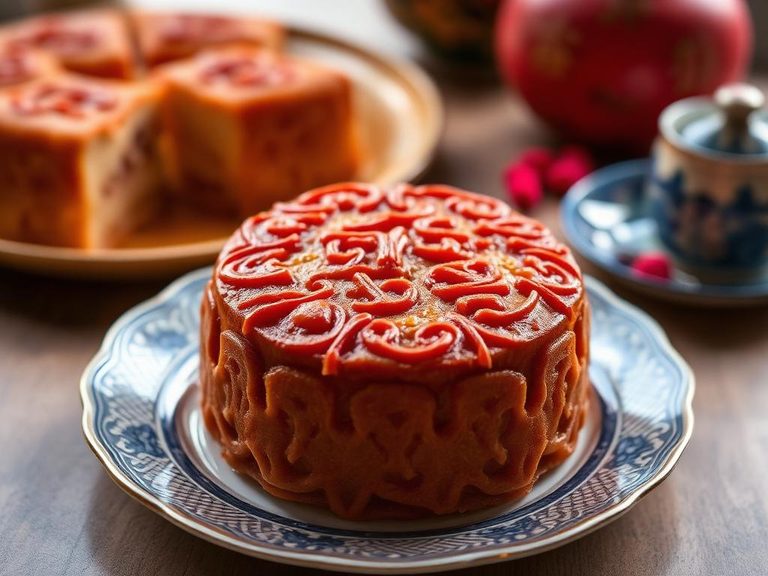
A soft, chewy, and often slightly sweet or savory cake made from rice flour, a staple in Chinese dim sum and festive baking. Its texture can range from delicate and steamed to dense and pan-fried, with a subtle, clean rice flavor. Nutritionally, it's a high-carb energy source with minimal protein and fat.
Calorie split: 5% protein · 73% carbs · 22% fat
↓ Full nutrition💚 Why it's loved
People love it for its uniquely satisfying, soft-yet-bouncy texture and its ability to carry both delicate sweet flavors and robust savory fillings. It's a comforting, nostalgic taste of home and celebration in many Chinese communities.
⚠️ Watch-outs & how to enjoy it better
Its high carbohydrate and sugar content (especially in sweet versions) can cause rapid blood sugar spikes, making it less suitable for those managing diabetes or seeking sustained energy. To counteract this, pair it with a protein-rich food like tea eggs or a side of tofu, and practice portion control by choosing smaller pieces.
Key benefits
- Naturally gluten-free grain base
- Provides quick energy from carbohydrates
- Often steamed, a low-fat cooking method
- Versatile base for both sweet and savory dishes
- A traditional comfort food for many
🍽️ Popular dishes
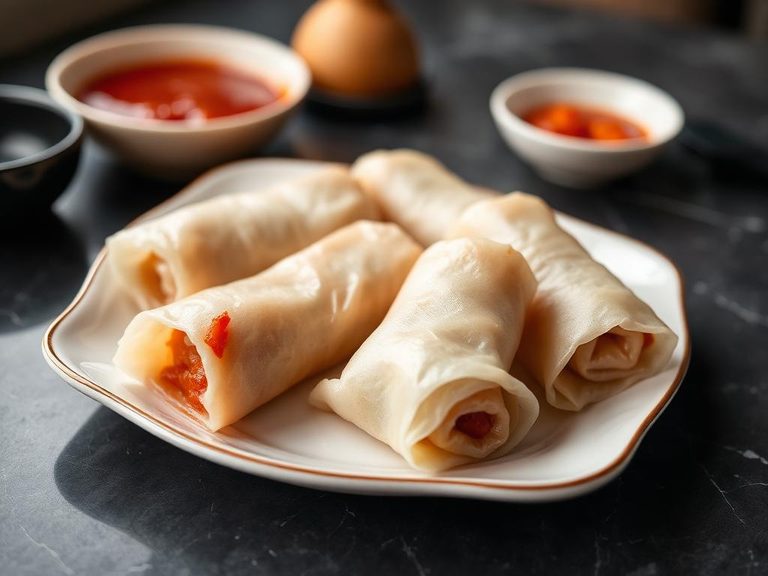
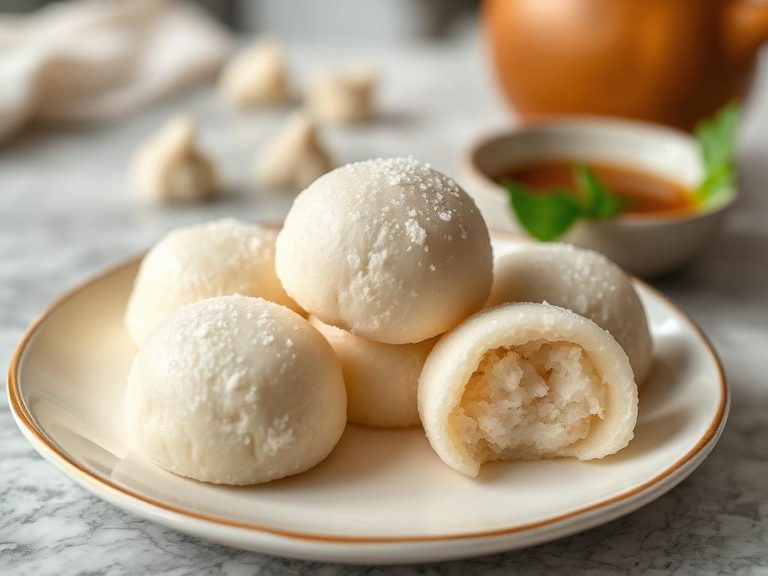
🌍 Where it's eaten
💡 Did you know?
The sticky rice cake 'Nian Gao' is a homophone for 'higher year' in Chinese, symbolizing progress and advancement, which is why it's a mandatory food during Lunar New Year celebrations.
Full nutrition (USDA data · scales with serving)
| Water | 45.8 g |
| Energy | 242 kcal |
| Protein | 2.8 g |
| Total lipid (fat) | 6.0 g |
| Carbohydrate, by difference | 45.0 g |
| Fiber, total dietary | 0.50 g |
| Total Sugars | 19.1 g |
| Calcium, Ca | 19.0 mg |
| Iron, Fe | 0.35 mg |
| Magnesium, Mg | 19.0 mg |
| Phosphorus, P | 47.0 mg |
| Potassium, K | 55.0 mg |
| Sodium, Na | 9.0 mg |
| Zinc, Zn | 0.56 mg |
| Copper, Cu | 0.11 mg |
| Selenium, Se | 2.8 ug |
| Vitamin C, total ascorbic acid | 0.00 mg |
| Thiamin | 0.04 mg |
| Riboflavin | 0.00 mg |
| Niacin | 0.57 mg |
| Vitamin B-6 | 0.03 mg |
| Folate, total | 7.0 ug |
| Folic acid | 0.00 ug |
| Folate, food | 7.0 ug |
| Folate, DFE | 7.0 ug |
| Choline, total | 2.9 mg |
| Vitamin B-12 | 0.00 ug |
| Vitamin B-12, added | 0.00 ug |
| Vitamin A, RAE | 0.00 ug |
| Retinol | 0.00 ug |
| Carotene, beta | 1.0 ug |
| Carotene, alpha | 0.00 ug |
| Cryptoxanthin, beta | 0.00 ug |
| Lycopene | 0.00 ug |
| Lutein + zeaxanthin | 0.00 ug |
| Vitamin E (alpha-tocopherol) | 0.97 mg |
| Vitamin E, added | 0.00 mg |
| Vitamin D (D2 + D3) | 0.00 ug |
| Vitamin K (phylloquinone) | 0.10 ug |
| Alcohol, ethyl | 0.00 g |
| Caffeine | 0.00 mg |
| Theobromine | 0.00 mg |
Fat & fatty acid profile (per 100g)
| Fatty acids, total saturated | 0.89 g |
| SFA 4:0 | 0.00 g |
| SFA 6:0 | 0.00 g |
| SFA 8:0 | 0.00 g |
| SFA 10:0 | 0.00 g |
| SFA 12:0 | 0.00 g |
| SFA 14:0 | 0.00 g |
| SFA 16:0 | 0.69 g |
| SFA 18:0 | 0.16 g |
| Fatty acids, total monounsaturated | 1.9 g |
| MUFA 16:1 | 0.01 g |
| MUFA 18:1 | 1.8 g |
| MUFA 20:1 | 0.02 g |
| MUFA 22:1 | 0.00 g |
| Fatty acids, total polyunsaturated | 2.9 g |
| PUFA 18:2 | 2.8 g |
| PUFA 18:3 | 0.07 g |
| PUFA 18:4 | 0.00 g |
| PUFA 20:4 | 0.00 g |
| PUFA 20:5 n-3 (EPA) | 0.00 g |
| PUFA 22:5 n-3 (DPA) | 0.00 g |
| PUFA 22:6 n-3 (DHA) | 0.00 g |
| Cholesterol | 0.00 mg |
Amino acid profile (per 100g)
Estimated from Puff pastry, frozen, ready-to-bake, baked — USDA does not publish this profile for Pastry.
| Tryptophan | 0.09 g |
| Threonine | 0.20 g |
| Isoleucine | 0.28 g |
| Leucine | 0.51 g |
| Lysine | 0.14 g |
| Methionine | 0.13 g |
| Cystine | 0.17 g |
| Phenylalanine | 0.37 g |
| Tyrosine | 0.20 g |
| Valine | 0.31 g |
| Arginine | 0.26 g |
| Histidine | 0.16 g |
| Alanine | 0.23 g |
| Aspartic acid | 0.30 g |
| Glutamic acid | 2.6 g |
| Glycine | 0.26 g |
| Proline | 0.88 g |
| Serine | 0.36 g |
FAQ
Is rice flour pastry the same as wheat flour pastry?
No. Rice flour pastry is made from ground rice and is naturally gluten-free, resulting in a distinctively soft, chewy, or sometimes crumbly texture. Wheat flour pastry contains gluten, which gives it elasticity and a different mouthfeel.
Why is my homemade rice cake tough or gummy?
This is often due to the type of rice flour used. Glutinous (sweet) rice flour creates a chewy, gummy texture, while regular rice flour is more crumbly. Over-mixing or incorrect water ratios can also affect the final texture.
Can I freeze leftover rice cakes?
Yes, most steamed or baked rice cakes freeze well. Wrap them tightly in plastic wrap and foil, then freeze for up to 3 months. Reheat by steaming or pan-frying to restore their original texture.
Nutrient density (calculated · NRF9.3)
Nutrient Rich Foods index: beneficial nutrients (protein, fiber, vitamins, minerals) minus saturated fat, added sugar & sodium, per 100 kcal.
NRF9.3 index — Fulgoni, Keast & Drewnowski, 2009. Computed from USDA nutrients.
Weight-loss friendliness (composite index)
Energy density 2.42 kcal/g · 5% calories from protein · 0.5 g fiber · 19.1 g sugar per 100 g.
Composite of energy density (Rolls et al., 1999), protein & fiber satiety, minus sugar. A calculated heuristic — ranks satiety-per-calorie, not a clinical measure.
Dietary load (calculated from USDA values)
Potential renal acid load. Positive = acid-forming, negative = alkaline-forming.
Sodium-to-potassium ratio: 0.16 (lower is better — aim for ≤ 1)
Sodium:potassium per WHO potassium guidance. Computed from USDA nutrients.