Nian Gao
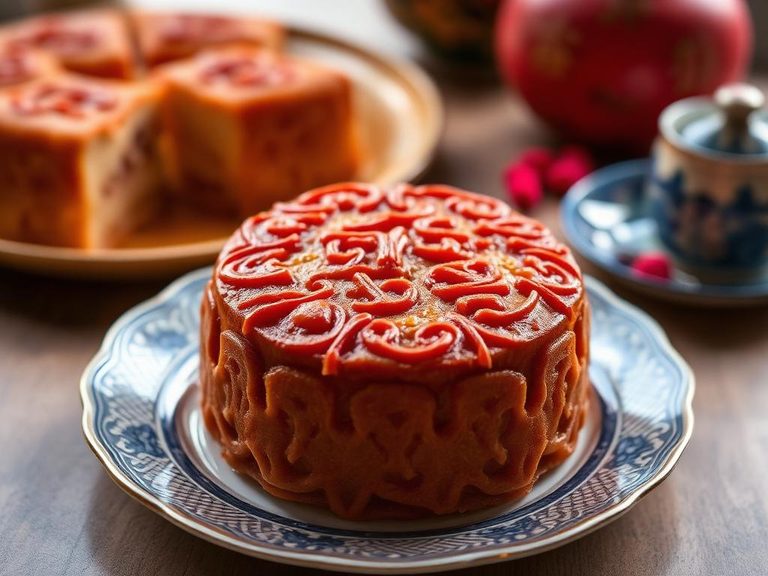
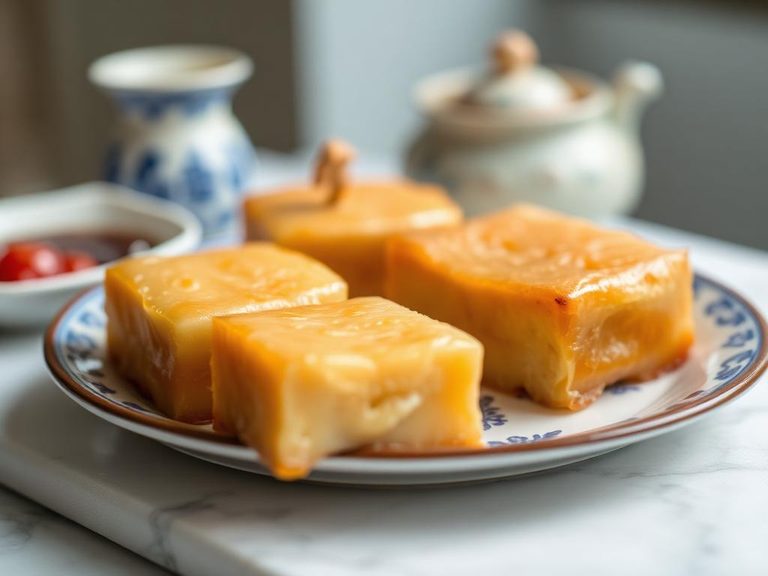
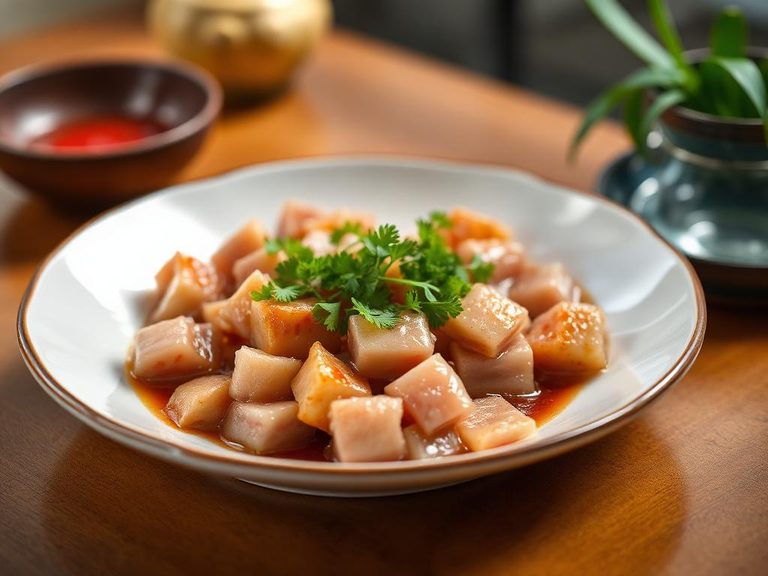
Nian Gao, a traditional Chinese New Year cake, is a sticky, sweet, and chewy dessert made primarily from glutinous rice flour and sugar. Originating from China, it is a staple during Lunar New Year celebrations, symbolizing progress and prosperity. The cake can be steamed, fried, or incorporated into savory dishes, and its simple, gluten-free ingredients make it a versatile treat enjoyed across many Asian cultures.
🍽️ Nutrition at a glance
Nian Gao is high in carbohydrates, providing a quick source of energy, but it is relatively low in protein and fat. A typical serving of about 100 grams contains roughly 200-250 calories, with minimal vitamins or minerals, making it more of an indulgent treat than a nutrient-dense food.
Nutrition breakdown
| Calories | 230 kcal |
| Protein | 3 g |
| Carbs | 52 g |
| Fat | 0.5 g |
| Fiber | 0.5 g |
| Sugar | 25 g |
| Sodium | 10 mg |
| Iron | 1.5 mg |
| Calcium | 20 mg |
| Magnesium | 10 mg |
| Phosphorus | 30 mg |
| Potassium | 50 mg |
| Thiamin (B1) | 0.05 mg |
| Niacin (B3) | 0.8 mg |
| Manganese | 0.3 mg |
Per 1 piece (about 100 g) · estimated, varies by recipe
💡 What's interesting
Culturally, Nian Gao's name is a homophone for 'higher year' in Chinese, symbolizing growth and advancement, which is why it's gifted and eaten during New Year. Nutritionally, its unique sticky texture comes from glutinous rice, which lacks gluten but creates a dense, chewy consistency that sets it apart from other rice-based dishes.