Chinese Nian Gao
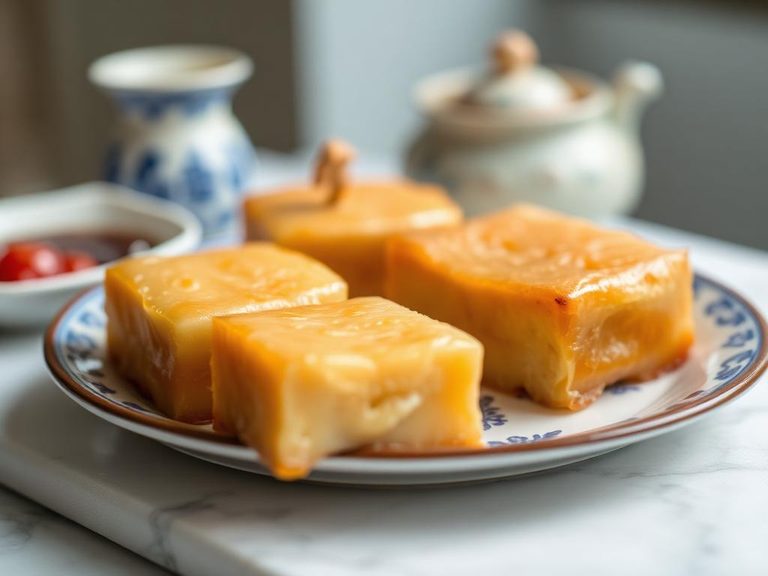
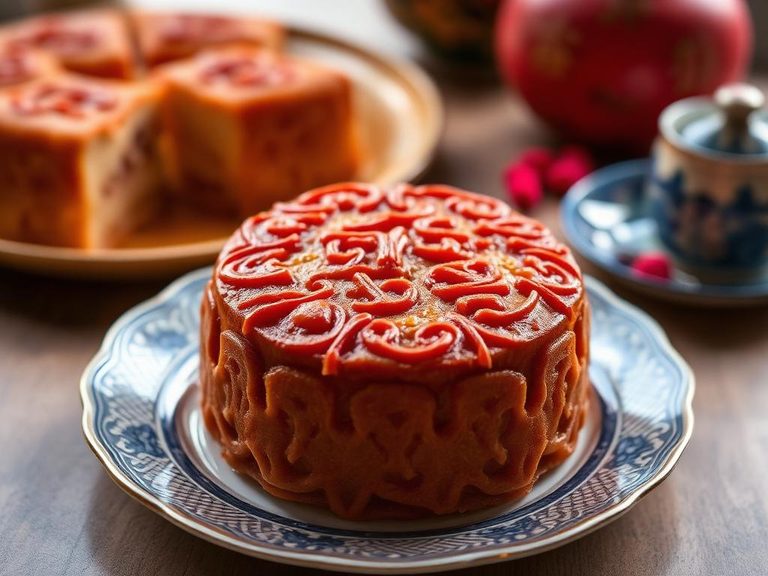
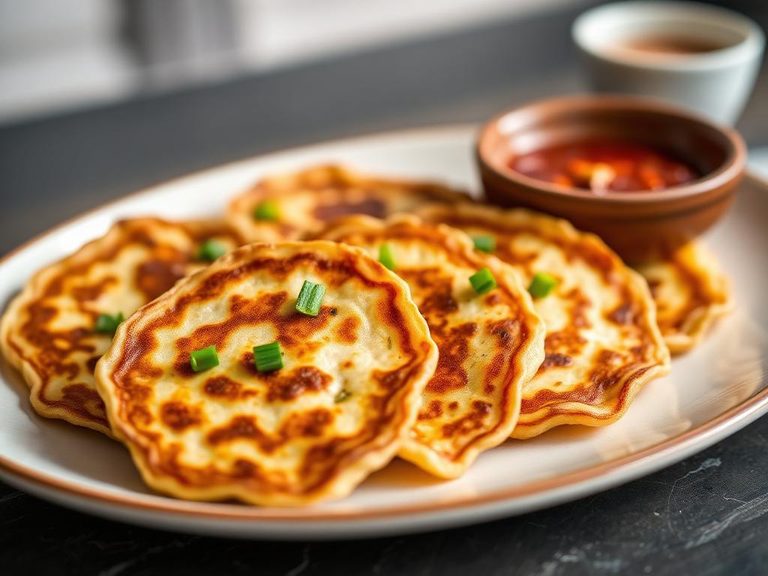
Chinese Nian Gao, or New Year Cake, is a traditional sticky rice cake enjoyed during the Lunar New Year. It is made primarily from glutinous rice flour, sugar, and water, often steamed or pan-fried, and symbolizes progress, growth, and prosperity in Chinese culture.
🍽️ Nutrition at a glance
Nian Gao is high in carbohydrates and low in fat and protein, providing a quick source of energy. A typical serving (about 100g) contains roughly 200-250 calories, with key nutrients coming from the rice flour and any added sweeteners.
Nutrition breakdown
| Calories | 220 kcal |
| Protein | 2.5 g |
| Carbs | 52 g |
| Fat | 0.5 g |
| Fiber | 0.5 g |
| Sugar | 28 g |
| Sodium | 15 mg |
| Iron | 1.2 mg |
| Calcium | 20 mg |
| Potassium | 80 mg |
| Magnesium | 10 mg |
| Phosphorus | 30 mg |
| Thiamin (B1) | 0.02 mg |
| Niacin (B3) | 0.3 mg |
| Folate | 5 mcg |
Per 1 piece (100 g) · estimated, varies by recipe
💡 What's interesting
The name 'Nian Gao' is a homophone for 'year high' in Chinese, making it a symbolic food for achieving new heights each year. Nutritionally, it is a dense, energy-dense food that reflects its historical role as a festive treat meant to provide sustenance during the holiday season.