

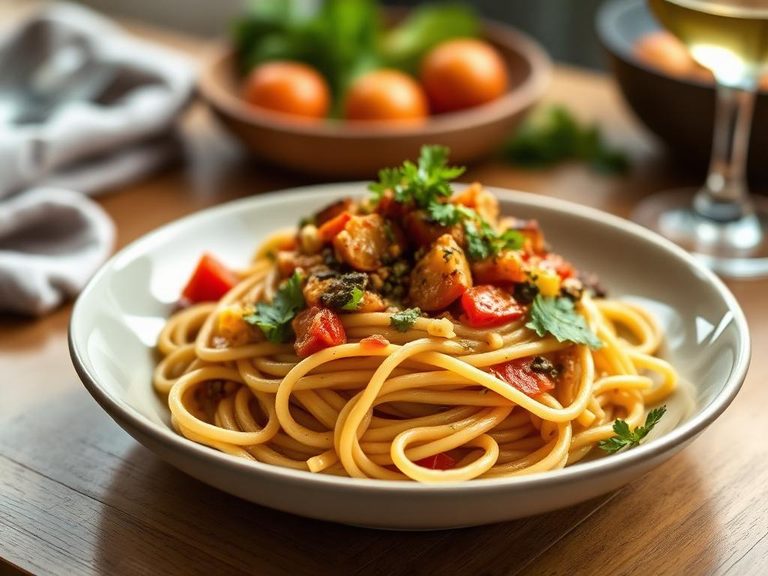
Pasta, whole grain, with tomato-based sauce and added vegetables, restaurant
Common food
This is a comforting, restaurant-style dish of whole grain pasta tossed in a savory, vegetable-rich tomato sauce. The whole wheat pasta provides a nutty, chewy texture and a dose of fiber, while the sauce offers a bright, tangy flavor with the sweetness of cooked vegetables. Nutritionally, it's a balanced, lower-calorie option that delivers complex carbohydrates and a modest amount of protein and fat.
Calorie split: 9% protein · 45% carbs · 46% fat
↓ Full nutrition💚 Why it's loved
People love it for its satisfying, hearty flavor that combines the earthy taste of whole grains with the bright, savory notes of tomato and vegetables. It's a versatile comfort food that feels both wholesome and indulgent, often evoking a sense of home-cooked warmth even in a restaurant setting.
⚠️ Watch-outs & how to enjoy it better
Some may find the whole grain pasta has a denser, chewier texture that's less familiar than refined pasta. The tomato sauce can be high in sodium, and the dish may contain common allergens like gluten or added cheese. To counteract, pair it with a lean protein like grilled chicken to balance the meal, and request a lighter sauce or ask for the sauce on the side to control sodium intake.
Key benefits
- High in dietary fiber from whole grain pasta, supporting digestive health.
- Provides complex carbohydrates for sustained energy release.
- Contains lycopene and antioxidants from the tomato-based sauce.
- Offers a good source of plant-based protein from the whole wheat and vegetables.
- Lower in glycemic index compared to refined pasta, aiding blood sugar management.
🍽️ Popular dishes
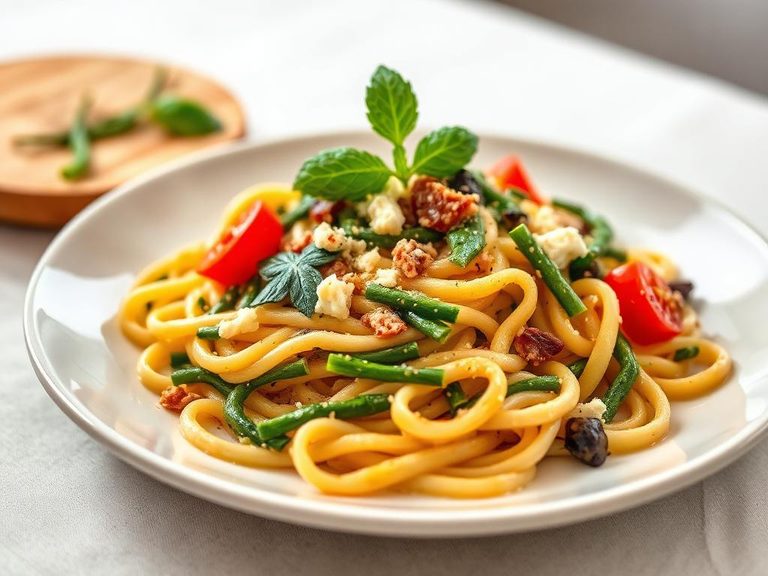
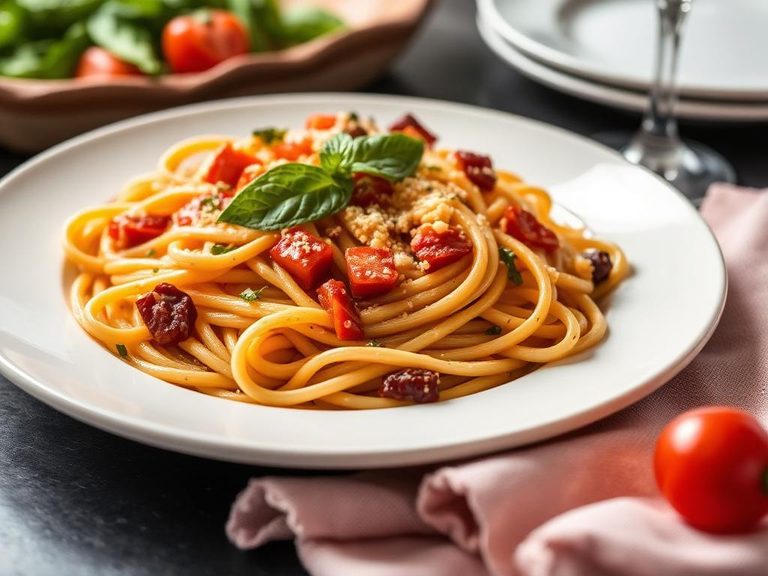
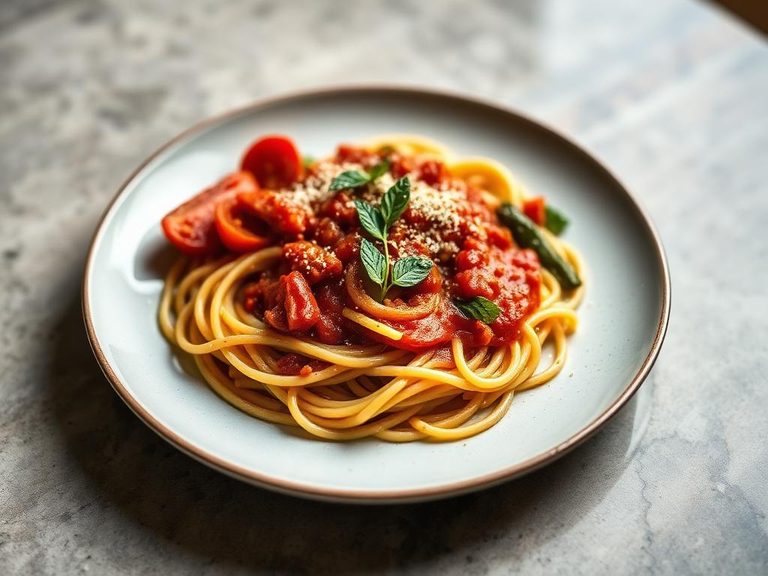
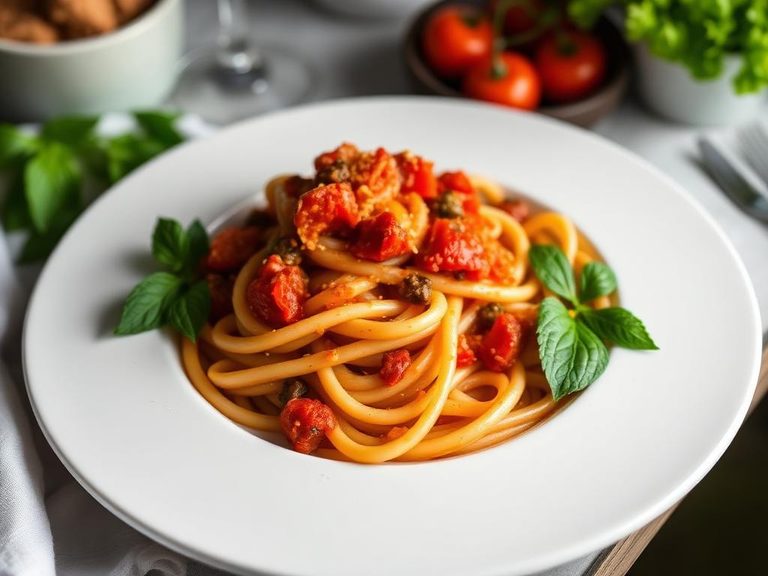
🌍 Where it's eaten
💡 Did you know?
Whole grain pasta was once considered a 'poor man's food' in Italy, but it has seen a major resurgence in modern cuisine as a health-conscious staple, with some restaurants now offering it as a premium option.
Full nutrition (USDA data · scales with serving)
| Water | 69.1 g |
| Energy | 154 kcal |
| Protein | 3.6 g |
| Total lipid (fat) | 8.2 g |
| Carbohydrate, by difference | 17.8 g |
| Fiber, total dietary | 2.6 g |
| Total Sugars | 2.6 g |
| Calcium, Ca | 17.0 mg |
| Iron, Fe | 1.1 mg |
| Magnesium, Mg | 34.0 mg |
| Phosphorus, P | 79.0 mg |
| Potassium, K | 187 mg |
| Sodium, Na | 344 mg |
| Zinc, Zn | 0.75 mg |
| Copper, Cu | 0.15 mg |
| Selenium, Se | 18.7 ug |
| Vitamin C, total ascorbic acid | 5.4 mg |
| Thiamin | 0.09 mg |
| Riboflavin | 0.09 mg |
| Niacin | 3.0 mg |
| Vitamin B-6 | 0.12 mg |
| Folate, total | 18.0 ug |
| Folic acid | 0.00 ug |
| Folate, food | 18.0 ug |
| Folate, DFE | 18.0 ug |
| Choline, total | 9.1 mg |
| Vitamin B-12 | 0.00 ug |
| Vitamin B-12, added | 0.00 ug |
| Vitamin A, RAE | 15.0 ug |
| Retinol | 0.00 ug |
| Carotene, beta | 176 ug |
| Carotene, alpha | 1.0 ug |
| Cryptoxanthin, beta | 10.0 ug |
| Lycopene | 4331 ug |
| Lutein + zeaxanthin | 164 ug |
| Vitamin E (alpha-tocopherol) | 2.3 mg |
| Vitamin E, added | 0.00 mg |
| Vitamin D (D2 + D3) | 0.00 ug |
| Vitamin K (phylloquinone) | 12.4 ug |
| Alcohol, ethyl | 0.00 g |
| Caffeine | 0.00 mg |
| Theobromine | 0.00 mg |
Fat & fatty acid profile (per 100g)
| Fatty acids, total saturated | 1.1 g |
| SFA 4:0 | 0.00 g |
| SFA 6:0 | 0.00 g |
| SFA 8:0 | 0.00 g |
| SFA 10:0 | 0.00 g |
| SFA 12:0 | 0.00 g |
| SFA 14:0 | 0.01 g |
| SFA 16:0 | 0.80 g |
| SFA 18:0 | 0.22 g |
| Fatty acids, total monounsaturated | 3.1 g |
| MUFA 16:1 | 0.03 g |
| MUFA 18:1 | 3.0 g |
| MUFA 20:1 | 0.05 g |
| MUFA 22:1 | 0.00 g |
| Fatty acids, total polyunsaturated | 3.1 g |
| PUFA 18:2 | 2.7 g |
| PUFA 18:3 | 0.35 g |
| PUFA 18:4 | 0.00 g |
| PUFA 20:4 | 0.00 g |
| PUFA 20:5 n-3 (EPA) | 0.00 g |
| PUFA 22:5 n-3 (DPA) | 0.00 g |
| PUFA 22:6 n-3 (DHA) | 0.00 g |
| Cholesterol | 1.0 mg |
Amino acid profile (per 100g)
Estimated from Restaurant, Italian, chicken parmesan without pasta — USDA does not publish this profile for Pasta.
| Tryptophan | 0.20 g |
| Threonine | 0.66 g |
| Isoleucine | 0.72 g |
| Leucine | 1.3 g |
| Lysine | 1.3 g |
| Methionine | 0.41 g |
| Cystine | 0.20 g |
| Phenylalanine | 1.1 g |
| Tyrosine | 0.53 g |
| Valine | 0.81 g |
| Arginine | 0.93 g |
| Histidine | 0.50 g |
| Alanine | 0.79 g |
| Aspartic acid | 1.4 g |
| Glutamic acid | 2.8 g |
| Glycine | 0.61 g |
| Proline | 1.3 g |
| Serine | 0.70 g |
| Hydroxyproline | 0.04 g |
FAQ
Is whole grain pasta healthier than regular pasta?
Yes, whole grain pasta retains more fiber, vitamins, and minerals from the wheat bran and germ, which can help with digestion and provide a more sustained energy release compared to refined pasta.
Can I make this dish at home with less sodium?
Absolutely. Use low-sodium canned tomatoes or fresh tomatoes, and season with herbs like basil, oregano, and garlic instead of salt. You can also add a splash of lemon juice for brightness.
What vegetables are typically added to this dish?
Common additions include bell peppers, zucchini, spinach, mushrooms, and onions, which add flavor, texture, and nutrients without significantly increasing calories.
Nutrient density (calculated · NRF9.3)
Nutrient Rich Foods index: beneficial nutrients (protein, fiber, vitamins, minerals) minus saturated fat, added sugar & sodium, per 100 kcal.
NRF9.3 index — Fulgoni, Keast & Drewnowski, 2009. Computed from USDA nutrients.
Weight-loss friendliness (composite index)
Energy density 1.54 kcal/g · 9% calories from protein · 2.6 g fiber · 2.6 g sugar per 100 g.
Composite of energy density (Rolls et al., 1999), protein & fiber satiety, minus sugar. A calculated heuristic — ranks satiety-per-calorie, not a clinical measure.
Dietary load (calculated from USDA values)
Potential renal acid load. Positive = acid-forming, negative = alkaline-forming.
Sodium-to-potassium ratio: 1.84 (lower is better — aim for ≤ 1)
Sodium:potassium per WHO potassium guidance. Computed from USDA nutrients.