

Pasta, whole grain, with cream sauce, seafood, and added vegetables, ready-to-heat
Common food
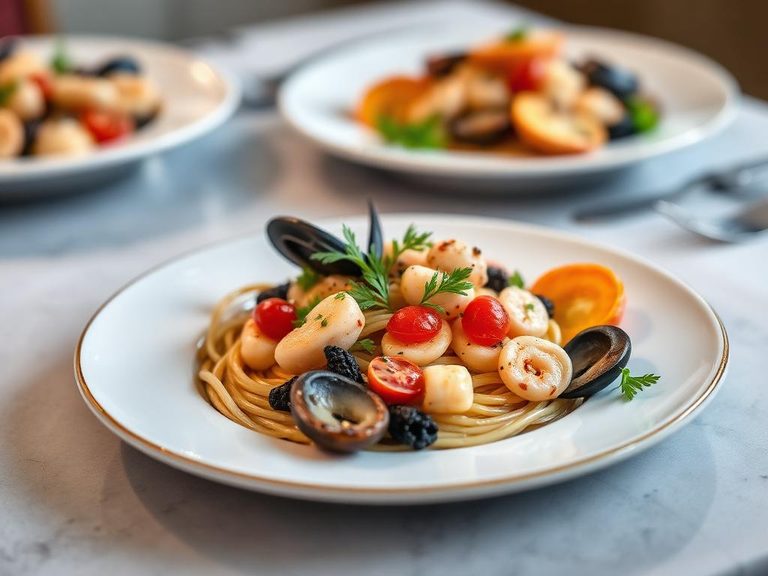
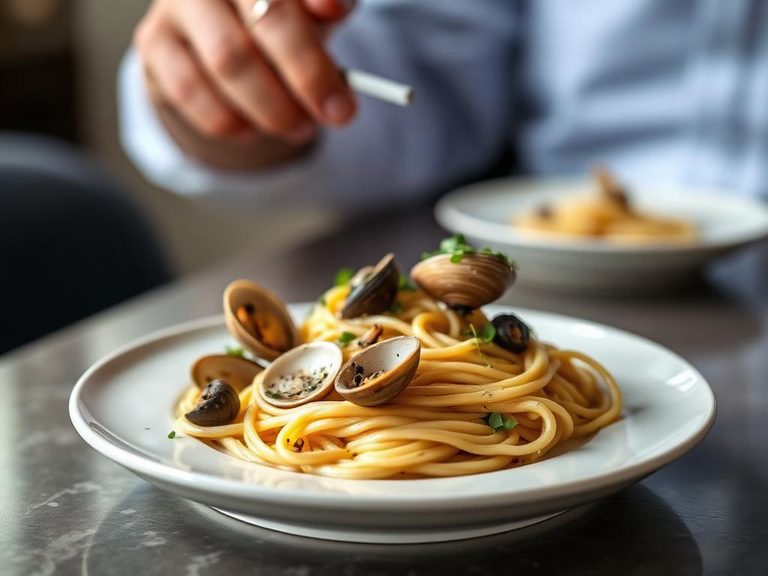
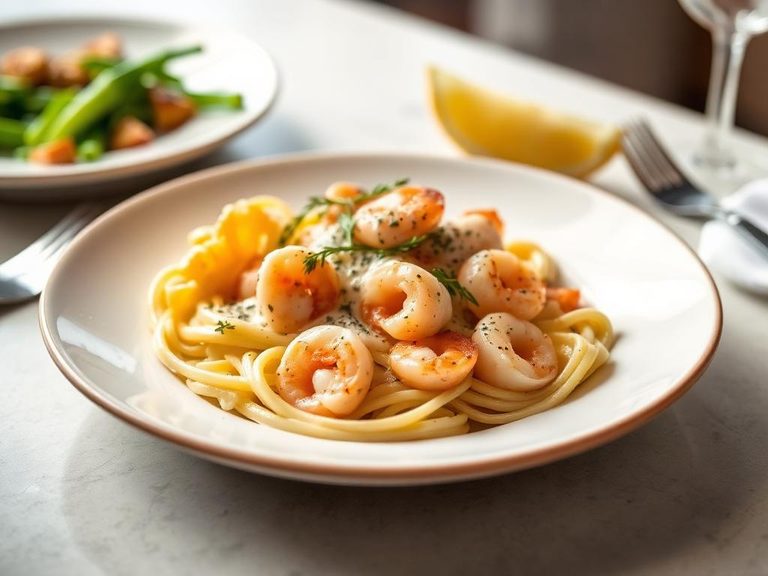
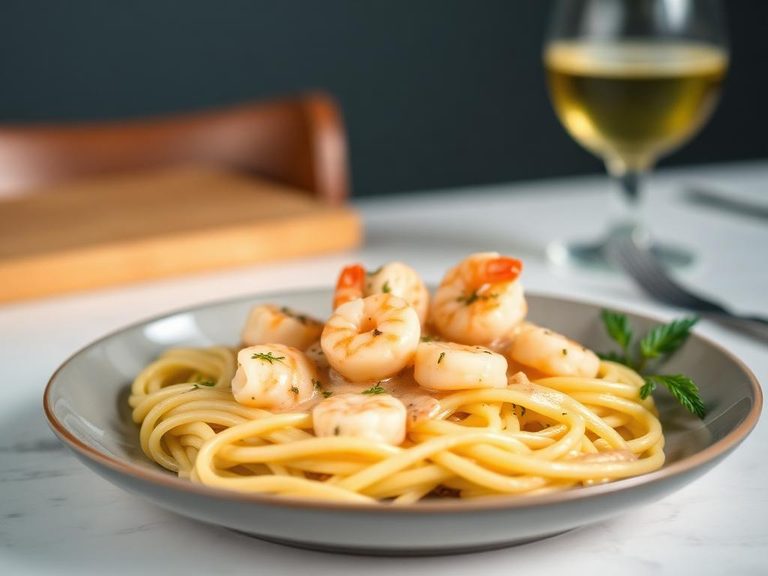
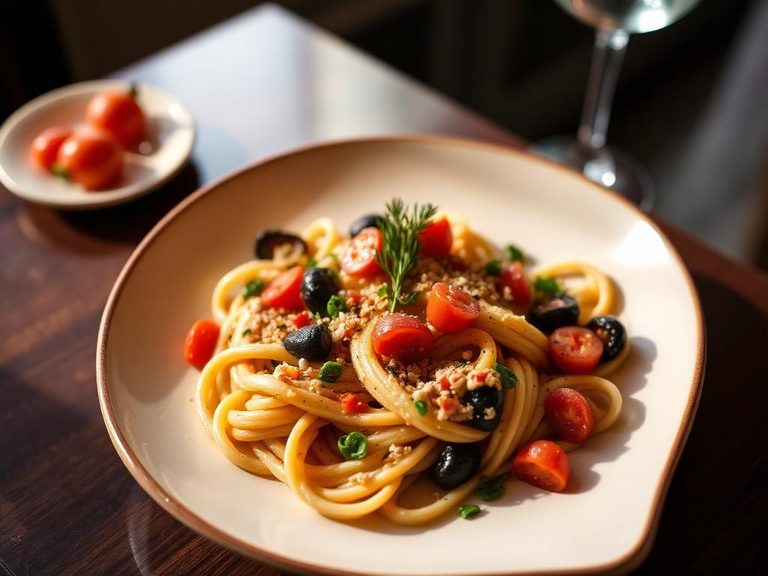
This is a comforting, ready-to-heat meal featuring whole grain pasta in a creamy sauce, studded with tender seafood and vibrant vegetables. It offers a satisfying, al dente chew from the pasta, a rich and velvety sauce, and a savory oceanic flavor from the seafood. Nutritionally, it provides a balanced profile with a notable 2.1g of fiber per 100g from the whole grains and vegetables.
Calorie split: 15% protein · 43% carbs · 42% fat
↓ Full nutrition💚 Why it's loved
People love this dish for its harmonious blend of rich, creamy comfort and the fresh, briny taste of seafood, making it feel both indulgent and wholesome. It's a versatile one-pot meal that brings a touch of coastal Italian-inspired cuisine to a quick weeknight dinner.
⚠️ Watch-outs & how to enjoy it better
The cream sauce can be high in saturated fat and sodium, which may be a concern for heart health or blood pressure. The whole grain pasta, while nutritious, contains gluten and may cause digestive discomfort for those with sensitivities. To counteract, pair a smaller portion with a large side salad to add volume and fiber, and check labels for lower-sodium sauce options.
Key benefits
- Whole grain pasta provides dietary fiber for digestive health.
- Seafood is a good source of lean protein and omega-3 fatty acids.
- Added vegetables contribute vitamins and minerals.
- Convenient ready-to-heat format saves preparation time.
- Balanced macronutrient profile for a satisfying meal.
🍽️ Popular dishes
🌍 Where it's eaten
💡 Did you know?
The 'cream sauce' in many commercial pasta dishes is often a blend of dairy and starches like modified corn starch to achieve a stable, creamy texture that won't separate upon reheating.
Full nutrition (USDA data · scales with serving)
| Water | 69.1 g |
| Energy | 149 kcal |
| Protein | 5.8 g |
| Total lipid (fat) | 7.2 g |
| Carbohydrate, by difference | 16.5 g |
| Fiber, total dietary | 2.1 g |
| Total Sugars | 0.93 g |
| Calcium, Ca | 36.0 mg |
| Iron, Fe | 1.1 mg |
| Magnesium, Mg | 33.0 mg |
| Phosphorus, P | 107 mg |
| Potassium, K | 119 mg |
| Sodium, Na | 348 mg |
| Zinc, Zn | 0.92 mg |
| Copper, Cu | 0.15 mg |
| Selenium, Se | 24.2 ug |
| Vitamin C, total ascorbic acid | 4.3 mg |
| Thiamin | 0.09 mg |
| Riboflavin | 0.10 mg |
| Niacin | 1.8 mg |
| Vitamin B-6 | 0.07 mg |
| Folate, total | 14.0 ug |
| Folic acid | 0.00 ug |
| Folate, food | 14.0 ug |
| Folate, DFE | 14.0 ug |
| Choline, total | 14.6 mg |
| Vitamin B-12 | 0.88 ug |
| Vitamin B-12, added | 0.00 ug |
| Vitamin A, RAE | 50.0 ug |
| Retinol | 46.0 ug |
| Carotene, beta | 39.0 ug |
| Carotene, alpha | 1.0 ug |
| Cryptoxanthin, beta | 9.0 ug |
| Lycopene | 0.00 ug |
| Lutein + zeaxanthin | 94.0 ug |
| Vitamin E (alpha-tocopherol) | 0.69 mg |
| Vitamin E, added | 0.00 mg |
| Vitamin D (D2 + D3) | 0.20 ug |
| Vitamin K (phylloquinone) | 2.9 ug |
| Alcohol, ethyl | 0.00 g |
| Caffeine | 0.00 mg |
| Theobromine | 0.00 mg |
Fat & fatty acid profile (per 100g)
| Fatty acids, total saturated | 2.9 g |
| SFA 4:0 | 0.09 g |
| SFA 6:0 | 0.07 g |
| SFA 8:0 | 0.05 g |
| SFA 10:0 | 0.11 g |
| SFA 12:0 | 0.13 g |
| SFA 14:0 | 0.41 g |
| SFA 16:0 | 1.4 g |
| SFA 18:0 | 0.47 g |
| Fatty acids, total monounsaturated | 1.8 g |
| MUFA 16:1 | 0.08 g |
| MUFA 18:1 | 1.8 g |
| MUFA 20:1 | 0.02 g |
| MUFA 22:1 | 0.00 g |
| Fatty acids, total polyunsaturated | 1.2 g |
| PUFA 18:2 | 1.0 g |
| PUFA 18:3 | 0.12 g |
| PUFA 18:4 | 0.00 g |
| PUFA 20:4 | 0.01 g |
| PUFA 20:5 n-3 (EPA) | 0.02 g |
| PUFA 22:5 n-3 (DPA) | 0.01 g |
| PUFA 22:6 n-3 (DHA) | 0.02 g |
| Cholesterol | 26.0 mg |
Amino acid profile (per 100g)
Estimated from Restaurant, Italian, chicken parmesan without pasta — USDA does not publish this profile for Pasta.
| Tryptophan | 0.20 g |
| Threonine | 0.66 g |
| Isoleucine | 0.72 g |
| Leucine | 1.3 g |
| Lysine | 1.3 g |
| Methionine | 0.41 g |
| Cystine | 0.20 g |
| Phenylalanine | 1.1 g |
| Tyrosine | 0.53 g |
| Valine | 0.81 g |
| Arginine | 0.93 g |
| Histidine | 0.50 g |
| Alanine | 0.79 g |
| Aspartic acid | 1.4 g |
| Glutamic acid | 2.8 g |
| Glycine | 0.61 g |
| Proline | 1.3 g |
| Serine | 0.70 g |
| Hydroxyproline | 0.04 g |
FAQ
Is this a good source of protein?
With 5.8g of protein per 100g, it provides a moderate amount, primarily from the seafood and whole grain pasta. It can be a solid part of a protein-rich meal when combined with other sources.
How does the fiber content compare to regular white pasta dishes?
The 2.1g of fiber per 100g is significantly higher than most white pasta dishes, thanks to the whole grain pasta and added vegetables, which support sustained energy and digestion.
What kind of seafood is typically used?
Common options include shrimp, scallops, mussels, clams, and squid (calamari). The exact mix varies by brand and recipe, but shrimp is the most frequent.
Nutrient density (calculated · NRF9.3)
Nutrient Rich Foods index: beneficial nutrients (protein, fiber, vitamins, minerals) minus saturated fat, added sugar & sodium, per 100 kcal.
NRF9.3 index — Fulgoni, Keast & Drewnowski, 2009. Computed from USDA nutrients.
Weight-loss friendliness (composite index)
Energy density 1.49 kcal/g · 16% calories from protein · 2.1 g fiber · 0.9 g sugar per 100 g.
Composite of energy density (Rolls et al., 1999), protein & fiber satiety, minus sugar. A calculated heuristic — ranks satiety-per-calorie, not a clinical measure.
Dietary load (calculated from USDA values)
Potential renal acid load. Positive = acid-forming, negative = alkaline-forming.
Sodium-to-potassium ratio: 2.92 (lower is better — aim for ≤ 1)
Sodium:potassium per WHO potassium guidance. Computed from USDA nutrients.